
We have driven in the area and would like to have an imprint in my blog on the wonderful towns of my belle France, There is so much to see , doing my best, and glad found me these older paper pictures which now transposing in my blog for you and me, The pictures are old ,so the quality may not be as good ,but the memories are forever, Therefore, here is my take on this is Lectoure !!!! Hope you enjoy the post as I.
The town of Lectoure is located in the Gers dept no 32 in the Occitanie region of my belle France,The town is in the Lomagne, a former district of the province of Gascogne having title of viscounty, nicknamed “French Tuscany”. It is 23 km from;Condom, 35 km from Agen and Auch, 96 km from Toulouse, 703 km from Versailles and 657 from my current house, The N21 road connects Limoges to Lourdes and N124 to Toulouse, the one we use to come here. Lectoure is labeled City of Art and History.
The Jardin de Marronniers, ancient garden of the bishopric, had a green theater which regularly welcomed the troop of the Comédie-Française (a plaque recalls that the tragedian Madeleine Roch played here for the last time, and an alley bears the name of French actor Albert Lambert). It dominates a terrace where the municipal swimming pool is located and offers a view of the Gers plain to the south to the Pyrenees. Pic back belltower of cathedral.
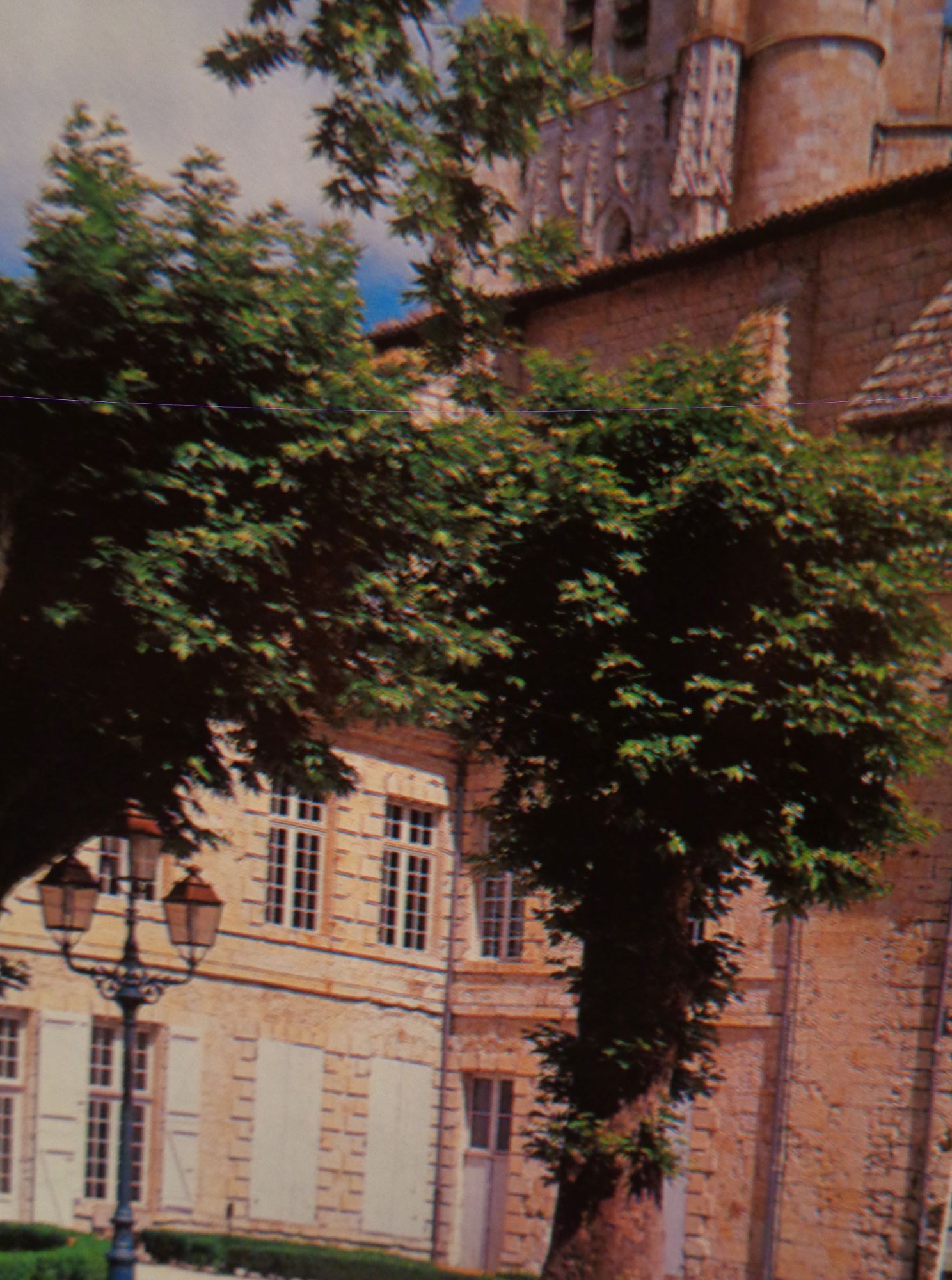
The former Royal Tannery began in the Middle Ages, when tanners, set up shop outside the ramparts at the top of the southern slope. The water flows down and under the bridges, in 1752 a new brand will become Manufacture Royale in 1754 and will bring together centuries-old know-how under a single banner. This majestic, imposing establishment will employ up to 200 workers, working on the 140 tanning bins. The activity declined in the second half of the 1900’s, ceasing eventually.
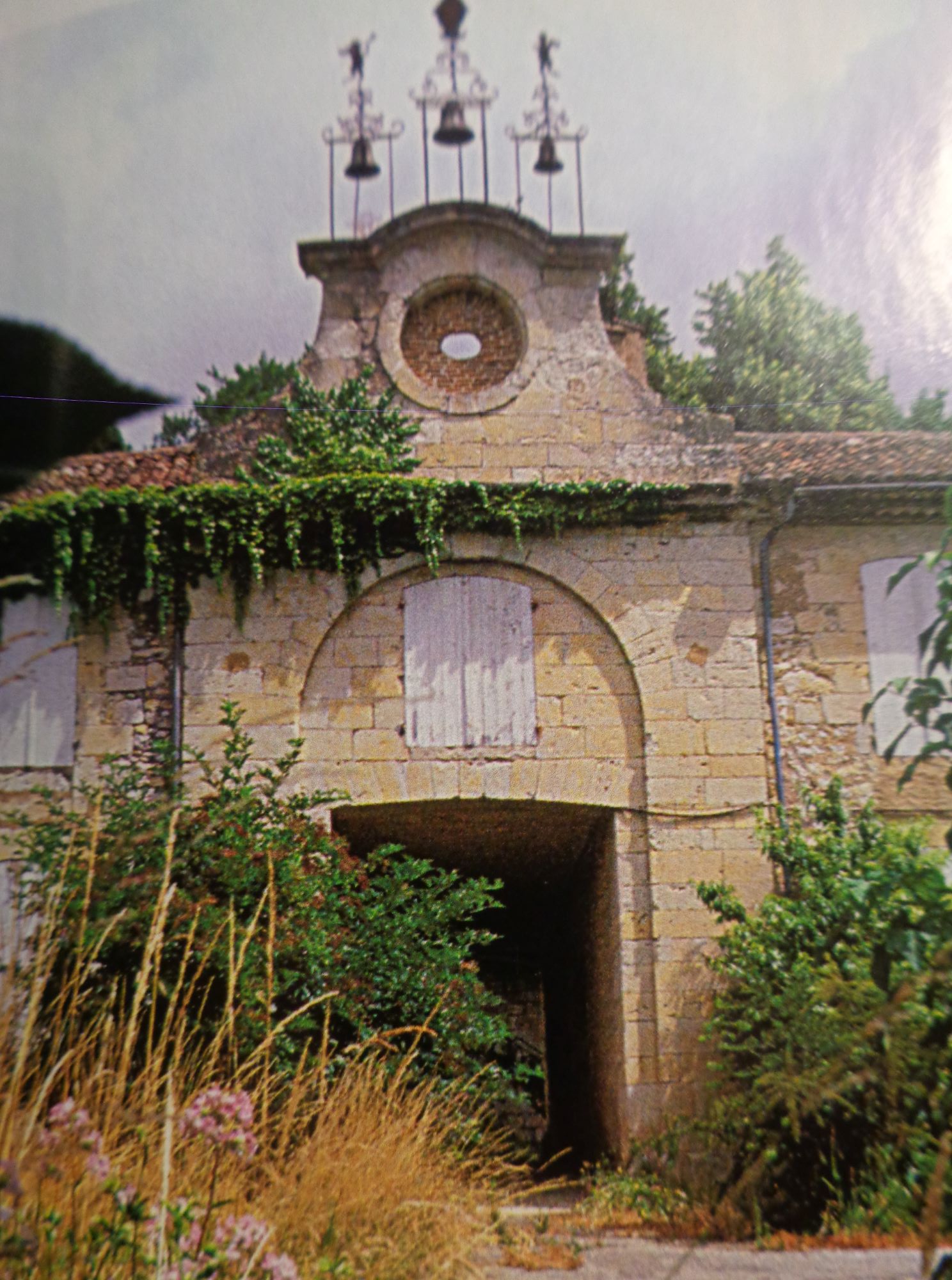
The thermal establishment has been installed since 2003 in an old 18C mansion, the Hôtel de Goulard, and is one of the most beautiful thermal establishments in France. The mineral water drawn more than a thousand meters deep, at a temperature of 42 ° C. (108F) Use for the proper treatment of rheumatisms and osteo-articular disorders, the spa station benefits from quality installations and the authenticity of the place are conducive to the best course of cures. So they said, never use it……
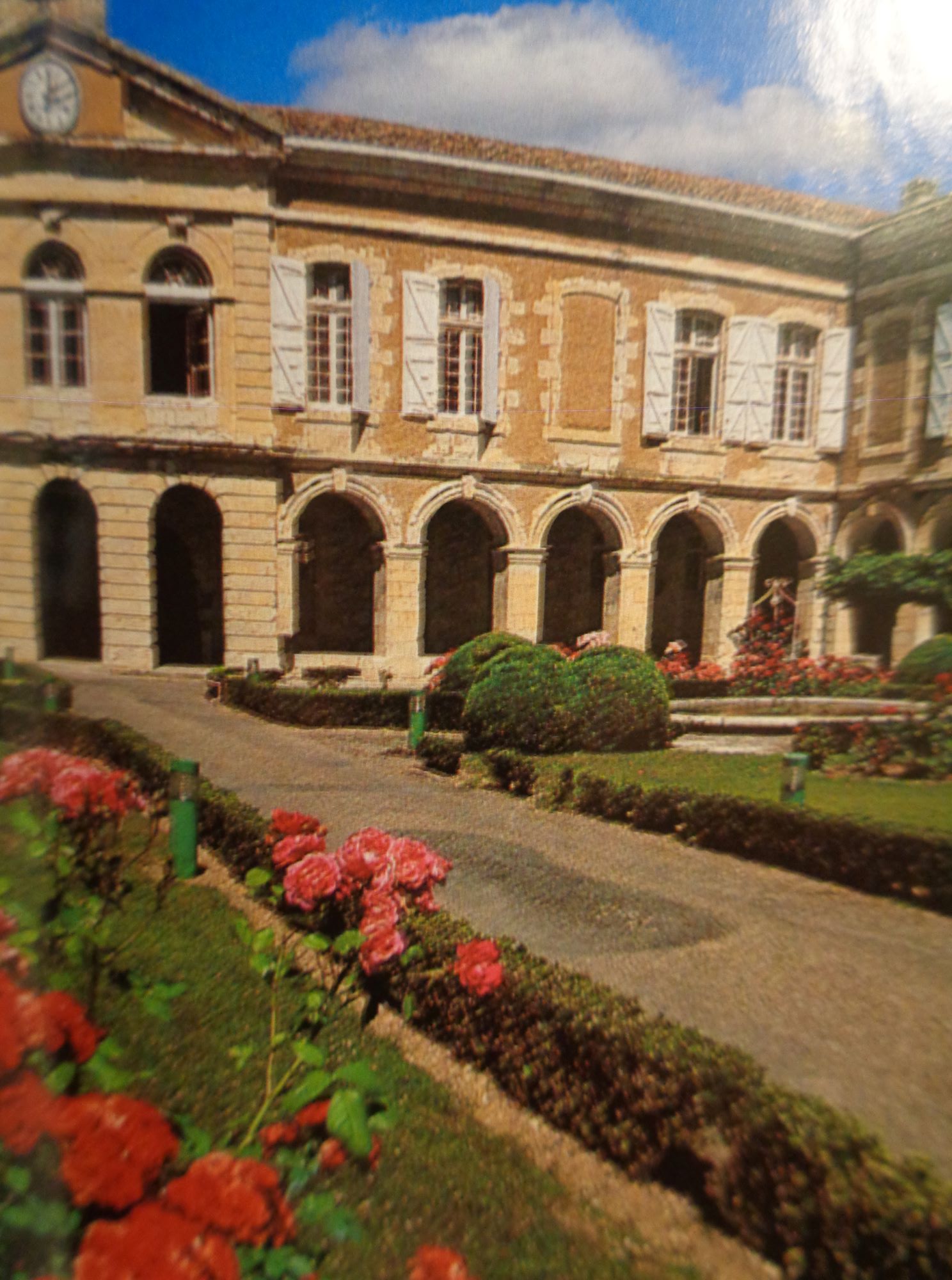
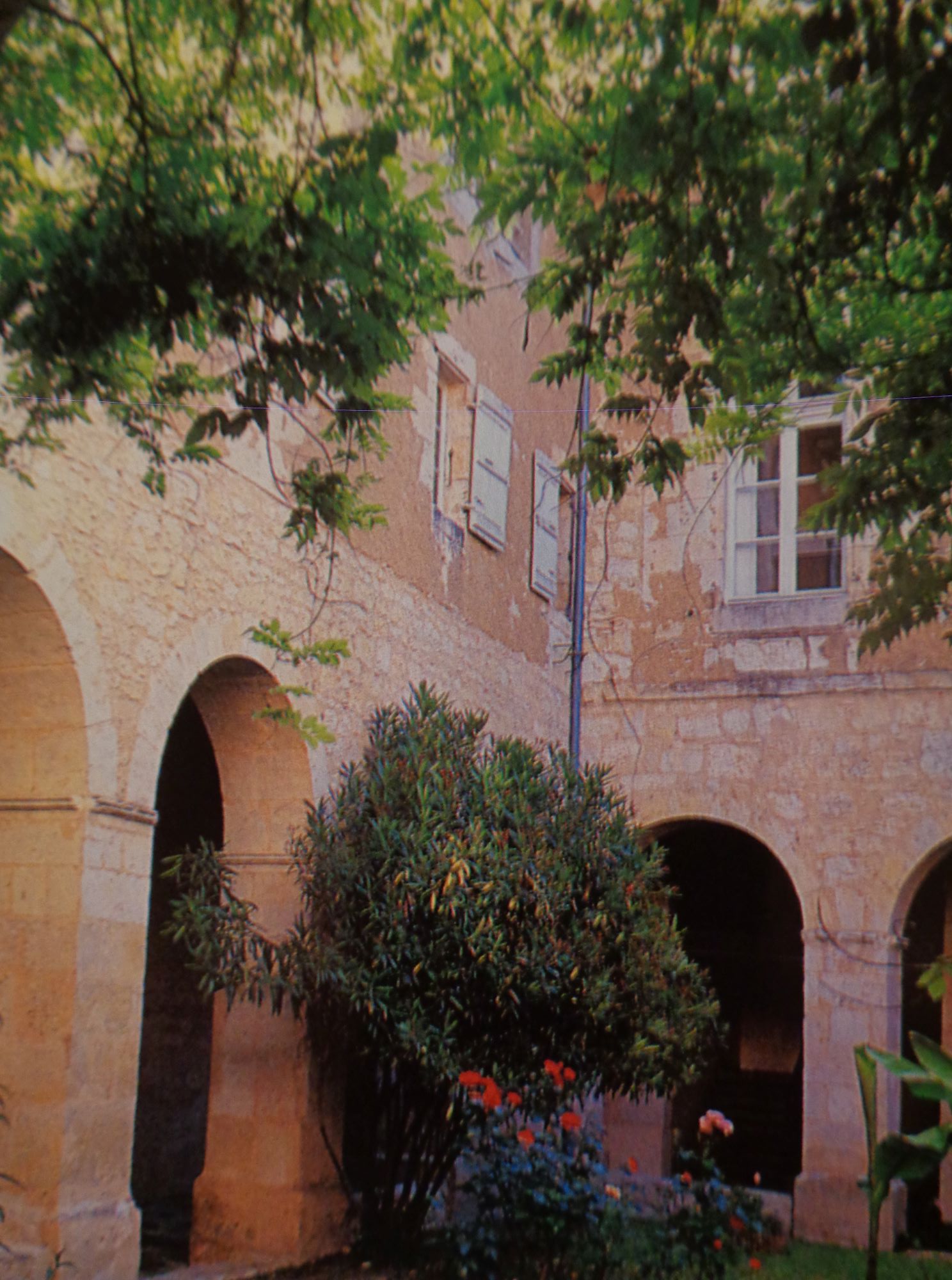
The Clarrisse Convent was of the Clarisses-Urbanistes installed in the town from the 14C. Their convent destroyed during the wars of religion was rebuilt on rue Sainte-Claire in 1617. The convent was seized in 1792, during the French revolution, then transformed into a prison. It was bought in 1796 then quickly sold to the town. The sub-prefecture and the court settled there until 1820. As early as 1819, sister-teachers were succeeded: the sisters of Nevers in the 19C, the Ursulines after 1918, then the Laïques, the sisters of Sainte-Christian-de-Make in the 1940s and finally the Sisters of Providence. The buildings are distributed around an 18 arcades cloister. The chapel was located south of the main entrance on rue Sainte-Claire. From the courtyard , access the large garden, on the other side of rue Corhaut, by a vaulted brick ponceau . This vast property is currently the Catholic private school of Immaculate Conception. Pic the Cloister.
Some other things to see here, me think are : The main axis is made up of rue Nationale, and Rue Imperiale, where several mansions of the 17-18C are located, the Albinhac tower of the 13C, last of the “strong houses” of the Middle Ages, The Portal des Cordeliers, the Carmelite Church or the 16C,Holy Spirit, the 18C hospital on the site of the castle of the counts of Armagnac, the tour du Bourreau ,12C executioner’s tower, the former bastion defending the eastern part of the city ,and its illustrious room. Albinhac tour. The Bastion promenade, former southern bastion defending the main entrance of the city, transformed into a promenade planted with elks 18C, then chestnut trees, with a musical kiosk ,A large monumental staircase (1839) surmounts the white marble statue of Marshal Lannes, (1834). The northern bastion, known as “small bastion”, also placed on a promenade later replaced by homes and a square, The Halle aux grains or Halle aux wheat, now events hall, built between 1842 and 1846 on the site of the old halle and common house built in 1591 and destroyed by fire in 1840 The Diane fountain, of Roman origin, dressed in three 13C.
Most of the mansion were of nobles or wealthy bourgeois, were built in the 17-18C in a classic architecture of great sobriety. Many are only visible externally by their large entrance gate
The old castle of the counts of Armagnac, one of the best fortified in its time, occupied the west spur at the end of the city, the salle de Lesquère with tour of the 13-14C, reworked at the end of the 15C beginning of the 16C. Addition of staircase in the 17C. Construction of main body in the 18C. Château d’Aurignac current castle dates from the 18C, rebuilt on the basis of a diligent tower. Charterhouse of Arton rebuilt on an anterior building around 1870. Many architectural elements come from Aurignac castle, Cathedral Saint-Gervais and Saint-Protais, rue Fontelie. The cathedral occupies the alleged site of a Gallo-Roman temple of Cybèle. Nef, originally Romanesque and probably made for a series of cupolas, was rebuilt in 1325, then in 1540, the choir in flamboyant style. The square tower at five levels, raised in 1488. The city hall houses the Eugène-Camoreyt museum, composed of four distinct parts: on the ground floor, an ncient pharmacy reconstituted around a Renaissance fireplace, a room dedicated to Marshal Lannes, and another to Admiral Boué de Lapeyrère.
A bit of history tell us that it was the capital of the county of Armagnac, it undergoes several sieges, In 1473 an army, commanded by Cardinal d’Albi, Jouffroy, was sent by King Louis XI, sees the capitulation and death of Jean V d’Armagnac, and an almost total destruction of the city. It marks the final fall of the Counts of Armagnac by the troops of the King of France, Louis XI. It undergoes new sieges in the wars of religion: then possession of the kings of Navarre, Protestant, it must capitulate before Blaise de Monluc. The world wars ,especially that of 1914-1918, which however save Lectoure, due to its geographical situation far from military operations.
The City of Lectoure on its heritage : https://lectoure.fr/ma-commune/patrimoine-et-histoire
The official Plus Beaux Detours de France on Lectoure : https://www.plusbeauxdetours.com/tous-les-plus-beaux-detours/detour-par-lectoure-dans-le-gers/
The Gers dept 32 tourist office on Lectoure : https://www.tourisme-gers.com/en/ville-de-lectoure-lectoure-145895
The local Gers Armagnac tourist office on Lectoure : https://en.gers-armagnac.com/explorer/incontournables/lectoure-ville-deau-et-dhistoire/
There you go folks, a dandy area to explore and enjoy with the family, Memorable moments in my belle France, driving all over in my road warrior trails brings out sublime awesome spots with nice memorable family visits of yesteryear always remember and always looking forward to be back, eventually. Again hope you enjoy the post on this is Lectoure !!!! as I.
And remember, happy travels, good health, and many cheers to all !!!

 Paris1972-Versailles2003