
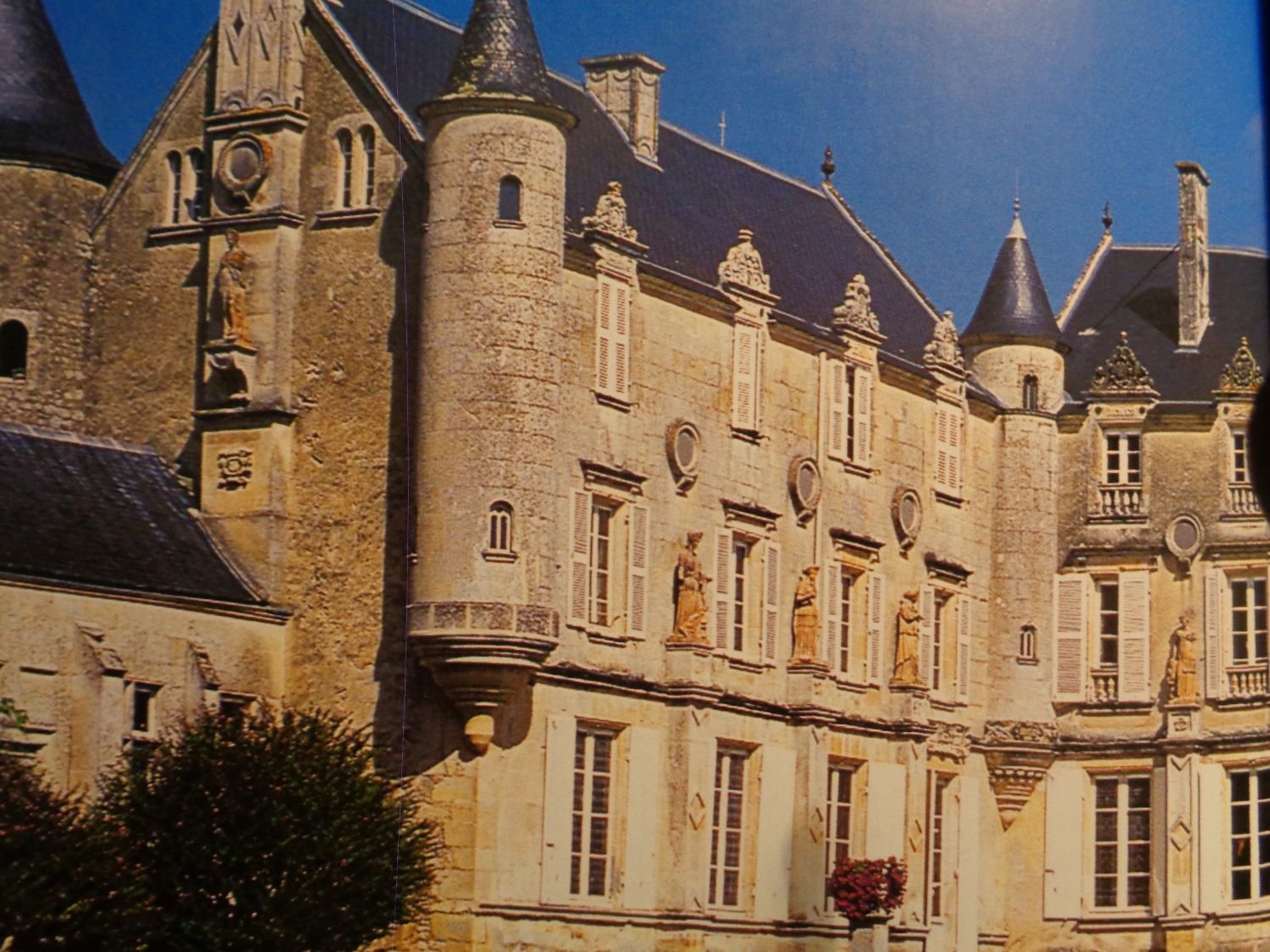
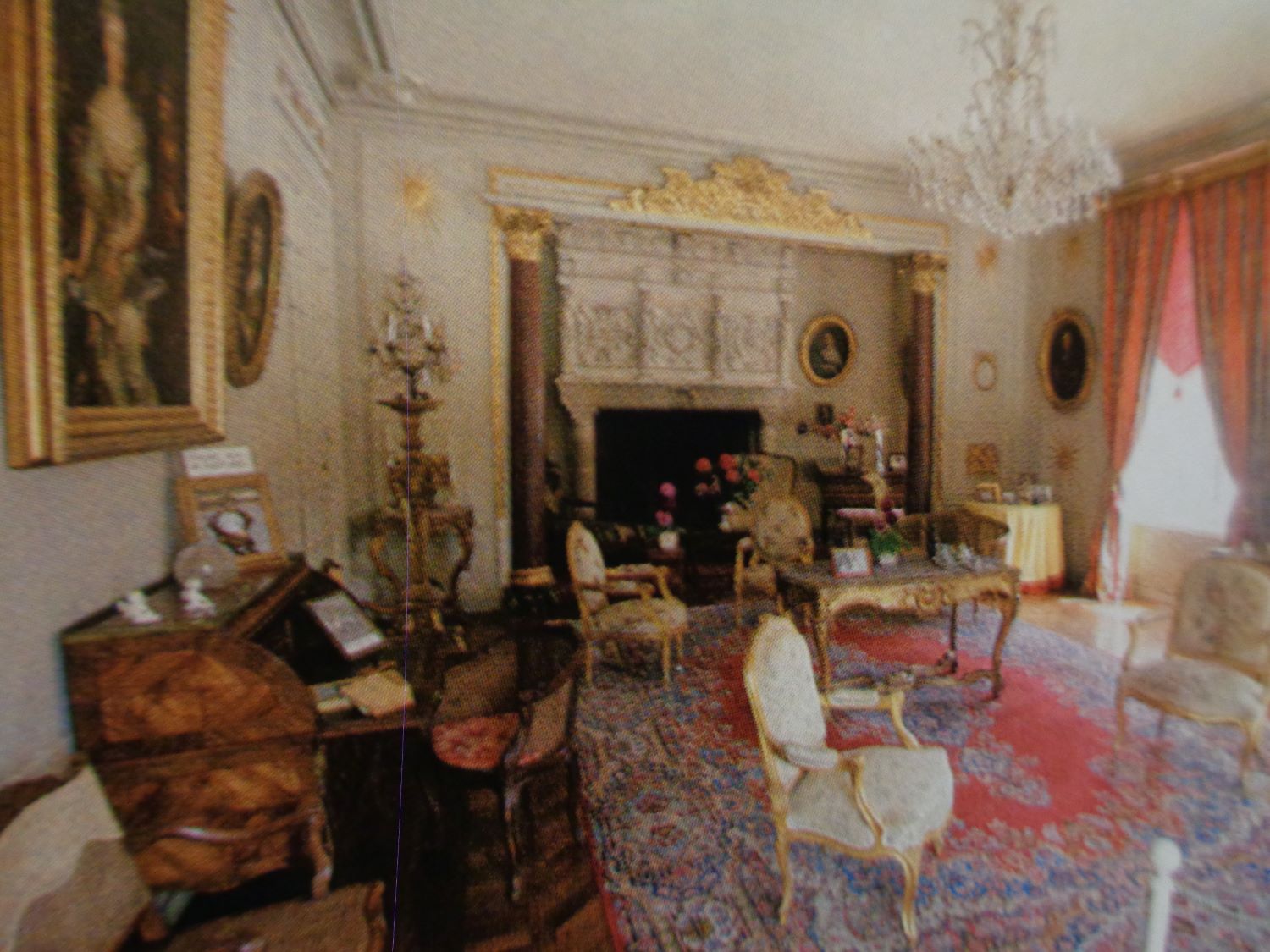
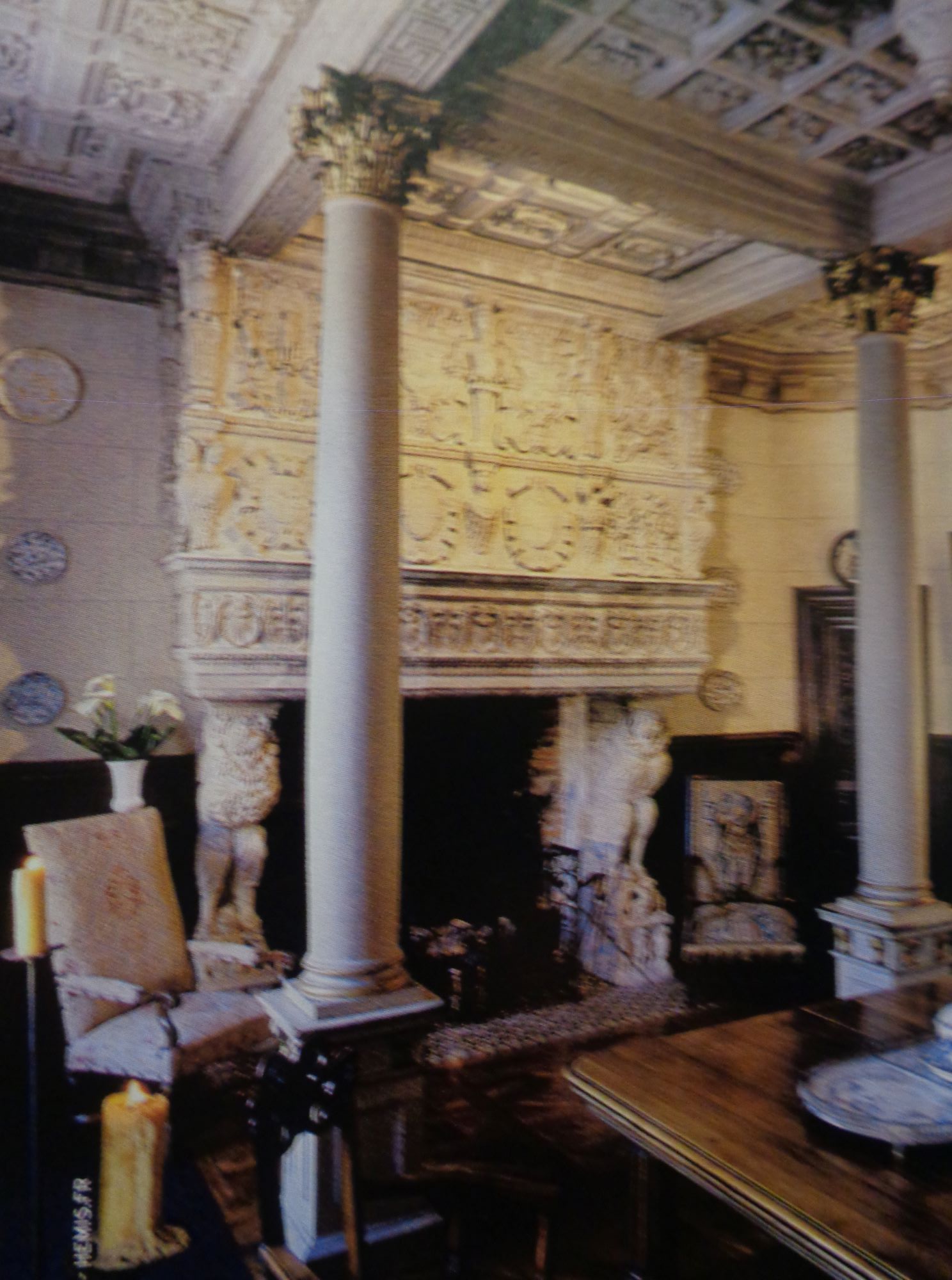
 The Château de Terre-Neuve is a privately owned castle that is still inhabited by its owner. The architecture is of a renaissance style. The visitor will be able to discover the several ceremonial rooms, the kitchen and the annexes which were transformed into a museum. Since 2018, a museum on the history of the Château and Octave de Rochebrune has been open to the public in the outbuildings of the castle. The castle is renowned for its alchemical fireplace, its coffered ceilings of carved stone, its wood panelling from the Château de Chambord, (fam were friends), the gold-leaf suns from the bedroom of King Louis XIV, and the cabinet door of King François 1st. You can admire paintings, furniture, collections and superb clothing from the 17C and 18C. Also, see pics on the Grand salon (living room) ;and salle à manger (dining room). The famous writer George Simenon lived there from 1940 to 1943. The castle opens onto a terrace that ends in a staircase leading to the grounds. From here, you can admire the façade of the dwelling, which has retained its angled plan and the main elevations, each end of which is flanked by watch-towers. In the 19C, the owners modified the façade. The windows were enlarged and pilasters topped with statues of the Muses were added. The five-hectare park surrounding the Château de Terre-Neuve is a pleasant place to stroll along the tree-lined avenues. Following the transmission by succession of the property in 2018, a museum dedicated to the Fontenioux-Rochebrune collections was created in a dependence, presenting around 300 objects (decorative arts, weapons) and presented to the public. The castle museum also receives a loan from the Dobrée Museum (see post) in Nantes, a significant part of the fund of the Department of Military Archeology of the latter from the Collections of Octave and Raoul de Rochebrune.
 Other things to see here me think are the Notre-Dame Church, rue René-Moreau (15C). Saint-Jean Church, rue des Tanneurs (15C) Several other churches and mansions The Fontaine des Quatre-Tias fountain (1542) , and the tour Rivalland (19C), The city has several bridges crossing the Vendée such as the Pont Neuf dating from 1775 It was called “Pont Royal” in 1780 and “Pont de la Fraternité” in 1793 , The pedestrian gateway on the Quai Pooey d’avant (1925) was Pont des Sardines, built In 1910, it replaced the old Sardines bridge of 1666. Viaduc formerly borrowed by the Fontenay-Bressire-Thouars train line.
A bit of history I like tell us that iIt was not until 841 that the chronicle of Nantes show of the existence of Fontenay, a town of Poitevin territory. In the Middle Ages, like other cities, it has means of defense: a strong castle, solid walls and ditches of which only vestiges remain. In the 10C, Fontenay was a hunting meeting.Louis d’Outre-Mer ( Overseas) is received there by the Count of Poitou Guillaume Tête d’Étoupe, Kings of Jerusalem then from Cyprus and Armenia , The city then became the property of Alphonse de Poitiers, brother of the king. It was since that time that it was assigned the nickname of Le-Comte. On the death of this prince on August 21, 1271, the city returned to the Crown, Philippe Le Hardi taking possession and going there the same year. , In March 1471, Louis XI erects the town as city. The Renaissance is for Fontenay-le-Comte an era of splendor with the construction of the most beautiful buildings in the city: the Château de Terre-Neuve, the mansions and the emblem of the city: the fountain of the eighty. The year 1560 marked the start of the spread of Protestantism in the country and the city is the theater of very hard struggles between Catholics and Huguenots. In the space of 25 years, the town was taken and resumed eight times, causing many damage to it. One of these siege led to the capture of the city by the Duke of Montpensier in 1575 ; Henri came to put the siege in front of Fontenay in May 1587 and seized the city, Sully accompanied him. On December 21, 1608, Richelieu was there, going to Luçon to take possession of his bishopric. Louis XIII had a short stay there in 1621, the year when the fortified castle was dismantled. The revocation of the Edict of Nantes in 1685 brought a fatal blow to the city. The flight of many Huguenots makes it lose much of its businesses and particularly that of drapery. The French revolution marks a turning point for the city. On January 27, 1790, the National Assembly decided that Fontenay-le-Comte will be the chief town of the Western department of Poitou, which will be called Vendée. 1793 did not spare the city, placed on the edge of the military Vendée against the French revolution, In 1804, Napoleon I, judging Fontenay too eccentric and wishing to pacify the Vendée, transfers the prefecture of Fontenay in the new city of Napoleon or La Roche-sur-Yon (see post). The old Fontenay-le-Peuple becomes Fontenay-le-Comte. On August 7, 1808, the emperor and his wife Joséphine de Beauharnais arrived in town, coming from Spain to leave the next day. The Duchess of Berry came to the city on July 11, 1828, then in 1832, to tried an uprising against the government of Louis-Philippe I. During ,WWII, the town will host refugees from the Ardennes. The Nazis occupied the city on June 23, 1940. The city was liberated on the night of September 1 to 2, 1944 by the FFI (French Interior Forces), General de Gaulle, President of the Fifth Republic, visit the city on 20 May 1965.
The City of Fontenay le Comte on its heritage : https://www.fontenay-le-comte.fr/vie-municipale/decouvrir-fontenay-le-comte/212-historique-et-patrimoine
The Grand Sud Fontenay le Comte tourist office on its heritage : https://en.fontenay-vendee-tourisme.com/destination/fontenay-le-comte/
The Vendée dept 85 tourist office on the castle of Fontenay le Comte : https://www.in-vendee.com/chateau-de-terre-neuve/fontenay-le-comte/pcupdl085v5033jf
There you go folks, a dandy area to explore and enjoy with the family, Memorable moments in my belle France, driving all over in my road warrior trails brings out sublime awesome spots with nice memorable family visits of yesteryear always remember and always looking forward to be back, eventually. Again hope you enjoy the post on this is Fontenay le Comte as I.
And remember, happy travels, good health, and many cheers to all !!!
Other things to see here me think are the Notre-Dame Church, rue René-Moreau (15C). Saint-Jean Church, rue des Tanneurs (15C) Several other churches and mansions The Fontaine des Quatre-Tias fountain (1542) , and the tour Rivalland (19C), The city has several bridges crossing the Vendée such as the Pont Neuf dating from 1775 It was called “Pont Royal” in 1780 and “Pont de la Fraternité” in 1793 , The pedestrian gateway on the Quai Pooey d’avant (1925) was Pont des Sardines, built In 1910, it replaced the old Sardines bridge of 1666. Viaduc formerly borrowed by the Fontenay-Bressire-Thouars train line.
A bit of history I like tell us that iIt was not until 841 that the chronicle of Nantes show of the existence of Fontenay, a town of Poitevin territory. In the Middle Ages, like other cities, it has means of defense: a strong castle, solid walls and ditches of which only vestiges remain. In the 10C, Fontenay was a hunting meeting.Louis d’Outre-Mer ( Overseas) is received there by the Count of Poitou Guillaume Tête d’Étoupe, Kings of Jerusalem then from Cyprus and Armenia , The city then became the property of Alphonse de Poitiers, brother of the king. It was since that time that it was assigned the nickname of Le-Comte. On the death of this prince on August 21, 1271, the city returned to the Crown, Philippe Le Hardi taking possession and going there the same year. , In March 1471, Louis XI erects the town as city. The Renaissance is for Fontenay-le-Comte an era of splendor with the construction of the most beautiful buildings in the city: the Château de Terre-Neuve, the mansions and the emblem of the city: the fountain of the eighty. The year 1560 marked the start of the spread of Protestantism in the country and the city is the theater of very hard struggles between Catholics and Huguenots. In the space of 25 years, the town was taken and resumed eight times, causing many damage to it. One of these siege led to the capture of the city by the Duke of Montpensier in 1575 ; Henri came to put the siege in front of Fontenay in May 1587 and seized the city, Sully accompanied him. On December 21, 1608, Richelieu was there, going to Luçon to take possession of his bishopric. Louis XIII had a short stay there in 1621, the year when the fortified castle was dismantled. The revocation of the Edict of Nantes in 1685 brought a fatal blow to the city. The flight of many Huguenots makes it lose much of its businesses and particularly that of drapery. The French revolution marks a turning point for the city. On January 27, 1790, the National Assembly decided that Fontenay-le-Comte will be the chief town of the Western department of Poitou, which will be called Vendée. 1793 did not spare the city, placed on the edge of the military Vendée against the French revolution, In 1804, Napoleon I, judging Fontenay too eccentric and wishing to pacify the Vendée, transfers the prefecture of Fontenay in the new city of Napoleon or La Roche-sur-Yon (see post). The old Fontenay-le-Peuple becomes Fontenay-le-Comte. On August 7, 1808, the emperor and his wife Joséphine de Beauharnais arrived in town, coming from Spain to leave the next day. The Duchess of Berry came to the city on July 11, 1828, then in 1832, to tried an uprising against the government of Louis-Philippe I. During ,WWII, the town will host refugees from the Ardennes. The Nazis occupied the city on June 23, 1940. The city was liberated on the night of September 1 to 2, 1944 by the FFI (French Interior Forces), General de Gaulle, President of the Fifth Republic, visit the city on 20 May 1965.
The City of Fontenay le Comte on its heritage : https://www.fontenay-le-comte.fr/vie-municipale/decouvrir-fontenay-le-comte/212-historique-et-patrimoine
The Grand Sud Fontenay le Comte tourist office on its heritage : https://en.fontenay-vendee-tourisme.com/destination/fontenay-le-comte/
The Vendée dept 85 tourist office on the castle of Fontenay le Comte : https://www.in-vendee.com/chateau-de-terre-neuve/fontenay-le-comte/pcupdl085v5033jf
There you go folks, a dandy area to explore and enjoy with the family, Memorable moments in my belle France, driving all over in my road warrior trails brings out sublime awesome spots with nice memorable family visits of yesteryear always remember and always looking forward to be back, eventually. Again hope you enjoy the post on this is Fontenay le Comte as I.
And remember, happy travels, good health, and many cheers to all !!! 
 Paris1972-Versailles2003
Looks fabulous. The French certainly do style.
LikeLiked by 1 person
YES. Thanks for stopping by. Cheers
LikeLike