Published by pedmar10
I am a lover of travels to Europe , Americas , Africa and Asia as well ,who like to share my experiences of the last 53 years with the world, visiting so far 81 countries; living in 6, working in 5, and Citizen of 4, speaking fluently 4 languages. I can deal with sports especially football/soccer and love music, arts, wine collector/drinker, and go out to restaurants, and just visit the world.
My background comes all the way from Candelaria and Pajara in Tenerife, Spain where my grandparents came from ;not knowing each other then, to Punta Brava, west of Havana, Cuba. There , my parents born in Cuba met and later on I was born there too. 100% guanche (annexed Tenerife to Spain on April 10 ,1496). I left Cuba as many have to Madrid, Spain where I lived for 4 years. Then, move to Perth Amboy ,New Jersey USA (living there 13 yrs) ; where I completed high school, became a US Citizen, learned to drive a car, and learned English. Afterward, went to the university in Florida, ERAU, and upon graduation decided to moved there to Ormond by the Sea, near Daytona Beach, finally moving North Miami, then Hialeah, then another moved to Silver Lakes division in Miramar, Broward county, Florida; in Florida I lived a total of 18 years. Finally , moved to France in 2003 ,Versailles call me for its royalty, and working in Paris was great. It was time to seek frontiers again and moved to Brech near Auray, Morbihan in Brittany , and later move to not too far Pluvigner. Total so far in France has been 20 years, and counting.
Moving average a home every 5.5 years hopefully this will be my last. Cheers
All rights reserved. No part of this blog may be reproduced or transmitted in any form or by any means or stored in a retrieval system of any nature, without the written permission of the copyright holder, me. No part of this work may be modified, without the written permission of the holder, me.No part of this work may be exposed to public view in any form or by any means, without identifying the holder as the author, and with the before mentioned permission.
View all posts by pedmar10

 Other things to see here, me think are : The Sainte-Marthe Collegiate Church consecrated in 1197, then enlarged in the 14-15C. The crypt houses the relics of Saint Marthe in a sarcophagus of the 4C. The Saint-Jacques Church, built, between 1740 and 1745 ; the city hall, built in 1648 in the Baroque style. The statue of Sainte Marthe terraging the Tarasque was produced by the sculptor Louis Le Mâle. The Saint-Gabriel Chapel ,a Romanesque chapel of the third quarter of the 12C, it constitutes one of the most beautiful examples of Provencal Romanesque art inspired by Antiquity, In Tarascon is also the Museum of Souleïado fabrics, installed in a 14C mansion in the city center. The Charles Demery manufacture continues to maintain this ancestral tradition inspired by Provençal folklore.
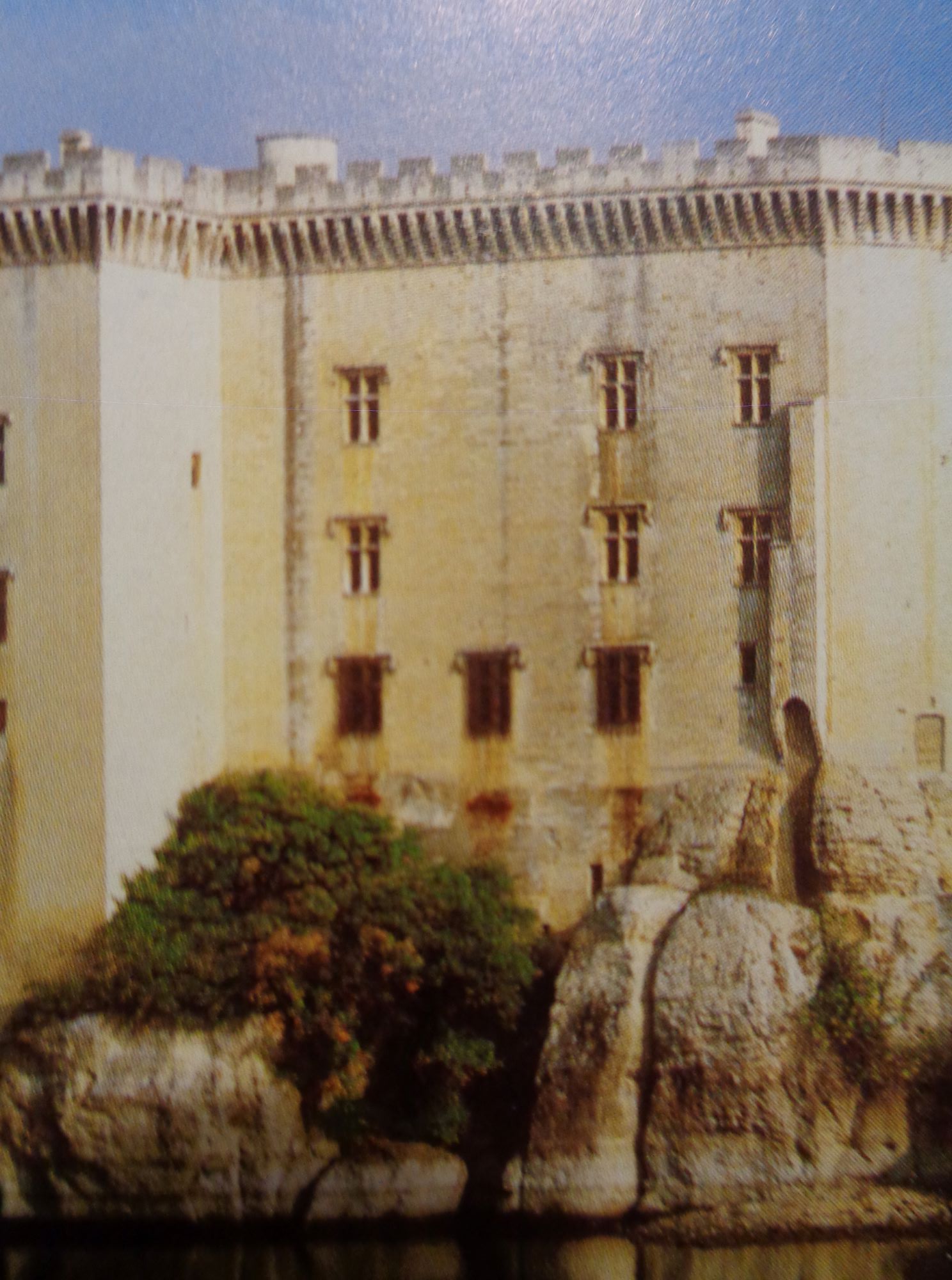
A bit of history tell us that on the death of Queen Jeanne Ire opens a succession crisis at the head of the county of Provence, the cities of the Union of Aix (1382-1387) supporting Charles de Duras against Louis I of Anjou. Tarascon hesitates before joining the Union of Aix, the community deciding in 1383, without engaging very firmly. When Louis I dies, Tarascon is also one of the first cities to receive the ambassador of his widow Marie de Blois, regent of Louis II of Anjou, in the summer of 1385, the locals are favorable to the Angevin dynasty exiled in 1385 By 1386 by letters patent, King Louis XI ordered the foundation of a collegiate church in the city of Tarascon in May 1482, During the French revolution, the castle was used to imprison the opponents of democracy while waiting to be guillotined. After the fall of Robespierre, supporters of the mountain convention are imprisoned there. On May 25, 1795, a hundred masked men entered the prison and precipitated Jacobin prisoners into the Rhône from the top of the windows, In 1797 it was royalists who were again thrown into prison, then massacred by a band of republicans revolutionaries, The town inspired other tales, in particular that of Tartarin de Tarascon, an illustrious character born under the pen of Alphonse Daudet in 1872. A house, located in the city center, was dedicated to him. A statue of Tartarin de Tarascon, in bronze, was inaugurated in November 2013, The Kilmaine district of barracks constructed between. 1718 and 1757, around a large courtyard was reserved for the cavalry, the small district was divided into two courses, one for the infantry, the another for stage stores. The buildings are on two levels, flanked by pavilions. The ground floor consists of vaulted pieces in a lowered cradle, reserved for the stables, the floor being reserved for soldiers’ chambers. The administration occupies the wing between the two districts. Passages are arranged to access the various courses. The district took the name of Kilmaine in tribute to Charles Édouard Saul Jennings of Kilmaine, general of the French revolution and Baron, born in Dublin in 1751 and died in 1799. From 1818 to the beginning of the 20C, the district was occupied by the dragons, then replaced by the 11th Hussars regiment until 1914. On June 30, 2006, it definitively closed its doors, ending the military history of Tarascon.
The town of Tarascon on its heritage : https://tarascon.fr/monuments-et-sites.html
The official Château de Tarascon : https://chateau.tarascon.fr/le-ch%C3%A2teau.html
There you go folks, another spot in my world map or rather France’s map. Glad to have found the old pictures to give credit to Tarascon in my blog; good for the memories of always. Again, hope you enjoy the post on this is Tarascon as I.
And remember, happy travels, good health, and many cheers to all !!!
Other things to see here, me think are : The Sainte-Marthe Collegiate Church consecrated in 1197, then enlarged in the 14-15C. The crypt houses the relics of Saint Marthe in a sarcophagus of the 4C. The Saint-Jacques Church, built, between 1740 and 1745 ; the city hall, built in 1648 in the Baroque style. The statue of Sainte Marthe terraging the Tarasque was produced by the sculptor Louis Le Mâle. The Saint-Gabriel Chapel ,a Romanesque chapel of the third quarter of the 12C, it constitutes one of the most beautiful examples of Provencal Romanesque art inspired by Antiquity, In Tarascon is also the Museum of Souleïado fabrics, installed in a 14C mansion in the city center. The Charles Demery manufacture continues to maintain this ancestral tradition inspired by Provençal folklore.
A bit of history tell us that on the death of Queen Jeanne Ire opens a succession crisis at the head of the county of Provence, the cities of the Union of Aix (1382-1387) supporting Charles de Duras against Louis I of Anjou. Tarascon hesitates before joining the Union of Aix, the community deciding in 1383, without engaging very firmly. When Louis I dies, Tarascon is also one of the first cities to receive the ambassador of his widow Marie de Blois, regent of Louis II of Anjou, in the summer of 1385, the locals are favorable to the Angevin dynasty exiled in 1385 By 1386 by letters patent, King Louis XI ordered the foundation of a collegiate church in the city of Tarascon in May 1482, During the French revolution, the castle was used to imprison the opponents of democracy while waiting to be guillotined. After the fall of Robespierre, supporters of the mountain convention are imprisoned there. On May 25, 1795, a hundred masked men entered the prison and precipitated Jacobin prisoners into the Rhône from the top of the windows, In 1797 it was royalists who were again thrown into prison, then massacred by a band of republicans revolutionaries, The town inspired other tales, in particular that of Tartarin de Tarascon, an illustrious character born under the pen of Alphonse Daudet in 1872. A house, located in the city center, was dedicated to him. A statue of Tartarin de Tarascon, in bronze, was inaugurated in November 2013, The Kilmaine district of barracks constructed between. 1718 and 1757, around a large courtyard was reserved for the cavalry, the small district was divided into two courses, one for the infantry, the another for stage stores. The buildings are on two levels, flanked by pavilions. The ground floor consists of vaulted pieces in a lowered cradle, reserved for the stables, the floor being reserved for soldiers’ chambers. The administration occupies the wing between the two districts. Passages are arranged to access the various courses. The district took the name of Kilmaine in tribute to Charles Édouard Saul Jennings of Kilmaine, general of the French revolution and Baron, born in Dublin in 1751 and died in 1799. From 1818 to the beginning of the 20C, the district was occupied by the dragons, then replaced by the 11th Hussars regiment until 1914. On June 30, 2006, it definitively closed its doors, ending the military history of Tarascon.
The town of Tarascon on its heritage : https://tarascon.fr/monuments-et-sites.html
The official Château de Tarascon : https://chateau.tarascon.fr/le-ch%C3%A2teau.html
There you go folks, another spot in my world map or rather France’s map. Glad to have found the old pictures to give credit to Tarascon in my blog; good for the memories of always. Again, hope you enjoy the post on this is Tarascon as I.
And remember, happy travels, good health, and many cheers to all !!! 
 Paris1972-Versailles2003