
We have driven in the area and stop by again, always worth it me think, This is memorable City of Blois in the Loir et Cher dept 41 of the Centre Val de Loire region of my belle France, There is so much to see , and did see more for you and me, I have written plenty on this castle but more is always welcome by me ! Therefore, here is my take again on the Château de Blois, part IV !!! Hope you enjoy the post as I.
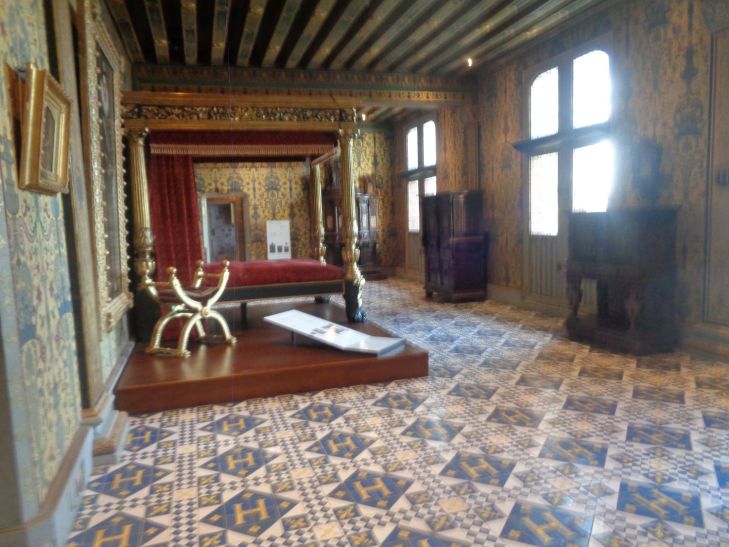
The decorations of the Chambre du Roi or king’s bedroom refer to Henry III. Often caricatured, he was concerned about the prestige of the monarchy. He therefore regulated the customs of the Court by limiting its access to the king, which sanctified him (and would serve as a model for Louis XIV’s “etiquette” at Versailles). The impressive size of the bed presented in this room as well as its decoration recall the ceremonial function of the bedroom. More than a space for rest, the king could also receive guests there, or discuss with his close advisors. Henry III surrounded himself with a group of favorites, “the mignons”, who constituted a real party, directed against the great families, which made him unpopular. Tradition says that it was in this room that the Duke of Guise was assassinated on his orders.
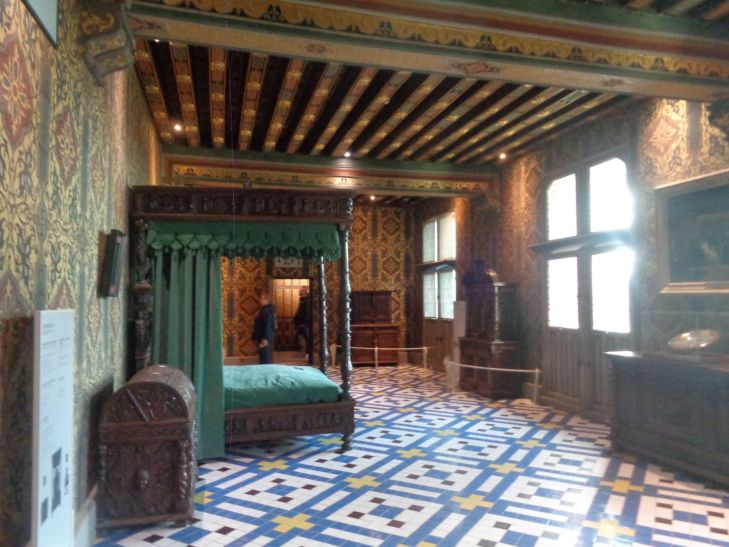
According to tradition, it was in this Chambre de la Reine or Queen’s bedroom that Queen Catherine de Medici died in 1589. The walls are decorated with the Queen’s monogram, two Cs intertwined with the H of Henry II. This room is an opportunity to recall the Queen’s day. When she gets up, she goes to Mass and then receives visitors. After dinner, the Queen receives ambassadors or distinguished guests. In the afternoon, the women watch the men’s sporting exploits and can ride horses, shoot archery or follow the hunt, but more often, they chat, play music or do needlework. Finally, the public supper is regularly followed by a concert or a ball.
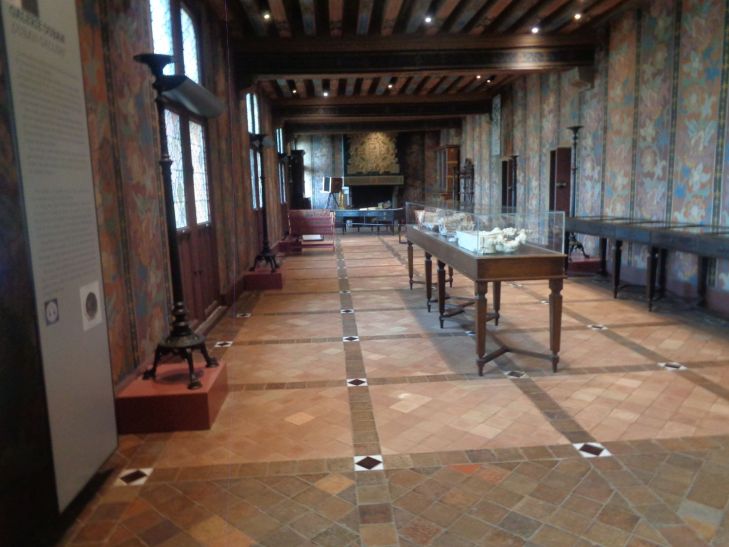
The galerie de la reine an indoor promenade, overlooking the royal gardens. Intended for receptions, it evokes the role of music, dance, and portrait galleries in the 16C and 17C. Two to three balls per week punctuate court life. After the ball, cards, checkers, chess or dice are played. Queen Catherine organizes performances of tragedies there and Henry III invites actors from the commedia dell’arte. Poets and scholars also come to the receptions; this is how Ronsard meets Cassandre Salviati in Blois, the sweetheart of his famous poem.

The salle des Valois tell us that from Louis XII to Henry IV, seven kings stayed at the Château de Blois, which was thus at the heart of French history for a century. Francis I centralized the royal administration, based on the principles of the sovereignty of the king and divine right. He outlined the absolute monarchy which was compromised by the Wars of Religion, since his son Henry II and his grandsons failed to establish a lasting peace. The works presented in this room refer to the collections of the Valois, in particular those of Francis I, patron of the arts, who over the years built up a sort of museum of the crown.

The salle Néo-Renaissance , this room presents furniture and art objects created in the 19C, in the Neo-Renaissance style. The restoration of many historical monuments inspired artists for their own creations. Many of these pieces of furniture appeared brilliantly at the salons or universal exhibitions of the time. The large vases exhibited were produced in Blois, which was a major center of earthenware production until the middle of the 20C, they take up decorative or heraldic motifs inspired by the castle.

The galerie Duban came upon in 1843, Félix Duban made the construction site of the Château de Blois a model for the restoration of other monuments in the Loire Valley. While the exterior restorations are faithful, the interior decorations are almost entirely created by Duban, who reinterprets those of the Renaissance. The architect uses photography, which had just been invented, to achieve historical verisimilitude. In this room, you will find the camera of Mieusement, a young photographer from Blois, who took more than 4,000 photos for the Commission des Monuments Historiques at the time. Copies of some of his photos are also on display, allowing you to discover the château in the 19C.
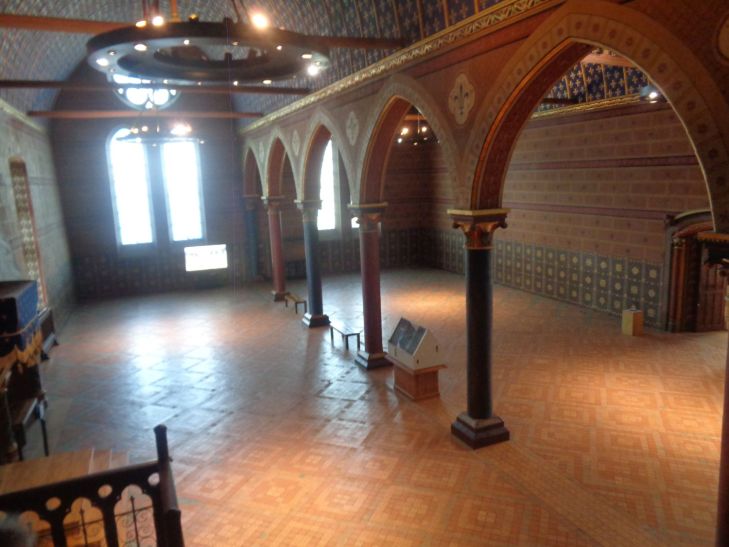
The salle des États Généraux or Hall of the Estates General is a large medieval hall, is one of the largest and oldest civil Gothic halls preserved in France. Today, in this hall, 2 giant screens with free access, present the evolution of the architecture of the castle through the centuries thanks to interactive 3D models. This large hall of the county palace was built in 1214 by Thibaut VI, last Count of Blois-Champagne. In this feudal hall, the Count held his audiences and celebrations, received tributes and dispensed justice. Because of its large dimensions, 30 meters by 18, or 540 m², it was covered by a framework made up of 2 large paneled naves, which rest in the middle on 6 pointed arches supported by 5 columns. The only Gothic window is on the west gable, the large mullioned windows were pierced in the 15C. The great medieval hall takes its name from the Estates General of the Kingdom of France which met there twice at the request of Henry III. These extraordinary assemblies bringing together the three orders of society (nobility, clergy, Third Estate) are convened by the king to deal with a political crisis, often a war, and to request military or fiscal aid. While in 1576, Henry III convened the Estates to take the lead of the Catholic League and levy a tax; in 1588-1589, he brought together the Estates in the hope of eliminating the Catholic League which he could not control.
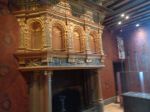
The chimenée or fireplace during the French Renaissance (from François 1er around 1515 to Henri IV around 1610) , During the 16C until the beginning of the 17C, following the Italian Wars, France, inspired by the so-called Renaissance art from Italy, looked towards Antiquity. A humanist culture, focused on mathematics and geometry, the Renaissance turned its back on the medieval eras. A decorative repertoire from Greek and Roman temples such as the Doric, Ionic and Corinthian orders, replaced medieval sacred imagery. The Renaissance period saw the construction of beautiful fireplaces in the interiors of castles; their jambs and mantels were decorated with sculptures and paintings of rare richness and elegance; Blois has several examples. Fireplaces then became real decorative objects which sit enthroned in the center of the room, combining luxury and comfort. These are all in the Château de Blois aile François Ier wing.


The official Château de Blois : https://en.chateaudeblois.fr/
The local Blois Chambord tourist office on the Château de Blois: https://www.bloischambord.co.uk/discover-the-destination/the-loire-valley-castles/blois-castle/
The official Loire Valley Centre Val de Loire region tourist office on the Château de Blois: https://www.loirevalley-france.co.uk/discover/loire-chateaux/royal-chateau-blois/
The Val de Loire Loir et Cher dept 41 tourist office on the Château de Blois: https://www.val-de-loire-41.com/les-chateaux-de-la-loire/chateau-royal-de-blois/
There you go folks, a dandy area to explore and enjoy with the family, Memorable moments in my belle France, going all over in my road warrior trails brings out sublime awesome spots with nice memorable family visits of yesteryear always remember and always looking forward to be back, eventually. Again hope you enjoy the post on the Château de Blois, part IV !!! as I.
And remember, happy travels, good health, and many cheers to all !!!

 Paris1972-Versailles2003