
 A bit on the inside from the diocese/church brochures, tell us that between pillars of arcades partly northern of the choir, it contains some bones of Saint-Bernard and Saint-Malachie, whose statues in the windows represent the busts. You have the Chapel Saint-Nicolas with statues exhibited on the altar from the 14C and 15C, The Chapel Notre-Dame , the statue is from the 15C. The Chapel of the Nativity and Saint-Antoine ,with small statues from the 15C. The south aisle and chapels see a statue of Saint Joan of Arc to the right of the chapel entrance The chapel of the coronation of the Virgin and Sainte-Barbe with parts of the altarpiece defined by the coronation of the Virgin, Saint-Pierre and Saint-Paul , five scenes from passion, donor and donor presented by Saint-John the Baptist and Sainte-Catherine. The Chapel of the Rosary has a group of statues ,and one of Saint-Bruno, The Chapel of the Annunciation and Saint-François-Xavier,see a statue of Saint Yves on console representing a winegrower, The Chapel of the Holy Trinity and Sainte-Anne also called ” Saint-Roch chapel ”, its statues are from the 14C and 16C, And the Baptismal font chapel.
Other interesting things to see, me think are the city is dominated by the remains of the feudal castle,which since 2003 has been the subject of a large restoration campaign. In the well tower, you will admire the partial reconstruction of the stone vault. By entering the imposing dungeon, the very beautiful frame and the panorama on the valley will surprise you. The remains of the château de Vignory, built at the beginning of the 11C by Guy I of Vignory. But there is currently no element of this time. The monuments visible today are more recent: the dungeon (middle 12C) which served the Lord to receive his subjects; The well (middle 15C) intended for the defense of the entrance to the village on the Chaumont side; Different ramparts and defenses on the Valnese side; The big gunboat tower (late 15C). In 1832, the village fountain and lavoir was demolished and replaced by the large hall of a new wash house completed in 1833, Vignory’s configuration recalls the medieval era. Do not hesitate to stroll through the alleys and borrow the covered passages, to the atypical washhouse with its colonnades. Discover an 18C house, the museum presenting the model of the medieval city, armaments and archaeological vestiges.
A bit of history I like tell us that the first mention of the name of Vignory dates back to 815, when Charlemagne would give the land of Vignory to the Luxeuil Abbey. It was originally a lordship dismembered by the former Bologna county. At the beginning of the 11C, Guy I, the first lord attested in Vignory, had the Saint-Etienne Church built, then the castle of Vignory. His son Roger de Vignory completed the construction of the church and founded the Bénédictin de Saint-Étienne priory around 1049. The village was placed under the sovereignty of the Count of Burgundy until the end of the 12C, he later passed to the county of Champagne. The town was created in 1319, after the postage conceded by Lord Jean de Dampierre. Throughout the medieval period Vignory was the most important town in the region. At the beginning of the 15C, the lordship of Vignory was mostly recovered by Jean IV de Vergy, in the 16C, this lordship belonged to the powerful family of Amboise, After the French revolution, the village declines and depopulates itself.
The official small towns of character as Vignory : https://petitescitesdecaractere.com/en/explore-petites-cites-de-caracterer/vignory
The Haute-Marne dept 52 tourist office on Vignory : https://www.bienvenue-hautemarne.fr/villes-cites-caractere/petites-cites-de-caractere/vignory/
There you go folks, another wonder to be seen, worth the detour , me think. This is wonderful quant pretty town ,it says one of the prettiest in France,and even if needed more time. Again, hope you enjoy the post on this is Vignory !!! as I
And remember, happy travels, good health ,and many cheers to all !!!
A bit on the inside from the diocese/church brochures, tell us that between pillars of arcades partly northern of the choir, it contains some bones of Saint-Bernard and Saint-Malachie, whose statues in the windows represent the busts. You have the Chapel Saint-Nicolas with statues exhibited on the altar from the 14C and 15C, The Chapel Notre-Dame , the statue is from the 15C. The Chapel of the Nativity and Saint-Antoine ,with small statues from the 15C. The south aisle and chapels see a statue of Saint Joan of Arc to the right of the chapel entrance The chapel of the coronation of the Virgin and Sainte-Barbe with parts of the altarpiece defined by the coronation of the Virgin, Saint-Pierre and Saint-Paul , five scenes from passion, donor and donor presented by Saint-John the Baptist and Sainte-Catherine. The Chapel of the Rosary has a group of statues ,and one of Saint-Bruno, The Chapel of the Annunciation and Saint-François-Xavier,see a statue of Saint Yves on console representing a winegrower, The Chapel of the Holy Trinity and Sainte-Anne also called ” Saint-Roch chapel ”, its statues are from the 14C and 16C, And the Baptismal font chapel.
Other interesting things to see, me think are the city is dominated by the remains of the feudal castle,which since 2003 has been the subject of a large restoration campaign. In the well tower, you will admire the partial reconstruction of the stone vault. By entering the imposing dungeon, the very beautiful frame and the panorama on the valley will surprise you. The remains of the château de Vignory, built at the beginning of the 11C by Guy I of Vignory. But there is currently no element of this time. The monuments visible today are more recent: the dungeon (middle 12C) which served the Lord to receive his subjects; The well (middle 15C) intended for the defense of the entrance to the village on the Chaumont side; Different ramparts and defenses on the Valnese side; The big gunboat tower (late 15C). In 1832, the village fountain and lavoir was demolished and replaced by the large hall of a new wash house completed in 1833, Vignory’s configuration recalls the medieval era. Do not hesitate to stroll through the alleys and borrow the covered passages, to the atypical washhouse with its colonnades. Discover an 18C house, the museum presenting the model of the medieval city, armaments and archaeological vestiges.
A bit of history I like tell us that the first mention of the name of Vignory dates back to 815, when Charlemagne would give the land of Vignory to the Luxeuil Abbey. It was originally a lordship dismembered by the former Bologna county. At the beginning of the 11C, Guy I, the first lord attested in Vignory, had the Saint-Etienne Church built, then the castle of Vignory. His son Roger de Vignory completed the construction of the church and founded the Bénédictin de Saint-Étienne priory around 1049. The village was placed under the sovereignty of the Count of Burgundy until the end of the 12C, he later passed to the county of Champagne. The town was created in 1319, after the postage conceded by Lord Jean de Dampierre. Throughout the medieval period Vignory was the most important town in the region. At the beginning of the 15C, the lordship of Vignory was mostly recovered by Jean IV de Vergy, in the 16C, this lordship belonged to the powerful family of Amboise, After the French revolution, the village declines and depopulates itself.
The official small towns of character as Vignory : https://petitescitesdecaractere.com/en/explore-petites-cites-de-caracterer/vignory
The Haute-Marne dept 52 tourist office on Vignory : https://www.bienvenue-hautemarne.fr/villes-cites-caractere/petites-cites-de-caractere/vignory/
There you go folks, another wonder to be seen, worth the detour , me think. This is wonderful quant pretty town ,it says one of the prettiest in France,and even if needed more time. Again, hope you enjoy the post on this is Vignory !!! as I
And remember, happy travels, good health ,and many cheers to all !!! This is Vignory !!!
This one was a while back in my road warrior tours of the quant pretty Vignory of my belle France I, again, found me older paper pictures that should be in my blog, glad to have found them, I have been all over France, but sometimes just touch base ,go on the run and lucky to be able to come back to many, but still work to do. Let me tell you about this is Vignory !!! Hope you enjoy the post as I.
The village of Vignory is located in the department of Haute-Marne No, 52, in the Grand Est region of my belle France, Small and pretty with about 230 inhabitans ; the town is 22 km from Chaumont, 35 km from Bar sur Aube, 158 km from Reims, 281 km from Versailles, and 717 km from my current house.
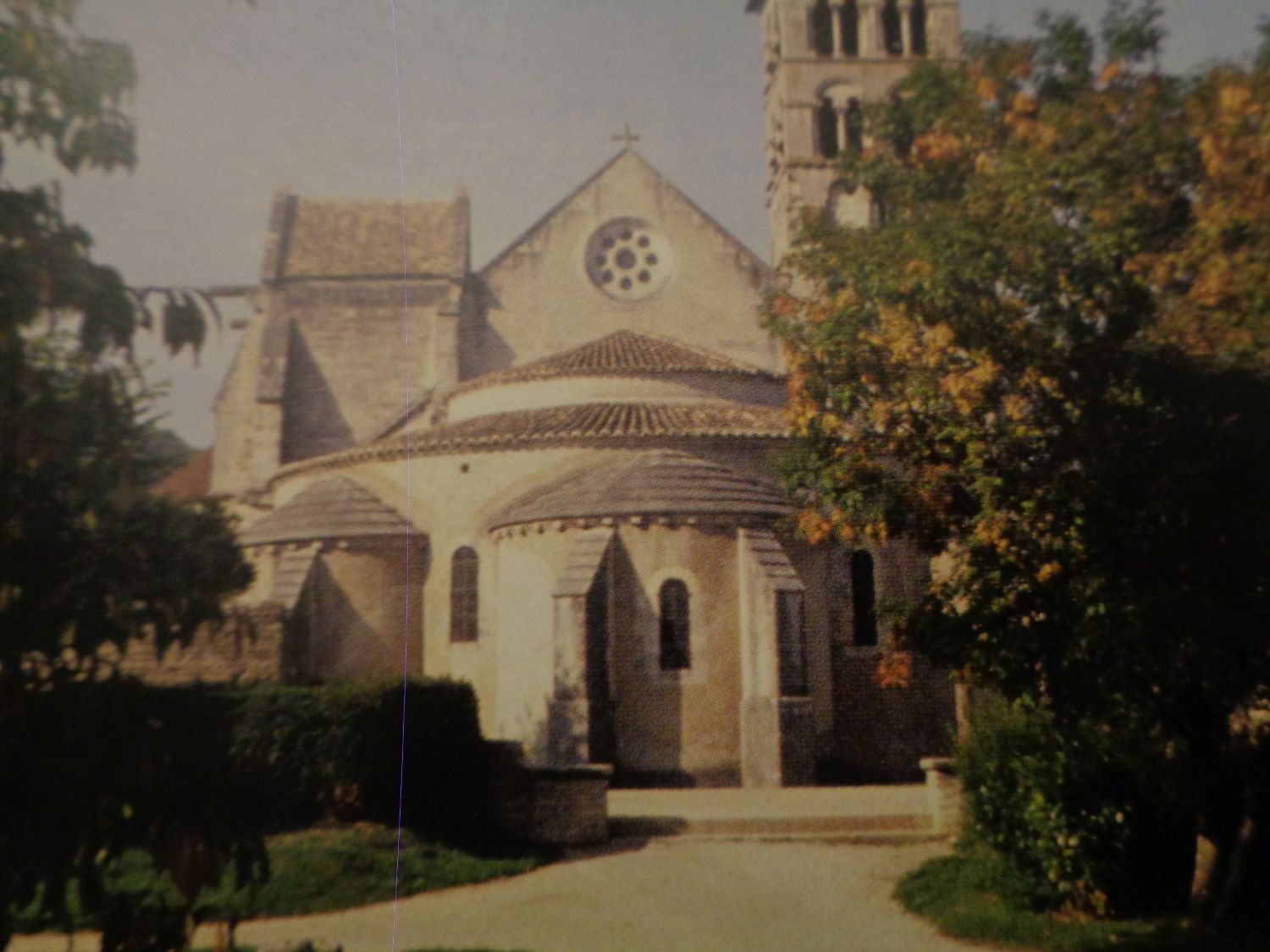
Vignory has one of the most remarkable Romanesque churches in the Grand Est region. Built in the 11C, the Saint-Etienne Church is a witness to pre-Roman architecture in eastern France and is recognized for the quality of its architecture and its furniture. The church, devoted to Saint Etienne,(St Stephens) is a rare and remarkable example of the transition of Carolingian architecture in the Romanesque style. The first stone was laid in 1032, by the will of Guy de Vignory, first lord of the village, The church is one of the rare buildings in northern France at the very beginning of the Romanesque era which has crossed history without having undergone deep reshuffles with the exception of addition, in the 15-16C of five chapels opening onto the southern aisle of the church. The Saint-Etienne Church raise your head to admire your three -level nave and its apparent frame. If you observe carefully, you will see certain capitals decorated with animals: salamanders, birds, fantastic animals, etc, The altarpiece and the altar also display leading sculptures with almond eyes, large hands, hair and overhanging drapes. The last major period of work took place in the 19C, which began in 1846 to end in 1863. The facade and the frame were completely rebuilt. Two Gothic arcades at the entrance to the nave were shaved and rebuilt in the Romanesque style according to the model of what was seen around. The big arch of the choir was drilled with windows to let the light procured by the newly created rosary.
A bit on the inside from the diocese/church brochures, tell us that between pillars of arcades partly northern of the choir, it contains some bones of Saint-Bernard and Saint-Malachie, whose statues in the windows represent the busts. You have the Chapel Saint-Nicolas with statues exhibited on the altar from the 14C and 15C, The Chapel Notre-Dame , the statue is from the 15C. The Chapel of the Nativity and Saint-Antoine ,with small statues from the 15C. The south aisle and chapels see a statue of Saint Joan of Arc to the right of the chapel entrance The chapel of the coronation of the Virgin and Sainte-Barbe with parts of the altarpiece defined by the coronation of the Virgin, Saint-Pierre and Saint-Paul , five scenes from passion, donor and donor presented by Saint-John the Baptist and Sainte-Catherine. The Chapel of the Rosary has a group of statues ,and one of Saint-Bruno, The Chapel of the Annunciation and Saint-François-Xavier,see a statue of Saint Yves on console representing a winegrower, The Chapel of the Holy Trinity and Sainte-Anne also called ” Saint-Roch chapel ”, its statues are from the 14C and 16C, And the Baptismal font chapel.
Other interesting things to see, me think are the city is dominated by the remains of the feudal castle,which since 2003 has been the subject of a large restoration campaign. In the well tower, you will admire the partial reconstruction of the stone vault. By entering the imposing dungeon, the very beautiful frame and the panorama on the valley will surprise you. The remains of the château de Vignory, built at the beginning of the 11C by Guy I of Vignory. But there is currently no element of this time. The monuments visible today are more recent: the dungeon (middle 12C) which served the Lord to receive his subjects; The well (middle 15C) intended for the defense of the entrance to the village on the Chaumont side; Different ramparts and defenses on the Valnese side; The big gunboat tower (late 15C). In 1832, the village fountain and lavoir was demolished and replaced by the large hall of a new wash house completed in 1833, Vignory’s configuration recalls the medieval era. Do not hesitate to stroll through the alleys and borrow the covered passages, to the atypical washhouse with its colonnades. Discover an 18C house, the museum presenting the model of the medieval city, armaments and archaeological vestiges.
A bit of history I like tell us that the first mention of the name of Vignory dates back to 815, when Charlemagne would give the land of Vignory to the Luxeuil Abbey. It was originally a lordship dismembered by the former Bologna county. At the beginning of the 11C, Guy I, the first lord attested in Vignory, had the Saint-Etienne Church built, then the castle of Vignory. His son Roger de Vignory completed the construction of the church and founded the Bénédictin de Saint-Étienne priory around 1049. The village was placed under the sovereignty of the Count of Burgundy until the end of the 12C, he later passed to the county of Champagne. The town was created in 1319, after the postage conceded by Lord Jean de Dampierre. Throughout the medieval period Vignory was the most important town in the region. At the beginning of the 15C, the lordship of Vignory was mostly recovered by Jean IV de Vergy, in the 16C, this lordship belonged to the powerful family of Amboise, After the French revolution, the village declines and depopulates itself.
The official small towns of character as Vignory : https://petitescitesdecaractere.com/en/explore-petites-cites-de-caracterer/vignory
The Haute-Marne dept 52 tourist office on Vignory : https://www.bienvenue-hautemarne.fr/villes-cites-caractere/petites-cites-de-caractere/vignory/
There you go folks, another wonder to be seen, worth the detour , me think. This is wonderful quant pretty town ,it says one of the prettiest in France,and even if needed more time. Again, hope you enjoy the post on this is Vignory !!! as I
And remember, happy travels, good health ,and many cheers to all !!!
A bit on the inside from the diocese/church brochures, tell us that between pillars of arcades partly northern of the choir, it contains some bones of Saint-Bernard and Saint-Malachie, whose statues in the windows represent the busts. You have the Chapel Saint-Nicolas with statues exhibited on the altar from the 14C and 15C, The Chapel Notre-Dame , the statue is from the 15C. The Chapel of the Nativity and Saint-Antoine ,with small statues from the 15C. The south aisle and chapels see a statue of Saint Joan of Arc to the right of the chapel entrance The chapel of the coronation of the Virgin and Sainte-Barbe with parts of the altarpiece defined by the coronation of the Virgin, Saint-Pierre and Saint-Paul , five scenes from passion, donor and donor presented by Saint-John the Baptist and Sainte-Catherine. The Chapel of the Rosary has a group of statues ,and one of Saint-Bruno, The Chapel of the Annunciation and Saint-François-Xavier,see a statue of Saint Yves on console representing a winegrower, The Chapel of the Holy Trinity and Sainte-Anne also called ” Saint-Roch chapel ”, its statues are from the 14C and 16C, And the Baptismal font chapel.
Other interesting things to see, me think are the city is dominated by the remains of the feudal castle,which since 2003 has been the subject of a large restoration campaign. In the well tower, you will admire the partial reconstruction of the stone vault. By entering the imposing dungeon, the very beautiful frame and the panorama on the valley will surprise you. The remains of the château de Vignory, built at the beginning of the 11C by Guy I of Vignory. But there is currently no element of this time. The monuments visible today are more recent: the dungeon (middle 12C) which served the Lord to receive his subjects; The well (middle 15C) intended for the defense of the entrance to the village on the Chaumont side; Different ramparts and defenses on the Valnese side; The big gunboat tower (late 15C). In 1832, the village fountain and lavoir was demolished and replaced by the large hall of a new wash house completed in 1833, Vignory’s configuration recalls the medieval era. Do not hesitate to stroll through the alleys and borrow the covered passages, to the atypical washhouse with its colonnades. Discover an 18C house, the museum presenting the model of the medieval city, armaments and archaeological vestiges.
A bit of history I like tell us that the first mention of the name of Vignory dates back to 815, when Charlemagne would give the land of Vignory to the Luxeuil Abbey. It was originally a lordship dismembered by the former Bologna county. At the beginning of the 11C, Guy I, the first lord attested in Vignory, had the Saint-Etienne Church built, then the castle of Vignory. His son Roger de Vignory completed the construction of the church and founded the Bénédictin de Saint-Étienne priory around 1049. The village was placed under the sovereignty of the Count of Burgundy until the end of the 12C, he later passed to the county of Champagne. The town was created in 1319, after the postage conceded by Lord Jean de Dampierre. Throughout the medieval period Vignory was the most important town in the region. At the beginning of the 15C, the lordship of Vignory was mostly recovered by Jean IV de Vergy, in the 16C, this lordship belonged to the powerful family of Amboise, After the French revolution, the village declines and depopulates itself.
The official small towns of character as Vignory : https://petitescitesdecaractere.com/en/explore-petites-cites-de-caracterer/vignory
The Haute-Marne dept 52 tourist office on Vignory : https://www.bienvenue-hautemarne.fr/villes-cites-caractere/petites-cites-de-caractere/vignory/
There you go folks, another wonder to be seen, worth the detour , me think. This is wonderful quant pretty town ,it says one of the prettiest in France,and even if needed more time. Again, hope you enjoy the post on this is Vignory !!! as I
And remember, happy travels, good health ,and many cheers to all !!! 
 Paris1972-Versailles2003