
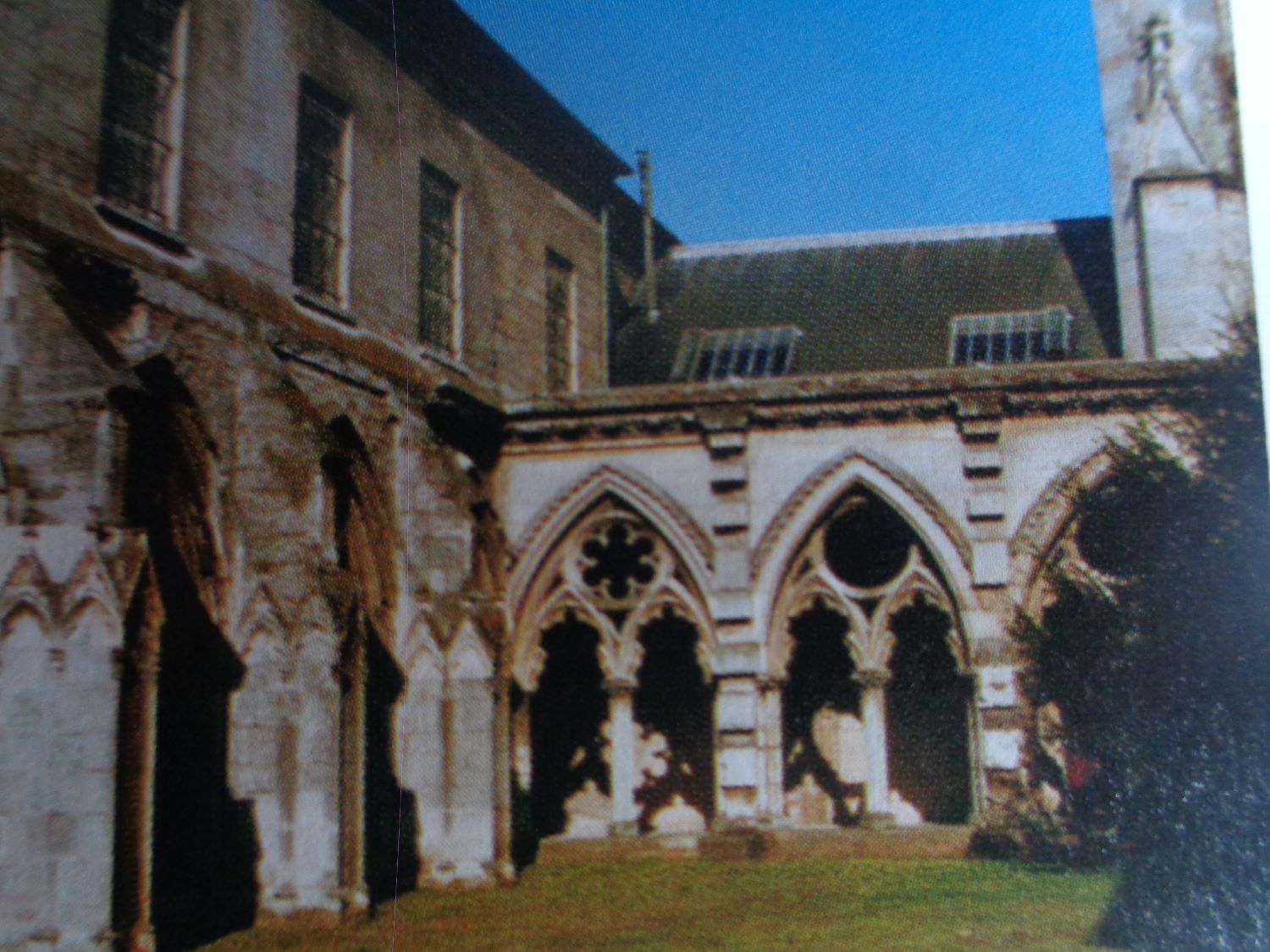
 The Saint-Léger abbey is a former abbey of secular canons and then regular a first chapel is raised in memory of the Bishop of Autun in a suburb of Soissons after his death, massacred on the orders of Ebroin, in 678. The presence of an abbey of secular canons in Soissons has been known for 1070. An abbey of regular canons is founded in 1139 under the impetus of canons from the Saint-Nicolas d’Arrouaise abbey near Arras. The Saint-Léger abbey was founded in 1152 following this donation. A Romanesque crypt built around 1100 remains under the Gothic church. The Hundred Years War was fatal for the abbey Repairs were made at the end of the 15C and at the beginning of the 16C. The abbey was put into a wait unusued in 1520. The church was dedicated in 1545. Soissons was occupied by the Protestants in 1567-1568. The nave and the facade were demolished by the Protestants in 1567. They were rebuilt at the end of the 16C and the 17C. The abbey was attached to the Congregation of France in 1660. The convent buildings were rebuilt. The abbey was sold to a wine merchant in 1791. It was then occupied by housing to the Second Empire when it was bought by Bishop Paul-Armand Cardon de Garsignies. The paintings of the crypt are restored, the nave and the bell tower of the church, as well as the cloister, were hard affected by the bombings of the Great War or WWI.
 A bit of history I like condense because huge here ,me think, It tell us that the city became the first capital of the kingdom of the Franks after the siege and the victory in 486 of Clovis on the army of General Romain Syagrius , Soissons, episcopal city, becomes the capital of Neustria under the reign of Clotaire I and his region is the scene of periodic clashes between Neustria and Austrasia. In 752, Pépin le Bref was proclaimed king and sacred to Soissons by Saint Boniface. In 768, on the death of Pépin le Bref, Carloman climbed on the throne of the frank kingdom shared with his brother Charles proclaimed in Noyon. On May 21, 1414, the city of Soissons, was taken by storm by the royal army after a siege, led by King Charles VI in person. During the wars of religion, the city was taken by the Protestants in 1567, which caused damage, in particular with religious buildings under the Old Regime (monarchy), Soissons is the chief town of a generality: the intendant sits in the Hotel de l’Intendance, current City/town hall. During the French revolution, Notre-Dame Abbey was destroyed, while it was one of the greatest convents of women in northern France. There are only two Romanesque style arcs, visible near the Saint-Pierre Church today. This abbey reliquary of the city, preserved at the Museum of the Saint-Léger church. In 1792, 20,000 French revolutionary soldiers arrived in the city (which had 8,000 inhabitants at the time), and hunted the canons of the Saint-Jean-des-Vignes Abbey site, transformed into a material and food deposit . During the French campaign of 1814, the Russian troops took the city almost without fight on February 14, 1814 during the first seat of Soissons: the Russians did not leave a garrison on the spot and the French troops reinstall there little after with a Polish regiment of the Legion of the Vistula. On March 3, 1814, the city was caught between the Prussian and Russians forces during the second seat of Soissons: the city was ordered to go on September 11, 1870, during the defeat of 1870. Before its refusal, The city has been besieged and bombed by the Prussians from Belleu. The military defense system is indeed revised according to the Séré de Rivières system, with the Fort de Condé (see post), built in the surroundings close to Soissons, from 1874 to 1885, as well as the fort of Malmaison, on the Chemin des Dames. Soissons is one of the martyred cities of the Great War or WWI. On May 29, 1918 the Foreign Legion Regiment succeeded in maintaining its positions and blocking the German advance in its sector. Soissons is definitely liberated during the summer. On August 28, 1944, Soissons was liberated this time by the 7th Corps of the 1st American army.
The City of Soissons on its heritage : https://www.soissons.fr/sortir-et-bouger/culture-et-patrimoine/ciap/
The Soissons tourist office on its heritage : https://en.tourisme-soissons.com/a-territory-to-explore/heritage-enthusiasts/
The assoc friends of the abbey of Saint Jean : https://amisdesaintjeandesvignes.fr/index.php/fr/
There you go folks, another wonderful spot in my road warrior trails of my belle France, This is architecture, history and a lot more ; one of the gems of the Aisne, worth the detour , me think, Again, hope you enjoy this unique post on this is Soissons as I
And remember, happy travels , good health and many cheers to all !!!
A bit of history I like condense because huge here ,me think, It tell us that the city became the first capital of the kingdom of the Franks after the siege and the victory in 486 of Clovis on the army of General Romain Syagrius , Soissons, episcopal city, becomes the capital of Neustria under the reign of Clotaire I and his region is the scene of periodic clashes between Neustria and Austrasia. In 752, Pépin le Bref was proclaimed king and sacred to Soissons by Saint Boniface. In 768, on the death of Pépin le Bref, Carloman climbed on the throne of the frank kingdom shared with his brother Charles proclaimed in Noyon. On May 21, 1414, the city of Soissons, was taken by storm by the royal army after a siege, led by King Charles VI in person. During the wars of religion, the city was taken by the Protestants in 1567, which caused damage, in particular with religious buildings under the Old Regime (monarchy), Soissons is the chief town of a generality: the intendant sits in the Hotel de l’Intendance, current City/town hall. During the French revolution, Notre-Dame Abbey was destroyed, while it was one of the greatest convents of women in northern France. There are only two Romanesque style arcs, visible near the Saint-Pierre Church today. This abbey reliquary of the city, preserved at the Museum of the Saint-Léger church. In 1792, 20,000 French revolutionary soldiers arrived in the city (which had 8,000 inhabitants at the time), and hunted the canons of the Saint-Jean-des-Vignes Abbey site, transformed into a material and food deposit . During the French campaign of 1814, the Russian troops took the city almost without fight on February 14, 1814 during the first seat of Soissons: the Russians did not leave a garrison on the spot and the French troops reinstall there little after with a Polish regiment of the Legion of the Vistula. On March 3, 1814, the city was caught between the Prussian and Russians forces during the second seat of Soissons: the city was ordered to go on September 11, 1870, during the defeat of 1870. Before its refusal, The city has been besieged and bombed by the Prussians from Belleu. The military defense system is indeed revised according to the Séré de Rivières system, with the Fort de Condé (see post), built in the surroundings close to Soissons, from 1874 to 1885, as well as the fort of Malmaison, on the Chemin des Dames. Soissons is one of the martyred cities of the Great War or WWI. On May 29, 1918 the Foreign Legion Regiment succeeded in maintaining its positions and blocking the German advance in its sector. Soissons is definitely liberated during the summer. On August 28, 1944, Soissons was liberated this time by the 7th Corps of the 1st American army.
The City of Soissons on its heritage : https://www.soissons.fr/sortir-et-bouger/culture-et-patrimoine/ciap/
The Soissons tourist office on its heritage : https://en.tourisme-soissons.com/a-territory-to-explore/heritage-enthusiasts/
The assoc friends of the abbey of Saint Jean : https://amisdesaintjeandesvignes.fr/index.php/fr/
There you go folks, another wonderful spot in my road warrior trails of my belle France, This is architecture, history and a lot more ; one of the gems of the Aisne, worth the detour , me think, Again, hope you enjoy this unique post on this is Soissons as I
And remember, happy travels , good health and many cheers to all !!! 
 Paris1972-Versailles2003