
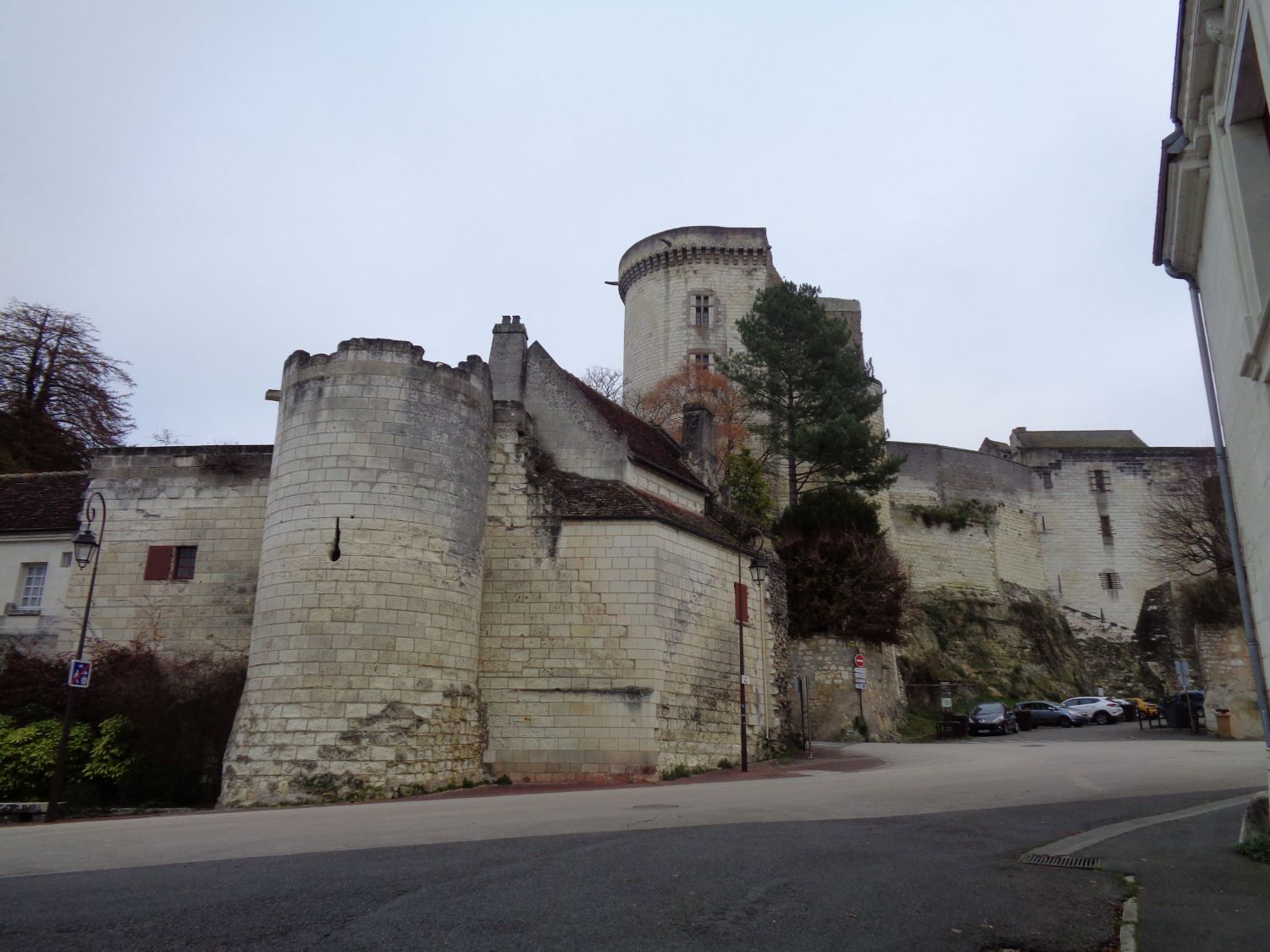
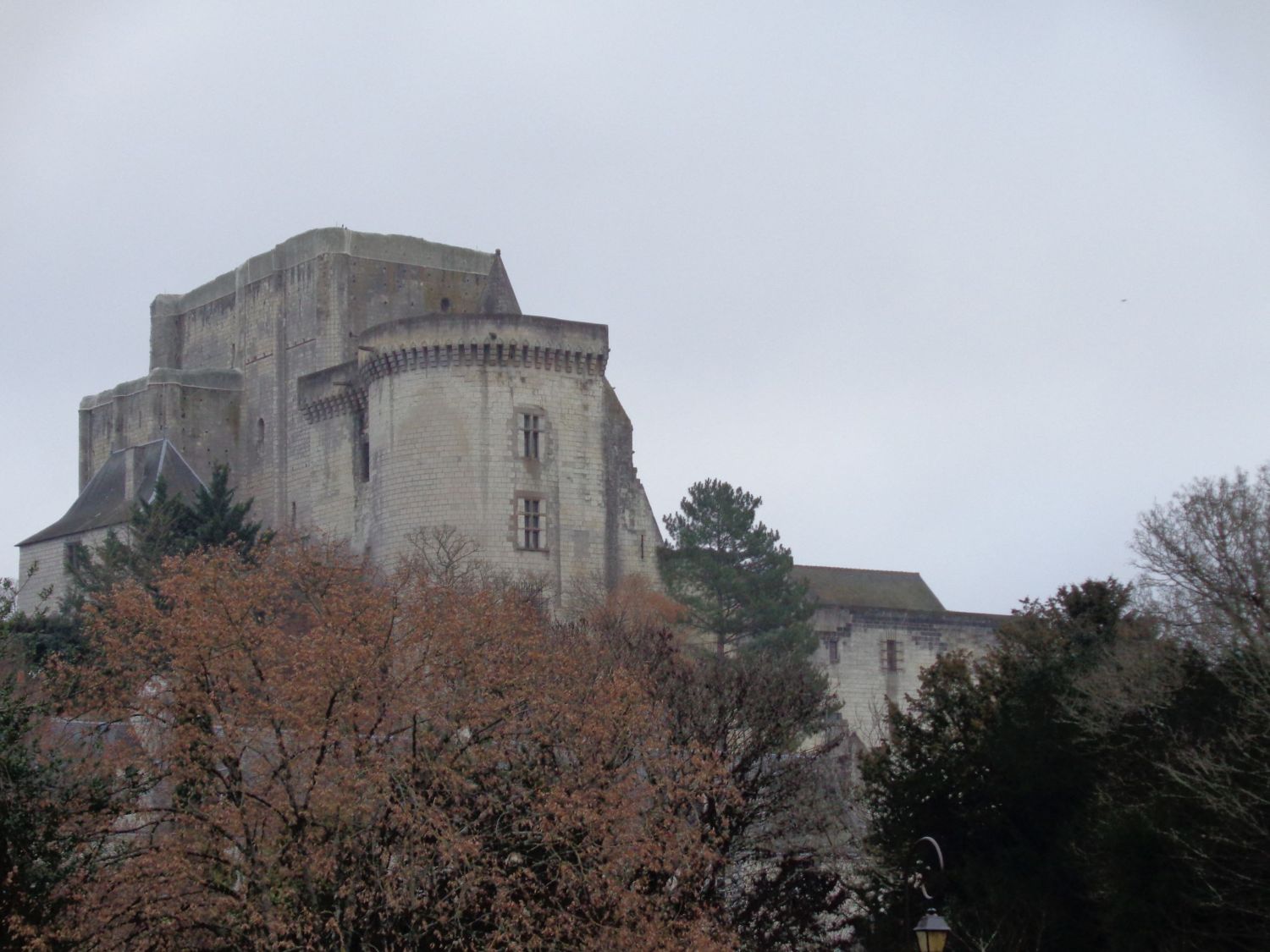
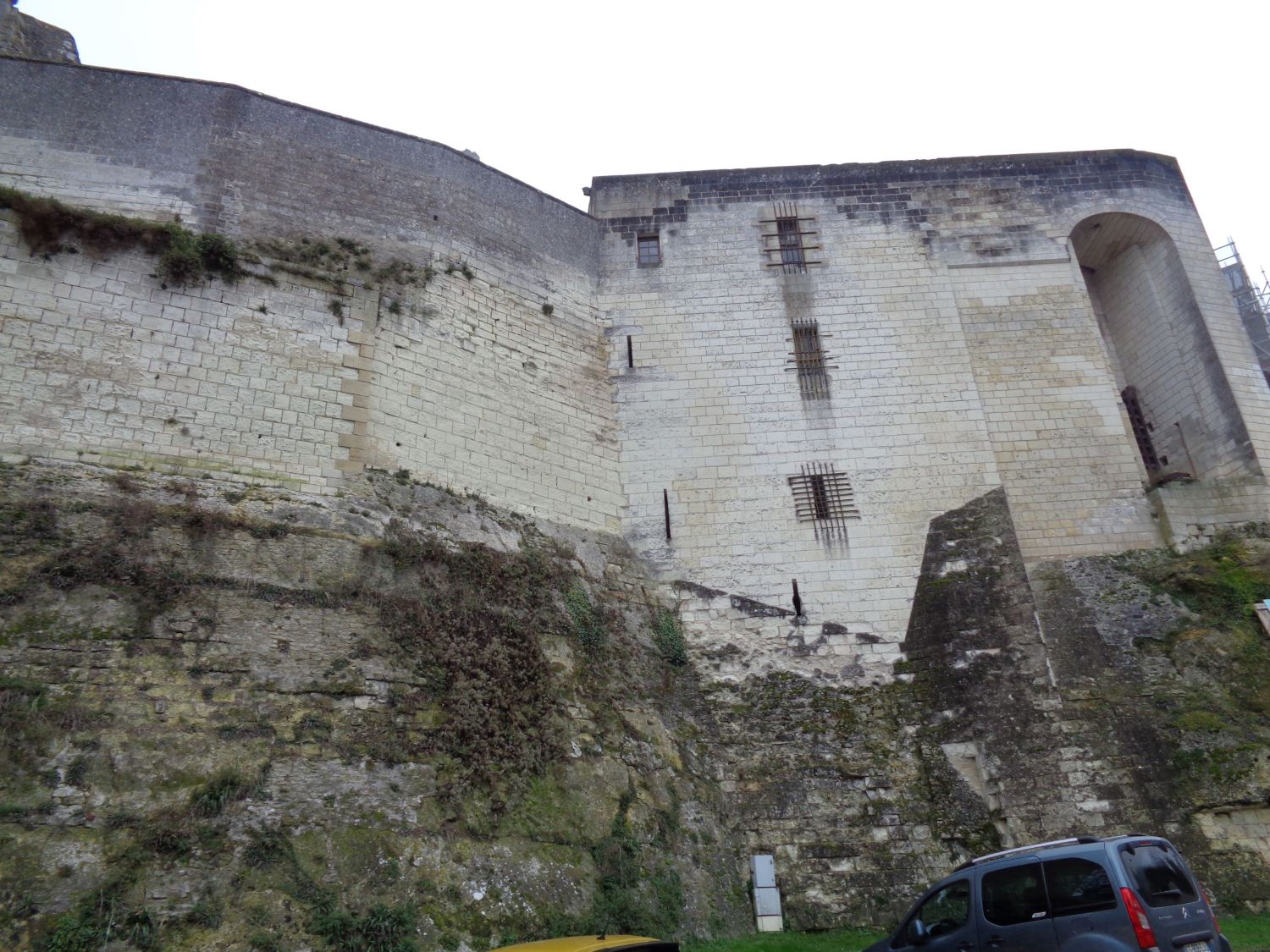
 The Royal Fortress of Loches ,includes, the Roman dungeon, remarkable for its dimensions, and for its excellent state of conservation, it is the last of the dungeons erected by Foulques Nerra, Count of Anjou, around the year 1000. The rectangular dungeon with buttresses, built in the first third of the 11C ; The dungeon is flanked by another tower called the Louis-XI tower, built during the Renaissance with a purely military vocation, it was designed to allow cannon firing from the top of its terrace. From the terrace, contemplate the meadows of the Roy, the bell tower of the Abbey of Beaulieu-lès-Loches and, in the distance, the edge of the immense state forest of Loches where the court liked to hunt. The tour maîtresse or master tower, four floors high on the ground floor, measures 36 meters high; Its ground surface is 25 × 14 meters. On the ground floor, there is a well and two ovens. The large room, or Aula, occupies the first level, the bedroom ,the second, while the third is assigned to the defense: sergeants, stocks of weapons and projectiles; the small dungeon, located on the side has three floors on the ground floor and measures 13 × 9 meters. Its thick walls reinforced by cylindrical buttresses made it a breathtaking fortress for the time. There is, at the bedroom level, the Capella, dedicated to Saint-Salbœuf. The tour carrée or square tower previously included a roof and an outdoor round way. The floors have disappeared, a metal structures allow the passage of visitors. The tour ronde or round tower, or “Louis XI”, 25 meters high, date from the 15C. The tour Martelet ,this tower has the particularity of not being “high”: you have to descend the four levels to visit it. Built in the 15C, it is 27 meters high, straddling the ditch. The Porte Royal or royal door, also called Portal du Chastel, is the only access to the castle, sometimes improperly called “Fort Saint-Ours”, from the “low” city. It is placed in the middle of the western front. The location of access to the castle has not changed since the construction of the first enclosure which crowns natural escarpments.
 The Logis Royal built on the tip of the rocky outcrop overlooking the Indre valley, the Logis Royal was one of the favorite residences of the Valois during the Hundred Years War. Charles VII erected a first main building inspired by military architecture at the end of the 14C. His successors extended it with a second building, the facade of which was decorated in a flamboyant Gothic style. Three illustrious women have marked the history of the Logis Royal: Joan of Arc, Agnès Sorel, favorite of Charles VII and Anne of Brittany. In the rowing of the rooms of this palace you observe the love that Charles VII had to his favorite, Agnès Sorel. This is also where you come across Jeanne d’Arc who came to meet this same king to convince him to brave the English to go and be crowned in Reims. Women had a preponderant role in the house. In the 14C, Anne de Bretagne stayed there regularly in an enlarged palace in which you can always discover her magnificent Gothic style oratory.
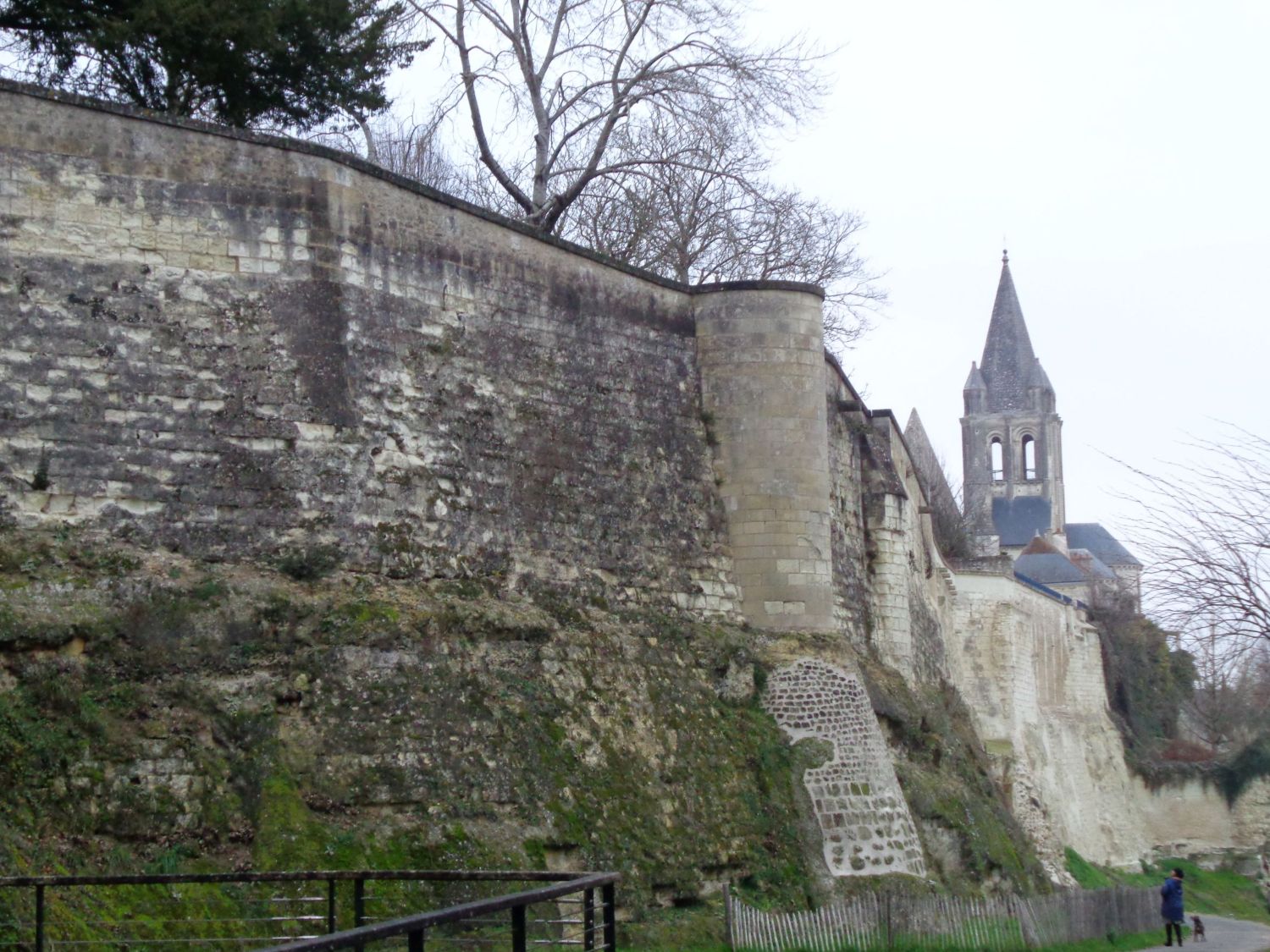
 Other building above plain are the caponnière or caponier ,a casemate located just off the dungeon. It was built around 1539 during the wars of religion, to modernize the castle and defend the ditches. The southern part of the ramparts, made up of three almond towers, was built by Henri II of England and his son, Richard Coeur de Lion. A pont-levis 14C hides between semi-circular towers 12C and almonds ,early 13C. In these towers were locked up in 1307 certain Templars, pending their trial. On the castral site is kept a 15C bombard,
A bit of history tell us that the first trace of a castle on the current site is reported by Ursus de Cahors (or Saint Ours) in 491, which evokes a castrum, it was probably a fortified camp with a wooden dungeon. Saint Ours built a mill near the monastery and lived there until his death around 510. In 742, the place was taken by the forces of Pépin and Carloman, which repress the revolt of Hunald, Duke of Aquitaine. The castle is then completely razed. Foulques Le Roux will marry Roscille de Loches which will bring him the fortress of Loches. This is how the powerful family of the Counts of Anjou will be born. The Dungeon, one of the best preserved of the Romanesque era, was built by Foulques Nerra, the fourth count of Anjou in the 12C, Henri II Plantagenêt entered into possession of the castle following his marriage to Aliénor d’Aquitaine, erects the ramparts and the moat that surround the upper town or bourg Saint-Ours, still visible today. Given to Philippe Auguste by Jean Sans Terre, in 1193, it was taken over by Richard Coeur de Lion the following year, during a three -hour siege, according to a legend. The dungeon is taken up from the Plantagenêts by Philippe Auguste in 1205 on that date, Loches joined the royal estate, and the castle will no longer know of major military confrontation. In the 13C, the Romanesque tower was surrounded by an enclosure. It was in the 14C, under the reigns of Charles V and Charles VI that the royal house (logis royal) is built, In May 1429, Charles VII who often resided at the castle in the company of Agnès Sorel, met Jeanne d’Arc there, The castle was used as a prison from the 15C by Louis XI and until 1926. Louis XVI used the castle of Loches as a prison for the English captured during the United States War of Independence, in which France participated against Great Britain. During the French revolution, the castle was looted and severely damaged. Major restorations began in 1806, but still today some parts remain in ruins.
The official Forteresse Royale de Loches : https://citeroyaleloches.fr/en
The city of Loches on its heritage : https://www.ville-loches.fr/sites-et-monuments-article-3-25-36.html
The Loches tourist office on its heritage: https://loches-valdeloire.com/en/loches-the-royal-town-2/
There you go folks, I came to the magnificent Loire valley. The Royal Fortress of Loches needs more time and we will be back. This is another must see in my belle France, and glad stop by to see it. Again, hope you enjoy the post on the Forteresse Royale de Loches !!! as I.
And remember, happy travels, good health, and many cheers to all !!!
Other building above plain are the caponnière or caponier ,a casemate located just off the dungeon. It was built around 1539 during the wars of religion, to modernize the castle and defend the ditches. The southern part of the ramparts, made up of three almond towers, was built by Henri II of England and his son, Richard Coeur de Lion. A pont-levis 14C hides between semi-circular towers 12C and almonds ,early 13C. In these towers were locked up in 1307 certain Templars, pending their trial. On the castral site is kept a 15C bombard,
A bit of history tell us that the first trace of a castle on the current site is reported by Ursus de Cahors (or Saint Ours) in 491, which evokes a castrum, it was probably a fortified camp with a wooden dungeon. Saint Ours built a mill near the monastery and lived there until his death around 510. In 742, the place was taken by the forces of Pépin and Carloman, which repress the revolt of Hunald, Duke of Aquitaine. The castle is then completely razed. Foulques Le Roux will marry Roscille de Loches which will bring him the fortress of Loches. This is how the powerful family of the Counts of Anjou will be born. The Dungeon, one of the best preserved of the Romanesque era, was built by Foulques Nerra, the fourth count of Anjou in the 12C, Henri II Plantagenêt entered into possession of the castle following his marriage to Aliénor d’Aquitaine, erects the ramparts and the moat that surround the upper town or bourg Saint-Ours, still visible today. Given to Philippe Auguste by Jean Sans Terre, in 1193, it was taken over by Richard Coeur de Lion the following year, during a three -hour siege, according to a legend. The dungeon is taken up from the Plantagenêts by Philippe Auguste in 1205 on that date, Loches joined the royal estate, and the castle will no longer know of major military confrontation. In the 13C, the Romanesque tower was surrounded by an enclosure. It was in the 14C, under the reigns of Charles V and Charles VI that the royal house (logis royal) is built, In May 1429, Charles VII who often resided at the castle in the company of Agnès Sorel, met Jeanne d’Arc there, The castle was used as a prison from the 15C by Louis XI and until 1926. Louis XVI used the castle of Loches as a prison for the English captured during the United States War of Independence, in which France participated against Great Britain. During the French revolution, the castle was looted and severely damaged. Major restorations began in 1806, but still today some parts remain in ruins.
The official Forteresse Royale de Loches : https://citeroyaleloches.fr/en
The city of Loches on its heritage : https://www.ville-loches.fr/sites-et-monuments-article-3-25-36.html
The Loches tourist office on its heritage: https://loches-valdeloire.com/en/loches-the-royal-town-2/
There you go folks, I came to the magnificent Loire valley. The Royal Fortress of Loches needs more time and we will be back. This is another must see in my belle France, and glad stop by to see it. Again, hope you enjoy the post on the Forteresse Royale de Loches !!! as I.
And remember, happy travels, good health, and many cheers to all !!! 
 Paris1972-Versailles2003