
Once again looking back into my vault found me older paper pictures that should be in my blog, after all, this is my life’s history ! This is again on Angers , a wonderful city in the dept 49 of Maine et Loire and in the region Pays de la Loire of my belle France. There are some nice buildings here that should be mentioned fully and I take this opportunity to offer me and you this new post. Therefore, here is my take on curiosities of Angers, part IV !!! Hope you enjoy the post as I.
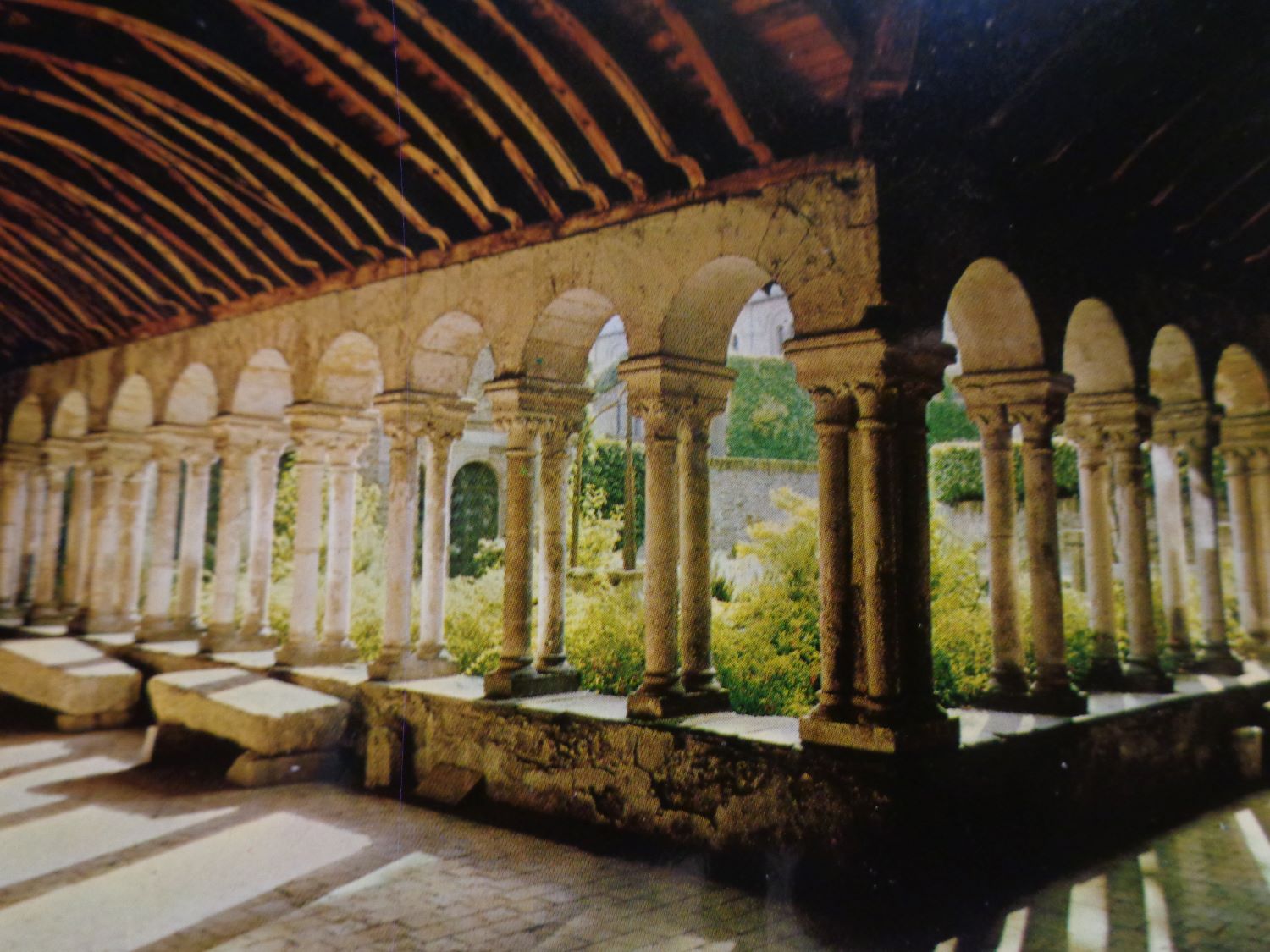
There was a hospital here ,the Saint-Jean Hospital ,one of the oldest witnesses to French hospital architecture. The Salle des Malades, a major building of Gothic art in the western France, forms with the chapel, the cloister and the granaries a remarkable civilian set, Towards 1203-1205, thirty religious,and secular brothers, led by a prior, follow the rule of Saint Augustine and set up statutes, confirmed in 1267 by Pope Clément IV, At the end of a series of trials which last more than seventy years, the parliament of Paris gives the administration of the building to four bourgeois elected by the aldermen, abolished the claustral offices and refounded the statutes in 1554. In 1639, the Daughters of Charity, take charge of the hospital service. They received the visit of their founder, Saint Vincent de Paul, in 1649, In 1797, all hospitals in the city were brought together under the municipal supervision. It was only in 1865 that all patients were transferred to a new hospital, which became the current hospital center (CHU). In 1874, the Salle des Malades,or sick room was assigned to the Museum of Antiquities, was restored around 1900 In 1968, the collections gave way to the tapestries of the “song of the world” of Jean Lurçat. In 1986, the old bathrooms and housing of the hospital’s sisters , became the Jean Lurçat contemporary tapestry museum. Today, only the Angevin Liciers workshop is in place. The Salle des Malades (sick room) was framed by two cloisters. From the Grand Cloître or big cloister, rebuilt in 1623, there remains only one gallery along the current entry. Also called cloister of the guardians in the 15C, it was supervised in 1188 by the refectory and the kitchen and a accommodation. The Petit Cloître or small cloister has only three galleries in its current appearance. Two are of a novel spirit with their arcades in the background based on twin columns. This is one of the few cloisters of this period in the region. The frame dates from the end of the 12C. The south Renaissance, surmounted by a chartrier, was built after 1534. The fourth side has never been built. The function of this cloister is not the one we know in the monasteries. It was a simple passage to cover houses in the chapel and the Salle des Malades. The latter were waiting there before being allowed to be admitted to the room and the religious stood there before taking their service with the poor. There are many buildings today to understand circulation and internal functioning. This is the case with the housing of the religious, the kitchens and the refectory. In the north, 18C buildings still remain, including the laundry room from 1752, transformed into a gymnasium.
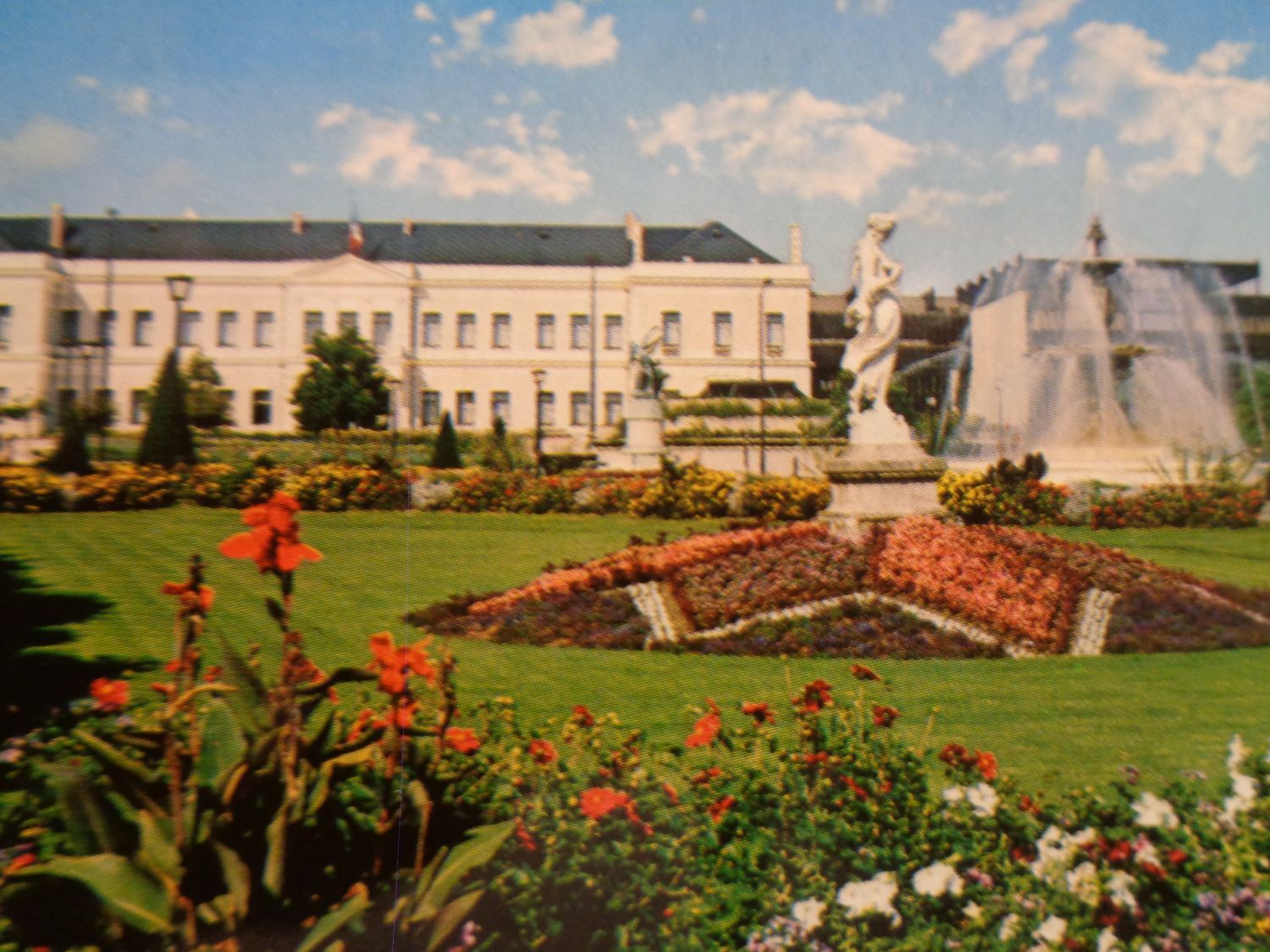
The jardin du Mail,wide promenade with a model of a fountain shown at the Universal Exposition of 1855 and a French style garden, It is located opposite the City/town hall, this garden was born around the 17C, the “Mail game”. This game consisted in pushing with a stick armed by the end of a head and a mallet a ball of boxwood that two games of players had to send each in a direction opposite by a small iron archer called “La Pass”. The mail game had illustrious followers: Henri II, prince of Condé husband of Catherine de Médicis or Louis XIII husband of Anne of Austria. The mail game was the first Angevin public game. The mail game had stopped and it becomes a promenade or walk as it is today under the name of avenue Jeanne d’Arc which extends the perspective of today’s garden, of neo-classical style of the 19C, where the corridors of greenery, the flower flowerbeds, enhance the back and forth of children and ball players. The summer flowering each year consists of 20,000 to 30,000 flowers in massifs in perfect symmetry or rub shoulders with geometry, reliefs and volumes. The musical kiosk and the statues participate in the life of the garden, an essential place for the locals and visitors alike. Back the hôtel de Ville.
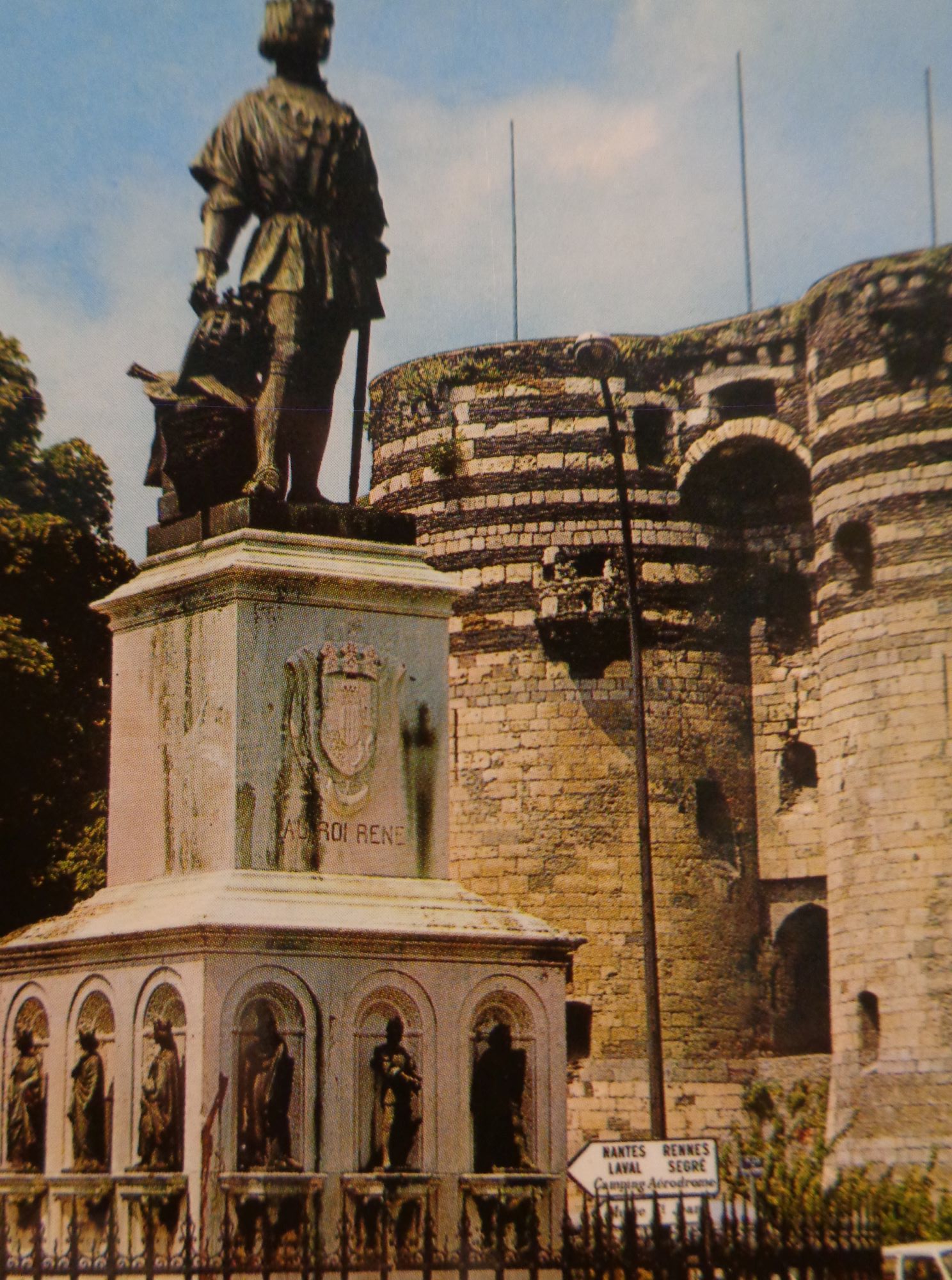
The initial statue was erected on May 31, 1853, the statue of King René was the first installed in the city. It is the work of the sculptor David d’Angers (see post) who has his gallery-museum a few steps away. She has been at the foot of the castle for over a century and a half , David of Angers has chosen to sculpt King René in the features of a young knight , René, who was born in Angers in 1409, indeed carries around the neck the necklace of l’ordre de chevalerie du Croissant or order of chivalry of the croissant which he created in 1448. He was therefore at least 39 years old. The King René married in second marriage Jeanne de Laval who was 24 years younger than him and of whom he was all his life very in love, Jeanne de Laval had her statue in Beaufort-en-Vallée, perched at the top of a 12-meter-high column. A romantic local tradition ensures that the orientation and the height of the statue owe nothing to chance: they would have been skillfully calculated so that the eyes of stone and bronze of Jeanne and René can cross forever, The sculptor wanted to deposit at the feet of King René, next to his shield, a harp, a palette and brushes, a feather and a parchment. It is a symbolic way of recalling that King René was at the same time patron, lover of the arts and artist himself. The base of the statue is decorated with twelve statuettes of characters who embody the history of the province of Anjou : Gauls Dumnacus, Roland, Robert Le Fort, Foulques Nerra, Foulques V, Henri II Plantagenet, Philippe Auguste, Charles I of Anjou, Louis Ier of Anjou, Isabelle de Lorraine (first wife of King René), Jeanne de Laval (His second wife), Marguerite d’Anjou (his daughter). The plaster of these twelve statuettes are visible at the entrance to the David-d’Angers gallery. The old statue (see pic) was located at the top of Boulevard de Gaulle, the statue of King René left his base on the night of August 5 to 6 2024. After restoration,it will join a fully renovated Place Kennedy in late 2025. Back the fortress castle.
The City of Angers on the cloister Saint Jean : https://www.angers.fr/vivre-a-angers/culture/patrimoine/angers-patrimoine/ressources/fiches-patrimoine/laissez-vous-conter-l-hopital-saint-jean/index.html
The City of Angers on the Jardin du Mail : https://www.angers.fr/vivre-a-angers/la-nature-a-angers/les-parcs-et-jardins-publics/patrimoine/parcs-et-jardins/jardin-du-mail/index.html
The official Château d’Angers on the roi René : https://www.chateau-angers.fr/en/discover/rene-the-magnificent-from-history-to-legend
There you go folks, a nice walk to see some wonderful architectural stunning building in pretty Angers. Enjoy the walk, the best way to see a place, and Angers is no difference. Again, hope you enjoy the post on the curiosities of Angers, part IV as I.
And remember, happy travels, good health, andn many cheers to all !!!

 Paris1972-Versailles2003