
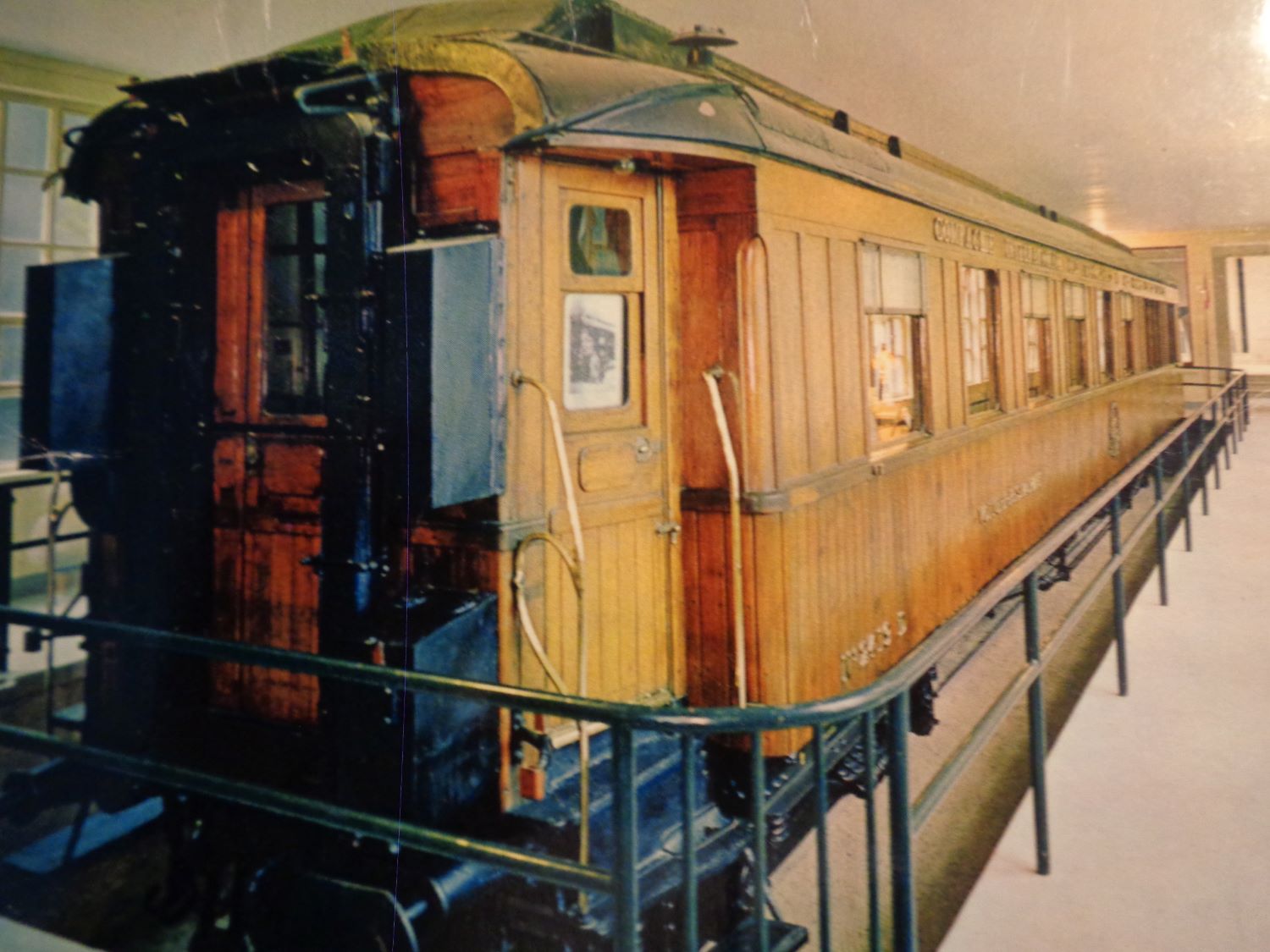
Once again looking back into my vault found me older paper picture that should be in my blog, after all, this is my life’s history ! This is on the wagon of the Armistice in historical Compiègne , a wonderful city to visit anytime. There are some nice monuments here that should be visited, too many need to be back, eventually. Again, I take this opportunity to offer me and you this new post. Therefore, here is my take on this is Compiègne !!! Hope you enjoy the post as I.
The City of Compiègne is located in the department of Oise no, 60 , in the Hauts-de-France region of my belle France. The town is located near of Paris. Royal residence from the Merovingians, it is often nicknamed “the Imperial City” because of its past closely linked to the Second Empire. In terms of distance, Compiègne is 49 km from Paris-Charles-de-Gaulle airport and 71 km from Paris, 97 km from Versailles, and 552 km from my house, The city has a train station located on the Creil line at Jeumont. It is served by the TER Paris-Saint-Quentin ,and Amiens-Compiègne trains lines. The inter-municipal transport of the Compiegnois constitute the urban and peri-urban transport network of the metro area. These never taken, I go by car and best is Indigo at 13 Rue de Bouvines, From there leave on the N31 direct to the Wagon of the Armistice.
Some of the things to see here are many but will try to condence text and give you many to chose all wonderful, The Saint-Germain Church, rue des Frères-Gréban / Square of the église Saint-Germain dedicated to Saint Germain d’Auxerre existed from the 6C, the Saint-Antoine Church, rue Saint-Antoine, the Saint-Jacques Church, Place Saint-Jacques, the Saint-Pierre des Minimes Church, rue des Minime (now exhibition hall) .Abbaye de Royallieu. Abbaye Saint-Corneille, rue Saint-Corneille, and the Chapelle du Palais Imperial. Still others are the former Hôtel-Dieu Saint-Nicolas-au-Pont, rue Jeanne-d’Arc and rue du Grand-Ferré, currently Chapelle Saint-Nicolas ; the foundation of the first hotel-Dieu de Compiègne would be due to Saint Éloi, and it would have been rebuilt by Charles II the bald., The Château de Compiègne, Place du Général-de-Gaulle. From the old medieval castle, there is only a half -ruined tower and vestiges of ramparts. The castle park is a renowned walking area. The current Château de Compiègne,houses today with the historical apartments of the 18C, the first empire and the Second Empire; the Museum of the Second Empire; The Empress Museum Eugenie and the National Museum of Car and Tourism, The City/Town Hall, Place de l’Hotel-de-Ville: the city hall of Compiègne has been in the same site since 1367, housed in a series of rented houses then bequeathed to the city by Jean Loutrel. In Flamboyant Gothic style, it combines fancy and robustness, and passes to be the most remarkable city hall in Picardy. The interior has been developed in the neo -Gothic style. The original furniture was dispersed during the French revolution but the main parts on the floor have beautiful 18C furniture. The Salon d’Honneur and the Vivenel Cabinet bring together furniture and art objects from the Antoine Vivenel collection, and thus complete the Antoine-Vivenel Museum
The Imperial theater of Compiègne, rue d’Ulm, next to the Château de Compiègne: it was built at the request of Napoleon III on the location of the old Carmel, the room is of neoclassical style and is capped thanks to an audacious metal structure. Wood is however the dominant material and ensures an excellent acoustics which makes the reputation of the theater, where nearly 900 spectators find space, The city ramparts, garden of the ramparts, impasse des ditches / rue des ditches The current ramparts replace those built in Carolingian era and were built in the 12C, the part along the Oise river having probably been completed under the reign by Philippe Auguste. The number of towers reached forty-five and flat bastions were developed in the ditches from the 15C. The tunnel which connects the garden of the ramparts to 21 rue des Domeliers (closed to the public) dates from the middle of the 16C The castle was built above the old ramparts and the old defense line is pierced by large avenues. The part along the Oise is shaved and three of the four main gates were demolished between 1732 and 1810; Only the porte de la Chapelle remains. The courtines small towers remain largely, but are generally landlocked in private gardens. The jardin des Remparts garden , gives the only opportunity to see a significant portion of it.
There are many mansions and villas too numerous to mention in one post some of these are the Villa Marcot, 16 avenue Thiers of 1907 , Vieille Cassine house at 10 rue des Lombards, and the Le Bouchon house of the 17C, 2 Place d’Austerlitz, former salt attic, 46 place du Changé since 1396 at rue Vivenel. Now a public market. Tour Jeanne-d’Arc, between rue d’Austerlitz and rue Jeanne-d’Arc: also called Big Tour du Roi or Tour Beauregard, it can be dated the first half of the 12C, and was perhaps built on Carolingian bases. It is a royal keep that was the center of the palace of the last Carolingians and the first Capetians..Joan of Arc probably fought in front of the tower, from where she holds one of her nicknames; National Haras of Compiègne, rue de la Procession since 1875 in the Grande Ecurie built by Ange-Jacques Gabriel at the foot of the ramparts, the Dominican convent, called here Jacobins, was founded in 1257 by Saint Louis in the grounds of the royal castle. The location of the church, rebuilt in 1422 after a fire and demolished under the French revolution, has been occupied by a neoclassical mansion since around 1800. It has housed the Antoine-Vivenel museum since 1952
Last as if the above is not enough ! Compiègne is a stage between via Gallia Belgica and the great French ways of the pilgrimage of Saint-James of-Compostela. The previous notable step is Saint-Quentin. Beyond Compiègne, the pilgrim could join one of the three main ways to Saint-James of Compostela: Via Turonensis more direct by Paris, via lemovicensis by Vézelay and Limoges, via Podiensis by Puy-en -Velay and Moissac.
A bit of history I like, well condence as much as possible , it is huge !! It tell us that the Faubourg of Saint-Germain seems to be the first establishment in Compiègne. The city, on its current location, is relatively recent ; it was created around the Château des Rois de France. The City was associated with the crown of France as soon as the Merovingians’ advent. The oldest act which mentioned it is a diploma of Childebert I in 547. Clotaire I died there in 561 and the Merovingian and Carolingian kings often stayed there and held many plaids and councils there. Pépin le Bref in 757, received an embassy of the Emperor Constantine V , who made him present for his oratory the first organ known in France. On January 2, 876, Charles Le Chauve ordered the construction of the Sainte-Marie collegiate church, future Saint-Corneille Abbey. The important abbey rich in insignia, then becomes the nucleus around which the city begins to develop and the king built a new palace there. Finally, Louis v the last Carolingian, who was crowned in Compiègne on June 8, 979 and who died on May 21, 987 was buried in Saint-Corneille Abbey. Hugues Capet having been elected king of the Franks in 987, the City will remain one of the favorite stays of the first Capetians, It was in Saint-Corneille that the Queen Constance d’Arles, wife of Robert Le Pieux, had her eldest son Hugues who associated with the throne will be buried in the basilica in 1025, before having been able to reign alone. Louis VI, in 1125, grants the city its first municipal charter, Saint Louis takes the jurisdiction of the priory and the Saint-Nicolas-au-Pont hospital and will make it a Hôtel-Dieu. The king, helped by his son-in-law, king of Navarre, bore the first patient there on a silk sheet in 1259. Until the end of the 14C the Kings Valois often reunited the general states in Compiègne. The kings of France continued to reside often in Compiègne and took the habit of stopping there by returning to be crowned at Reims, as did Charles VII, accompanied by Jeanne d’Arc, in 1429. During the wars of religion, Compiègne remained Catholic, faithful to royalty and benefited in return from some advantages from the sovereigns. In 1770, Louis XV and the Dauphin welcomed the Marie-Antoinette when she arrived in France. In 1790, the department of Oise was created after the dismantling of the former governments of Île-de-France and Picardy. In 1794, the sixteen carmelite sisters of Compiègne were deemed and guillotined. Georges Bernanos was inspired by their history to write his play Dialogues des Carmelites.
In 1804, the Château de Compiègne joined the imperial estate. King Charles IV of Spain, having just abdicated, was housed there by Napoleon from June 18 to September 18, 1808. In March 1810, the emperor met Marie-Louise of Austria for the first time. August 9, 1832 , the marriage of Louise-Marie d’Orléans (daughter of King Louis-Philippe I) with the King of Belgians, Léopold Ier, is celebrated at the castle. Napoleon III frequently stayed there from 1856 to 1869 to take advantage of the Compiègne forest. The city is invaded from September 2, 1914 and was occupied until September 12, where German troops folded up on the heights of Tracy-le-Mont after their defeat during the Battle of the Marne, General Pétain installs his headquarters at the castle from April 5, 1917 to March 25, 1918 On November 11, 1918, in the forest of Compiègne, in a wagon in the middle of a forest, near Rethondes, the armistice of 1918 is signed between France and Germany in the presence of Marshal Foch and General Weygand , In the same place, set up in the meantime as a clearing known as a clearing of Rethondes or clearing of the armistice, and in the same wagon as in 1918, is signed the armistice of June 22 1940 between France, represented by the delegation sent by Marshal Pétain and chaired by General Huntziger, and Germany represented by Marshal Keitel. Adolf Hitler and many German dignitaries were present the day before, an inaugural day of armistice negotiation. The creation of the Picardy region by decree of June 2, 1960, incorporates the department of Oise. On January 1, 2016, the territorial reform of 2015, Picardy merged with the Nord-Pas-de-Calais region, forming the Hauts-de-France regioin, of which the city is now part of.
The City of Compiégne on its heritage : https://www.agglo-compiegne.fr/culture-et-patrimoine
The official memorial de l’Armistice: https://armistice-museum.com/
The official Château de Compiégne : https://chateaudecompiegne.fr/en
The official museums of Compiégne : https://www.musees-compiegne.fr/
The official compiégne pierrefonds tourism on the heritage: https://www.compiegne-pierrefonds.fr/nos-incontournables/
The Oise dept 60 on its heritage : https://www.oisetourisme.com/visiter/les-incontournables/
There you go folks, a nice walk to be able to see some wonderful architectural stunning building in historical Compiégne. Enjoy the walk, the best way to see a place, no different here. Again, hope you enjoy the post on this is Compiégne !!! as I.
And remember, happy travels, good health, andn many cheers to all !!!

 Paris1972-Versailles2003