
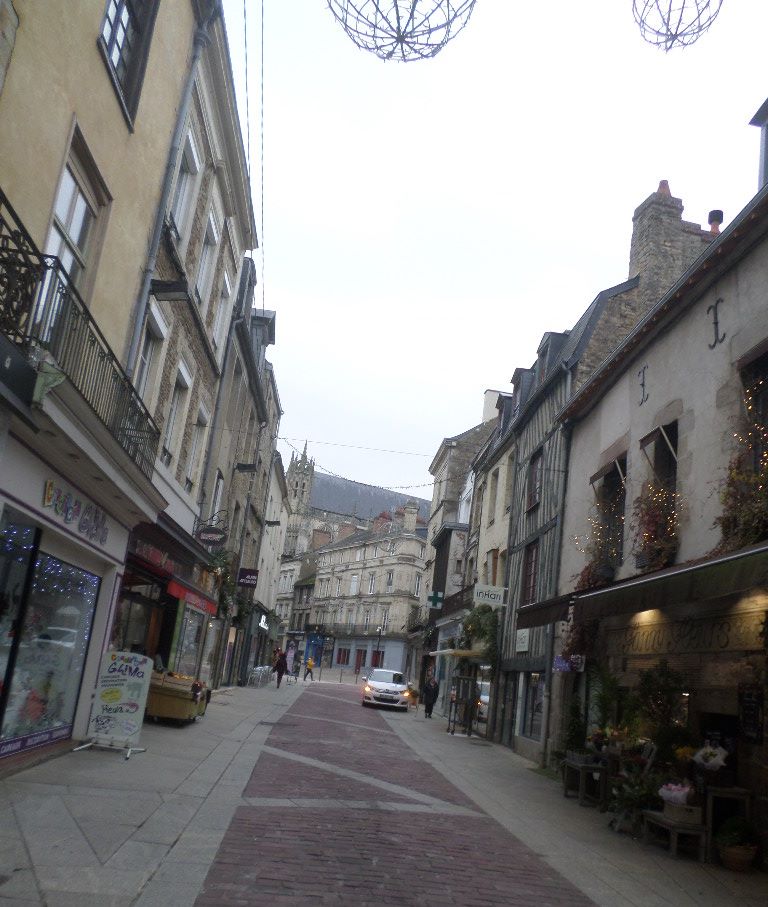
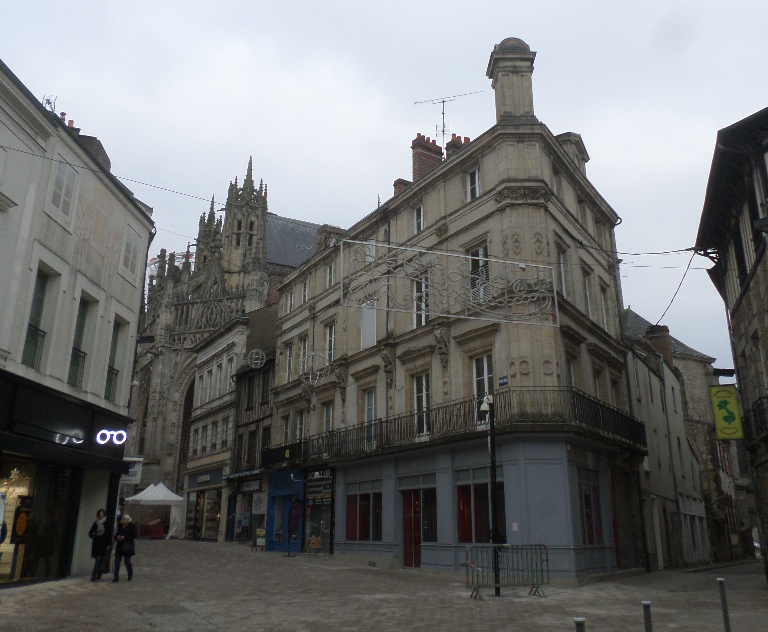
 There are plenty to see here and just gorgeous I like to mentioned them in brief. You can see the balconies of buildings of the 18C bearing the numbers 1 and 11; at No. 6, with its balconies, lintels, capitals, cornice, curvilinear pediment and skylights, built in 1858; Nos. 12 to 32 facades of the 18C, decorated with wrought iron balconies, the first and the last of which have empty niches; and the facade covered with essences of the Petit Nègre, gabled house with overhanging floors, from the 15-16C, at No. 37. At No. 38 is an old court entrance which gave access to the Tribunal du Commerce or commercial courthouse. The house n ° 44 occupied today by a pastry shop, at the corner of the rue du Bercail and Grande-Rue 160, facing the Notre-Dame Basilica, (see post) preserves the characters of a 15C building under its renovated facade The following buildings are from the 18C. The numbers 52-54 are noticeable by their balconies and the 57 by its wooden panel. The part of Grande-Rue located between this crossroads and the Saint-Léonard Church (see post) is lined with buildings of architectural interest, with beautiful granite facades with pretty wrought iron balconies. Notable buildings include No. 76 dated 1860; the 77 with its stone facade, its pilasters, its frames, its paintings of carved bays and its moldings; the sign of the charcuterie at no. 79 which proclaims in the form of rebus “It is good from the feet to the head”; the No 81 with its half-timbered facade; the former porch of No 83, which gave access to the establishment of the nuns of Providence; the No 109 with its beautiful wooden skylight and the balconies of the no. 111. It is at No. 118, that Jacques Hébert, the famous revolutionary founder of the newspaper Le Père Duchesne, was born in 1757. The two windows are lintels double brace and shield. Further at no 123,from the end of the 15C, has a door surmounted by a lintel hug and shield; on its timber-framed façade with corbelling, one can see a shield with a carved monogram representing initials and a key, perhaps the emblem of a locksmith. At Nos. 135-137, from the 15C, with a large molded beam, are timber framed and bricks with corbelling, and the door of 137 is embellished with an arch in brace and escutcheon. In the past, the houses were equipped with galleries or awnings, called “porches”, protecting the onlookers from the rain or the sun, like that of the n ° 150, from the 15-16C, with three arcades with big round piers in granite . The buildings at no 153-157 are provided with balconies and the first has a beautiful door with small panels Louis XIII; the No 156 is 15C, and the no 158, from the 16C, has a skylight, a covered terrace and an iron balcony; at no 163, an octagonal stair tower of the 15C and, at No. 171, a Virgin overlooks the crossroads of the Étaux.
Moving on to other very nice streets on our walks we come to the Rue du Bercail. At no 6 is the Tribunal de Commerce or courthouse. Built in the 15C and renovated in the 17C, the building was initially the home of a noble Normand family , the Érard de Ray, and was historically known by the name of Hôtel Erard de Ray. It was between 1636 to 1666 the seat of the General super intendant of Alençon. By an edit law of March 1710, the consular jurisdiction of Alençon was here that in 1790 became the seat of the Tribunal de Commerce. At rue du Bercail 15 you have the Hôtel Radigue at 60 meters from the Basilica of Notre-Dame.
There are plenty to see here and just gorgeous I like to mentioned them in brief. You can see the balconies of buildings of the 18C bearing the numbers 1 and 11; at No. 6, with its balconies, lintels, capitals, cornice, curvilinear pediment and skylights, built in 1858; Nos. 12 to 32 facades of the 18C, decorated with wrought iron balconies, the first and the last of which have empty niches; and the facade covered with essences of the Petit Nègre, gabled house with overhanging floors, from the 15-16C, at No. 37. At No. 38 is an old court entrance which gave access to the Tribunal du Commerce or commercial courthouse. The house n ° 44 occupied today by a pastry shop, at the corner of the rue du Bercail and Grande-Rue 160, facing the Notre-Dame Basilica, (see post) preserves the characters of a 15C building under its renovated facade The following buildings are from the 18C. The numbers 52-54 are noticeable by their balconies and the 57 by its wooden panel. The part of Grande-Rue located between this crossroads and the Saint-Léonard Church (see post) is lined with buildings of architectural interest, with beautiful granite facades with pretty wrought iron balconies. Notable buildings include No. 76 dated 1860; the 77 with its stone facade, its pilasters, its frames, its paintings of carved bays and its moldings; the sign of the charcuterie at no. 79 which proclaims in the form of rebus “It is good from the feet to the head”; the No 81 with its half-timbered facade; the former porch of No 83, which gave access to the establishment of the nuns of Providence; the No 109 with its beautiful wooden skylight and the balconies of the no. 111. It is at No. 118, that Jacques Hébert, the famous revolutionary founder of the newspaper Le Père Duchesne, was born in 1757. The two windows are lintels double brace and shield. Further at no 123,from the end of the 15C, has a door surmounted by a lintel hug and shield; on its timber-framed façade with corbelling, one can see a shield with a carved monogram representing initials and a key, perhaps the emblem of a locksmith. At Nos. 135-137, from the 15C, with a large molded beam, are timber framed and bricks with corbelling, and the door of 137 is embellished with an arch in brace and escutcheon. In the past, the houses were equipped with galleries or awnings, called “porches”, protecting the onlookers from the rain or the sun, like that of the n ° 150, from the 15-16C, with three arcades with big round piers in granite . The buildings at no 153-157 are provided with balconies and the first has a beautiful door with small panels Louis XIII; the No 156 is 15C, and the no 158, from the 16C, has a skylight, a covered terrace and an iron balcony; at no 163, an octagonal stair tower of the 15C and, at No. 171, a Virgin overlooks the crossroads of the Étaux.
Moving on to other very nice streets on our walks we come to the Rue du Bercail. At no 6 is the Tribunal de Commerce or courthouse. Built in the 15C and renovated in the 17C, the building was initially the home of a noble Normand family , the Érard de Ray, and was historically known by the name of Hôtel Erard de Ray. It was between 1636 to 1666 the seat of the General super intendant of Alençon. By an edit law of March 1710, the consular jurisdiction of Alençon was here that in 1790 became the seat of the Tribunal de Commerce. At rue du Bercail 15 you have the Hôtel Radigue at 60 meters from the Basilica of Notre-Dame.
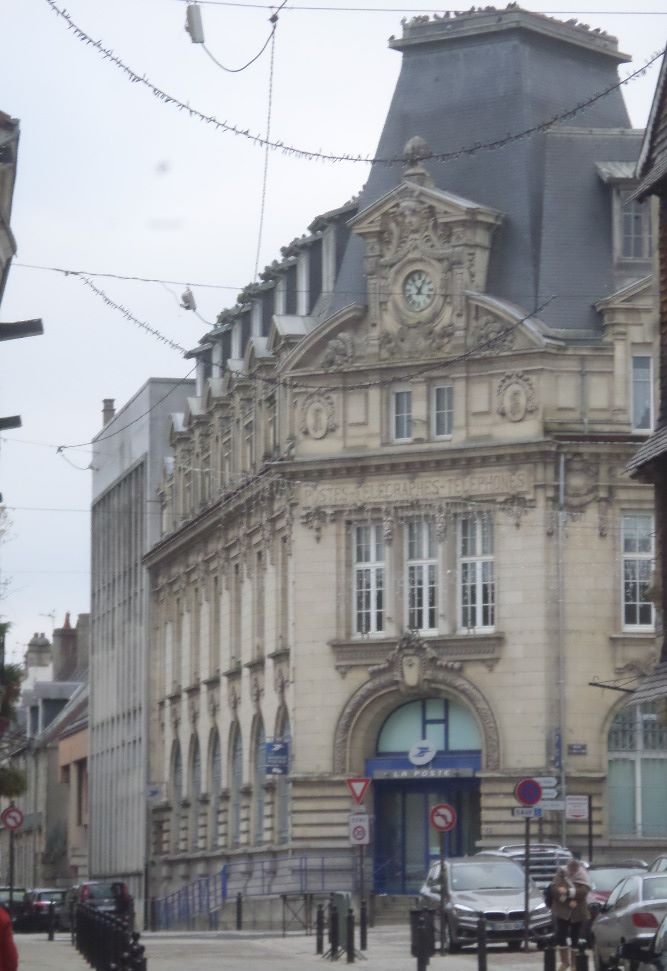
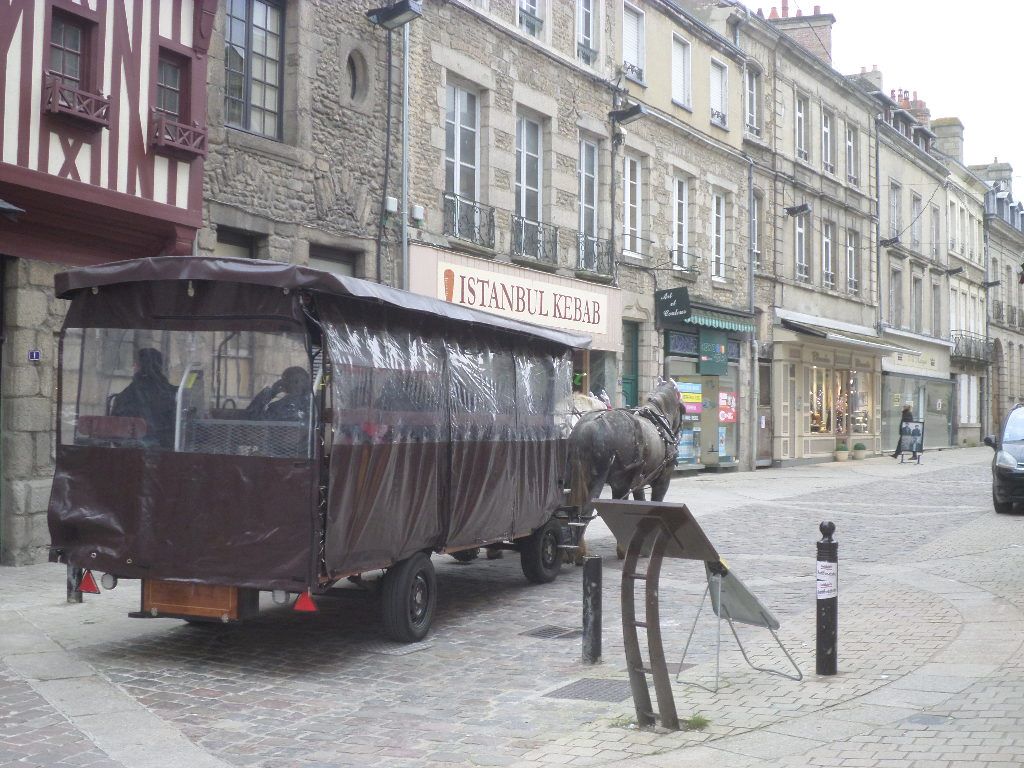 Another interesting street is that of the Rue du Jeudi (Thursday street) you can see the houses at no 42 44 dating from the 18C with a date shown on the façade of 1762. At No 31-33 also from the 18C it keeps its joinery on the first and second floor. The first floor retains balconies. At No 40 also dates from the 18C. And of course here is the post office La Poste!
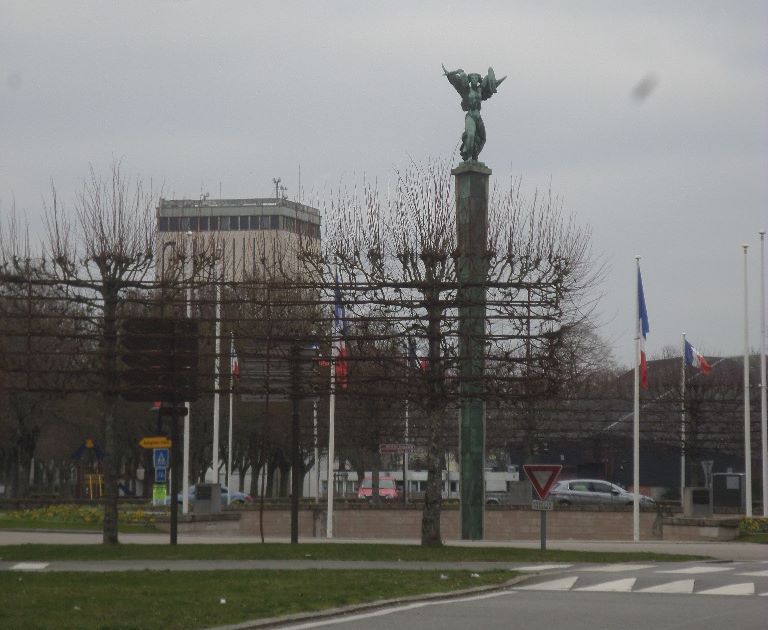
 And we have the Place du Gén De Gaulle located at the northern entrance to the city at the junction of Basingstoke, Quakenbrück and Wilson avenues, Demées and Saint-Blaise streets and boulevard de Strasbourg. Probably formed in the 17C, attested under the name of the Place de la Pyramide in 1898, it bears the name of Charles de Gaulle since 1947 and was inaugurated on the following July 14. More than half a century later, the name “Place de la Pyramide” is still used by most of the local folks.
 And lastly, the rue de la Poterne, with the Porte de la Poterne gate, destroyed in 1724, was a secondary opening pierced in a tower of the ramparts of a narrow passage, still existing, only allowing pedestrians to circulate. Quant indeed.
 The city of Alençon on its heritage: https://alencon.fr/mes-sortiesmon-temps-libre/tourisme-et-patrimoine/patrimoine/
The Alençon tourist office on its heritage: https://www.visitalencon.com/d%C3%A9couvrez-alen%C3%A7on?lang=en
There you go folks, a nice slow walk in old town Alençon, a wonderful experience indeed. Do walk my belle France and you will be enchanted , millions have! me too!!! Again, hope you enjoy this post on the streets of Alençon as I.
And, remember, happy travels, good health, and many cheers to all !!!
The city of Alençon on its heritage: https://alencon.fr/mes-sortiesmon-temps-libre/tourisme-et-patrimoine/patrimoine/
The Alençon tourist office on its heritage: https://www.visitalencon.com/d%C3%A9couvrez-alen%C3%A7on?lang=en
There you go folks, a nice slow walk in old town Alençon, a wonderful experience indeed. Do walk my belle France and you will be enchanted , millions have! me too!!! Again, hope you enjoy this post on the streets of Alençon as I.
And, remember, happy travels, good health, and many cheers to all !!! 
 Paris1972-Versailles2003