
Once again back into nostalgia lane, this will be the reason looking into the vault of my parents’ old pictures found some good ones me think, I am relinquishing viewing them as memories forever of my Havana (San Cristobal de la Habana ). After leaving it in 1970! my visits have been in 1984, 1998 ,from the USA,, and a business trip in 2012 from France, However, always in my heart. Therefore, let me tell you curiosities of Havana , part II !!! Hope you enjoy the post as I.
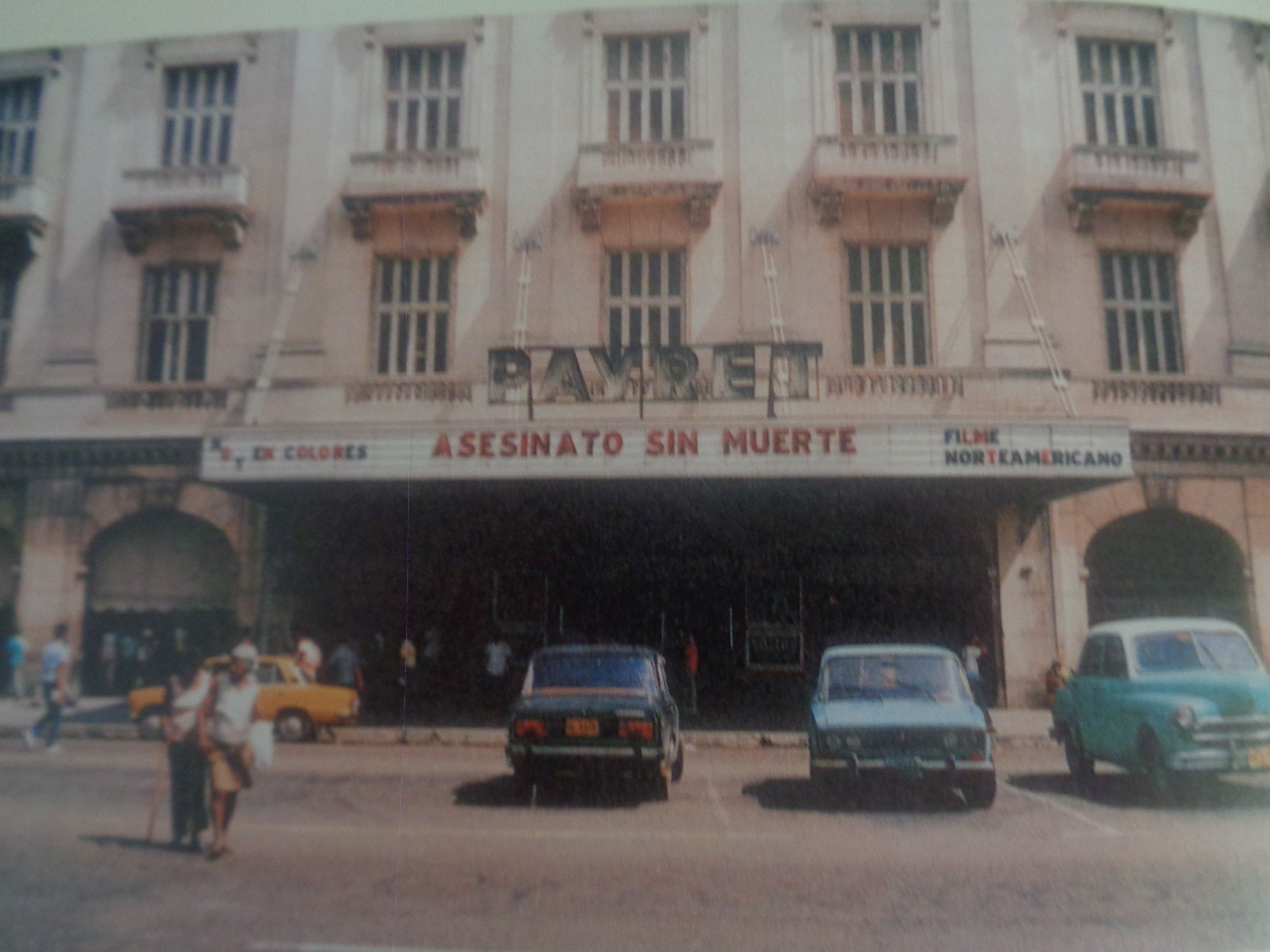
The Cine Payret is located in the Havana Vieja Area, opposes the Grand Teatro, and is one of thelLargest vinemas in Havana. In 1952 it was operated by Augustin Batista. It has a classical style façade, but the interior of the building is in a streamline moderne style, Seating is provisions in orchestra & balcony levels. On the auditorium walls are bas reliefs depicting the nine muses and a bronze figure street ‘illusion’ in in the lobby. It’s progamming consists of Cuban films, occasionally a Hollywood blockbuster and is one of the main venues for the Havana film festival. The Payret Theater Cinema was inaugurated January 21, 1877 and rebuilt several times throughout the 20C. Its owner, Joaquín Payret, arrives from Spain in the 1850s in search of fortune.
The Gran Teatro of Havana «Alicia Alonso», headquarters of the National Ballet of Cuba, is one of the main cultural institutions of the Cuba and one of the city’s icons. The current building was raised to host the headquarters of the Centro Gallego (Galician Center) , and was the enclosure where the anthem of Galicia was played for the first time. It is located the Paseo de Marti , also known as Paseo del Prado,on the corner of the Calle San Rafael pedestrian boulevard, on the west side of the central park. Right next to this monument, is the famous Capitol of Havana (see post) In 1834, Governor General Miguel Tacón y Rosique commissioned the construction of a theater that would have a greater capacity than the existing, the main theater, next to the Alameda de Paula. The new theater called Teatro Tacón in honor of thr Captain General , governor of Cuba between 1834 and 1838. It was inaugurated on February 28, 1838, for the occasion there was a carnival dance in the still unfinished enclosure ; But it was on April 15 of that same year when he was officially inaugurated with the staging of the work Don Juan de Austria, starring Cuban actor Francisco Covarrubias, In its time, the theater was the largest and most luxurious in the American continent; and for its technical qualities the third of the world, after the Scala de Milan and that of Vienna’s opera. Among the most significant artists who acted in the theater were singers Jenny Lind, María Barrientos, Adelina Patti and Luisa Tetrazzini; actresses Sarah Bernhardt and Eleonora Duse; The musicians Louis Moreau Gottschalk, Teresa Carreño, José White and Ignacio Cervantes; The Ballerina Fanny Elssler and Cuban intellectuals José Martí and Gertrudis Gómez de Avellaneda, crowned with Laurels, in its great room, in 1860, by the Cuban poet Luisa Pérez de Zambrana. The Centro Gallego (Galician Center) of Havana was inaugurated in 1914 on its main facade has four sculptural groups in white marble that represent allegories of beneficence, education, music and theater, In 1906, the Sociedad de Beneficencia de Naturales de Galicia purchase the building, which would be demolished, and the entire square in which it was located. Between 1907 and 1915 the current building was built to house the headquarters of the Centro Gallego de La Habana. In the Gran Teatro, the Galician anthem was sung for the first time in 1907. The main hall, called Federico García Lorca, has capacity for 1500 people, and is the headquarters of the National Ballet of Cuba, in addition to hosting the opera seasons offered by the National Lyric Theater. It has other smaller rooms, such as the Lecuona room, and spaces such as Café Adagio, where chamber music recitals are offered.

The Bacardí building is a construction located on Avenida Belgica No. 261 between calle Empedrado and calle San Juan de Dios, in the old city , a jewel of the Art Deco was completed in 1930 and at the time it was the highest structure of the city, It is rowed as one of the finest Art Deco buildings in Latin America in this place were the company’s central offices. The rest of the building was leased to different companies based in the city. At present, it continues to perform as the Oficina del Historiador de la Ciudad or city’s historian office.

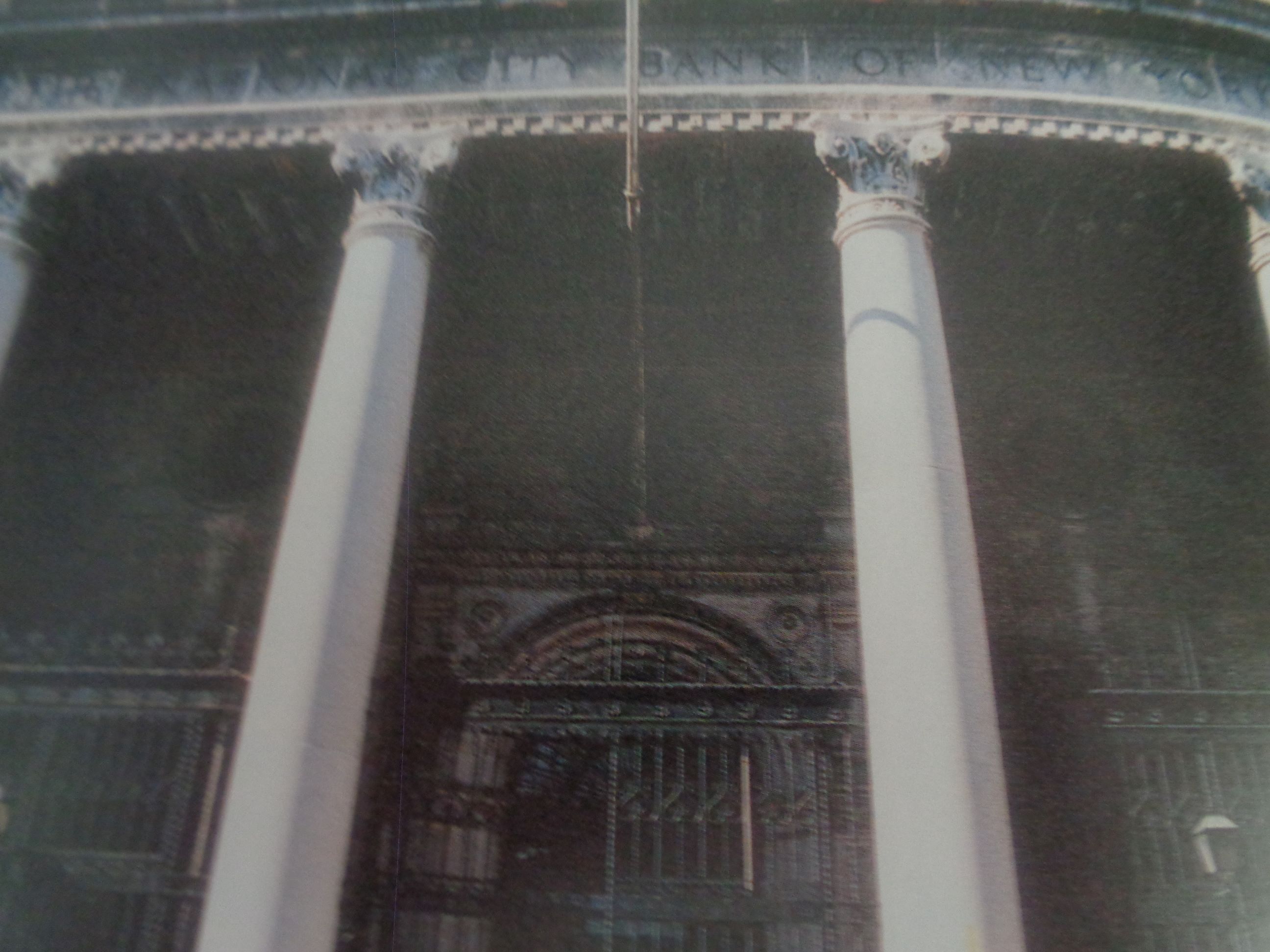
The former The National Bank of New York, was founded on August 11 ,1915, in Havana, currently house the Banco Metropolitano (part of the State banking system) in Calle O’Reilly corner with Calle Compostela, The bank became part of Citigroup in the USA, Just briefly some of the institutions nationalise and the reason for the current embargo as these were never renumerated by the revolutionary goverment, These are Banco de Credito & Comercio is housed in what was once an office of Chase Manhattan, a bank that was later was folded into JP Morgan Chase, a former Woolworth’s store which is now used as a “10 Cent Store”, the equivalent of a dollar store in the United States. A former Western Union location which is now home to Etecsa, the Cuban telephone company. The former First National Bank of Boston ( now Bank of America) houses offices of the Central Bank of Cuba. The former General Electric offices in Havana, where workers are building a new school. The former Sears Roebuck and Co. in Havana is now a computer center for Cubans to use the internet. The former Coca-Cola building in Havana, ironically painted the company colors, now houses the headquarters of the state-owned “Beverage Company of Havana”. A bit of history I like on the banking before the revolution has that in 1842 the “Caja de Ahorros” (savings bank) was established, followed in 1854 by the “Caja Real de Descuentos,” which in 1856 became the “Banco Español de La Habana.” On May 1, 1857, the “Banco de Cuba” was founded in Santiago de Cuba, after which a number of banking institutions were established. In 1859 there were 15 financial institutions on the island , Although the two most important banks were the “Banco de la Isla de Cuba” and the “Banco del Comercio,” several other banking houses, such as Gelats y Cía., Upmann, Zaldo and Simón y Cortés had been established and began to flourish. Most merchant banks operated in the British merchant bank fashion, most of them created by Germán and English immigrants. They later evolved into regular commercial banks. Zaldo would eventually become “Banco de la Habana” and later still, the First National Bank of New York. The Banco Nacional de Cuba was officially established by Law XIII, signed by President Carlos Prio Socarrás in 1848, although it did not begin operations until April, 1950. The Banco Nacional had the functions and powers normally associated with modern central banking institutions. It acted as a banker’s bank: it was the fiscal agent of the government, a regulatory institution and was Cuba’s sole bank of issue. By 1959 there were 49 commercial banks with approximately 200 bank branches in the island. Most of the principal banks were centered in Havana. Only six foreign banks remained, three US-owned: the National Bank of New York, the First National Bank of Boston, and the Chase National Bank (later named the Chase Manhattan Bank). The other three were: the Royal Bank of Canada, the Bank of Nova Scotia, and the Bank of China , After 1958, with the Castro regime, the commercial banking system of Cuba ceased to exist. The 1960 Bank Nationalization Law was issued by the regime. Promulgated on June 1, 1960, Law 851 authorized the executive branch to expropriate all business enterprises, including banks belonging to citizens of the United States. You can even still the name in the front top !
I like to take advantage of this post to add two anecdotal pictures from my books. The first is a map of Havana from 1857 and the second is a page from the Havana telephone yellow pages of 1958. Just for the memories of always.


There you go folks, it was a city to fall in love for no matter what period of time in history, Sadly for the last 65 years since have change a lot and is not the same nor would it ever will be ; all we have is the nostalgia of past times, Again, hope you enjoy this post on curiosities of Havana, part II as I
And remember, happy travels, good health, and many cheers to all !!!

 Paris1972-Versailles2003