
We were back to my dear Spain again !! love it !! We came by car of course and took time to see some new towns with my sons and our dog Rex ! I rented a small house in a off the beaten path country town that was just perfect ! I like to continue the saga of our new road warrior experiences even if now with less in our family,This post is on my latest road warrior tour of wonderful sublime back to Madrid, Therefore, let me tell you about the Parque del Buen Retiro of Madrid !!! Hope you enjoy the post as I.
This is Madrid capital of the province and community of Madrid as well as the kingdom of Spain, All central all comes and leaves from here in my dear Spain, A must to visit at least once in your lifetime or more once bitten with the bug as from Madrid to heaven and a hole in the sky to look down on it everyday ! Once again, thrill to be back to my Madrid and this year twice !! Love it !!! Only 202 km from our rental house in Velliza down on the A62, A6, and this time to the M500 and M30 to the Retiro park and our parking at Parking Avenida del Mediterraneo 28 near metro bus Conde de Casal and the Retiro park,
This park has several entries in my blog but never enough I passed great part of my stay in Madrid here, it was cheap and great to play, meet friends and do all the young boy wanted to do It has stayed in my heart ever since Over the years, I have the opportunity to come back to Madrid and the Parque del Buen Retiro park is a must. To be in Madrid need to have visited , I can come back a thousand times and still will missed it once leaving. Because the Retiro park for me is part of what we say , from Madrid to heaven and a hole in the sky to look down on it every day !!! I had to come back to the Retiro park, yes it was practically my backyard, not far from my house when lived in Madrid and many times running, chasing,and eating , playing you name it in it. The park of my first loves, my youth, my adolescent my early days of free life in my beloved dear Madrid. Even here, my journey with what later became my wife started, my dear late wife Martine (our first trip out of France with her I had to take her to Madrid and the Retiro was grand ) she always loved to come here each year with me and then with the boys. I can say my life can be resume with one word Retiro. This is Madrid at its best. The Retiro park is now an Unesco World Heritage Site under the name “El Paseo del Prado y el Buen Retiro. Paisaje de las Artes y las Ciencias” or sort of the Paseo del Prado and Buen Retiro, landscapes of Arts and Sciences. You will do well to search in my blog for my other many posts on the Retiro park, and again is a must in Madrid ; you cannot come to the city and not visited it.
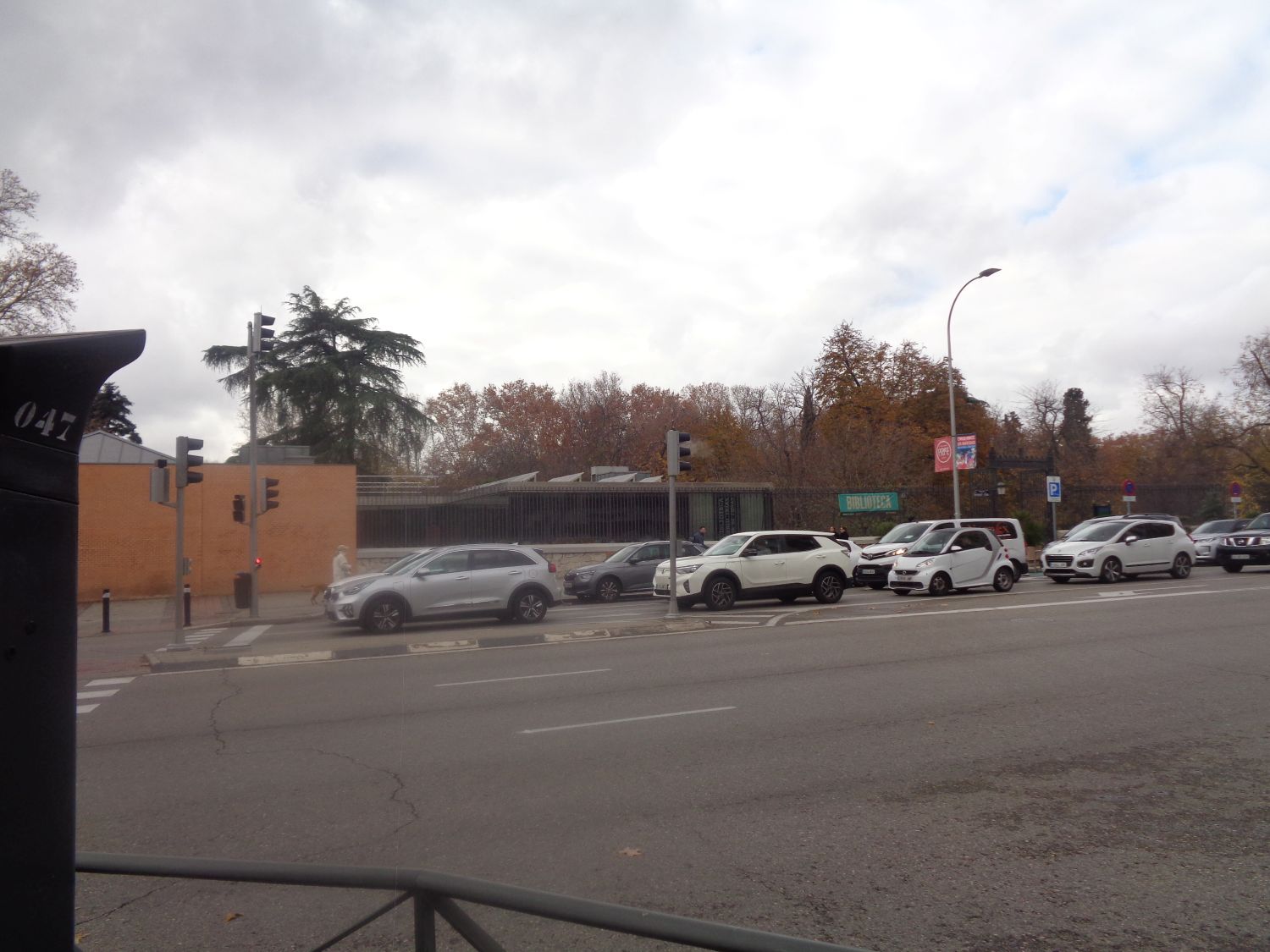
The Avenida Menéndez Pelayo is between Calle de Alcalá and Avenida de la Ciudad de Barcelona. Formerly, the section between the streets of Alcalá and O’Donnell was called Calle Muñoz by the hostel of the same name that was located where the Valencia Tower is today. The rest received the names of Ronda de Vicálvaro , between the Calle de O’Donnell and the Plaza del Niño Jesús, and Ronda de Vallecas, between the Plaza del Niño Jesús and the avenida de la Ciudad de Barcelona, because it led to the Camino de Vallecas. In 1915, it received the name of Avenida de Menéndez Pelayo, in memory of the polygraph and historian Marcelino Menéndez Pelayo, One of my dear streets of Madrid, walked all over it. The pics is towards the library in the Retiro park
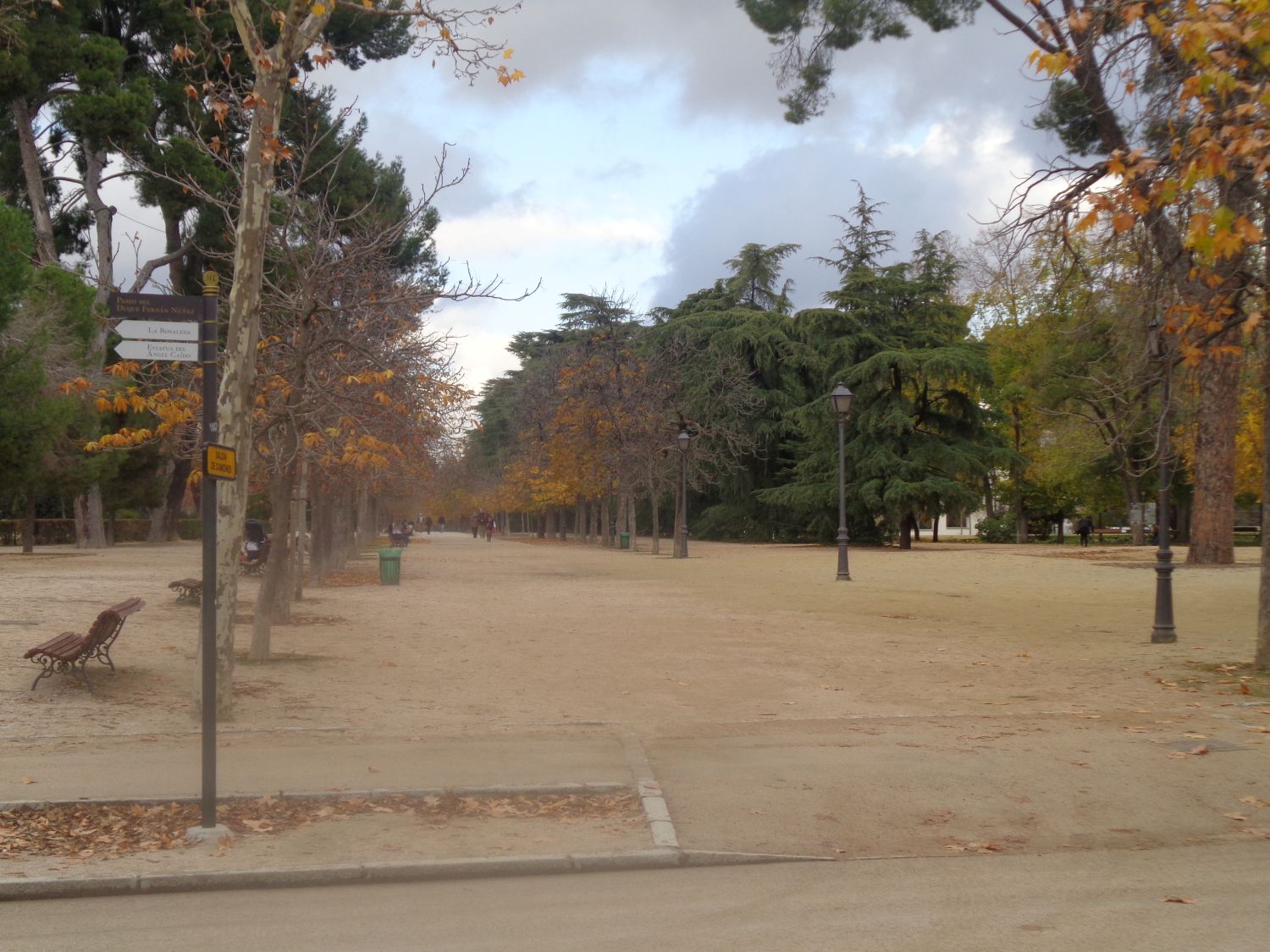
The Paseo de Fernán Núñez (or de Coches (carriages)).Done in 1874 and vehicules were still permitted on it until 1981. It is a big promenade all along the park. Awesome walks. The Paseo de Fernán Núñez, we can also find with other names such as the Duke of Fernán Núñez, the carriage or carriages. The promenade opens the way from the northern zone, where the Puerta de Madrid at Calle O’Donell is located, to the southwest area where we find the Puerta del Angel Caido , which gives to the Cuesta de Moyano is the senior walk length of those existing in the park. It presents different sections being in its central part where it reaches greater width and that is where it is known as carriage or coches promenade since, according to some authors, the ostentatating families of noble titles walked their carriages and their horses to rival each other, When the months of May and June arrive, the Book Fair is usually held in its southernmost part , One of the most peculiar monuments of Spain, that of the Angel Caido or fallen angel. In its final stretch, if we consider the beginning from Calle O’Donell , the paseo becomes a slight slope down, again full of athletes where the high pines stand out, leading to the astronomical observatory of Madrid and at the Puerta of the Angel Caido. The first count of Fernán Núñez, Alonso Estacio Gutiérrez de los Ríos and Angulo gave or sold its land to the valid of Felipe IV, the Count -Duke of Olivares around 1630 – 1640, for the enjoyment of the court and these lands became the Retiro park. The main artery I would say, wonderful indeed!
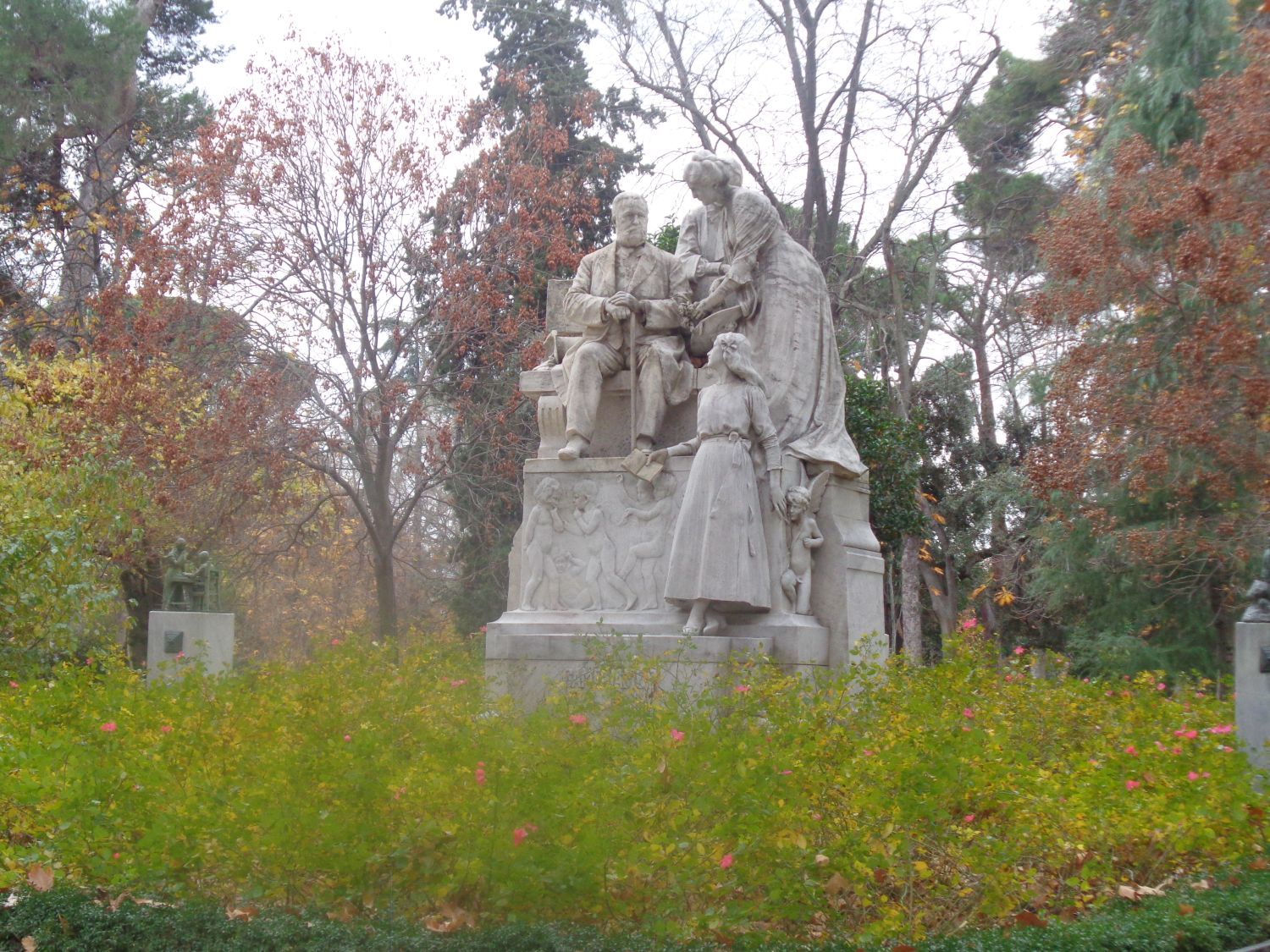
The Monument to Campoamor is on Paseo de Fernán Núñez. This sculpture was inaugurated on February 18, 1914 being made in marble and bronze, with dimensions of 4 meters high and 2.36 meters of width. The sculpture represents an allegory having the poet Ramón de Campoamor sitting along with three female figures that represent the three stages of life (youth, maturity and senectud). In his time, he frequented a lot the Retiro park.
This area has been transformed into pleasant gardens integrated into the rest of Retiro Park, The jardines de Cecilio Rodriguez or gardens of Cecilio Rodriguez ,the gardener of the city build in 1972 with many ornaments and statues ,which today are an extenstion called the Jardines del Architecto Herrero Palacios, Senior Gardener of the Retiro, successor to Don Cecilio Rodríguez. In 2013, the historic zoo was converted to a library and botanical garden. Today, books are stacked on shelves in structures that once caged wild animals. However many of the original structures from the zoo have been preserved. You can still see the old bear cages, the monkey pit, the lion’s den, and remains of the bars through which the great beasts were fed. Nostalgia to be visited by all !!!
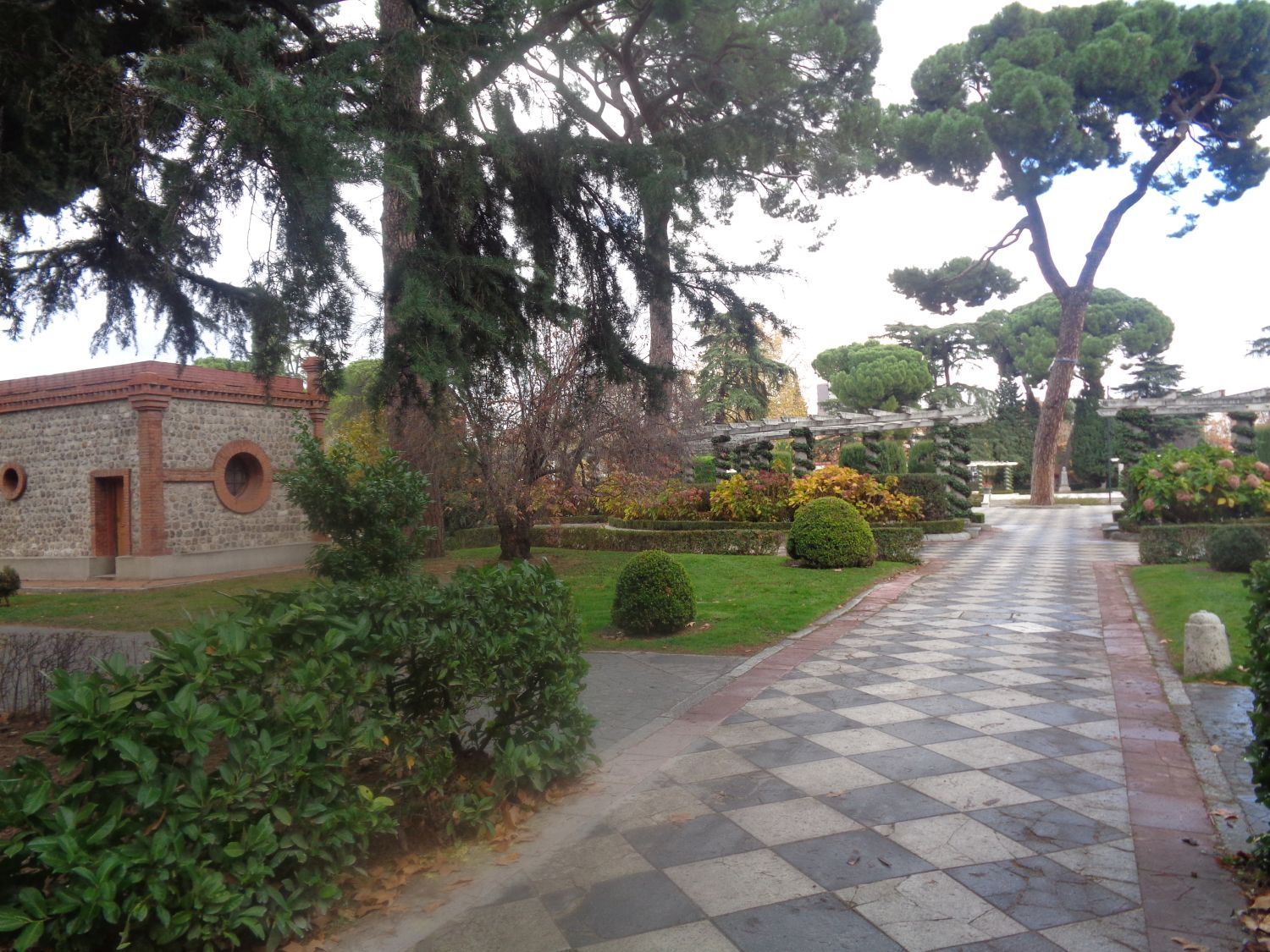
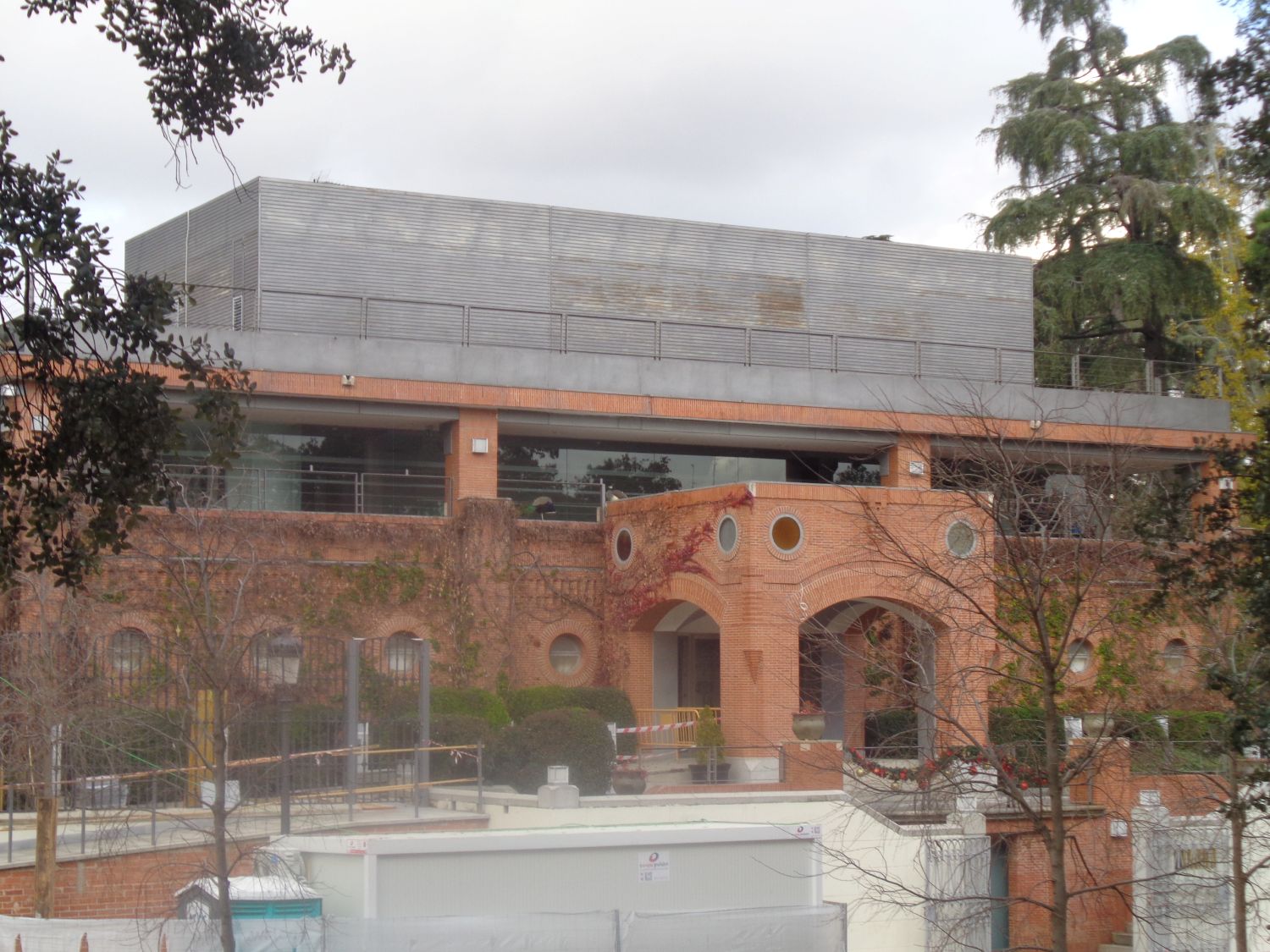
The Pabellón de los Jardines de Cecilio Rodríguez or Pavilion of the gardens of Cecilio Rodríguez is a modern and simple building framed in the gardens of Cecilio Rodriguez of the Parque del Buen Retiro. An glazed pavilion consisting of two floors built in red brick on a white and gray tile floor. Its interior decoration is typical of a functional space for public acts and events, highlighting its wide luminosity by large windows and diaphanous rooms that can be adapted to different uses. From the second floor there is a panoramic view of the symmetry of the gardens of the same name. Classic and geometric gardens that have central ponds surrounded by cypresses in perfect ways.
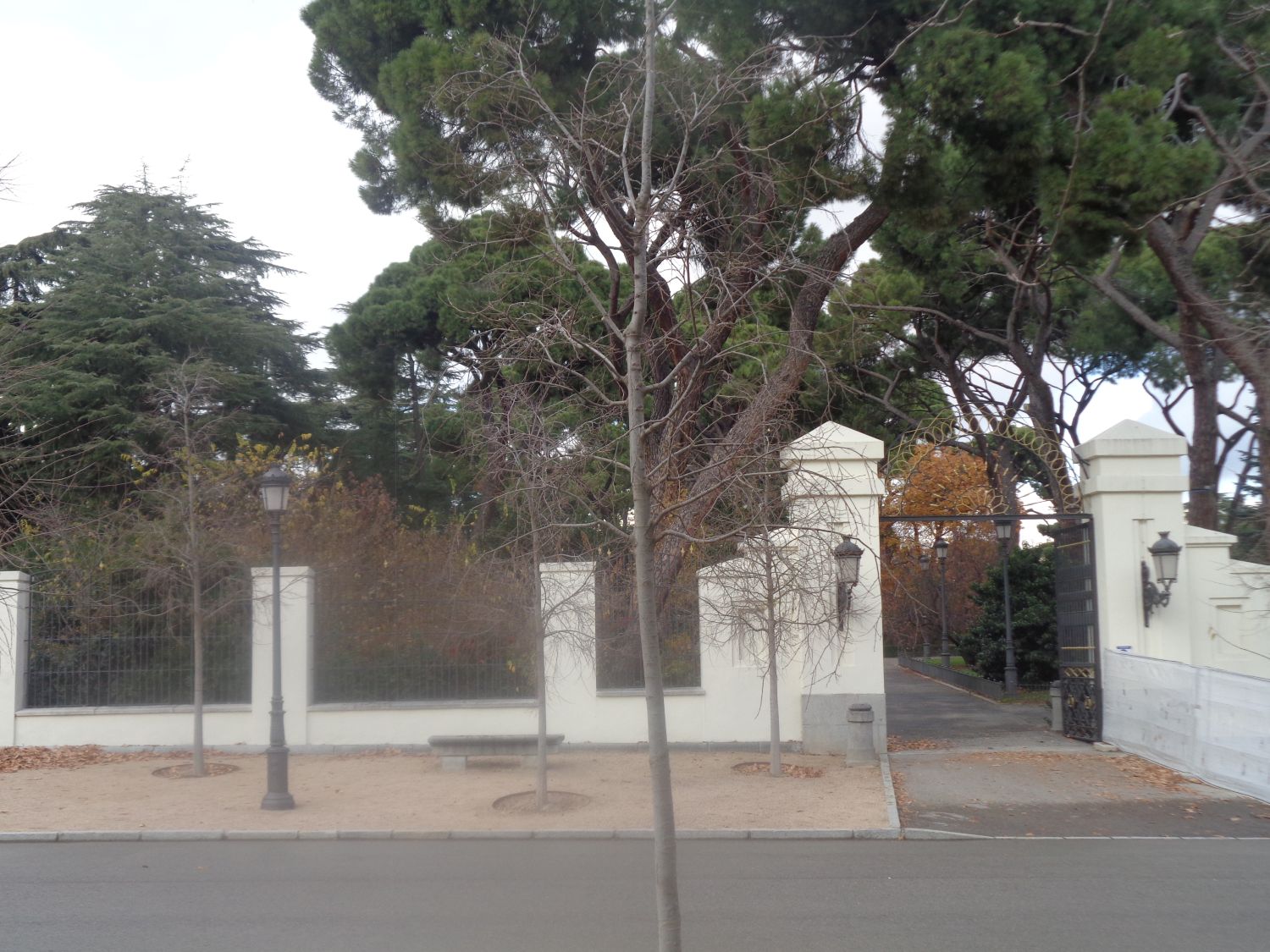
The Puerta Sur de los Jardines de Cecilio Rodríguez communicates this monumental door for the south the Paseo del Uruguay of the Retiro Park with the gardens of Cecilio Rodríguez, possibly raised and initiated by this gardener around 1929, as a prolongation of the Casa de las Fieras (old zoo) or house of wild beasts, which was restored by himself after the Spanish Civil War.
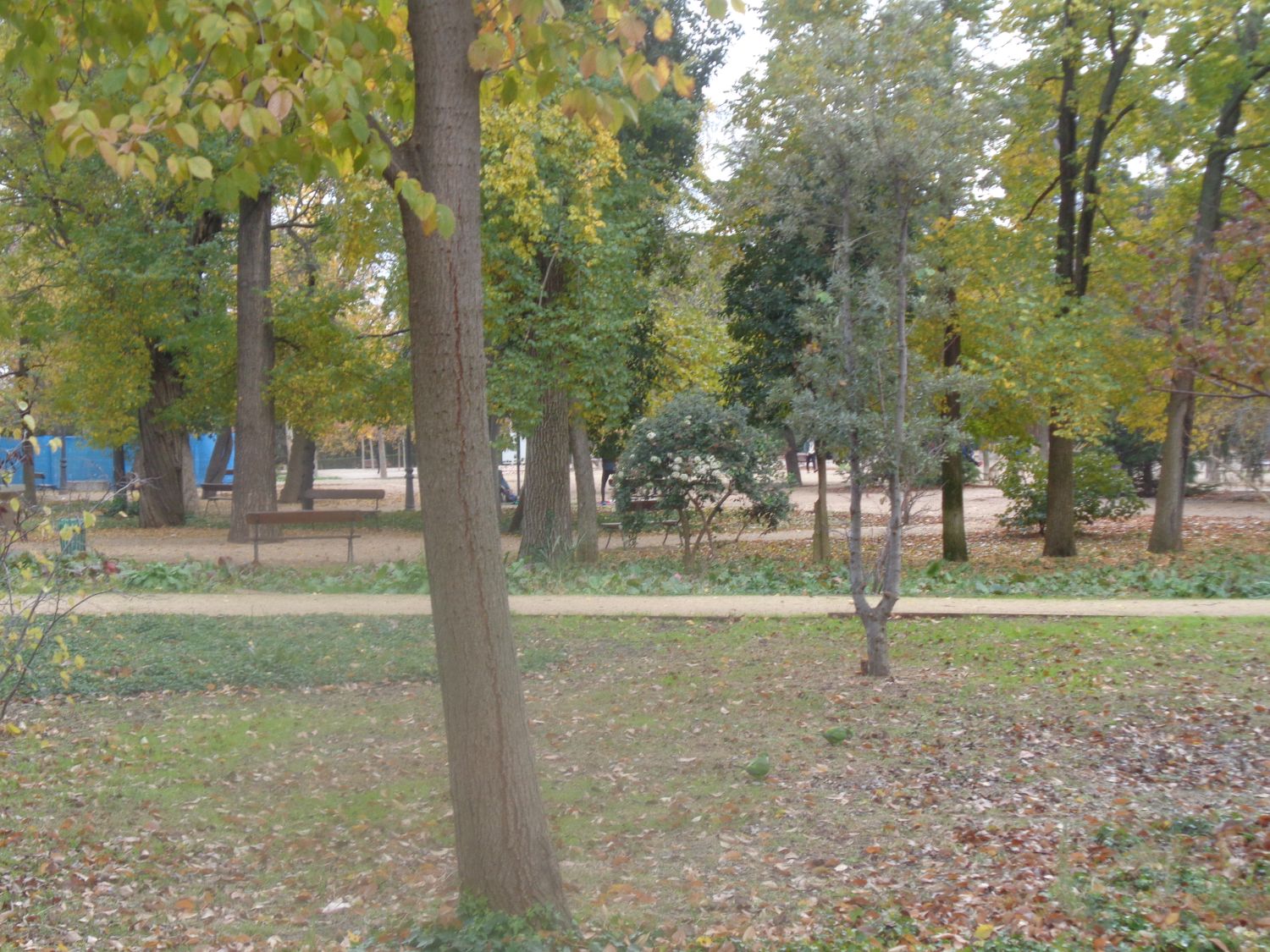
The Jardín de Vivaces or Garden of Vivaces, a slight slope in which some difficult species grow in Madrid, such as the giant secuoya or the willow-leaf podocarp. In May, dozens of acanthus flourished, a plant in which the Corinthian capital between the holm oaks is inspired.
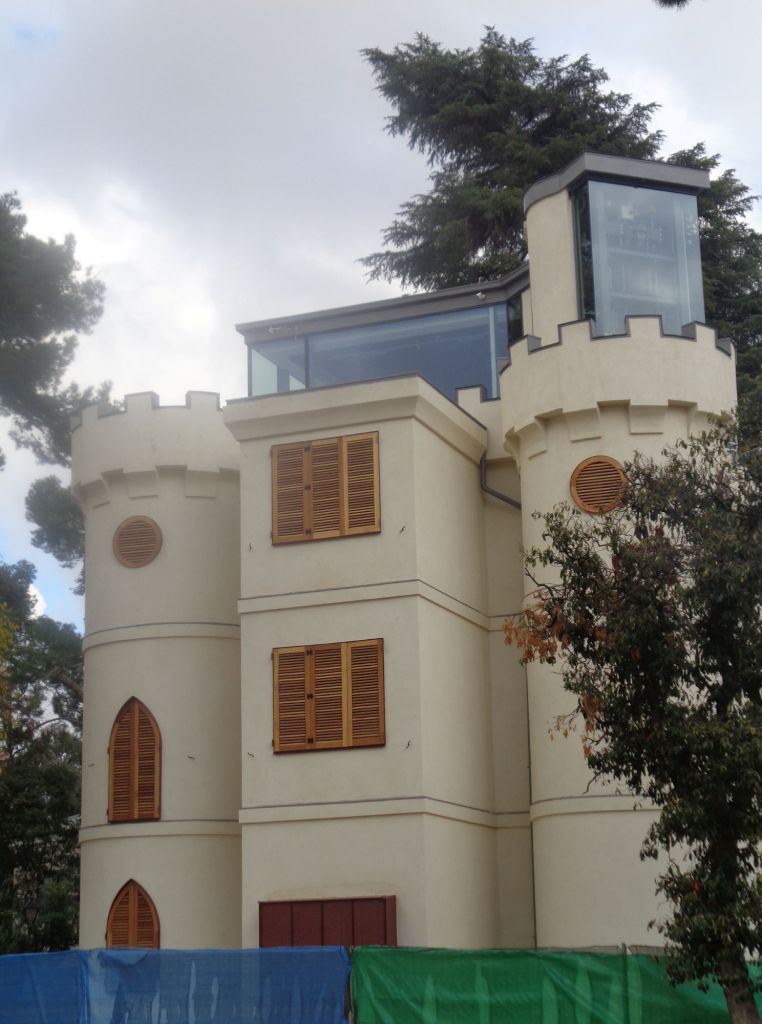
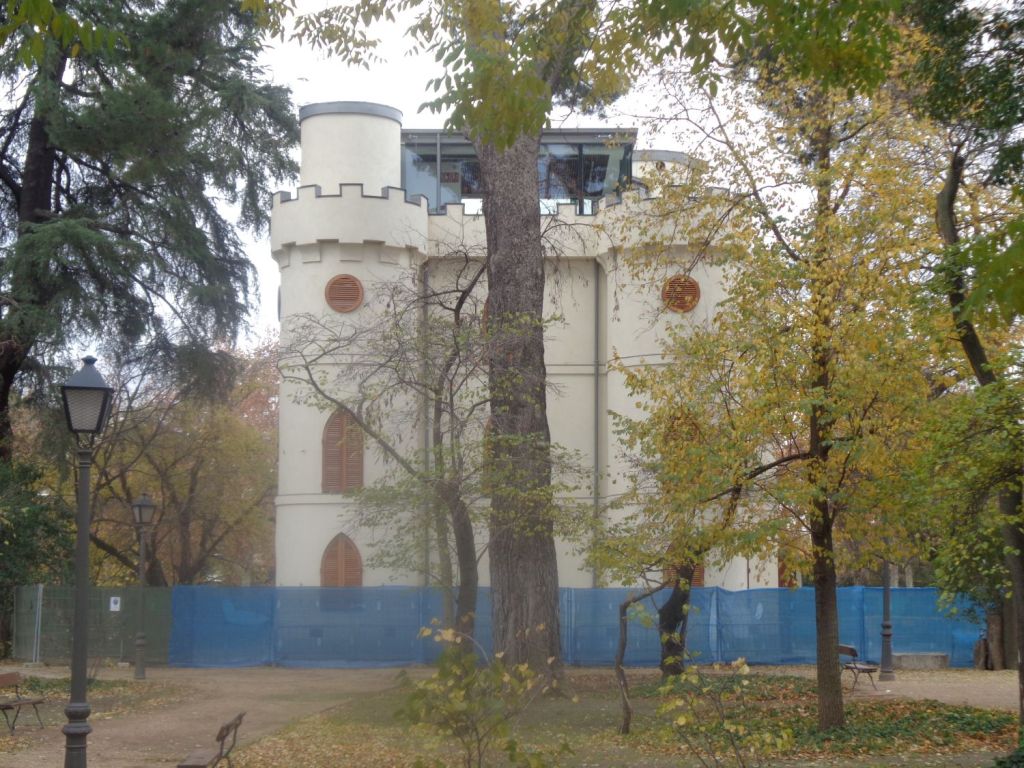
The medieval Castillete is a small medieval castle originally called the Torre del Retiro or the tower of Retiro with a middle ages aspect with four angle towers, three levels and a flat cover. At the end of the 20C was given to the Meteorological service , Currently it is been renovated for future use.
Some of things to look out here and do see them are the neoclassical Palacio de Velazquez(red brick and tiles now an exposition center by paseo de Venezuela ) and the Palacio de Cristal (crystal palace as in London by paseo de la Republica de Cuba). There are several entrances to the Retiro park but the main entrance for me and family is by the Puerta de Alcala, (see post) the gateway used by king Carlos III (emperor Carlos V) to entered Madrid that in the 19C marked the easternmost entry to the city. You find the La Rosaleda (built in 1914 by Cecilio Rodriguez a great gardener) ,its an imitation of the one in the bois de boulogne of Paris for which the Spanish gardener took it queus. In Plaza del maestro Villa there is the quiosco de Musica or music kiosk ornate dome; Paseo del Estanque is the casa de la vaca or cow house that used to be a milk store, extreme northwest of the park you have the casita del Pescador or Fisherman house near the artificial mountain, is a small house of square shape and two levels with roof in zinc and water spouts ;of the original royal properties still standing there; next to avenue Menendez Pelayo you will find the Casita de Fieras or wild animals house , a small zoo for the entretain of king Fernando VII; jardines de Cecilio Rodriguez or gardens of Cecilio Rodriguez ,the gardener of the city build in 1972 with many ornaments and statues.
Monumento to the Republic of Cuba (at plaza del Salvador, done in 1929 as a monument to the nation of Cuba and to honor similar monument in Havana,Cuba to Spain. There in Retiro park, you will see Catholic queen Isabel I and Cristobal Colon (Columbus) built in 1952); Monument to General Martinez Campos at Plaza de Guatemala( built in 1927 in bronze to honor the gen that ended the 1er Republic in Spain and also head of Spanish troops in Cuba during the 1860’s); it is behind the statue to king Felipe XII. El embarcadero or embarkment for boats built in 1902 where you rent today boats for the lake. The monument to Ruperto Chapi. At the proposal of the Society of Spanish Authors, the monument dedicated to the teacher Ruperto Chapí Llorente, at the Paseo de Fernan Nuñez, was raised. The monument was inaugurated in 1921.
Estanque Ochavado (or de las Campanillas (small bells)) The date of construction is not known but it has to be before the big lake or Estanque Grande. It is done with eight sides and a small isle in the center with a coral decoration today, Estanque Grande or big lake, was ordered built in 1634 done to extract water for the Royal Palace and use for fishing and boating as well as theatrical shows . In 1817 it was built a pavillon with oriental designs and later destroyed tobuilt what you see today the Monument to Alfonso XII. In 1917,it was done a new one located on the north side that caught fire and again was rebuilt in 1926 as the one that has reach our days. Just a must ,gorgeous spot many memories crying just to write on it. Ría de Patinar. An skating stream done in 1876 to replace a previous one that is now at the Rosaleda. It was chosen an area shady to keep the water colder frozen even so that the ice skating could be done, it has an oval shape around a garden isle. Estanque del Palacio de Cristal ; small lake right in front of the palace built in 1887. Done in a rocky cave and a nice water basin. Rias del Estanque Grande y Ria de La Chopera; on each side of the monument to Alfonso XII the two merge.160 for the Estanque and 200 for Chopera meters long , not known when they were created but probably end of the 19C, shown in maps until 1900. The Ria de La Chopera is from the same time and has 200 meters running. Estanque Rustico, the gardener Cecilio Rodriguez did this one to provide water to his gardens from 1918 , the lake has a bridge and a masonry factory with brick lines.
You know this was a Royal park and even if cutoff a lot still has 125 hectares or 4,5 km of perimeter; from the beginning it was much larger something like 145 hectares. It was created from 1630 to 1640. It has about 19000 trees of 167 different species. It takes its name from Felipe IV royal palace that once stood there. The only remains are the Cason del Buen Retiro (now part of the Prado museum) and the Museo del Ejercito (where the sword of El Cid was and now at the Army museum, Calle de Mendez Nuñez). The royal family used it from 1632, in the 18C it was partially opened to the public as long as they came properly dress ,until finally fully open to the general public in 1869. Beyond the park main view you see the half moon colonnade with the equestrian figure of king Alfonso XII; all of 30 meters high (99 ft) by 86 meters long (284 ft) and 58 meters wide (191 ft). It was called a national contest to built it upon the request of the regent queen Maria Cristina, the winner finally did it inspired on the monument of William I of Berlin, built this one in 1922 . It is at the west side of the pond or Estanque Grande. Around the king you have statues of representation of peace, progress and liberty . Around the hemicycle you have other statues representing The army and marine, the sciences, agriculture, Arts, industry, and two lions.
The Madrid tourist office on the Retiro park : https://www.esmadrid.com/en/tourist-information/parque-del-retiro
The Comunidad de Madrid region tourist board on the Retiro park:
https://www.visitmadrid.es/descubre-destinos-madrid/madrid-capital-espana/paisaje-luz-recorrido-paseo-arte-parque-retiro
There you go folks , another wonderful nostalgic, sentimental trip to my dear Madrid, Do not know when we will be back, we sure will have this trip in our hearts forever, Again, hope you enjoy this post on the Parque del Buen Retiro of Madrid !!! as I
And remember, happy travels, good health, and many cheers to all !!!

 Paris1972-Versailles2003