
We were back to my dear Spain again !! love it !! We came by car of course and took time to see some new towns with my sons and our dog Rex ! I rented a small house in a off the beaten path country town that was just perfect ! I like to continue the saga of our new road warrior experiences even if now with less in our family,This post is on my latest road warrior tour of wonderful sublime back to Madrid, Therefore, let me tell you about the fountains of the Retiro park of Madrid !!! Hope you enjoy the post as I.
This is Madrid capital of the province and community of Madrid as well as the kingdom of Spain, All central all comes and leaves from here in my dear Spain, A must to visit at least once in your lifetime or more once bitten with the bug as from Madrid to heaven and a hole in the sky to look down on it everyday ! Once again, thrill to be back to my Madrid and this year twice !! Love it !!! Only 202 km from our rental house in Velliza down on the A62, A6, and this time to the M500 and M30 to the Retiro park and our parking at Parking Avenida del Mediterraneo 28 near metro bus Conde de Casal and the Retiro park.
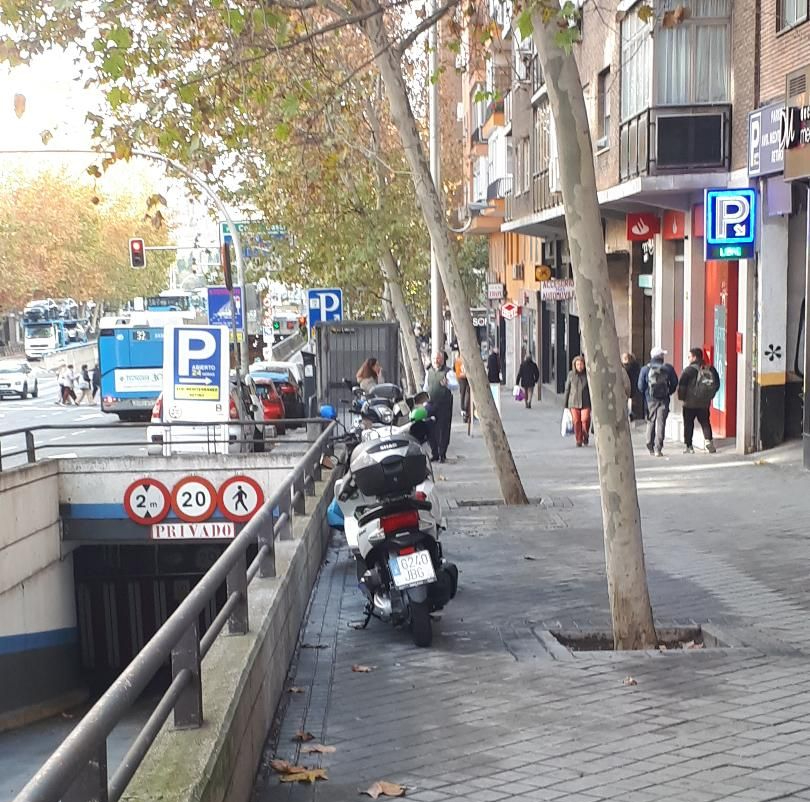
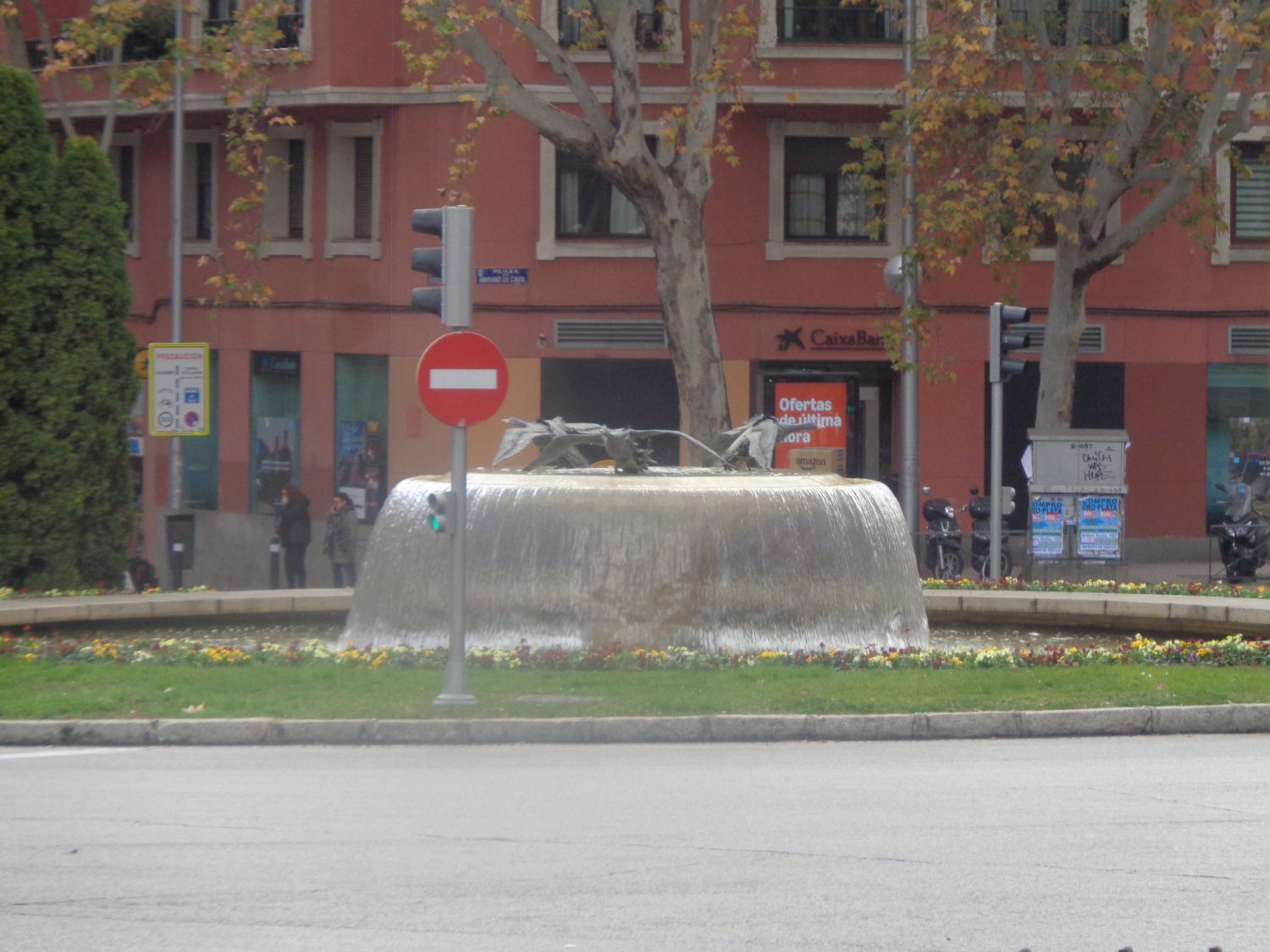
While en route from the parking we passed by the Plaza Mariano de Cavia. The square is between the Paseo de Reina Cristina, the avenues of Menéndez Pelayo and Mediterraneo, and calle Cavanilles. First, it was called Glorieta de Maria Cristina by the neighboring barracks of Queen María Cristina, where military housing buildings are built today on the walk of the same name. Subsequently, it was called Mariano de Cavia, because the illustrious chronicler, journalist and literary died in a sanatorium that was in the neighboring Paseo de María Cristina. In the center of the square a fountain de las Gaviotas (seagulls). The characteristic of this fountain is that when the water flows the bronze seagulls move their wings.
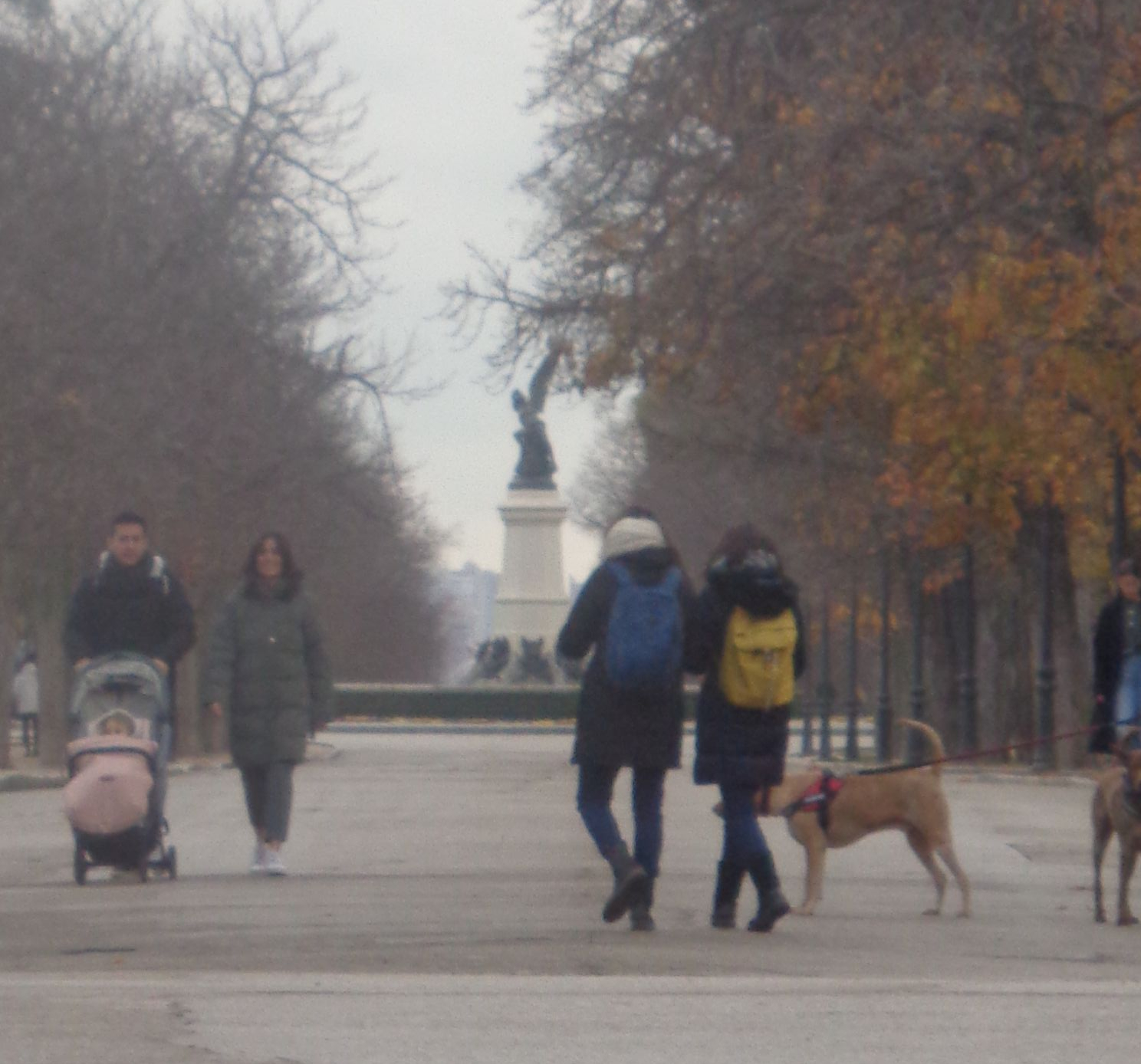
The Fuente del Angel Caido in the Glorieta del Angel Caido, in the Retiro park, sits on the plot that occupied the Porcelain factory of China, destroyed during the War of Independence in 1813. The Madrid sculptor Ricardo Bellver made the work called the fallen angel in plaster. The work was acquired by the State and it was decided to send it to Paris, on the occasion of the Universal Exhibition of 1878. Since only marble or bronze sculptures were admitted, the procedures to perform the foundry in said metal were initiated. It was carried out in Paris, by the Thiebaut-Fils house. The fallen angel then became part of the National Museum collection. A pedestal was executed in granite, bronze and stone, adopting the structure of a fountain with a wide pylon. The set was officially opened in 1885. The set has approximate dimensions of 10 meters long, 10 wide and 7 high. Bellver’s sculpture measures 2.65 meters high. The fallen angel, with the wings deployed and contorted, rests on some rocks ,which serve as a base, while a large snake is screwed around its body. This work shows three great influences: Hellenistic, especially from Laocoonte and her children; the Baroque , especially of Bernini, for its composition of diagonal lines and their expressiveness; and the Romantic, for its feeling and dramatic intensity. The Glorieta del Angel Caido is at an official topographic altitude of 666 meters above sea level in Madrid. Only monument dedicated to the devil in the world.
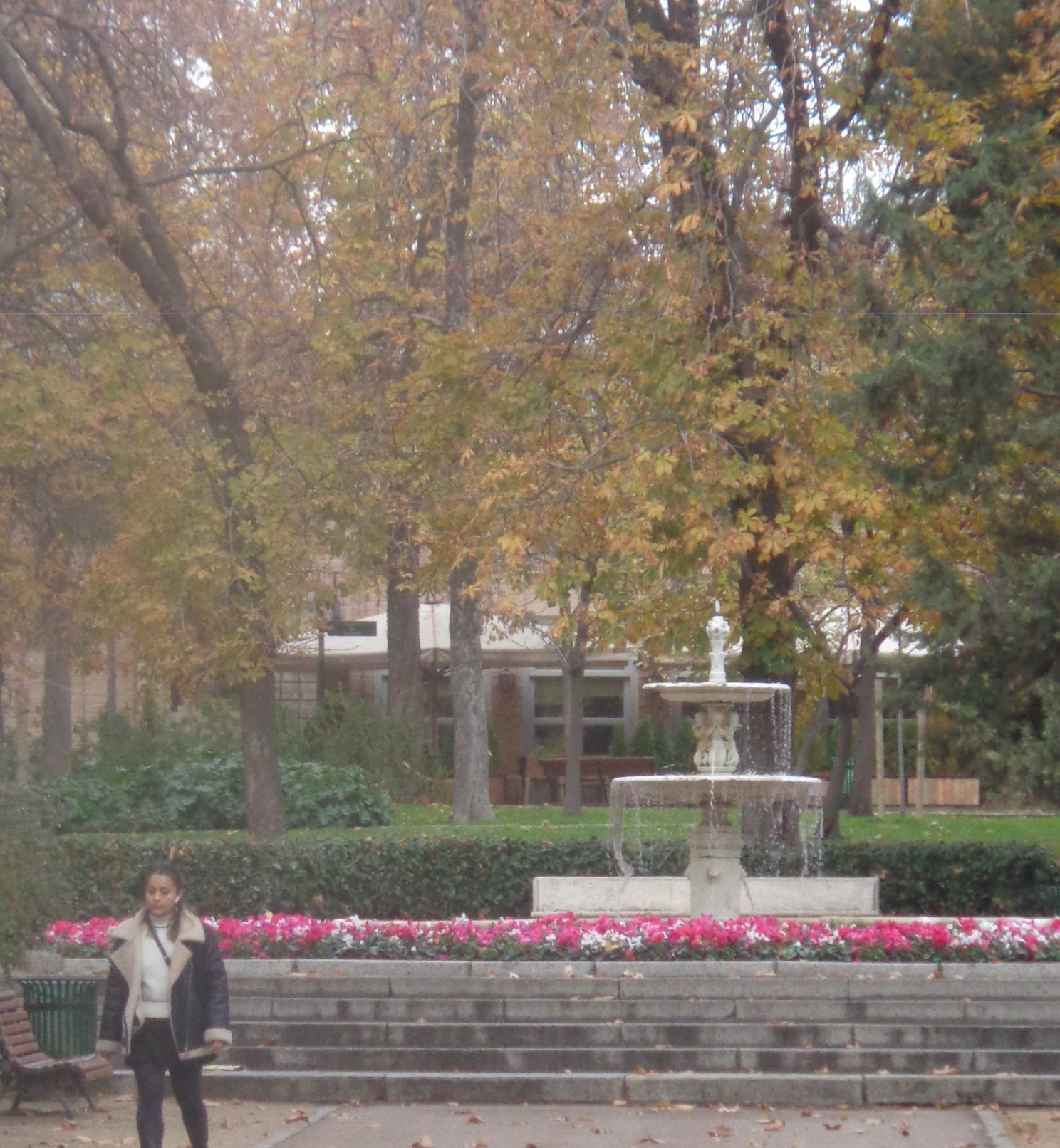
The fuente del pequeño Tritón o del muchacho del pez, or the fountain of the little triton or the fish boy, which although today is located in the Retiro Park by the Puerta Hernani ; its original location was the royal reserved of the Casa de Campo We know that the fountain was done in the 19C and belongs to a catalog of pieces presented in the Universal Exhibition of London of 1851 by the Parisian Foundry “J.J. Ducel et Fils ”. There are equal pieces in the Plaza del General Leclerc of the French town of Blérancourt, two similar figures decorate the two twin sources in the Paseo Arenal in Bilbao; and even in the Plaza del Santo Cristo de Río de Janeiro, the known as “Fonte da Criança” is preserved. In the specific case of the fountain of the Triton, the dolphins and the triton are inspired by classical antiquity sculptures recovered in the Renaissance and subsequently reinterpreted. In fact, the four fountains of Paseo del Prado have a similar model. The fountain of the Triton appears in 1943 in the center of a landscaped area created by the gardener Cecilio Rodríguez to provide the access of the new Puerta Hernani , and making axis with the fountain of the Nereids and following in axis until ending at the fountain of the Galapagos , The fountain has had several names in its almost two centuries of history. It has been known as the fountain of the Child, as a fountain of the Prince and, in the times of the Second Republic (1931-1939), as a fountain of the nightingale. Its current denomination refers to the main motive of the sculptural group: a triton child, crowned with a bay branch, which rides on the back of a fish, whose mouth comes out of water.
The Madrid tourist office on the Retiro park : https://www.esmadrid.com/en/tourist-information/parque-del-retiro
The Madrid tourist office on the Fuente del Angel Caido :https://www.esmadrid.com/en/tourist-information/el-angel-caido
There you go folks , another wonderful nostalgic, sentimental trip to my dear Madrid, Do not know when we will be back, we sure will have this trip in our hearts forever, Again, hope you enjoy this post on the fountains of the Retiro park of Madrid !!! as I
And remember, happy travels, good health, and many cheers to all !!!


