
I bring to you, the crème de la crème ,no need to said more than Chantilly a beautiful historical and architecturally stunning castle and proud member of the Friends of Chantilly Castle since 2008! I like to update this older post with new text and links for you and me. Therefore, here is my take on the Château de Chantilly, part IV !!! Hope you enjoy the post as I.
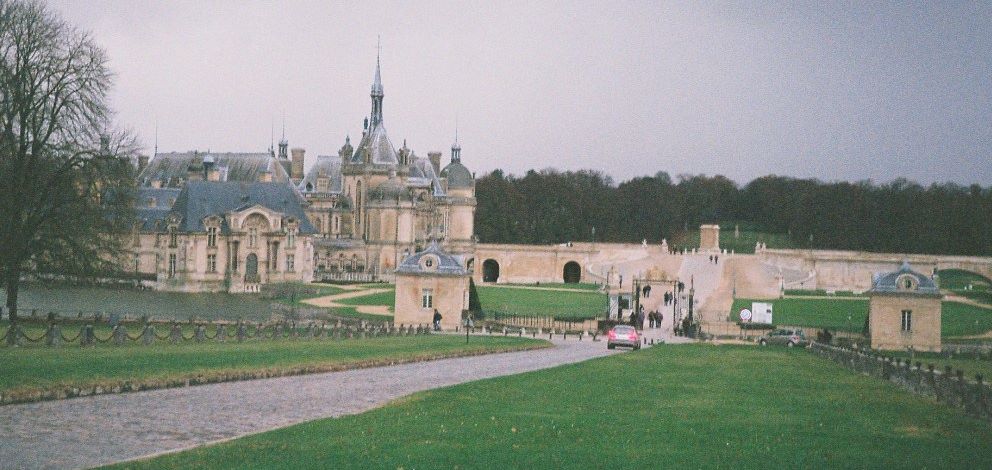
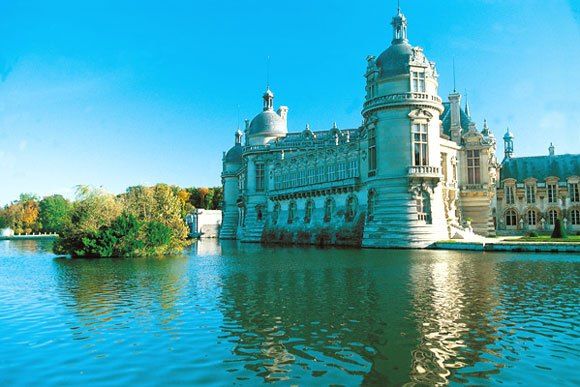
This is a cinderalla castle ,wonderfully done and maintain, full of history and hunting stories of France. It was my first post on it in my blog !! Chantilly is ,also, the name of the town, in the Oise, dept 60 ,in the region of Hauts de France ( previously Picardie and historically the region of the Valois) , and of course in my belle France, It is right in the middle of the forest of Chantilly. You have here a beautiful castle with a museum of Condé, racetrack or hippodrome, and a museum of the living horse! All within walking distance !!! It took a great beaten in WWI as the opposition hq was based until Marshal Joffre got rid of it in the great battle of the Marne. In WWII ,the hq of the opposition was installed at the grand ecurie, the town was liberated by the Americans in 1944. Afterward it became a great residential area full of horse lovers. The main route to reach Chantilly is the A1 and A16 autoroutes easily accessable from Paris or London. The train station Chantilly-Gouvieux is on the line Paris-Lille from Paris gare du Nord, and also on the RER D from Paris. It is only about 30 km from Paris Charles de Gaulle airport.
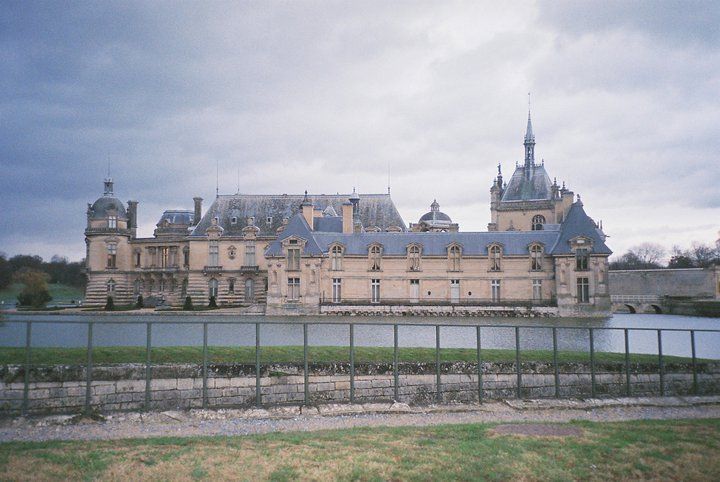
A bit of a tour at the properties. In the Petit Chateau, you have the appartments des Princes or princes apartments, where the Grand Condé lived; the Duke of Aumale was reserved the apartment in the ground floor. You can see a beautiful collection of manuscripts in the Cabinet des Livres or library ,where you will find the original copy of the “Trés Riches Heures du Duc de Berry”. The galerie de Monsieur le Prince or the gallery of Mister Prince has works of arts showing battles under the command of the Grand Condé.
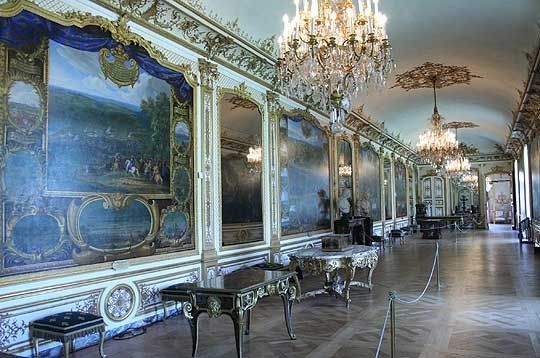
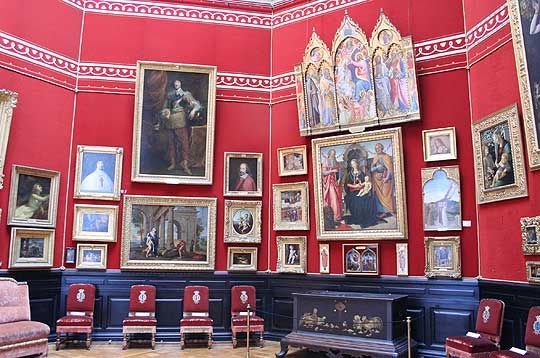
The Grand Chateau, once crossing the galerie des Cerfs or gallery of deers dedicated to hunters and hunting, you will the tapestries from the 17C, then the galerie de Peintures or paintings gallery, showing the tastes and likes of the Duke of Aumale with paintings of military battles, Richelieu,Mazarin and Gabrielle d’Estrée au bain. At the end of the gallery you reach a rotonda or main hall, you see the Vierge de Lorette by Raphael, turn to your right at the end you see the salle de la Smala and the rotonde de la Minerve where portraits of the family of Orléans are shown. Come back a bit and see the Cabinet de Giotto dedicated to the primitive Italians, then in succession you see the Salle Isabelle, wonders from the 19C as Delacroix and Ingres, Salon d’Orléans, with porcelains of Chantilly taken from the factory founded by the duke of Bourbon in 1725. The visit continues with the salle Caroline, work by Van Loo and Watteau etc,then Cabinet des Clouet a collection of works of arts in miniatures, opening into the Santuario where the works of Raphael Vierge de la maison d’Orléans, the Trois Glaces, Esther et Assuerus, portrait of the marriage coffre by Lippi, forty miniatures by Jean Fouquet as told in the book by Heures d’Etienne Chevalier, and you will finish this tour on the Cabinet des Gemmes that houses the beautiful jewerly and enamels as well as miniatures ,and the Tribune showing the 8 places favorites of the Duke of Aumale. All just gorgeous !
Then ,you move into the gardens, compose of three sections, the jardin a la française design by Le Notre, the jardin anglo-chinois around a hameau or house dating from 1773, and the jardin anglais from 1819. It takes about an hour to really see these. You can make longer by going to the Potager des Princes or prince veggies garden. Begin at the English garden or jardin anglais with its platanesques trees, take the allée Blanche and continue on the canal des Morfondus to reach the Chapel of St Jean (built 1538); take a half turn and cross the canal des morfondus by a passarelle bridge to reach the hameau or country house created in 1774, along the banks you will see the Grand Canal to see the castle from the back great view indeed. When you return go by the allée des Philosophes; you can see kangaroos if you go outside their sleeping time very early.

A bit of history I like tell us that the area is the domaine of the Montmorency family from the 15C to the 17C, then it passes to the Condé house, junior house of the Bourbon branch from the 17C to the 19C. Only the petit chateau is original from the 16C, the Grand Chateau is a reconstruction from the 19C ( 1875-1881) . It was the son of king Louis Philippe Ier,Henri d’Orléans, Duke of Aumale that inherits the castle and adorned it with paintings and objects of arts. He in turns donates all to the Institut de France and the collection is turn into the museum of Condé inside the Castle ( the best collection of old paintings in France behind the Louvre!) . The Grandes Ecuries built in 1719-1740 today house the musée vivant du cheval (see posts) or the living museum of the horse ,and the gardens is done by none other than Le Notre. All these complexes are worth a visit, a must to see while in the Paris area.
The official Château de Chantilly : http://www.chateaudechantilly.com/en/
The Chantilly-Senlis tourist office on the castle: https://www.chantilly-senlis-tourisme.com/en/the-destination/le-chateau-de-chantilly/
There you go folks, a wonderful beautiful castle museum of Chantilly, see it is a must in my belle France. Again, hope you enjoy this post on the Château de Chantilly, part IV !!! as I
And remember, happy travels, good health, and many cheers to all !!!

 Paris1972-Versailles2003