
I am again back at you with one of most fluid passions, wines. Of course not just any wine but the Médoc! And not just Bordeaux as if you have read my blog should know it is a genetic name covering a very large area north south, east of the city of Bordeaux! I found me much older pictures of my visiting days from Florida that need to be in my blog, The Médoc is in the Gironde department 33 of the Nouvelle-Aquitaine region. There are three parts to it: Bas-Médoc, Haut-Médoc and Landes, and two terroirs, the famous Médoc vineyard along the estuary, and Landes du Médoc towards the ocean, Therefore, here is my take on the wines of Saint Emilion, part II !! Hope you enjoy the post as I.
The town of Saint-Émilion is located in the department of Gironde 33 in the Nouvelle Aquitaine region of my belle France, It has an important monumental adornment (hermitage, monolith church, collegiale church, archbishop palace, opulent buildings and remains of fortifications) which is aligned according to tortuous alleys (called “mounds”) and shaded squares, and enjoys the fame of its oenological heritage and gastronomy,
In the 8C, a Breton native monk in Vannes named Émilion chose as Ascumbas retirement place (old name of the Saint-Émilion site). This man, noticed for his charity, left his family and his native Brittany to lock himself in a cloister, following the direction towards Spain. The fatigue forced him to stop in Saujon, in a monastery of the Order of Saint Benoît, where he exercised as a baker. Continuing his idea of living in the deepest solitude, Emilion left the monastery and came to settle in the forest of Cumbis. He settled in a cliff where he dug a troglodyte hermitage. It was around the hermitage of Saint-Emilion that the first hidden grouped given his name in Côtes-d’Armor at the church built in the 15C in Loguivy-Plougras. A statue of Sant Emilion was placed in the heart of this church: at the foot of the monk three large round breads intended for the poor thrifty at the priory of Saujon, in Saintonge, noticed for his great virtue, Émilion ends up withdrawing in the forest of the Combes which then covers the current Saint-Émilion site, The Jurade was established at the same time as the village of Semelione in 1199 by Jean Sans Terre, king of England. The latter delegated its economic, political and judicial powers to notables and magistrates in order to manage the general administration of the village. In exchange for these granted privileges, England was able to enjoy the “privilege of Saint-Emilion wines”. Thus the area of the vineyard increases with the notoriety of wines. Their quality was subject to the control of the Jurade before transport to England from the port of Pierrefitte on the Dordogne. The authority of the Jurade was not lost until the French revolution in 1789. Other monuments to see here are the hermitage of Saint-Émilion, chapel of the Trinity (beginning of Gothic art), chapel of the chapter (13C), chapel of the Madeleine. The monolith church (see post) known to be the second largest monolith church in the world, the arrow of its bell tower rises to 68 meters. The collegiate church and its cloister, the cloister of the Cordeliers with the ruins of the church and the cloister (14-15C), and the tour du Roy tower or King’s castle is a dungeon-citadel built in 1237.
The official City of Saint Emilion : https://www.saint-emilion.org/decouvrir-la-ville
The Saint Emilion tourist office : https://www.saint-emilion-tourisme.com/en/
The origin of Château Monbousquet dates from 1540. It is attributed its creation to François de Liscours. Later, in 1682, Henri de Géres acquired the castle and ensured its developments in the Saint-Emilion’s hillsides. The property is transmitted from generation to generation, up to the marriage of Jeanne de Gères with François de Carles. At the same time, in 1779, the castle that we know today is built. The 19C was marked by a certain instability in the direction of the castle. Nevertheless, the reputation and notoriety of the wines of the domain never ceased to grow during this century the Perse family acquired in 1993 the Château Monbousquet. The reorganization of the vineyard, the cellar and the vinification techniques is driven upon arrival of the new owners. In 2006, the efforts made by all the teams of the castle were rewarded by the ranking of their wine to the rank of Grand Cru Classé in Saint-Emilion. The wine is normally made of Merlot (60%) brings roundness, Cabernet Franc (30%) of finesse and Cabernet Sauvignon (10%) of the structure. Château Monbousquet is among the precursors of Saint-Emilion. It is indeed the first area to offer white wines on the appellation. The history of the Château Monbousquet directed by big names and ambitious owners, the area is now led by the enthusiast Gérard Perse.It is on the name of Saint-Emilion, on 32 hectares of a soil composed of bass, sands and clays that the vines align. Precursors in their approach to viticulture, the Perse family offer for the first time on the appellation, the cultivation of white grape varieties. Merlot, Cabernet Franc, Cabernet Sauvignon, Sémillon, Sauvignon Blanc and Muscadelle are all grape varieties that make it possible to develop this classified Grand Cru.
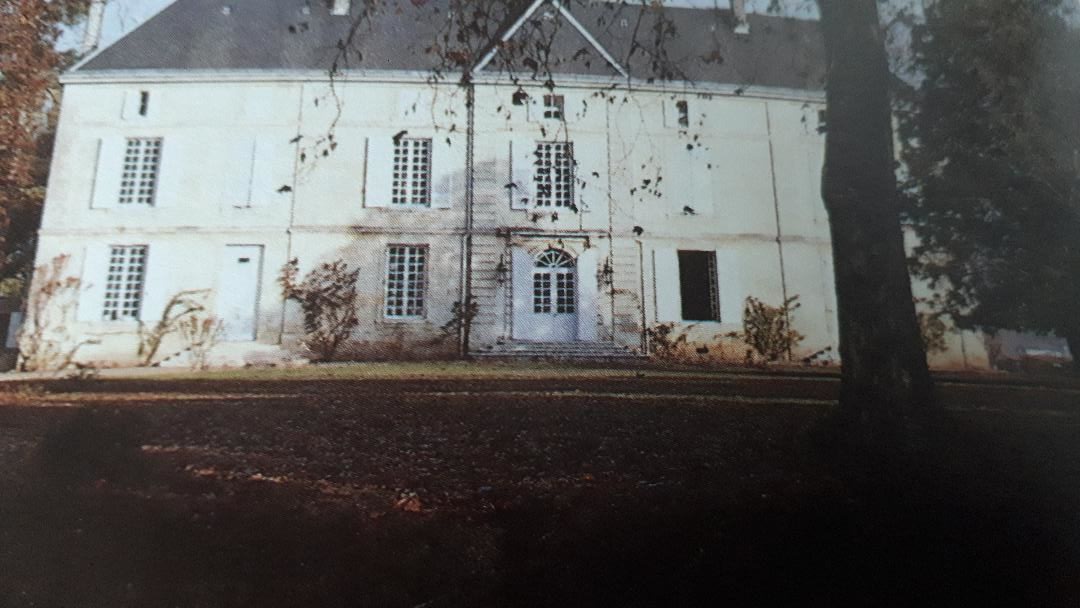
The official Château Monbousquet: https://chateaumonbousquet.com/eng/home
Over the yeras, the place has continued to evolve, without ever being frozen in time. Fabulous heritage of past centuries, the architecture that can be admired today in the Château Corbin is highlighted by a modern and harmonious renovation, respectful of the history of the domain. In a neoclassical style, the castle was built in the 18C at the demand of the owners of the time, backed by the older parts. Corbin also retains wonderful memories of the 16C like a tower with a stone staircase that winds, a pretty dovecote, a charming guest house, as well as the operating buildings and the tasting room from the same time. But to discover the Corbin foundations, you have to go back to the 15C. The legend says that these lands would have belonged to the Black Prince who fought the French at the start of the Hundred Years War … If Château Corbin is the heart of one of the greatest lordships in Saint-Émilion, it is also the seat of a dynamic, lively architecture, evolving with its time … character traits which could also describe the production of its wines. Since 1924, Château Corbin belongs to the same family. Training oenologist and owner of it since 2007, Anabelle Cruse Bardinet has managed this vintage first in 1999. Year after year, she is working on the constant improvement of the place and its production: renewal of plots, restructuring of the site, creation of a new plot. Like the first Château Corbin wine, the tasty Divin de Corbin and XX de Corbin come from a very rigorous selection. They benefit from the same care as the first wine. Their breeding is simply shorter, since these second wines are bottled in the summer following the harvest in order to keep all the freshness of their fruit.
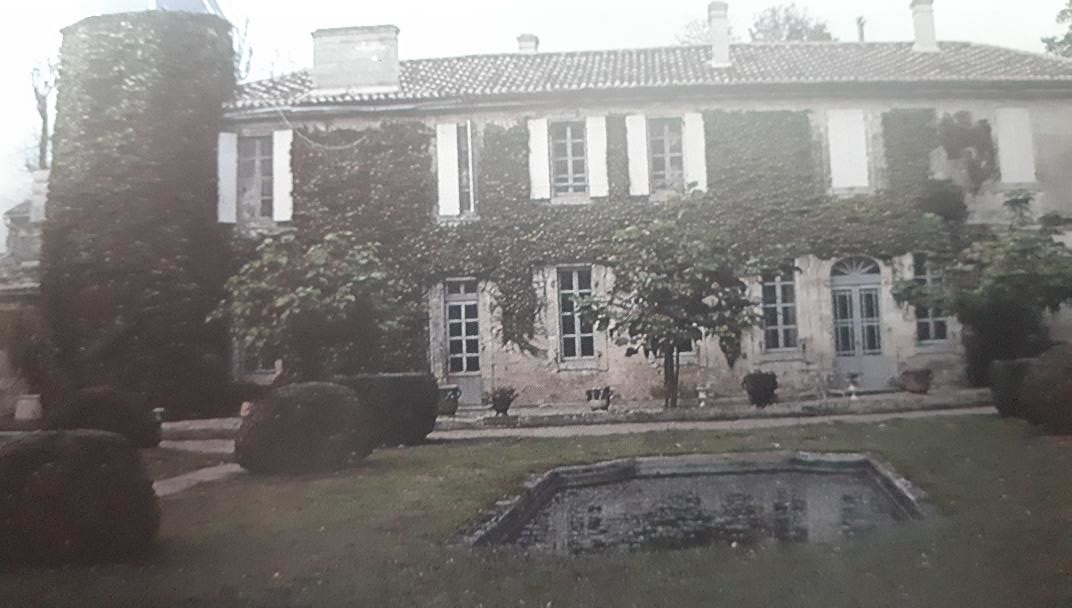
The official Château Corbin : https://www.chateau-corbin.com/le-chateau-corbin/?lang=en
The official wines of Bordeaux on the Médoc : https://www.bordeaux.com/us/Our-Terroir
The Bordeaux tourist office on the vineyards: https://www.bordeaux-tourism.co.uk/vineyards-wines
There are many properties visited over the years too numerous to mention, I purchase back in 2014 the Feret edition, Bordeaux and its Wines book , the essential historical analytical guide to the wines of the Médoc (Bordeaux) The official Feret Library: https://librairie.feret.com/
There you go folks, the wines of my belle France, and the very best from the Médoc that peninsula up from Bordeaux, sublime ! Again, hope you enjoy the post on the wines of Saint Emilion ,part II !! as I
And remember, happy travels, good health, and many cheers to all !!!

 Paris1972-Versailles2003