
I have found older paper pictures that should be in my blog even if quality is not as good, This is a work of love and nostalgia of times and places that will never be back from a beautiful city of Havana, now mostly in ruins, This is my native capital City, the city where I spent a great part of my very early life until 10 years old, Luckily was able to visit it in 1984, 1998, and 2012 , This is Havana or La Habana or the full name San Cristobal de La Habana, the capital of the Republic of Cuba. This is my Habana and would like to share these new old pictures with the world; do see my other posts on it, Therefore, here is my take on the other museums of Havana !!! Hope you enjoy the post as I.
The Casa del Conde De Casa Barreto was built in the 18C,and is located in Calle Oficios no. 362 , corner with Calle de la Luz, Old Havana ,and is today the Centro Provincial de las Artes Plásticas y Diseño (Provincial Center for Plastic Arts and Design),The opulent family of the councilor and provincial mayor of the Holy Brotherhood Don Jacinto Tomás Barreto y Pedroso. The house has a privileged location for its proximity to the port. Only an original portion, which includes the facades, is preserved from this stately mansion, The house reflects in its architecture the transition of the Spanish Mudejar to the Baroque style, merging both with great harmony. Don Jacinto Tomás Barreto y Pedroso, and Count of Casa Barreto on the 1st. August 1786 King Carlos III, of Spain, granted Don Jacinto Tomás the title of Count of Casa Barreto with the previous Viscount as mayor of the Holy Brotherhood, in recognition to the support provided to the crown, especially during the English siege, The house is also known as the Palace of the Marqués de Cárdenas, title of one of its subsequent owners.
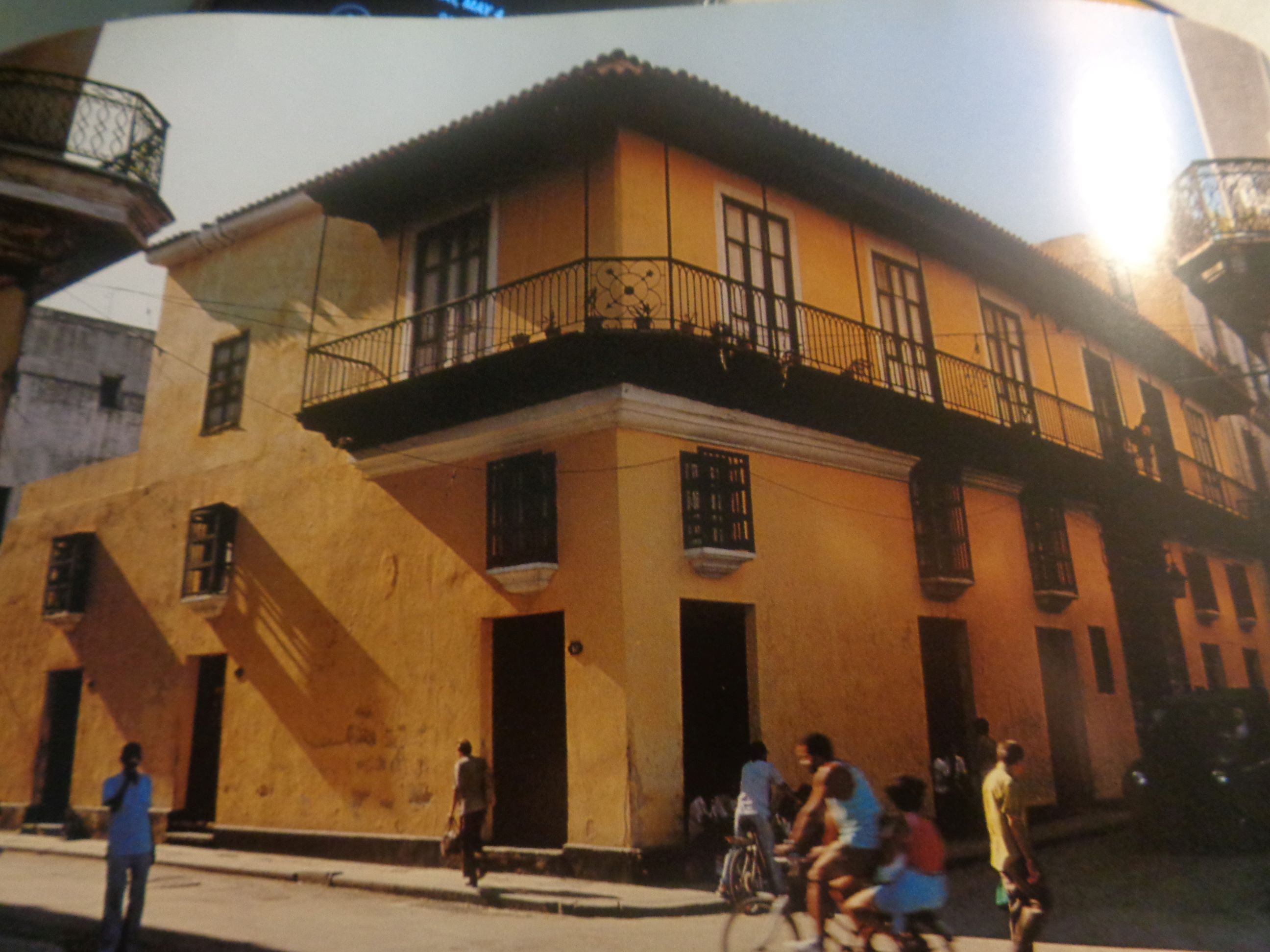
The Museo Nacional de Historia de las Ciencias Carlos J. Finlay is located at Calle Cuba no, 460 entre calles Amargura y Brasil,old Havana, The National Science History Museum Carlos J. Finlay disseminates and studies the heritage of the Cuban scientific movement. The museum dates from June 13, 1962, it was created by the then National Commission of the Academy of Sciences of Cuba, in commemoration of the 130th anniversary of the birth of the outstanding Cuban sage that bears his name and with the purpose, to transform the facilities and library of the former Academia de Ciencias Médicas, Físicas y Naturales ( Academy of Medical, Physical and Natural Sciences) of Havana, in a historical museum. It has a wealth that includes the building with its original furniture, and traces of historical figures that exchanged there such as doctors Nicolás José Gutiérrez and Carlos J. Finlay, (recognise discoverer of the transmission of the mosquito for the yellow fever) ,the civil engineer Francisco de Albear and the naturalist Felipe Poey. There are the remains of Tomás Romay, valuable documentary and bibliographic funds, instruments and personal objects of prominent science men and a pharmacy room. The visit allows a panoramic view of the sciences, both in the country and internationally. Within its collection, dozens of oils, busts and belongings of leading Cuban scientists from the 19C and 20C, portraits of outstanding members of the academy during the 20C, bottles of the 17C and 19C, belongings of the pharmaceutical work.


The Museo Napoleónico or Napoleonic Museum is an establishment that presents a varied collection of objects that belonged to the French emperor Napoleon Bonaparte or that had to do with it. It was inaugurated on December 1, 1961 when the communist regime proceeded to seize all the value and possessions that were on the island; Among those affected were the landowner Orestes Ferrara, a tycoon who obtained his fortune thanks to the exploitation of the sugarcane and that had gathered a collection of objects related to Napoléon, acquired in the first half of the 20C among the 8,000 works that it possesses, Also, collection of another sugar tycoon Julio Lobo, The most important Napoleonic objects in the Americas, The museum is installed in what was the residence of Orestes Ferrara, the Villa Florentine, vast and beautiful residence of Renaissance inspiration carried out between 1920 and 1930. It brings together military weapons and equipment, furniture, bronzes, porcelain, paintings, sculptures, currencies, personal objects from Napoleon and his loved ones, books, engravings and autograph letters. The museographic journey follows the chronology of major political and military events of the Napoleonic epic. It begins with the evocation of the fall of the monarchy to then retrace the ascent of Napoleon until its accession to power and then, it is complete to restore the riches of the Empire to us before approaching the abdication, the exile on the island of Elba, the hundred-days, Waterloo and Sainte-Hélène. During the visit, the visitor meets the names of the greatest artists of the time. Gérard, the official portraitist of the courtyard and especially of the imperial family, is present here with a portrait of Caroline Bonaparte and another from Hortense de Beauharnais. Robert Lefevre is represented by portraits of Napoleon, Elisa and Pauline; Gros by a portrait of General Marceau and another of Bonaparte in Italy. Bonaparte in Milan is again mentioned in a painting by Andrea Appiani while Jean-Baptiste Regnault offers us a monumental Bonaparte at the Boulogne camp. Other more unexpected painters are also exposed such as Marguerite Gérard, the sister-in-law and the pupil of Fragonard, with a double portrait of Jérome Bonaparte and Catherine de Wurstemberg. The Napoleonic epic remained throughout the 19C a privileged theme as evidenced by the works of later artists such as Bellangé, Vibert, Meissonier or Detaille. The sculpture is present with some busts: Pauline by Romagnesi, Joséphine by Chinard or Mathilde by Bartolini. Everywhere, furniture and works of art bear the prestigious signatures of Jacob Desmalter or Thomire. From this one, it is to report a magnificent chandelier with 18 branches drawn by Percier and having belonged to Joséphine at rue des Victoires then to Malmaison. This furniture set gives a complete vision of a house in the French upper bourgeoisie during the first quarter of the 19C. Showcases containing costumes, decorations, weapons and other objects of the soldiers and relatives of Napoleon complete this evocation. A special mention must be made at the Napoleon mortuary mask. This bronze copy is part of a limited series executed in 1833 from the original produced by Doctor Antommarchi in Sainte-Hélène. If we mention it here, it is because François Antommarchi withdrew to Cuba in 1837 in order to devote himself to the study of yellow fever. He died there on April 4, 1838 and his body was buried in the Sainte-Iphigenie cemetery of Santigo de Cuba. The Museo Napoleonico, also has a library rich in more than 5,000 works open to students and researchers. Awesome !
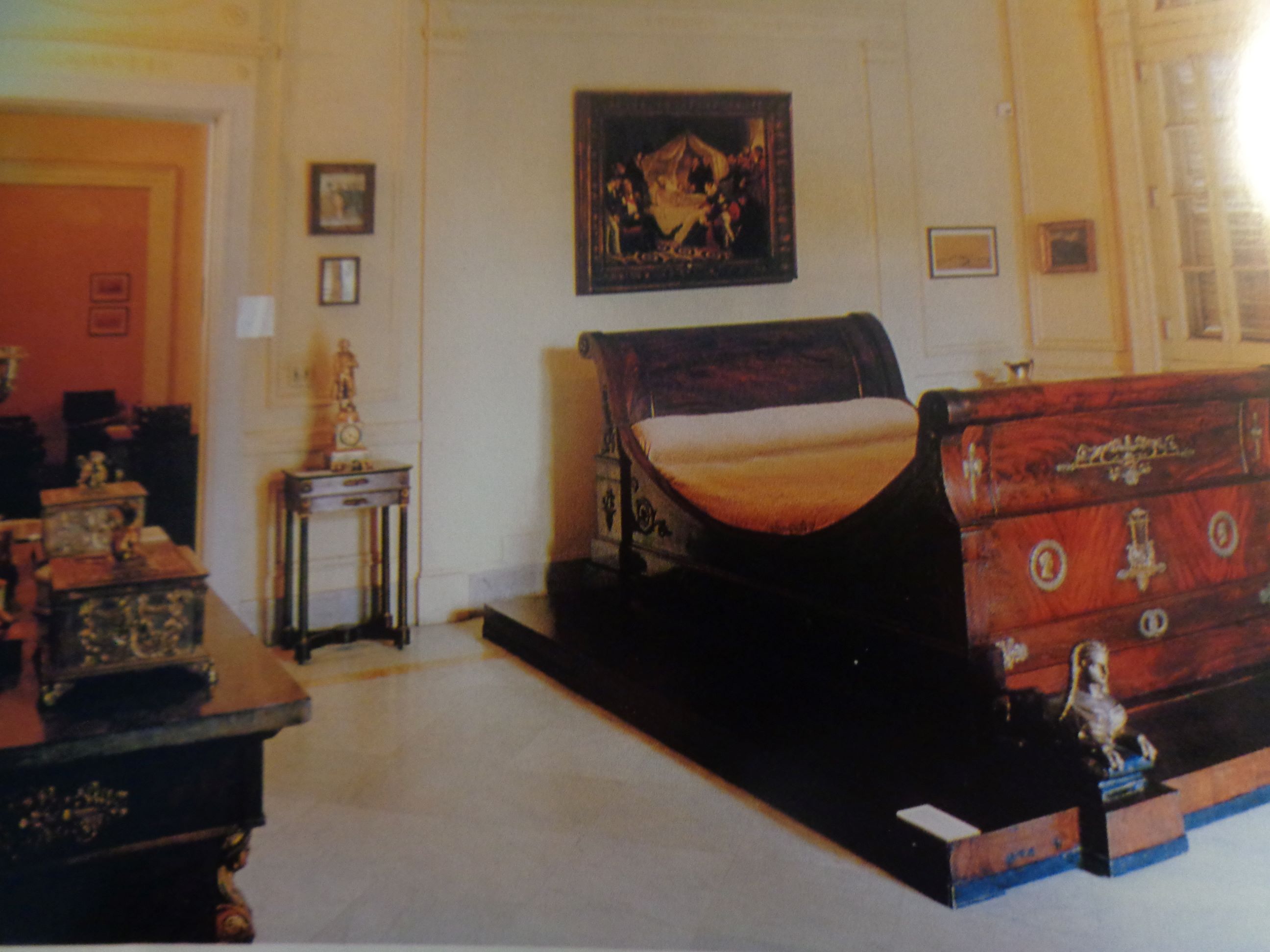

There you go folks, another dandy of my old Havana, memories forever, even if today they are becoming blurred and far away in my mind. Havana still an attracting place even if the crowds are different and the conditions worse; life goes on in this sad forgotten island of Cuba under a long dictatorship . Again, hope you enjoy the post on the other museums of Havana !!! as I.
And remember, happy travels, good health, and many cheers to all !!!

 Paris1972-Versailles2003