
I will take you south deep French country on my road warrior rides of older days when visiting even from FL USA we were on rental cars and passing rather quickly, I love castles/churchs/monateries etc , and stop to see them even without much time on my ways for one shot picture, I am looking at my vault in my new environment and found me some older paper pictures of driving in my dear late wife Martine paternal family side and of course, they need to be in my blog for the memories of always, Therefore, will group them here in the curiosities of the Haute Garonne , part II !!! Hope you enjoy the post as I.
The town of Revel is located in the Haute-Garonne department no 31 in the Occitanie region. On the historical and cultural level, the town is in the Lauragais, the former “country of cocagne”, linked to both pastel culture and the abundance of productions, and granary in Languedoc, It is 48 km from Toulouse on the D622 road or Castres
,The Bastide de Revel was founded in 1342 by King Philippe VI of Valois on Via Tolosane under the name of the Bastide de Lavaur, on the forests of Vauré and Dreuilhe. It was one of the last bastidas or fortified towns created, From the 18C, under Louis XVI, Revel was embellished thanks to important public works, and the townhas been a land of religion since its foundation. Several religious communities are there such as the Benedictines; Antonins; Doctrinaires; Dominicans; and the Brothers of the Christian schools.
Dating from the 14C, the central halle or market is one of the largest in France. It is made up of 79 oak posts and surmounted by a neo-classical style belfry from 1834, a symbol of the royal power of the Bastide. Historically, it was the consuls’ house, a prison, a guards room and a watchtower. The covered market was intended for commercial activities. Even today, the market brings together many locals and tourists and is one of the 100 most beautiful markets in France. The place Philippe VI de Valois on which the belfry and the garlands sits is now a paved and semi-poeton space.
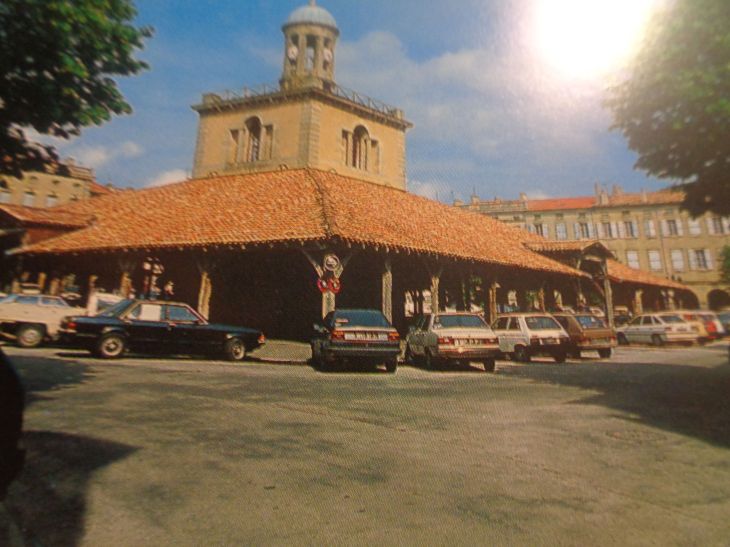
The town of Revel on its market and belfry : https://www.mairie-revel.fr/bouger-sortir/patrimoine/le-beffroi-2/
The town of Rieux-Volvestre is located in the center of the Haute-Garonne department 31 in the Occitanie region. On the historical and cultural level, the town is in the Volvestre, made up of the Arize and Volp valleys, near the Garonne valley, located south of Toulouse and part northern of the Couserans. Rieux was quoted free in 1202 and was erected as a bishopric in 1317 by Pope John XXII. Thirty-four bishops succeeded there until its disappearance in 1790; This former diocese is then attached to the archdiocese of Toulouse.
The Cathedral of the Nativity-of-Marie was erected as a cathedral in 1317 by Pope John XXII, in order to increase the presence of the Catholic Church in the bishopric of Toulouse where Catharism was still getting followers. It was the cathedral of the diocese of Rieux until November 29, 1801, date on which Pope Pius VII established the bubble Christi Domini attaching the territory of the diocese of Rieux to that of the Archdiocese of Toulouse. The Saint-Etienne Cathedral of Toulouse (see posts) then became the cathedral of the Archdiocese of Toulouse where the archbishop sits. Since 1801, the cathedral has become the Parish Church of the Nativity of Mary,
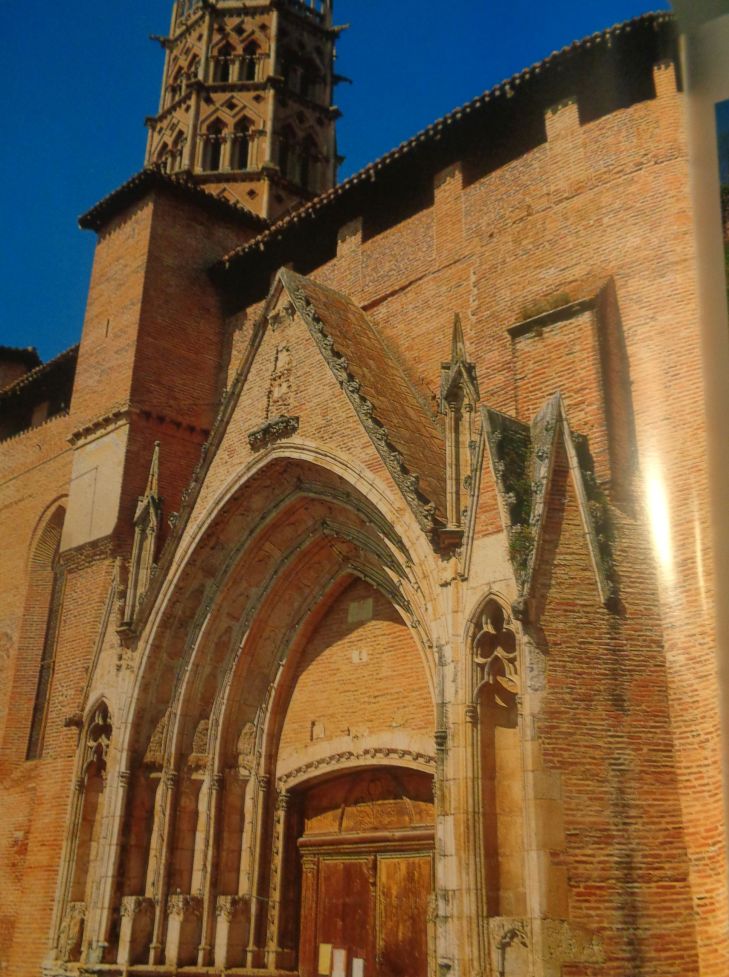
The town or Rieux-Volvestre on its heritage : https://www.mairie-rieux-volvestre.fr/fr/decouvrir-la-ville-cite/le-patrimoine.html
The town of Seysses is located in the north of the department of, Haute-Garonne no 31 in the Occitanie region. On the historical and cultural level, the town is in the Toulouse country, which extends around Toulouse along the Garonne valley, bordered to the west by the hillsides of Savès, in the east by those of the Lauragais and to the south by those of the Ariège valley and the Volvestre. It is 16 km from Toulouse, and 4 km from Muret, accessible by the A 64 highway on exit no 35,
Seysses was located on the ancient Roman road which connected Tolosa (Toulouse) to Lugdunum condenum (Saint-Bertrand-de-Comminges). The Church of Saint-Blaise and Saint-Roch with an organ of 1867 , The works began at the end of the year 1784 and the church was completed and delivered to worship as early as 1790. The Patrons of the church are: Saint Blaise, bishop from Sébaste to Armenia, invoked for sore throat and animals. Saint Roch, born in Montpellier around 1295, became an orphan at the age of 20, he then abandoned his medical studies, distributed his fortune to the poor and went to Provence and Italy to treat the plague epidemic of 1315. Reached by the contagion, he took refuge in a forest to wait for death but was discovered there by the dog of a gentleman named Gothard who had him treated. Back in France, then torn apart by the wars of the kings of Aragon and Mallorca, he was taken for a spy and locked up in a prison where he died in 1327.

The town of Seysses on the Church Saint Blaise and Saint Roch : https://www.mairie-seysses.fr/leglise-de-seysses/
The town of Muret is located in the north of the Haute-Garonne department no 31, of which it is one of the sub-prefectures, in the Occitanie region. On the historical and cultural level, the town is in the Toulouse country, which extends around Toulouse along the Garonne valley, bordered to the west by the hillsides of Savès, in the east by those of the Lauragais and to the south by those of the Ariège and Volvestre valley. It is 23 km from Toulouse and 4 km from Seysses,
Muret is generally known for the Battle of Muret (1213) and as the birthplace of Clément Ader, inventor and pioneer of aviation. It is also on the lands of this town that the Niel family, of which Adolphe Niel, Marshal of France and Minister of War, lived. Muret also had a deputy who became President of the Republic under the fourth Republic, in the person of Vincent Auriol. On September 12, 1213, Muret entered history. That day, a battle changed the horizons on both sides of the Pyrenean border and saw the fate of Occitania. The lords of the north of France, launched in the crusade against the Albigensians (cathars), trying to win in the south and to eradicate Catharism. It was in Muret, on September 12, 1213, that King Pedro II of Aragon who came to reinforce the local Occitan forces, lost his life. This defeat of the Occitano-Aragonese troops announced the annexation of Languedoc to the crown of France and the end of Catharism.
The Saint-Jacques Church was built in the 12C thanks to the counts of Comminges which made their main residence in Muret. It was reworked and enlarged in the 14-15C. Its a Toulouse type octagonal bell tower is particularly remarkable. In 1538-1548, a large vaulted choir was added at the end of the gothic nave. Its decor is restored after the depredations of the French revolution, under the first empire, in a neo-classical style and side chapels are built.
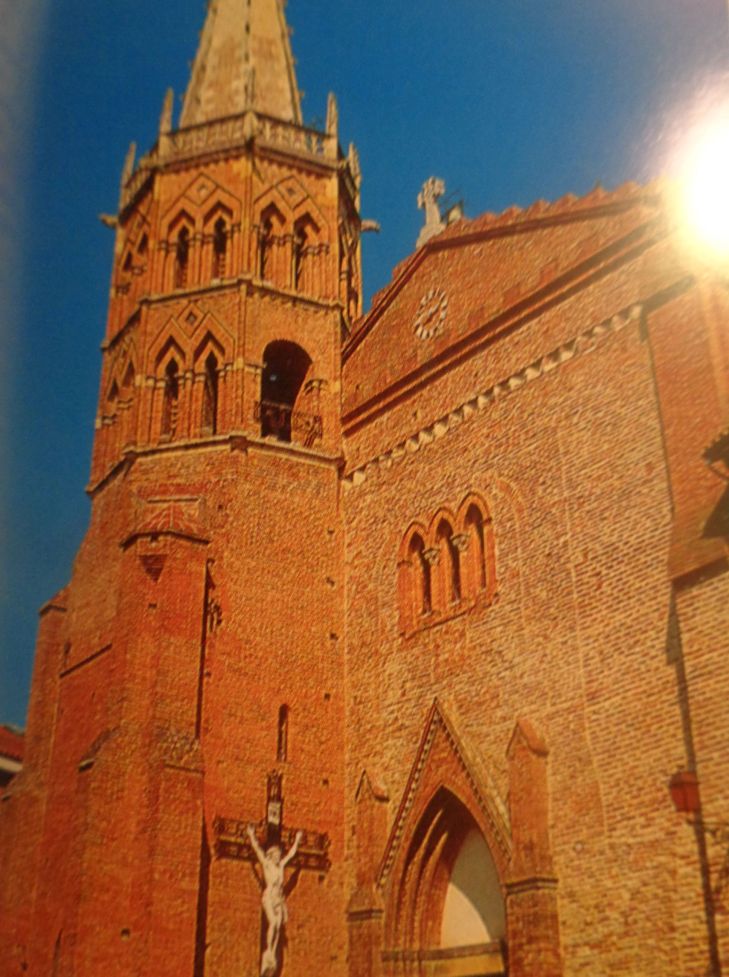
The town of Muret and its heritage : https://www.mairie-muret.fr/decouvrir-la-ville/visites-et-patrimoine-touristique
The town of Saint-Sulpice-sur-Léze is located in the center of the Haute-Garonne department no 31, in the Occitanie region. On the historical and cultural level, the town is in the Volvestre, made up of the Arize and Volp valleys, near the Garonne valley, located south of Toulouse and part northern of the Couserans. It is located 35 km from Toulouse, and 15 km from Muret ,and can be access by the A64 highway/motorway, exit 28, then take the D 622 road,
Saint-Sulpice sur Lèze is an ancient Bastide of the 13C which owes its origin to Alphonse de Poitiers brother of Saint Louis and its prosperity at the commandery of the Order of Saint-Jean de Jerusalem founded in the 14C. The Saint-Sulpice Church on the Esplanade André Maurette is from the 15-16C, restored in the 19C, The history of this parish church began shortly after the Bastide foundation in 1257, and whose establishment is part of the plot of the latter. It was located outside the Bastide at the time of the construction of the fortified enclosure, around 1356. In the second half of the 15C, the church was entirely rebuilt in a southern Gothic style, with its remarkable dimensions, that we can always admire today.

The town of Saint Sulpice sur Lèze on its history : https://www.stsulpicesurleze.fr/bref-apercu-historique/
For reference, the Haut Garonne dept 31 tourist office: https://www.hautegaronnetourisme.com/
The Occitanie region tourist office: https://www.visit-occitanie.com/en/
There you go folks, a dandy wonderful region of my belle France , very close to the family, with many memories from and with the family over the years. Again, hope you enjoy the post on the curiosities of the Haute Garonne , part II !!! as I
And remember, happy travels, good health, and many cheers to all !!!

 Paris1972-Versailles2003