
Well, well, I found me older new pictures to the blog and therefore, will do a post on the curiosities of Curitiba, part I ! These are new to the blog and glad found the pictures to write these wonderful posts, As said, had the opportunity to lived in Curitiba back in 2008 for 3 months, and it was superb! I have several posts on the city, so let me tell you about the beautiful City of Curitiba, ,Paranà State of Brazil, Hope you enjoy the post as I.
The Praça Garibaldi was known in the 19C as Largo do Rosário, after the Rosário Church. At the end of the 19C, it was named Praça Faria Sobrinho. In 1946, it became Praça Garibaldi square, in honor of Giuseppe Garibaldi, The square is home to important historical buildings, such as the Garibaldi Palace (pic), the headquarters of the Curitiba Cultural Foundation, the Rosário dos Pretos Church, the Independent Presbyterian Church and Solar do Rosário. The Garibaldi square also has art galleries, antique shops, bars and the Flower Clock. Giuseppe Garibaldi was born in Nice, an Italian city at the time (currently French). Son of a fisherman. He began traveling at age 15, as a helper on a ship. In 1835, he fled to southern Brazil, where he met Anna Maria Ribeiro da Silva in Laguna. Anita Garibaldi, as she came to be known, fought alongside Giuseppe in the campaigns in Brazil, Uruguay and Europe. In Brazil, Garibaldi participated in the Farroupilha Revolution (1839-1840), under the command of Bento Gonçalves and in the conquest of Laguna, where the Juliana Republic was founded. In Uruguay, he led the defense of Montevideo and, in 1848, returned to Europe to fight against the papacy for the unification of Italy. He died at his home on the island of Caprera, in 1882. Due to his struggles and achievements, he is considered a hero of two worlds: South America and Europe, fyi The Garibaldi Society was founded in 1883 and was born from the idea of bringing together Italian immigrants in Curitiba, under the same ideal that led Giuseppe Garibaldi to fight for the unification of Italy and the Farroupilha Revolution in Brazil. The Palacio Garibaldi is located at Praça Garibaldi, 12,in the district of Alto São Francisco,
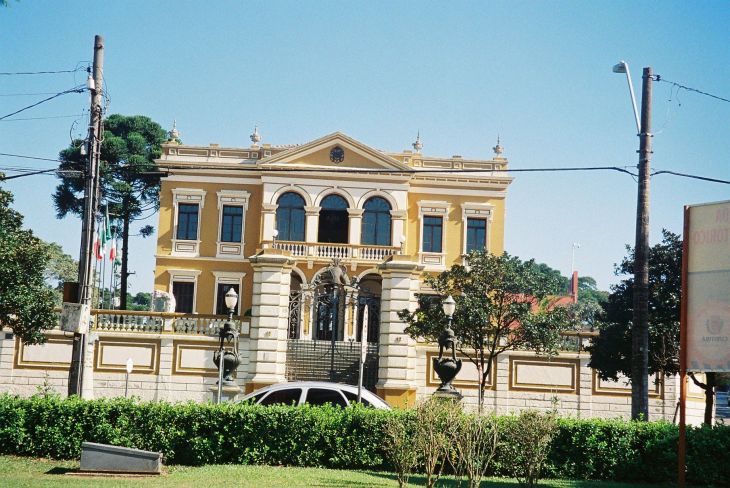
The official Palacio Garibaldi : https://www.palaciogaribaldi.com.br/
The Conselho Estadual de Cultura or State Cultural Council building is at Rua Ebano Pereira, It serves as the cultural admin of the State in charge of several museums, The picture shows great architecture style, for the memories.
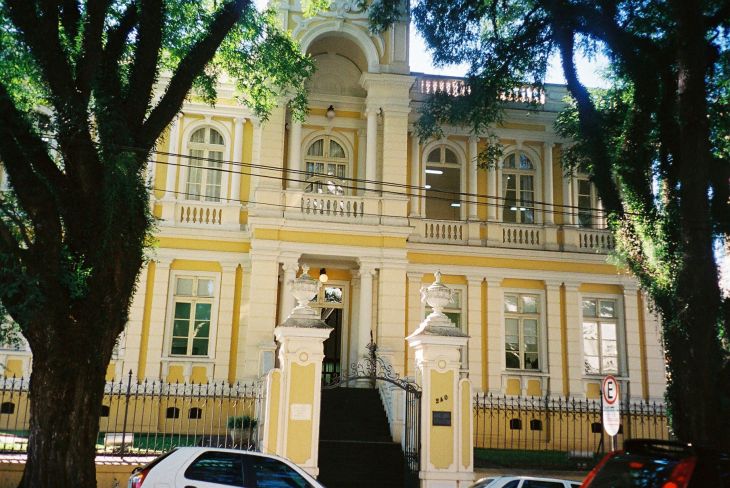
The official State Culture admin : https://www.cultura.pr.gov.br/Pagina/Conselho-Estadual-de-Cultura
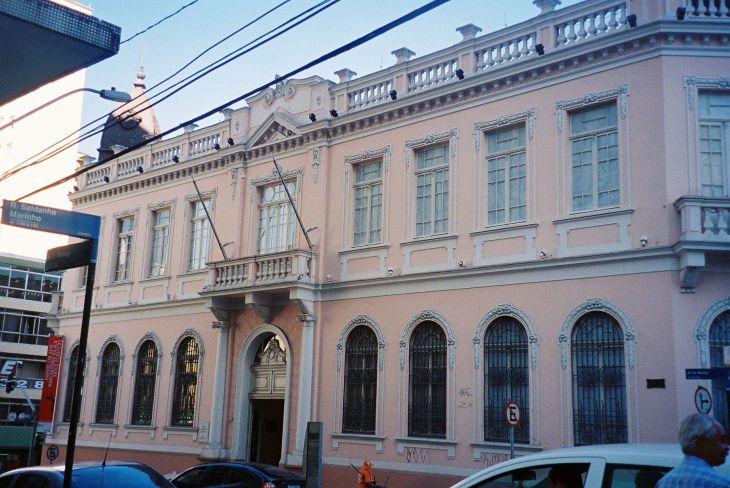
The Casa Andrade Muricy located at Al. Dr. Muricy, 915 – Centro is now closed, It was an excellent art space that was closed by the Government of Paraná and never reopened. There was a last exhibition there in approximately 2010. The house, very old, is huge and worth a visit for the beauty of the building. The Casa Andrade Muricy was built between 1923 and 1926, in an eclectic style. It was the headquarters of several public bodies. It is named after the Curitiba writer José Cândido de Andrade Muricy, grandson of the Bahian doctor Dr. Muricy, after whom the Alameda where the building is located is named. Since 1998, it has been a space for visual arts exhibitions, managed by the Paraná Department of Culture. Its main facade faces Alameda Dr. Muricy, 915.
TheTeatro Guaíra Cultural Centre is a state-run cultural institution , Its building, located at Rua Conselheiro Laurindo facing Praça Santos Andrade, It has about 3,000 seats in three different auditoria, being one of the largest concert halls in Latin America.It houses the activities of the Paraná Symphony Orchestra, the Ballet Teatro Guaíra dance company and the Paraná Comedy Theater (TCP), The history of the Guaíra Theater begins in the 19C when the theater was located in the square where the Paraná Public Library building is today, on Rua Cândido Lopes, and its inauguration was scheduled for September 28, 1884, with the name of Theatro São Theodoro. The opening was canceled due to the outbreak of the Federalist Revolution, which used the building as a political prison. Sixteen years later, on November 3, 1900, after renovation, expansion and installation of electric lighting works, the theater was finally inaugurated, receiving the name Teatro Guayra. The facilities were redecorated and expanded in 1915. In 1937 it was ordered the demolition of the theater, alleging danger of collapse. The new theater work began in 1952. The theater was finished in different phases of its buildings such as the medium-sized Salvador de Ferrante Auditorium, known as Guairinha, was inaugurated on December 19, 1954. The large auditorium, also known as Guairão, was inaugurated on December 12, 1974, receiving the name from the Bento Munhoz da Rocha Netto Auditorium. The Glauco Flores de Sá Brito Auditorium, known as the mini-auditorium, was inaugurated a year after the large auditorium, in 1975, and was reserved mainly for Paraná theater companies and experimental and avant-garde shows. The José Maria Santos Theater is not part of the main property, but is part of the heritage of the Guaíra Theater Cultural Center. It was inaugurated on June 27, 1998.
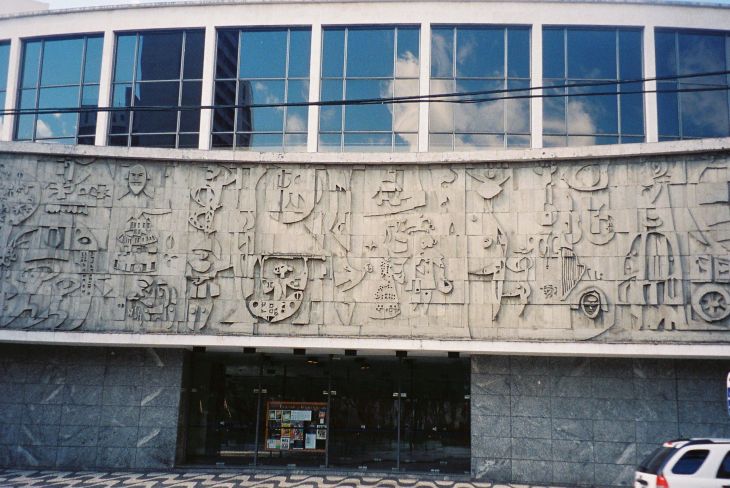
The official Teatro Guaira : https://www.teatroguaira.pr.gov.br/
For reference, the Curitiba Tourist Office: https://turismo.curitiba.pr.gov.br/en/
There you go folks , a very nice time of many nice memories ; good for the soul and this road warrior in Curitiba. I had many opportunities to walked city , and do lots of sightseeing as had a company car in addition to my knowledge of the local language , and the fun was great, memories forever. The curiosities of Curitiba , part I was one happy moment in the City, and great architecture, good to walk the beat and enjoy the scenery, And for me, just another wonderful memory, always in my heart. I hope one day to be back toCuritiba, eventually. Again, hope you enjoy the post as I.
And remember, happy travels, good health, and many cheers to all !!!

 Paris1972-Versailles2003