
Again,now on more familiar territory but always new finds in my road warrior ways ! I have passed by here several times but never stop until now, I came over to see family again, my dear late wife Martine oldest brother and voilà a new older spot in my world map ! This is the continuation of wonderful sights in the dept 59 Nord of the region of Hauts de France, and in my belle France , Therefore, let me tell you about the must to see,the curiosities of Le Cateau Cambrésis !! Hope you enjoy the post as I.
The town of Le Cateau-Cambrésis is located in the department 59 Nord in the Hauts-de-France region of my belle France. The town is 9.5 km from Caudry, 23 km from Cambrai, 28 km from Valenciennes and 34 km from Saint-Quentin. The regional capital, Lille, is 68 km away. The town is located right on the departmental road 643 (ex national route 43). The departmental road 932, also known as “Chaussée Brunehaut”, an old Roman road from Bavay to Vermand, passes to the east of the town.
The town’s fame is essentially due to the Treaties of Cateau-Cambrésis which were signed there in 1559 between the sovereigns of France, and Spain and which put an end to half a century of wars. Also, the wool spinning and weaving company of Charles Seydoux, created in the 19C and closed in 1981, contributed to the notoriety of the town , And the town is known for its museum dedicated to the painter Henri Matisse, (see post) a native of the city, created in 1952 by the painter himself and installed today in the old palace Fenelon.
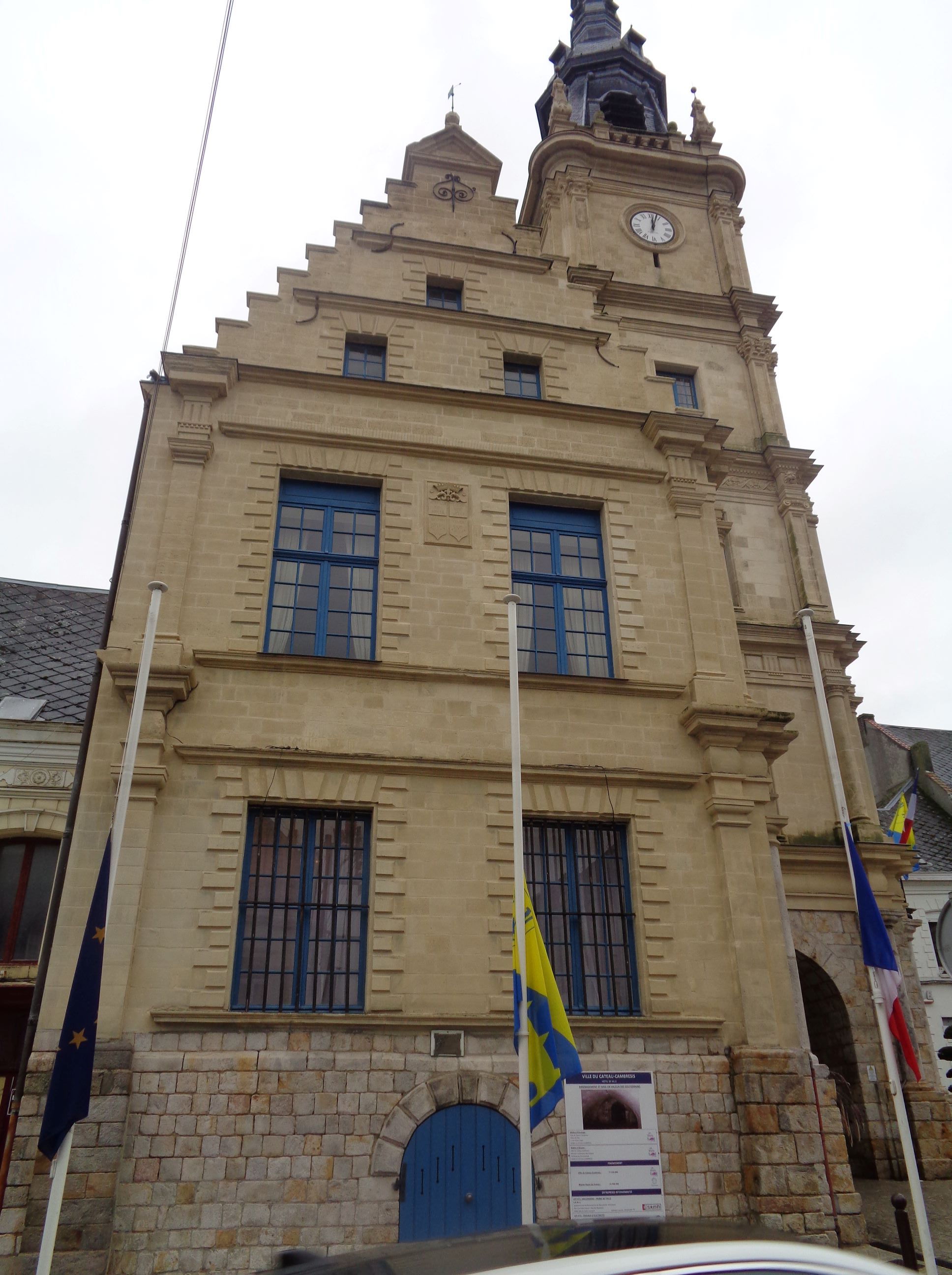
The Hôtel de Ville or City/town hall was built from 1533 on a certainly older basis. The belfry, in Renaissance style, is later: it was built in 1705. The belfry has four floors with superposition of orders: Tuscan order on the ground floor, then, successively , Doric, Corinthian and composite order. Some of its elements are typical of Flemish architecture, such as the ridge triangle of the sparrow-step gable. The spire of the belfry is decorated with a campanile and four small pinnacles. The carillon, installed in 1716, still punctuates the life of the city. It was renovated in 1918 On one of the stones of the sandstone base, we can see the date 1533.
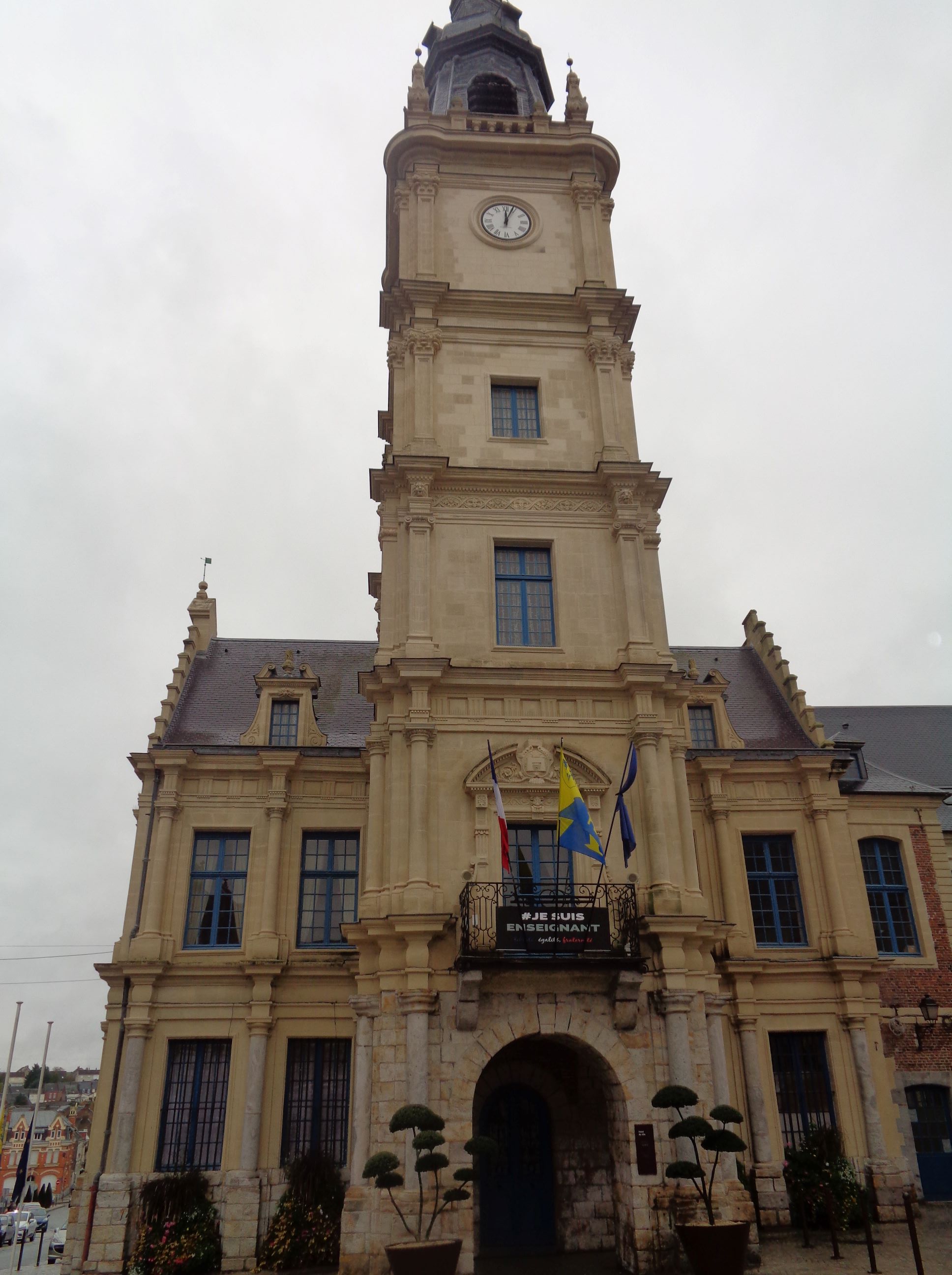
The belfry is later: it was built in 1705 as originally, the City/town hall did not have a belfry because Le Cateau did not have franchises, belonging in its own right to the Bishop of Cambrai. It was the most famous of them, Fénelon, who acceded to the request of the Catesians to build this belfry. On the ground floor, a vaulted porch topped with a balcony provides access to the building. Close to the church whose bell tower is also onion, it creates a very pretty view for the city, at the bottom of the steeply sloping Place where at the opposite end is the statue of Marshal Mortier, marshal of the First Empire born at Le Cateau. In the 19C, the belfry was restore, but since the limestone stones, blackened by time, and which tend to crumble, were in great need of complete restoration; This is what was achieved, and since April 2019, the refurbished belfry has stood at the bottom of a redeveloped paved square where a stone with the city’s coat of arms appears.
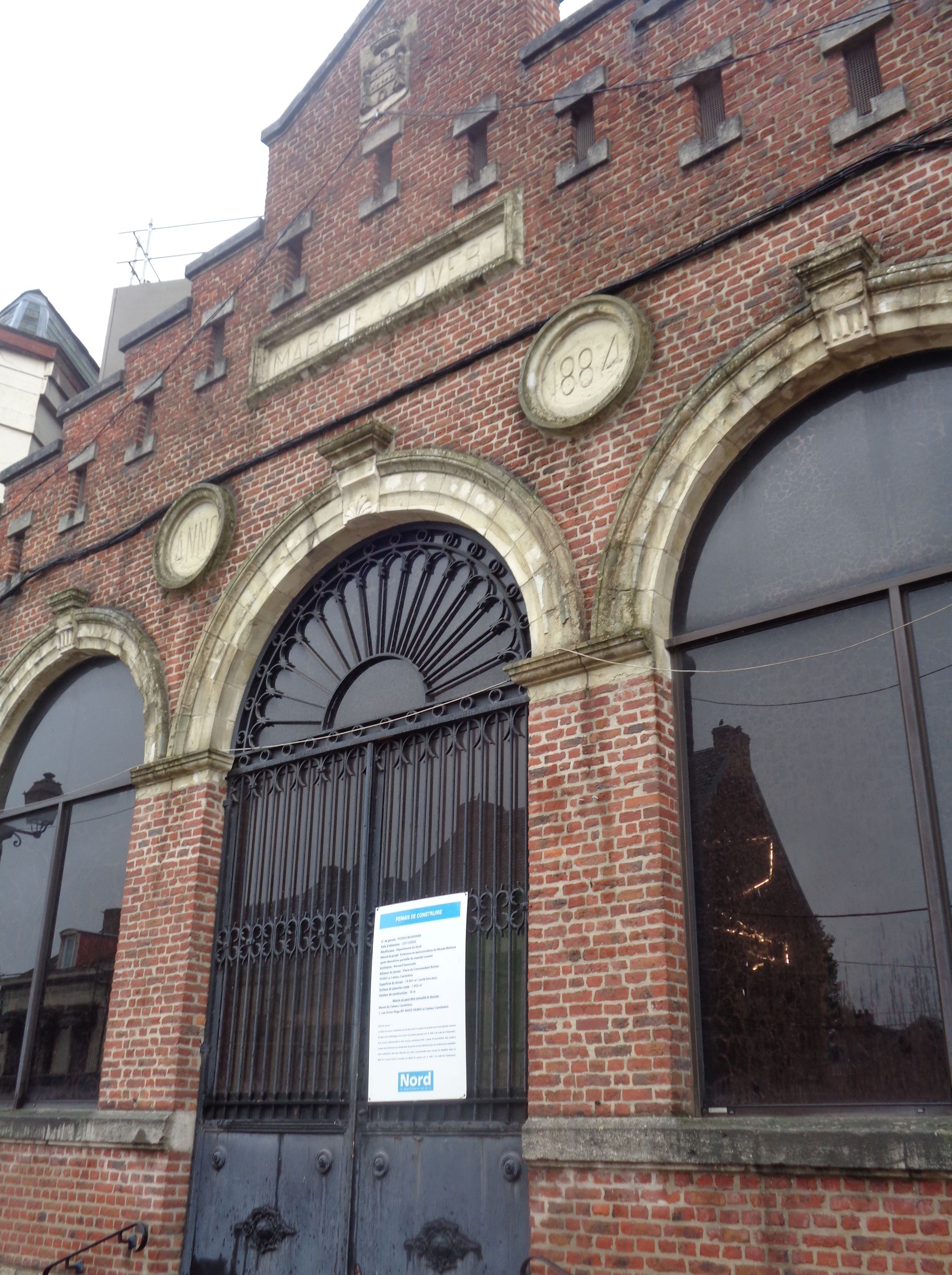
Built in 1878 on the site of the stables and stores of the Palais Fénelon, the old covered market welcomes traders from Cambrésis and Thiérache. On the facade of the market appear the arms of the town of Le Cateau. At the rear the building opens onto the public garden. This is part of the expansion of the Henri Matisse Museum work ongoing until june 2024.
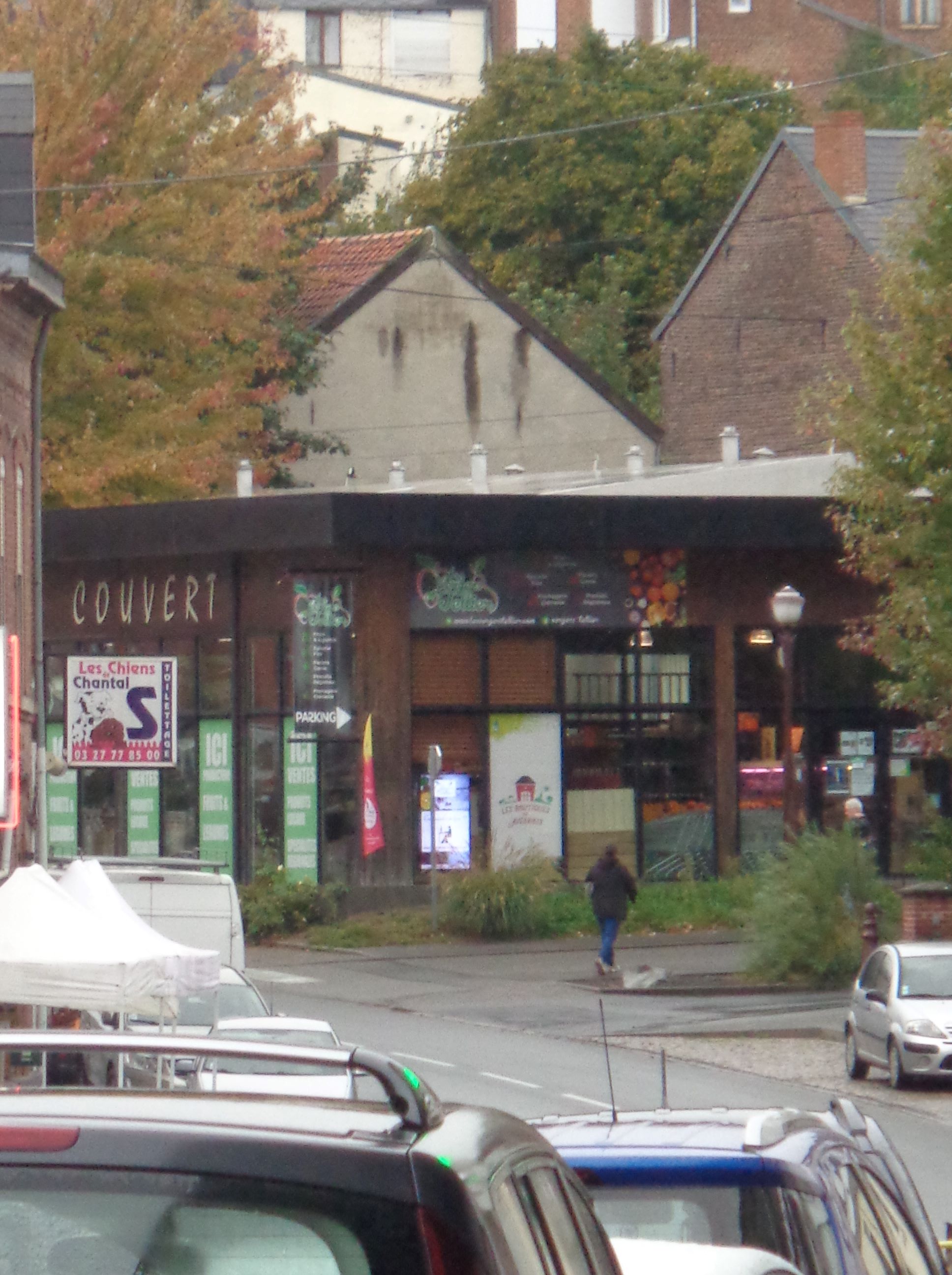
The new covered market in Le Cateau-Cambrésis was inaugurated on August 30, 2012, more functional, brighter and above all truly accessible. This new market is a real meeting place, It welcome around 10 traders on Fridays, the greengrocer, horse butcher, cheese maker, farmer, fishmonger, butcher, delicatessen caterer, florist, candy seller, honey producer, oriental caterer. And on Sundays , greengrocer, butcher, delicatessen, oriental caterer and roaster.
Other things to see with more time are :The old ramparts, destroyed at the beginning of the 17C on the orders of Louis XIII, were partly rebuilt. The five military cemeteries from the Great War or WWI located on the territory of the town ; four British cemeteries and one German cemetery, These are : Le Cateau Communal Cemetery, inside the town’s cemetery, Le Cateau Military Cemetery, route de Montay next to the German Military Cemetery, Quietiste Military Cemetery located on route de Busigny, Highland Cemetery Le Cateau located on route de Guise, and the Cateau-Cambrésis German military cemetery, route de Montay next to the British military cemetery and which contains the Russian cemetery. Le Cateau-Cambrésis is a French stage on the via Gallia Belgica of the pilgrimage to Santiago de Compostela, which continues via the via Turonensis. The previous notable stop is Landrecies; the next one is Bohain,
The town of Le Cateau Cambrésis on its heritage : https://www.lecateau.fr/que-faire-au-cateau/decouvrir-le-cateau.html
The local Cambrésis tourist office on Le Cateau Cambrésis : https://www.tourisme-cambresis.fr/commune-59-Le%20Cateau-Cambr%C3%A9sis.html
There you go folks, a dandy wonderful road warrior ride that we love it much, This time in the north of France and just lovely, Family area and memories flashing, but glad I did it . Again, hope you enjoy the post on the curiosities of Le Cateau Cambrésis !! as I
And remember, happy travels, good health, and many cheers to all !!!

 Paris1972-Versailles2003
💛
LikeLiked by 1 person
Thanks for stopping by Cheers
LikeLike