
Again, for the story, It took me a while , worse when you have family about an hour from the city. But often said, living and visiting are two different things . When in the area stay with family and this time again,however, did it in reverse order, when to see Lille and its sights, (stay tune for posts), and then went to see family. Therefore, let me tell you about the Palais des Beaux Arts Museum of Lille !!! Hope you enjoy the post as I.
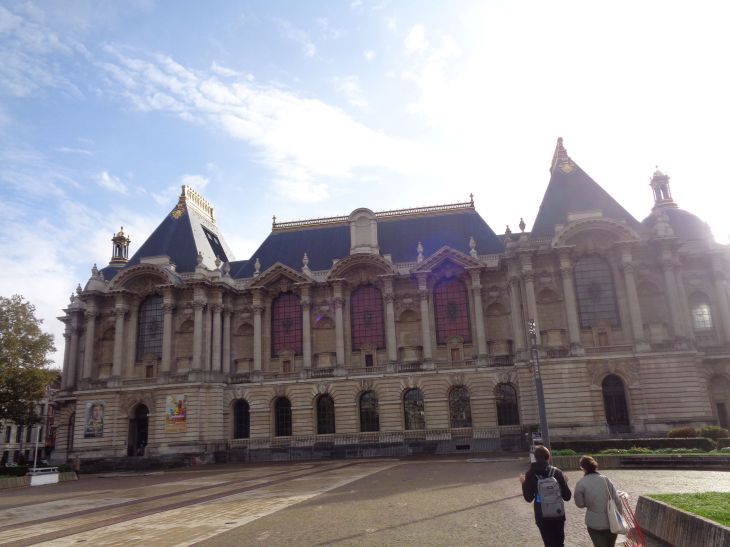
The Palais des Beaux-Arts de Lille or Fine Arts Museum of Lille is located at Place de la République square from 1885, The Haussmannian influence is noticeable in its exterior architecture, just beautiful, The museum is one of the largest Fine Arts museums in France, and the largest outside Paris in the number of works of art exhibited , Renovated and extended in the 1990s, it has 12,000 m2 of exhibition space. In particular, it presents a very rich collection of painted works from the 15C to the beginning of the 20C. It also contains a drawing room, a sculpture gallery, a ceramic collection, around fifteen relief plans of fortified towns in northern France and Belgium and a numismatic collection.
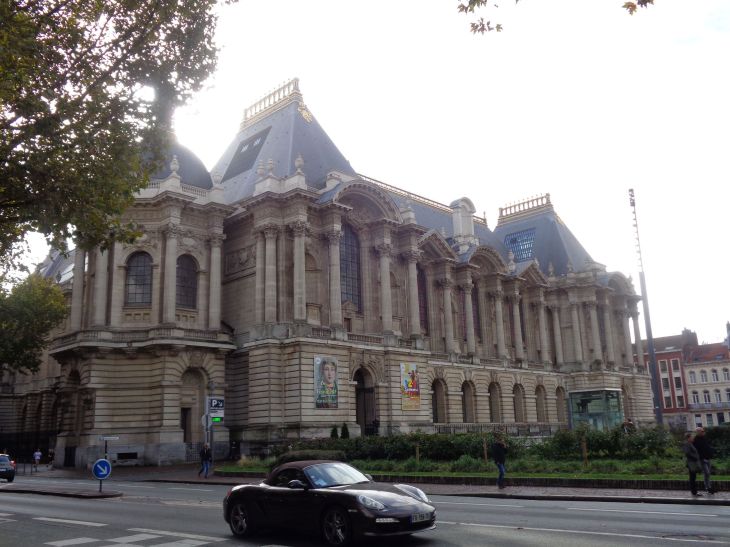
Created in 1792 at the instigation of the painter Louis Joseph Watteaua, the museum’s initial collection was made up of works confiscated from the city’s émigrés and religious institutions in the aftermath of the French revolution (of course), including several paintings by Rubens, Van Dyck or Jordaens . In 1803, it was enriched with works donated by the State, in accordance with the provisions of the Chaptal decree, at the origin of the creation of numerous provincial museums; where the confiscated loot was share, In 1809, the museum opened to the public. Afterward ,mainly by the legacies and donations, from the 1850s, which lead to the creation of the current fund. The reopening of the museum, in 1892 in this new building, offered the opportunity to bring together several collections of paintings, and also of sculptures, drawings, old pieces and art objects, until then dispersed.
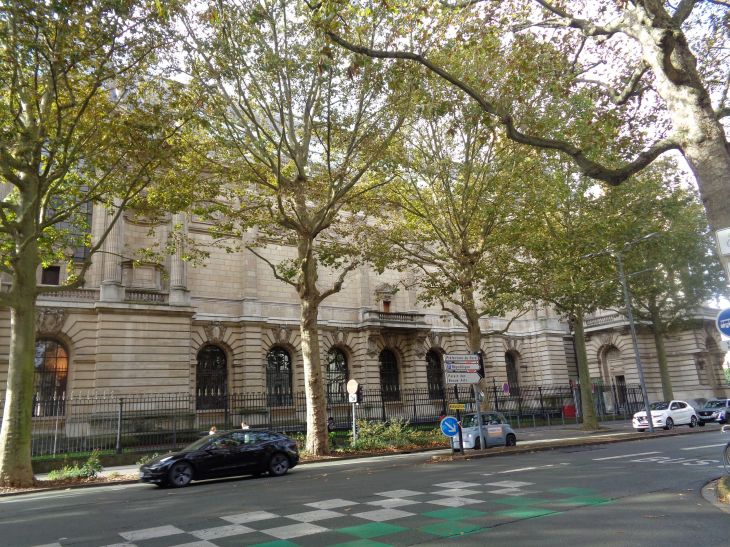
The City of Lille acquisitions were also very dynamic until the eve of the Great War or WWI. They include some major works, by David, Goya, Delacroix, Courbet, Corot and Puvis de Chavannes, some of which have marked the history of painting, but above all old or contemporary works by artists of regional and local origin who come supplement other forms of contribution. The result is collections where Flemish and Dutch pieces from the 15C to the 17C and French pieces from the 19C hold a prominent place, Drawn from a collection of more than seventy thousand works, the museum now offers nearly two thousand for visitors. In particular, there are two hundred pieces of sculptures, paintings and art objects from medieval Europe and the Renaissance, more than five hundred painted works from the 16C to the 20C, some one hundred and thirty-five sculptures from the 19C, a beautiful collection of ceramics from the 16C to the beginning of the 20C, and fifteen 1/600 relief plans of towns fortified by Vauban. The museum also has a drawings cabinet with six thousand five hundred sheets of drawings and prints from the 15C to the 20C, and a numismatic collection of several thousand coins and medals, as well as two hundred and fifty matrices of seals ranging from the 13C to 19C. Renovated between 1991 and 1997, the museum also hosts a temporary exhibition room, an auditorium, a library and educational workshops.
The museum’s collections were formed separately, first at the initiative of the City of Lille for the painting museum, then at that of the Lille Society of Sciences, Agriculture and Arts from the objects brought by its members since its foundation in 1802. The latter thus founded a museum of archeology and numismatics in 1824, bringing together medieval sculptures, coins and medals, art objects and ceramics, then a Wicar museum in 1834 to receive the legacy of drawings and art objects from Jean-Baptiste Wicar. In 1869, a ceramic museum was installed in the conclave room of the Rihour palace, then, in 1881, an Vicq archaeological museum, also in the Rihour palace, to accommodate the legacy of Jules de Vicq, consisting of carved woods, ivories, enamels, goldwork, miniatures and ceramics. The opening of the Palace of Fine Arts in 1892 provided the opportunity to bring together these different collections in the same place. In 2015, the collections numbered 72,430 works divided into seven departments: the department of Antiquities, the Middle Ages and the Renaissance, the department of paintings from the 16C to the 20C, the department of sculptures, the department of ceramics, the department Plans-Reliefs, the Drawings cabinet and numismatics
Imagine a Fine Arts Museum that houses a complete panorama of the history of Western art, from the Middle Ages to the 20C. Imagine being able to wander among more than 650 paintings on display: Brueghel, Rubens, Goya, David, Chardin, Delacroix, Courbet, Monet, Chagall, Renoir… Imagine being able to explore the 3D model of the city of Lille… and walk through a gallery of sculptures between Carpeaux, Claudel and Rodin. Awesome ! Me think second only to the Louvre,
The official Palais des Beaux Arts of Lille : https://pba.lille.fr/en
The Lille tourist office on the Fine Arts Museum of Lille : https://en.lilletourism.com/museum-lille/palais-des-beaux-arts-de-lille.html
There you go folks, a dandy city of the Nord that is North of France. I was finally back to Lille and it was great with many family memories flashing but glad I did it now. Again, hope you enjoy the post on the Palais des Beaux Arts Museum or Fine Arts of Lille as I
And remember, happy travels, good health, and many cheers to all !!!

 Paris1972-Versailles2003