
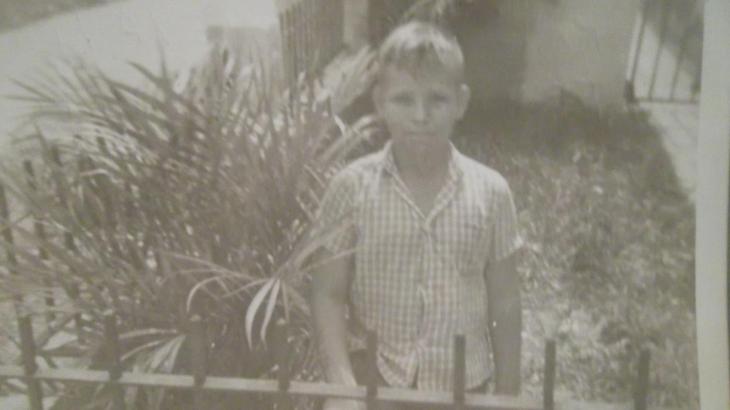
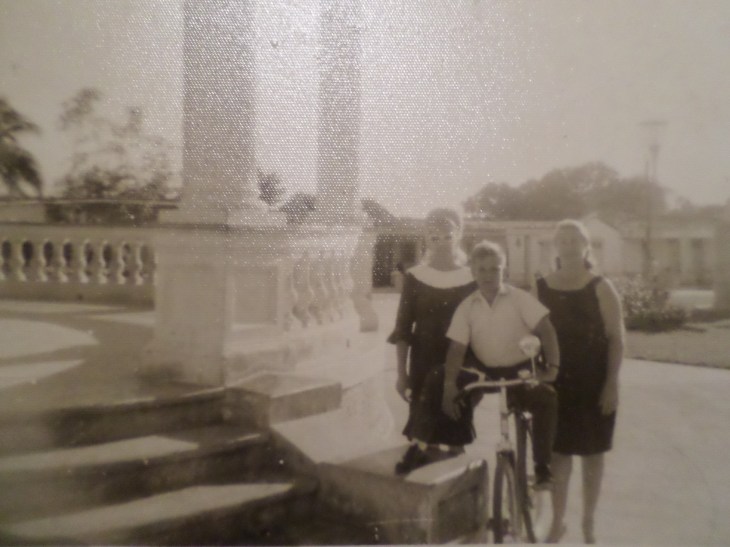
Ok so this is pull from my vault and realise not in my blog , and should be, Pictures are hard to come by from those earlier days of my life but the ones I find will be in my blog, This is again nostalgia of a time far away, of my Punta Brava !!! and the towns of my childhood before 10 ,such as Bauta Cangrejeras and Santa Fe, Therefore, here is my take on these memorable towns, Hope you enjoy it as I.
Cangrejera is a village of Bauta , and today in the new province of Artemisa before Havana, It is bordered mostly by Santa Fe, a bit on Arroyo Arenas and Playa Baracoa. For me here a rural area was that I spent by force of the new communist government interne school José Manuel Lazo de la Vega boarding school where the children of the workers were brainwashed on the new socialists order, luckily not me and was able to get out. A sad memorable moment of my life in Cuba, Of course, no pictures.
The story of Bauta tell us that since 1550, pirates and corsairs, were attacking the possessions of the empires between 1558-1577, The castillo de la Real Fuerza , castillo de los 3 reyes magos (Morro) and Castillo de la Punta, were built between 1589-1630 at the entrance to the bay of Havana. The town of Bauta was officially founded as a rancheria (ranch area) in 1750, and became a town in 1879, when it was separated from Santiago de las Vegas, by a Royal decree of Gen Arsenio Martínez Campos of Spain, My last school in Cuba was based at Bauta, (see post) where I needed to come by bus, car, hitchhike whatever means. I did not do much school as most of the time I sneak out to go to the baseball stadium not far from there.

In 1607 it was officially founded Havana, as the capital of the Island of Juana (later also called Fernandina and eventually Cuba from taino indian word Cubanacan), developing trade and increasing the population and towns or ranches of the interior, the livestock, agriculture, mining and timber industry/ships/houses are increasing steadily thus, both tobacco and sugar industries were strong and necessary economies, for Spain. By 1,830 there were more than 1,000 mills/trapiches, producing 94,000 tons of sugar/ molasses, Due to these favorable conditions, the wealthy and the mills expand, being founded between 1853-57 the mill El Tahoro, with slaves of origins “lucumi” and “yorubas” captured in equatorial Africa, (present day Benin Nigeria Ghana etc), The ruins of the old Tahoro mill are located in the town of Bauta, province of La Havana, near the village of Cangrejeras, in the highway that goes from Punta Brava (my native town!) to Santa Fe. Its remarkable historical wealth, closely linked to the process history and slavery in Cuba, to the economic, agro-industrial and development of the nascent Creole (natives of Cuba) oligarchy of the 19C. The sugar fields were extensive including up to the areas of Cangrejeras, Punta Brava, and Arroyo Arenas (see posts).
On January 7, 1896, had as scene of the combat waged by General Antonio Maceo against the Spanish army, being destroyed partially its buildings when they were set on fire by the Mambises troops (name given by Spain to independance army of Cuba) They, also burned town Cangrejeras in 1896. Near there Gen Maximo Gomez (Dominican Gen who fought for Cuba) after he would continue to the west when Gen Antonio Maceo died in combat at Punta Brava, the crossing that Maximo Gomez followed then is known today as the Paso Gomez or Gomez’s pass. In 1868 the father of the fatherland of Cuba Carlos Manuel de Cespedes proclaimed the abolition of slavery in Cuba, being free the former slaves fought for Cuba,the same happened at the El Tahoro mill and grouped in areas around the towns of El Roble ,Cangrejeras, Punta Brava and Bauta.
The so-called main house, of El Tahoro mill today in ruins, is fundamentally distinguished by its portal, with wide columns, masonry walls and Spanish tile floor; the same built at the beginning of the century, it adjoins the garage, the kitchen, the servants’ quarters and the great bunkhouse. Of the large rectangular barracks from the 1850s are partially preserved and some are in a state of deterioration, they were made up of with stone walls, with minimal ventilation at through a small window with a wooden frame and iron bars. The spatial architectural system counted within its elements, with an elongated plan, of prismatic volume, which occupied more or less the center of the batey, with quite wide lights and intercolumnios for the transfer of raw material and the movement of the buoy, that must have been part of the mill house, the mill or the trapiche. The boiler house was close to the house of the trapiche and sometimes forming a single building with it, appears with its longitudinal axis in the north direction south, with the objective of attenuating the intense heat; the other important object in the production flow constitutes the purge house, a construction that is characterized by being closed to prevent the entry of air and keep moist After the introduction of sugar cane, from India, several things emerge: the “rudimentary” industry of sugar…. Slavery…the landowners “Creoles”…….the “slaves” of china, for the sowing… servitude… works with a certain amount of patience and quality……remember that the first railway was built in Cuba in 1837, between Havana and Bejucal (first in America and before Spain), Again, these places are now gone thanks to the Cuban revolution.
Another of my childhood towns was Santa Fe, which initially belonged to the region of cangrejeras, town of Bauta (1900-59), after the they went to Marianao (1965-66?)… and finally to the City Havana (1969/70), Today part of Lisa municipality , and Havana, The town in between mine was Cangrejeras and here was located the historical sugarcane mill of El Tahoro closely linked to the Colonial and pre Republican stages of the people of Santa Fe, A bit more on my closest beach only 6 km from my native house ! This was/is Playa Santa Fe founded in 1909 ,and already by 1920, Santa Fe was a site for fishing with guano houses and the beach had by 1930 ,the Casino de la Punta built due to the dry alcohol laws in the United States (prohibition). Many trip here with my parents for the beach especially.
There were in Santa Fe the bodega El Amparo in the sidewalk beach front , and on the right the Andrés’s Bar where the best fried foods were enjoyed ( potatoes stuffed…minutes….croquettes…etc) of the world. Also el Bolero or bowling alley, The house had a very wide area because it came from the 1st street to 3rd street, with wide margins to the side of the building, Also in these 1950s and given that the Chapel of Carmen had become very small, a church was built on Calle 12 between 3rd and 5th streets , The Church Ntra. Sra. De la Caridad came to be , Also, the Colegio de Guadalupe where the Catholics could follow their cults, the Freemasons had two lodges, Jehovah’s Witnesses had a house, and in teaching beyond public education, there was the Colegio de Guadalupe for nuns, La Durán Academy , the Pitman Academy and the Miralles College. There was a Lions Club, Rotary Club, Chamber of Commerce, Association of Retailers and the old Lourdes cinema, located next to the picnic area, which continued to operate for a while despite the new facilities of the Cine Century (Today Oasis), and the cinema Victoria, on the road to Punta Brava, in front of the pharmacy of Dr. Pazó, The old neighborhood of Barlovento, today known as the Marina Hemingway. As noted many of these places are gone today sadly per the Cuban revolution,
Again, this is a memorable lane post and no webpages. Hope you enjoy with me these wonderful places of our lives always remembered as much as possible as it is 52 years that I left it! As said , the time passes by and all we have is blurred memories of always. A time, a place, a dot in my world map, that is in another world. Again, hope you enjoy this personal post on my early life as I.
And remember, happy travels, good health, and many cheers to all !!!

 Paris1972-Versailles2003