
Again on my road warrior mode, we set out to new territories ! Well not per se but this time we were in town and saw many things which will share over the coming posts in my blog, We first came to Fécamp, and it was a blast !! We will be back for more for sure, eventually, As you know there is so much to see in my belle France, We parked by the Quai Berigny to walked to the hugely beautiful Palais Bénédictine of Fécamp, a must to visit, Therefore, let me tell you about the complex of the Palais Bénédictine of Fécamp, part II !!! Hope you enjoy the post as I.
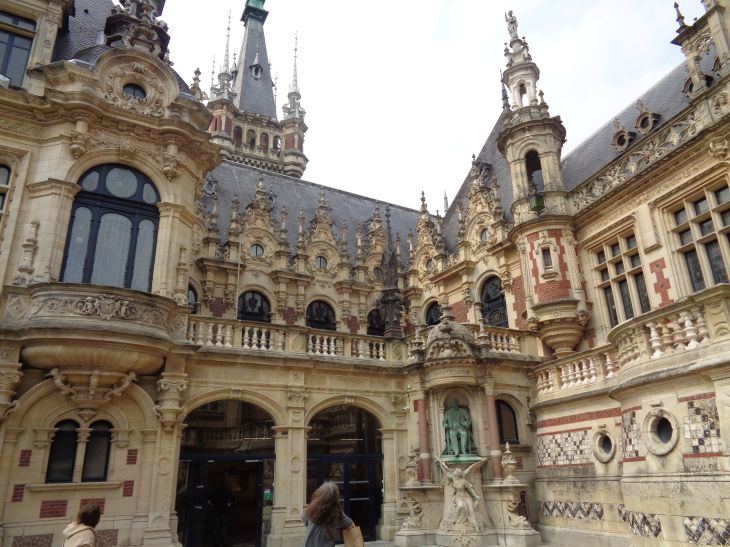
Fécamp is located in the Seine-Maritime department 76 in the Normandy region of my belle France. Just me, just a reminder ok,


The Benedictine Palace Museum opened in 1888 by its founder Alexandre-Prosper-Hubert Le Grand in a building characteristic of historicism, eclectic trend, mixing styles and eras: neo-Gothic, neo-Renaissance and art nouveau. It houses a museum dedicated to the precious Norman liqueur and temporary art exhibitions, The Palais Bénédictine is getting ready to celebrate 150 years and is starting the renovation of some of its spaces. It is located at 110 rue Alexandre Le Grand.
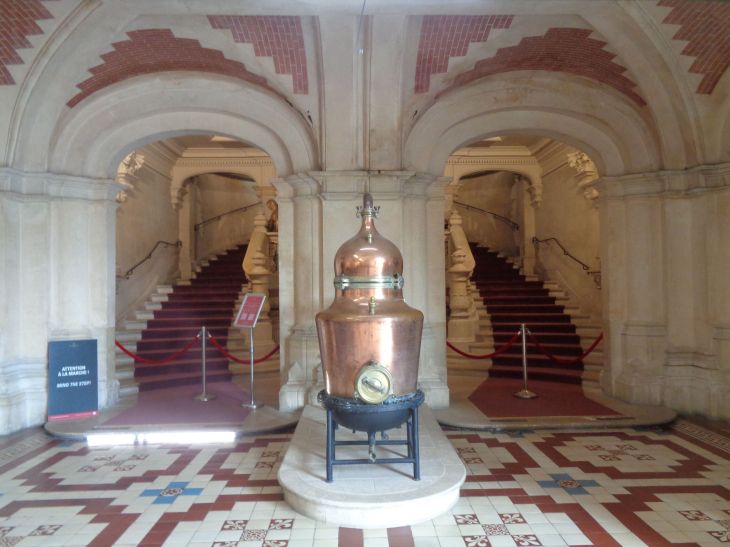


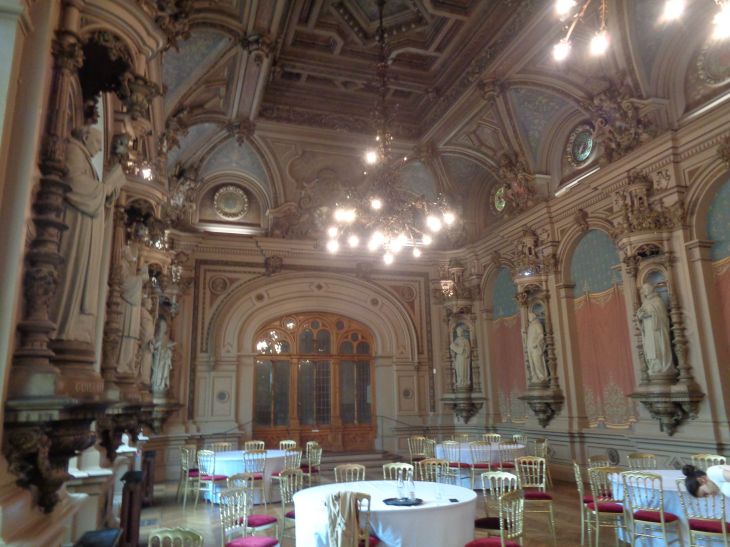
The Palais Bénédictine palace is a building mixing neo-Gothic and neo-Renaissance styles, built at the end of the 19C in Fécamp for Alexandre-Prosper Le Grand, a spirits merchant and who made his fortune by re-inventing and marketing Benedictine liqueur. The palace houses the distillery, still in operation, and its cellars, as well as a museum presenting various collections (worked ivories, coins, locks, old religious paintings, etc.).
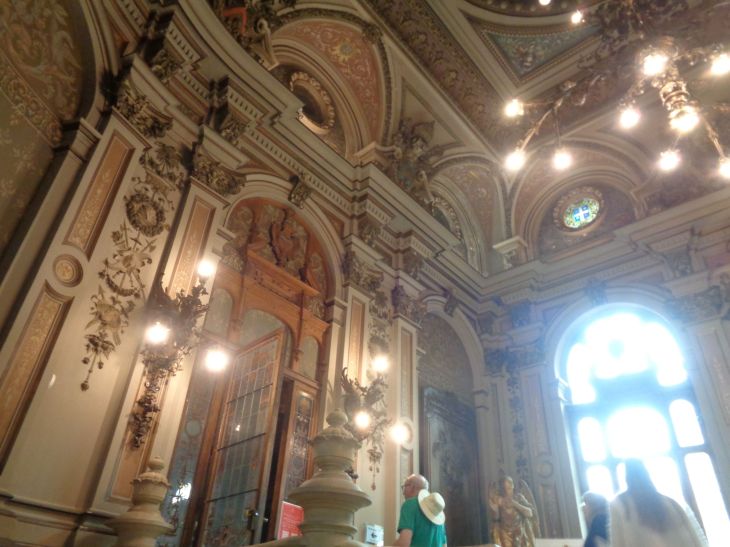
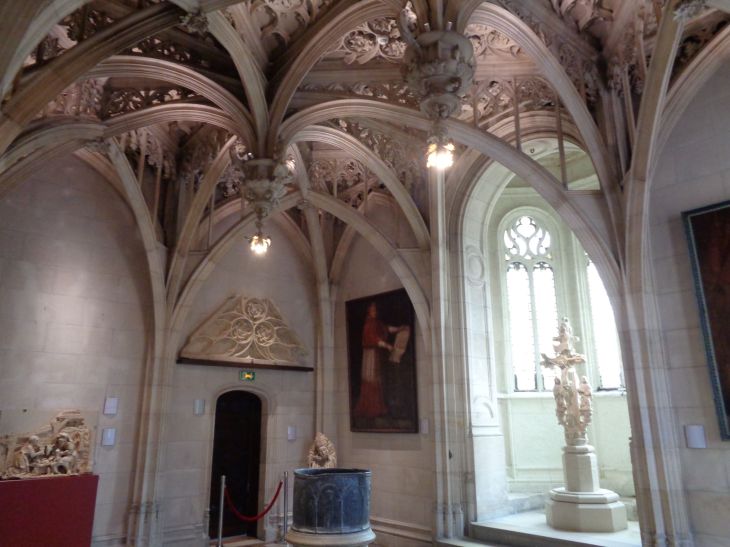
Work on the palace began in 1882, and it was inaugurated for the first time in 1888. But, devastated on January 12, 1892 by a fire, it was then rebuilt in its current form, in an architecture mixing neo-Gothic style and neo-Renaissance style, characteristic of eclecticism, a trend of historicism that ran through the entire 19C, before the emergence of Art Nouveau, to which the style of the palace also refers.The palace is both the place of production of the Benedictine liqueur and a museum. One room tells the story of the liqueur and another brings together some 600 counterfeits of which the Bénédictine was a victim, one of the most copied liqueurs in the world. The plants are presented under the glass roof of the Jardin des essences. In the more classical part, the museum has a large collection of art from the 14-16C, partly from the personal collections of the founder, represented in the center of a large stained glass window as a glorious restorer of the liquor that made his fortune,
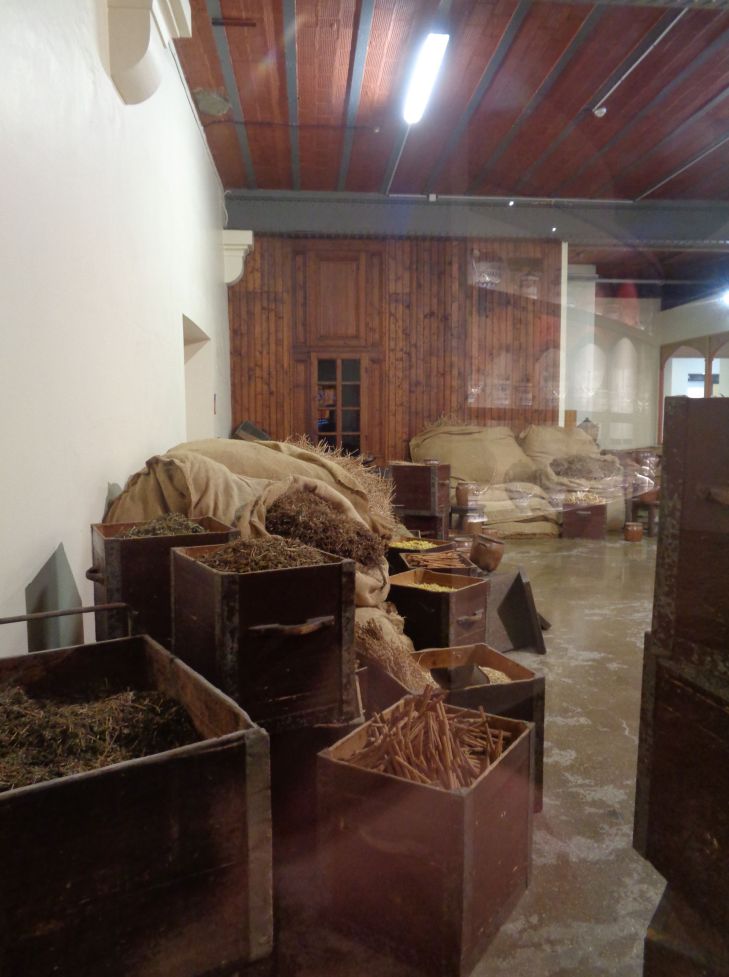
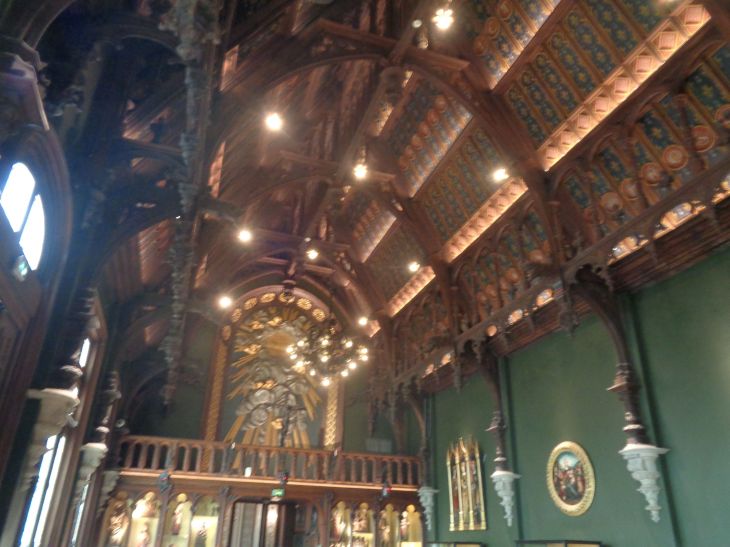
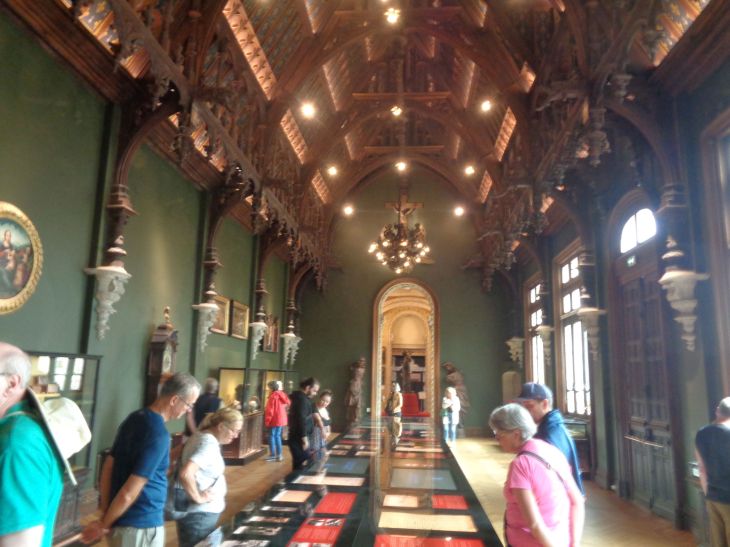
The museum is made up of rooms dedicated to ancient and medieval art, many of which come from the old abbey. They contain various collections of enamels and ivories, the library comes in part from the abbey of Fécamp,(see post) a collection of ironwork – acquired in a castle in the Val-de-Loire – paintings, mostly on wood, formerly attributed to specific French, Italian, German and Flemish artists, somewhat arbitrary attributions. They are mostly works from workshops or from the school of. From the abbey of Fécamp, a library exhibits manuscripts and incunabula, champlevé enamels from the 16C, reliquaries, carved ivories, old ironwork. The central room is the Salle des Abbés, the main interest of which lies in its stained glass window, depicting the reception of King François I by the monks of Fécamp in 1534 and the statues of certain abbots who marked the abbey of Fécamp. The salle des épices (spices) is partly dedicated to the different plants and spices used in the composition of the Bénédictine. Although the exact recipe of this liqueur is kept secret, we know the ingredients that compose it: 27 plants and spices, detailed on a display.


For an anecdote the Belgian army headquarters here in 1914 under the command of chevalier king Albert 1st that came to joined his forces to the French and fought 1914-18,There is a plaque inside the Benedictine Palace honoring this event,
The official Palais Bénédictine: https://www.benedictinedom.com/flamboyant-palais/
The Seine Maritime dept 76 on the Palais Bénédictine : https://www.seine-maritime-tourisme.com/en/i-visit/10-key-places/fecamp/the-palais-benedictine.php
The City of Fécamp on the Benedictine palace: https://en.fecamptourisme.com/experiences/our-must-haves/the-benedictine-palace/
There you go folks, a hugely must to visit in Fécamp , We moved our car closer to the Quai Berigny to walk about 200 meters to the Palais Bénédictine. Again, hope you enjoy the post on the Palais Bénédictine of Fécamp, part II as I
And remember, happy travels, good health, and many cheers to all !!!

 Paris1972-Versailles2003