
This is a thrill trip of many years , and repeat visits to Cuenca with the family. Memories of always in my heart. We walked all over even steep cobblestones streets and in summer! I have written on the old castle but found me some new older pictures not in my blog and they should,Plenty in my blog on Cuenca ! Therefore, here is my new take on the old castle of Cuenca !!! Hope you enjoy it as I.
For reference, this is Cuenca, in the province of Cuenca, and the autonomous community of Castilla La Mancha in the kingdom of Spain , This is pretty old ruins overlooking a wonderful view of the city of Cuenca canyons. This is the remnants of an old castle that is worth a detour. We came to love this town after staying nearby for a couple times in our trips down to sunny Spain. The Castillo district is a small suburb located just outside the walls and built of houses of local style, Of medieval origin, the working-class suburbs of San Antón (located on the other side of the Júcar) and of Los Tiradores complete the fortress that is the upper town. The importance lies not in the individual buildings but in the overall effect, that of urban landscapes made up of narrow, winding alleys adapting to the very steep topography and constituting a choice foreground for the upper town.
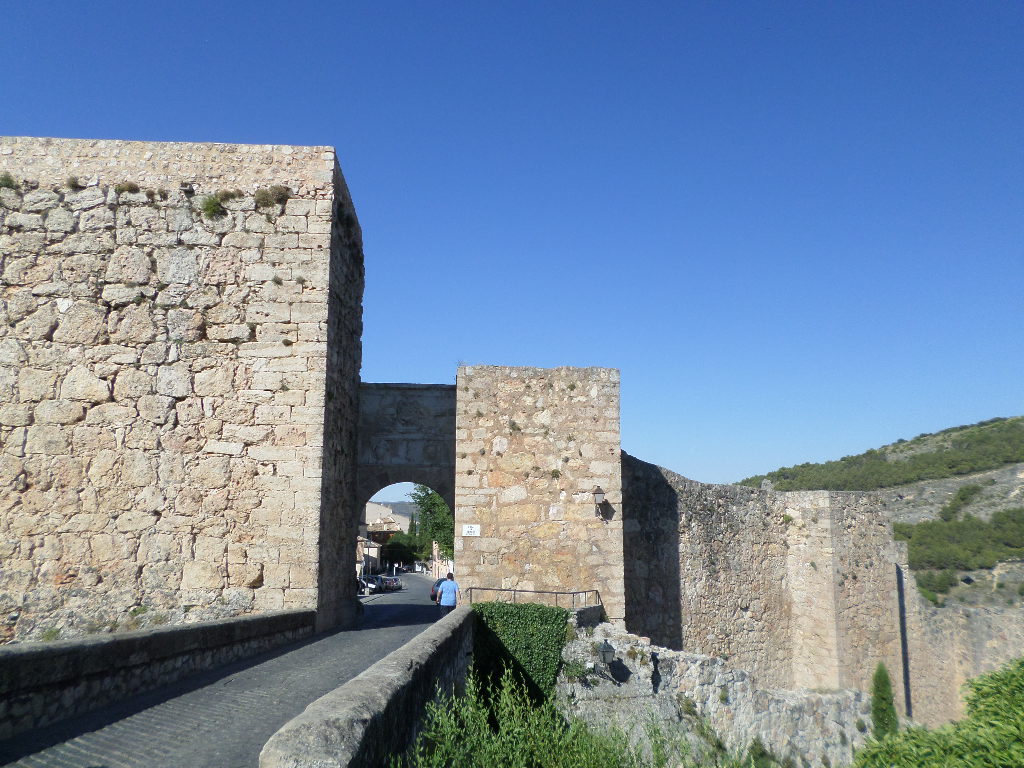
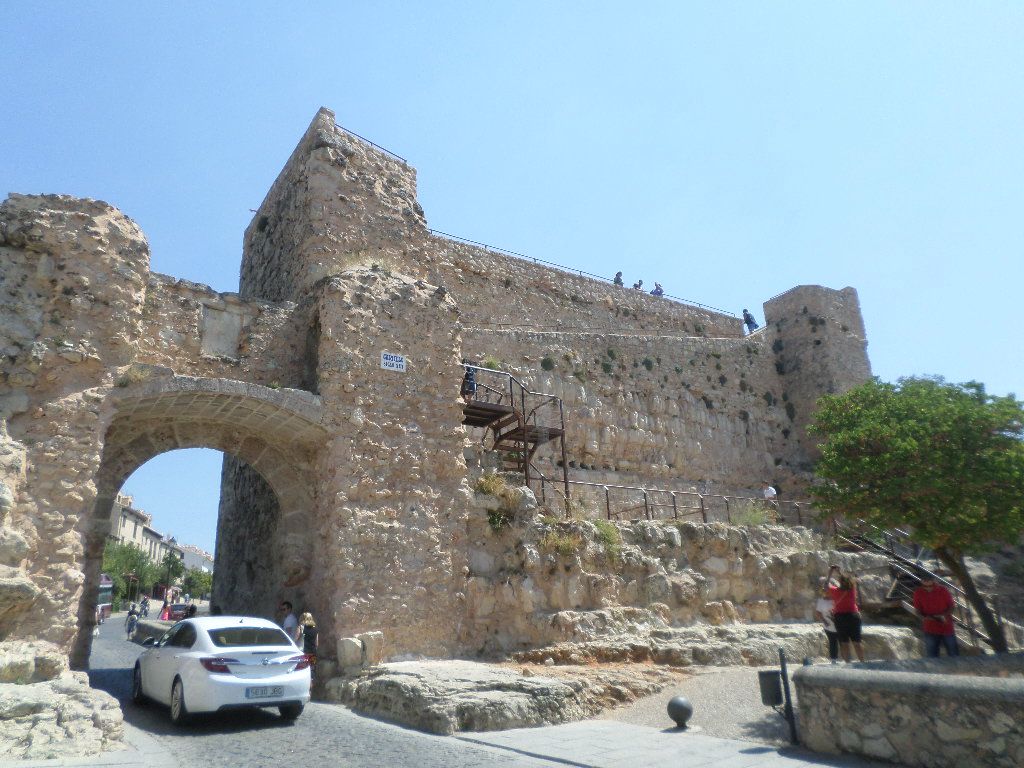
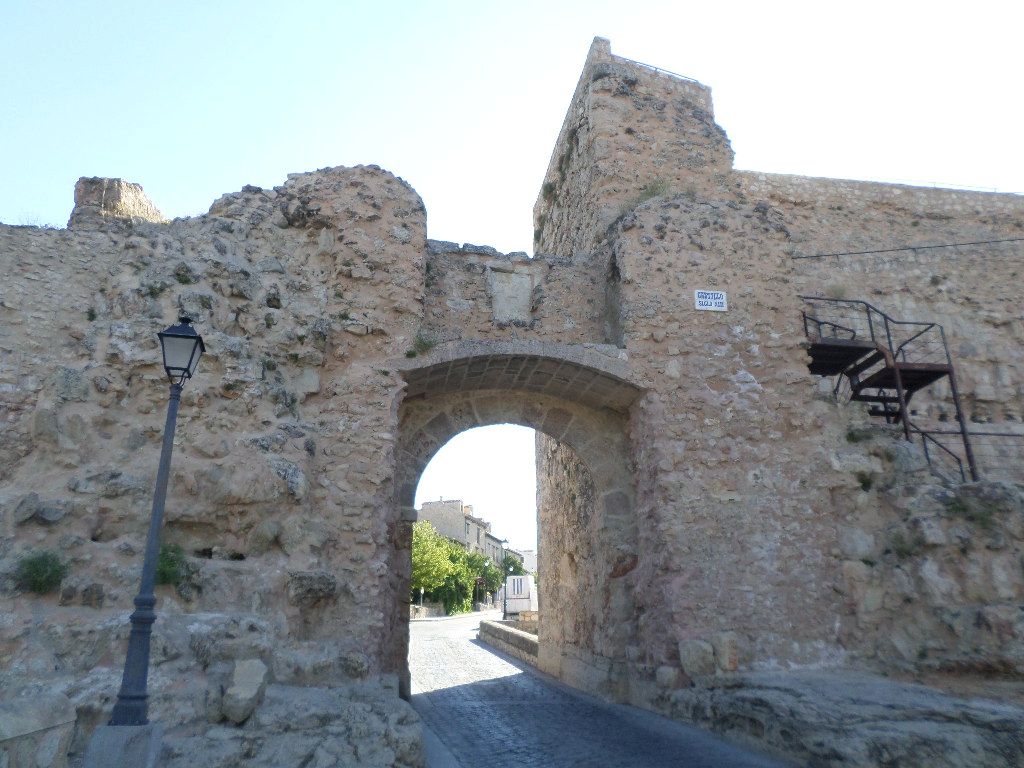
The entrance arch that serves as the door to the castle was baptized the Arch of the Rodríguez Bezudo Brothers, 16C (short for Arco de Bezudo) in memory of their deaths in the capture of the City by Alfonso VI. According to historical accounts, one of them died in the assault on this castle while the other was appointed governor. Currently you can see a cobbled plaque with the name Arco de Bezudo. Today few remains of Cuenca’s defensive system remain, a shield with a fleece is still preserved over the semicircular arch. Taking advantage of its high walls, a staircase has been installed that allows access to the top of the Castle of Cuenca. On the other side, a small section of the canvas of the wall extends, following the steep orography of the Júcar river gorge.
On one side you can see the zigzagging Húecar River with its steep sickle giving shape to the historical case, crossed by the Puente de San Pablo bridge that connects the Casas Colgadas or hanging houses with the Parador de Turismo (former convent of San Pablo or St Paul) On the other hand the Júcar River stretches out, making its way between hills of limestone that has been drilled for millennia. You can walk to the castle from the Plaza Mayor, following Calle San Pedro, which connects with Calle Trabuco. Another option is to follow the Ronda Julián Romero, passing by the Mirador de Florencio Cañas, the Mirador del pintor Víctor de la Vega or the rincón del Cristo del Pasadizo. Although it is a short distance, the streets are quite steep, so it is also possible to go by urban bus line 2 stop Arco de Bezudo or the tourist train.
Today, the ruins of the castle of Cuenca are equipped with stoney square steps stairs by which you can ascend to the highest part of the wall to access the viewpoint with some of the best views of the city to the gorges of the Jùcar river and the Huécar river at the same time. The part of the Huécar river gives us views of the hanging houses (casas colgadas), the bridge of San Pablo (St. Paul) and the Church of St. Paul (San Pablo). While at the other end of the viewpoint, the Jucar river, we can contemplate the wonderful and refreshing sickle of the Jùcar river along with its well-known Ojos de la Mora (eyes of the moor).
A bit of history I like tell us that the Castillo or castle origins dates back to the Arabs to be conquered by Alfonso VIII in 1177, who changed its structure to that of a medieval Christian fortress. In 1325 King Alfonso XI gave it to Don Juan, son of Don Juan Manuel. In the 16C it was ceded to the Inquisition, hosting the headquarters of the Inquisition Court in an annex building. Finally, the Catholic Monarchs ordered the demolition, perhaps to end the defensive places of the feudal lords to end up with their intrigues and disloyalties. But above all, his demolition was a symbol of the fall of the power of the Hurtado de Mendoza. In the 17C, the seat of the Inquisition Tribunal was built on the castle grounds, and it was used as a provincial prison until a few years ago. This, in turn, was partially destroyed in 1812, during the Spanish War of Independence and which has been the headquarters of the Provincial Historical Archive since the end of the 20C. In its entrance there is a statue of Fray Luis de León commemorating the four centenary of his death. From the castle, dating from the 13C, we have only received a rectangular tower, with several floors, as betrayed by the mechinales that we see today of its forgings. We also find some fragments of the Caliphate wall from various construction periods. The structure that we see today does not correspond to the original fortress, but to a part of it that has been integrated into later constructions.
The Cuenca tourist office on the castle and arch : https://visitacuenca.es/content/descubre-ciudad-y-paisaje-urbano/castillo-y-arco-de-bezudo
The Castilla La Mancha tourist board on the castle of Cuenca: http://en.www.turismocastillalamancha.es/patrimonio/castillo-de-cuenca-87564/descripcion/
There you go folks, we have nice memorable moments climbing the steep hilly road the first time to reach this castle to find out there was a parking on top next to it lol! Well we came back ,and parked on top ! Either way is a great walk, and still nice family memories forever , again do it on the shade of the day. Again, hope you enjoy the old castle of Cuenca !!! as I
And remember, happy travels, good health, and many cheers to all !!!

 Paris1972-Versailles2003
A bit of a favourite of mine.
LikeLiked by 1 person
Its a favorite alright thanks
LikeLike