
Ok, too many posts on it so I condense into two enough you get the picture must be here ! It has and is my favorite garden of all the wonderful gardens of my eternal Paris. I used to worked for several years just across from it in Rue Castiglione. The memories are huge, and nice family outings as well as friendly get together like having a lunch in it with collegues! I was looking in my vault of pictures, and combining them into these two posts. Therefore, here is my take on the Jardin des Tuileries of Paris, part I !!! Hope you enjoy the post as I.
The Jardin des Tuileries is located in the 1er arrondissement of Paris, and was created in the 16C. It is the oldest and largest garden in Paris with 28 hectares, It is, in fact, at the crossroads of the Louvre Palace/Museum, the Place de la Concorde, the Seine river, and the rue de Rivoli. Right along the Terrasse des Feuillants exit onto rue de Rivoli and into the rue de Castiglione you have a nice carrousel , nearby a Children’s playground and before your eyes lit up seeing the wonderful Obelisk of the Place Vendôme, Just magical!!! The jardin des Tuileries memories forever and glad to have worked next to it for about 2 yrs and visited zillions of times, by far my favorite garden/park in Paris, I came to work on rue de Castiglione corner of rue de Rivoli facing the side main entrance to the Jardin des Tuileries going to the Place Vendôme! It was magical just to go out for lunch or catch air and walk around it , inside of it! Very strong moments seeing Paris as it really is, in all seasons , and even coming with the family on weekends.
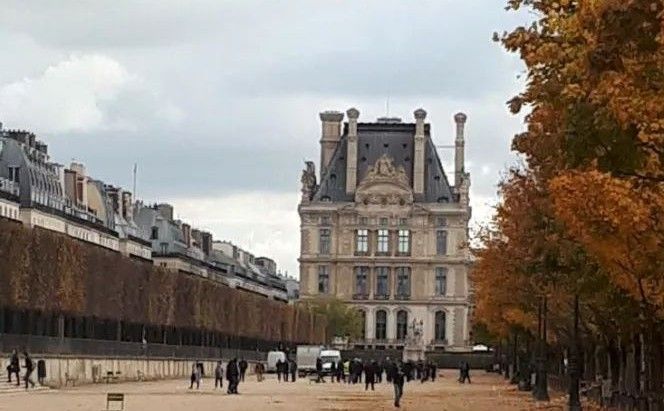
Other than walking into it you can reach it by metro Tuileries (design of Hector Guimard),the entrance is located along the Tuileries garden, rue de Rivoli on line 1 or Concorde lines 1, 8 and 12 . The line 1 of the Metro built has two staircases with low frames with cartridges with an entrance and an exit. The Tuileries Garden is open daily from 7h30 to 21h. Also, bus lines 20 21 68 72 73, 84 , as the closest , and my best parkings underground here are Concorde Place de la Concorde (corner of Avenue Gabriel and Place de la Concorde), and Tuileries by 38, rue du Mont Tabor (now not open to the public).
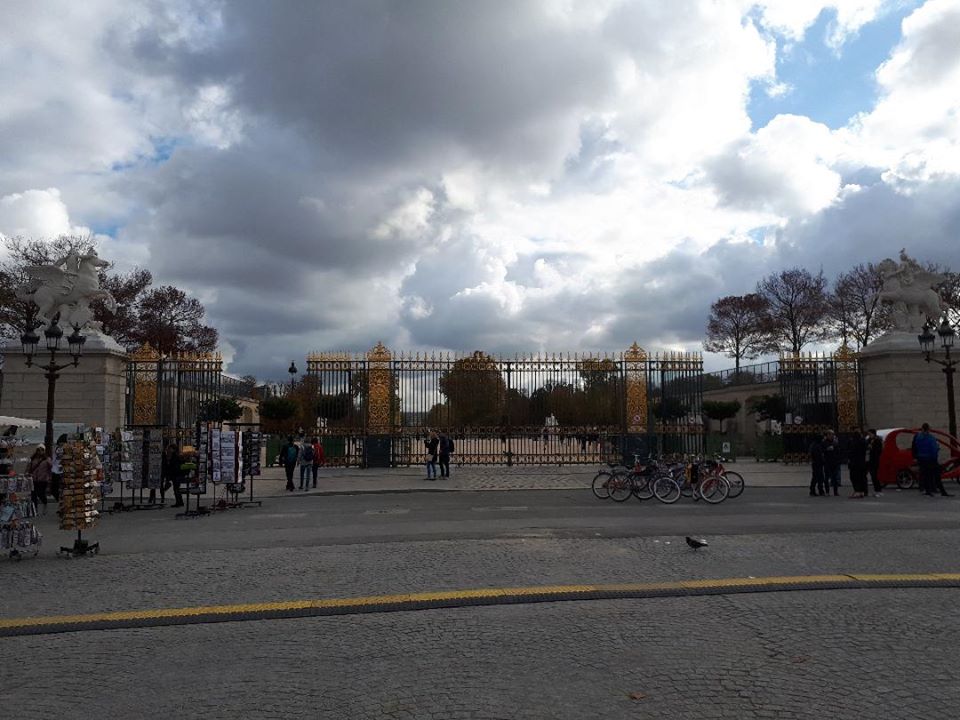
It is actually a series of gardens and the locals sometimes call it the Jardins des Tuileries in plural. The Jardin des Tuileries garden extends from the Palais du Louvre (east) to the Place de la Concorde (West), it is bordered to the north by the Rue de Rivoli, the place de Pyramides and to the south by the Seine river . The Arc du Carrousel, built in 1806 in the Carousel’s garden, marks the entrance to the Tuileries. The Palace of the Tuileries, which closed the Louvre on its west side, was burned during the commune in 1871 and its ruins were razed in 1881 by the third Republic. From the 1st arrondissement or district created in the 16C to the site of old Tuileries which gave it its name. It is the most important and oldest French garden of Paris, which used to be the palace of the Tuileries, a former royal and imperial residence, now extinct. I was a former treasurer to rebuilt it but it is difficult and costly almost 400M€, believe the effort is dead;so history will continue to be hidden,However, I did get into every day from crossing Rue de Rivoli on the side entrance. You have a straight eye view of the Louvre museum! Once inside, you have heaven on earth, and one gorgeous view is looking at the musée de l’Orangerie from the back side of it; feels so romantic, me think.
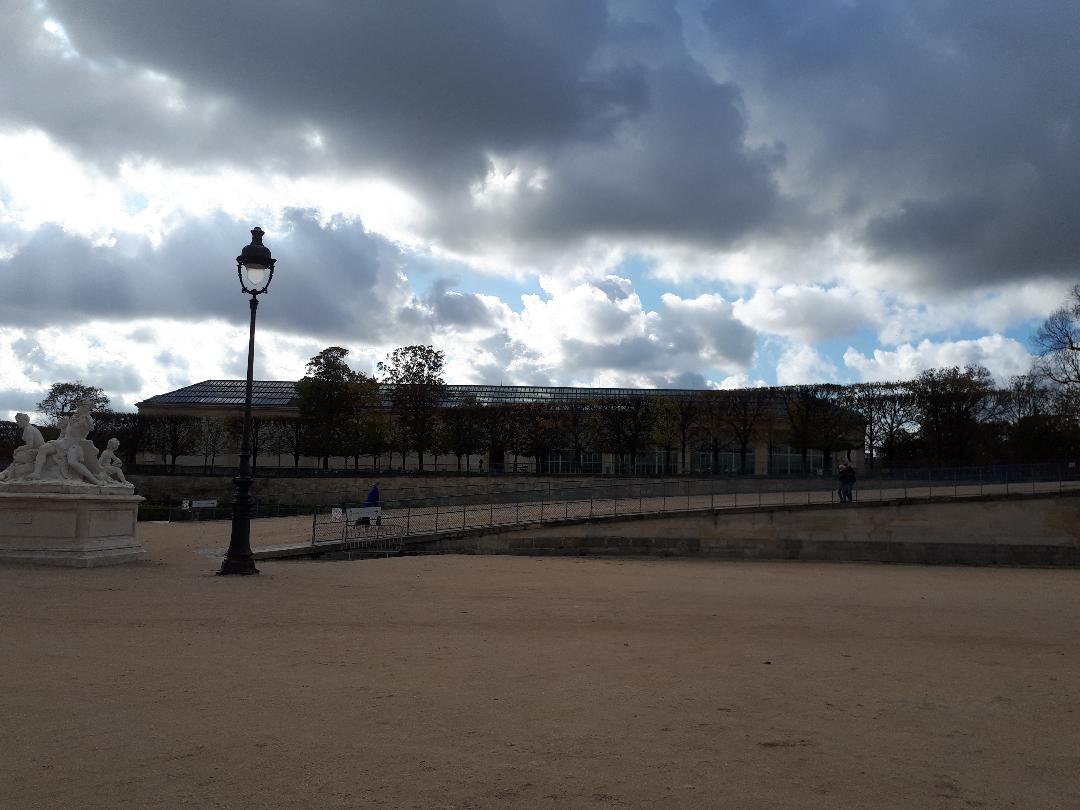
Walking it octagonal basin and the pigeons is just very romantic me think. Then, you move along the allée centrale to the big basin and even now little boats awaits you. Before facing the wonderful Arc de Triomphe du Carrousel. Not to leave out the wonderful other museums of the Orangerie facing the Seine, and Paume facing rue de Rivoli and both out to the Place de la Concorde.
An orangery in 1852, in the southwest, today hosting a museum of modern Art, the Musée de l’Orangerie (see post). The Museum of the Orangerie is a museum of impressionistic and Impressionists paintings located in the garden of the Tuileries, at the western end of the terrace of the waterfront, Place de la Concorde it presents works by Claude Monet, Paul Cézanne, Henri Matisse, Pablo Picasso, Pierre-Auguste Renoir, Amedeo Modigliani, Le Douanier Rousseau, André Derain, Chaïm-Soutien, Marie Laurencin, Maurice Utrillo, Paul Gauguin, Alfred Sisley and Kees van Dongen. A Jeu de Paume in 1861, today hosting a museum of Contemporary Art, the National Gallery of Jeu de Paume. The Jeu de Paume Museum.(see post) The building is located on the terraces by rue de Rivoli dominating the Place de la Concorde in the Tuileries garden. The Jeu de Paume game was built in 1861 on the model of the Orangerie was a gym where the ancestor of tennis was practised. At the beginning of the 20C, the building is a national museum. The museum was remodelled in 1986, following the opening of the Musée d’Orsay, and became a place of temporary exhibitions.
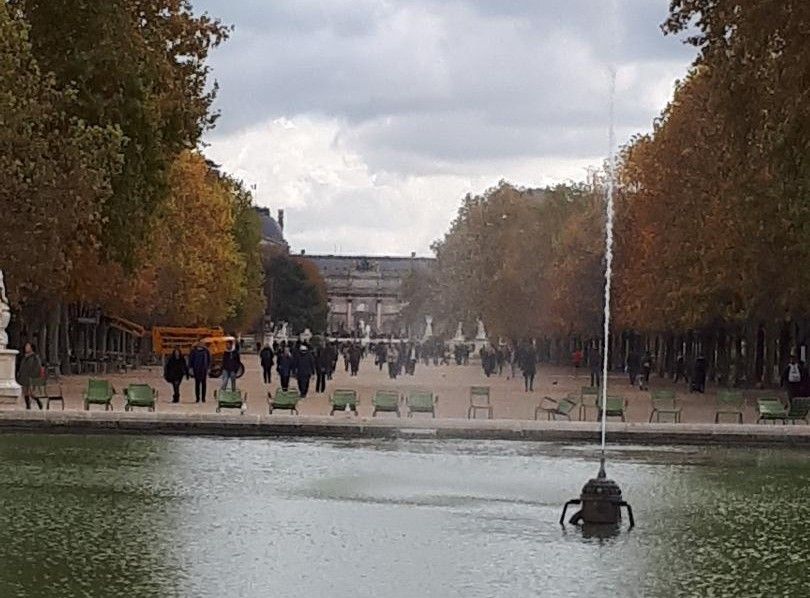
A bit of history I like and long but worth it tell us that the Rue de Rivoli is located in the early 19C between Rue de Rohan and rue Saint-Florentin, in particular the impasse and the grounds occupied by the Dames-de-l’Assomption. The garden then expanded during the development of the Tuileries Wharf, a support wall is built along the terrace of the water’s edge, with stones extracted from the quarries of Châtillon. In 1519, king François 1er had chosen this vast land occupied since the 12C by tile factories (hence Tuileries) . In 1553 Catherine de Medici decided to settle in the Louvre and to have a castle built, she bought land at the Tuileries and built an Italian park with fountains, a cave, a greenhouse and a menagerie, the Palais des Tuileries.
Since the Middle Ages, tilers and potters have been active at this location, hence the name “Tuileries” , even a tile factory by the middle part facing the Seine river. In the 13C, this area of the city included fields of squash, or cucurbits according to their scientific name, as well as tile factories. Queen Catherine de Medici was behind the construction of the Palais des Tuileries (Tuileries Palace) (see post) in 1564. Many rulers lived there. This palace no longer exists today. It was destroyed during the Paris Commune 1871. However, the garden still exist !!! In this garden, there is also a fountain, a menagerie, as well as a cave dating from the Middle Ages and decorated by Bernard Palissy, a famous ceramist. About fifty years later, the orangery and silkworm farm, a building in which silkworms are raised, will emerge. The orangery houses citrus fruits in winter, which cannot stand frost. However, the garden was rehabilitated during the reign of King Louis XIV. The latter, as well as his Prime Minister, Jean-Baptiste Colbert, ordered that it be completely redesigned by André Le Nôtre, the famous gardener of the king who was at the origin of the development of the gardens of Versailles and Vaux-Le- Vicomte palaces(see posts). By entering this garden, you are a historical witness of the redevelopment carried out by André Le Nôtre, who made it into a French garden. Le Nôtre carefully studied painting and optical effects to redesign the Grand Carré, which is remarkable for its play on perspective. He corrected the distortion due to the distance by shifting towards the East the small round basins of the reserved gardens, located to the left and to the right of the round basin (on the Place du Carrousel side), which seems much larger than the Octagonal Basin while it is twice as small! The Tuileries Garden has a multitude of entrances. Entering from the Place de la Concorde side, you can see on your left the Terrasse des Feuillants, the Jeu de Paume museum, built in the 19C, On your right, La Terrasse du Bord de L’Eau, symmetrically, is located the Musée de l’Orangerie. Today, it no longer hosts citrus fruits, but the famous Water Lilies by Claude Monet ! During WWII, part of the garden was transformed into a depot because of the lack of supplies during the Occupation. On 25 August 1944, General von Choltitz, commanding officer of the “Groß-Paris”, received an ultimatum from Colonel Pierre Billotte of the 2nd DB and replied “I do not accept ultimatums”. In the ensuing fighting, Captain Branet seized the hotel Meurice, rue de Rivoli, headquarters of the Nazis occupying forces; Captain Julien goes to the Rue du Faubourg-Saint-Honoré to reach the siege of the Kommandantur, Place de l’Opéra and on his side Lieutenant Bricard clears the
Tuileries garden. The ten commemorative plaques affixed along the garden at the corner of Rue de Rivoli and Place de la Concorde do not fully account for the intensity of the fighting and the number of casualties.
In the 16C, the garden was ordered by Catherine de Medici, the widow of King Henry II, and ordered built Palais des Tuileries (gone since 1883 but see post) that she was designing. The garden of course was done first by a native of it, André Le Nôtre. First royal garden, it became in the 17C one of the first Parisian gardens open to the public. There are a few big names in landscaping to remember: André Le Nôtre, who redesigned the garden from 1664, and, recently, Pascal Cribier and Louis Benech, who renovated it as part of the “Grand Louvre”. Originally, the garden was exclusively reserved for the royal family and the court. During the reign of Louis XIV, it opened up to the promenade for honest people: it should be shown there, as if on parade. But it was during the French revolution that attendance democratised. The people can finally enjoy the garden that has become national property. First reserved for royal or imperial children, like Louis XIII or the King of Rome, it becomes the favorite playground for children, whoever they are from. Henri IV had white mulberries planted on the Terrasse des Feuillants, essential for the breeding of silkworms , an industry he wished to develop. The great inventor of the gardens of Louis XIV, André Le Nôtre innovates by opening a perspective towards the future avenue des Champs-Elysées. The garden evolves from an “Italian” style to a “French” style. As for gardeners, they are committed to preserving the environment by recycling waste, outlawing any chemical weed killer and using insects to fight against pests. At the jardin des Tuileries, the walker also discovers an open-air museum. Statues began to adorn it at the beginning of the 18C, first for the approval of the very young Louis XV. Since then, the garden has never ceased to be enriched with works of primary importance and hosts each fall the International Fair of Contemporary Art. As for the plant heritage, it is rich and varied, with more than thirty-five species of trees. In the Grand Couvert, they provide shade and freshness, while the flower beds of the Grand Carré mix perennial and annual plants in subtle combinations, renewed each year. The first Motor Show in 1898 was held here. Artists have always taken the jardin des Tuileries as their motif: the Impressionists, such as Claude Monet, painted its light and colors in a radically innovative way. Even today, this garden inspires and welcomes the avant-garde of creation. The recent reconstruction of the bivouacs of the 14-18 war is part of this commemorative tradition. The jardin des Tuileries welcomed Polish ambassadors there in 1574 or Turkish ambassadors with Mehemet Effendi in 1721. Under the French revolution the funeral ceremony of August 27, 1792 was held there, or the saltpeter feast on March 10, 1794. In 1810, the procession of the marriage of Napoleon and Marie-Louise crosses the beautifully paved garden. Throughout the 19C and whatever the regimes, the official festivals were numerous. During the 1900 World Fair, the Banquet of Mayors brought together 22,000 elected officials. Before the Great War or WWI, monuments were erected to the glory of Republican legislators Jules Ferry and Waldeck-Rousseau. In the summer of 2020, flowering will herald the exhibition Le Corps et l’Âme, or the body and the soul, which will be devoted this fall to Italian Renaissance sculpture. The art gardeners were inspired by Michelangelo’s famous “Slaves”, but also by reliefs of the “Bacchante delirious”, a decorative frieze by Mino da Fiesole, a sarcophagus. From these sculptures, they sought to transcribe the expressions of the body and the movements of the soul. Shades of flaming red evoke violent movements, pink and mauve harmonies the grace of light drapes. As for the soul, it is suggested by the texture of the plants, sometimes vaporous, sometimes architectural. Planted in May and June, the annual flowers give their measure throughout the summer until mid-October. They are supported by perennial plants, which last longer. A total of 2,600 m2 of flowerbeds are available to walkers, with signage explanations.
The managing Louvre museum on the Jardin des Tuileries:https://www.louvre.fr/en/explore/the-gardens
The Paris tourist office on the Jardin des Tuileries: https://parisjetaime.com/eng/culture/jardin-des-tuileries-p3545
The city of Paris on the Jardin des Tuileries: https://www.paris.fr/equipements/jardin-des-tuileries-1795
The Île de France region tourist office on the Jardin des Tuileries: https://www.visitparisregion.com/en/garden-of-tuileries
There you go folks, this is one enjoy by all Parisiens, even if loaded with tourists in a heavily visited area of Paris. The Jardin des Tuileries is a must to see ,no excuses. So much part of the history and landscape of the most beautiful city in the world. Again, hope you have enjoy this post on the Jardin des Tuileries of Paris, part I !!! as I
And remember, happy travels, good health, and many cheers to all !!!


