
I know about Aranjuez since a small enfant, my mother would sing to me the concierto of Aranjuez, that has been even turns into operas and zarzuelas in my beloved Spain. The best I heard was played by Paco de Lucia ,the great Flamenco guitarist. It is said that Juaquin Rodrigo was inspired by the love to his wife Victoria. Many versions tells of a love between a Prince and a lady that was not possible to be, this one I like it better but both are not proving yet. The Royal Palace of Aranjuez is one of the residences of the King of Spain , part of the Comunidad de Madrid. However, I like to expand and tell you more about this wonderful park/garden part of the palace, Therefore, here is my take on the Jardin del Principe of Aranjuez !!! Hope you enjoy the post as I.
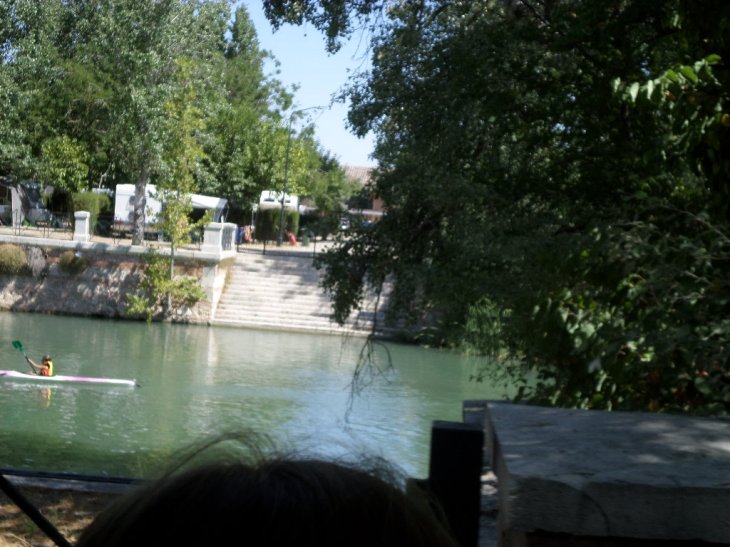
The Jardin del Principe is a large park within the Palace of Aranjuez (see post), 150 hectares, delimited by the sinuous course of the Tagus river, and the Calle de la Reina, which stands out for its botanical wealth. Its name is due to Carlos IV, who had it built when he still held the title of Prince of Asturias, conserving previous elements, such as the Primavera orchard and the Fernando VI pier. The Jardin del Principe is the largest park in Aranjuez with 7 km perimeter. Only half of the garden can be visited. In the northern part, which is the one that borders the Tagus river , the garden is protected by a stone dike called Malecón de Solera, while the southern part is delimited by a long fence on a Colmenar stone plinth and brick pillars adorned with artistic stones. The garden is formed by a wide variety of different tree species. This large garden has monumental neoclassical entrance gates. Before reaching the Tagus river, you can see the old Spring garden. The pier is located at this point, preceded by a roundabout with five picturesque pavilions, the largest being the Royal Pavilion built in 1754. You can also see a small octagonal garden, which as a courtyard of honor separated the main pavilion from the street of the pier. The Great Pavilion, built by order of his father, King Carlos III, was the space that the future monarch used to frequent, to enjoy the beautiful views it offered. For this reason, he would like to contribute to enriching this space, entrusting a series of changes and extensions to the gardener Pablo Boutelou. Other elements that enrich the garden are the fountains, including that of Narciso, and that of Apolo, the latter being a replica of the one found in the Royal Palace of La Granja de San Ildefonso. In the Estanque de los Chinescos you can see a small neo-Greek temple, with magnificent Ionic marble columns, as well as a small Chinese-type wooden pavilion.
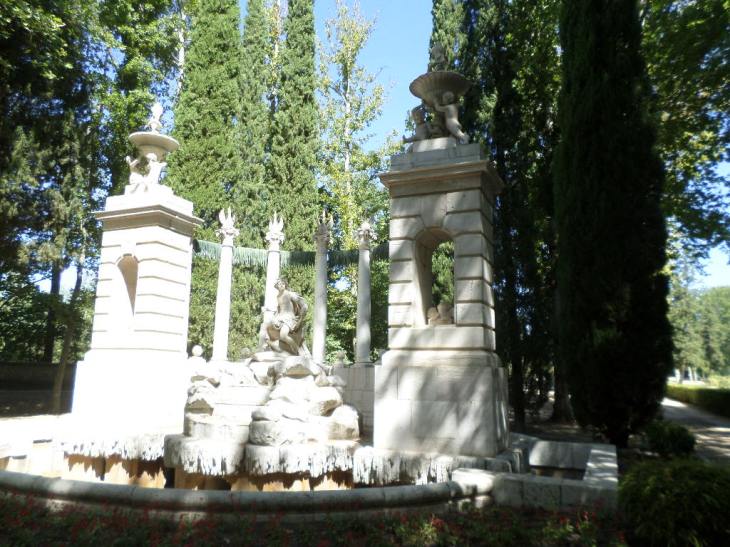
The famous Narcissus fountain with its dog on a pillar placed in a beautiful cup, into which he is about to fall. The cup is lifted by four sturdy Hercules The Fuente de los Cisnes (Swans) is inspired by a fountain in the gardens of the Royal Palace of Granja de San Ildefonso. It features a rock with two marble children grasping a swan, whose beak sticks out of the water. Further on, the Fuente de Apolo (Apollo, in Carrara marble, shows the God of Beauty on a pedestal , There is a Estanque de los Chinescos (Chinese figures) is an artificial lake bordered by a small grid, with three islands on which there is a temple or kiosk of Greek style, another of Chinese type and an Egyptian granite mausoleum. with a series of eight Ionic columns that support a ceiling crowned by a bronze pineapple painted in marble color. Between each column were Egyptian canopic jars now missing. An artificial hill, called Montaña Rusa (roller coaster) was built. Its real name was Montaña Suiza (swiss mountain). It is crowned with a wooden temple from which there is a superb view of the whole garden. Finally, at the easternmost end, we find the Casa del Labrador, built by Charles IV, Neoclassical style, particularly known for its large collection of statues and clocks.
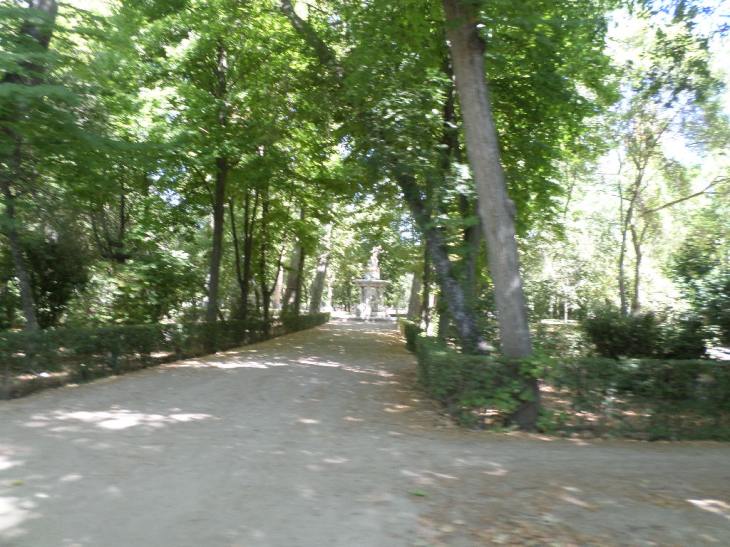
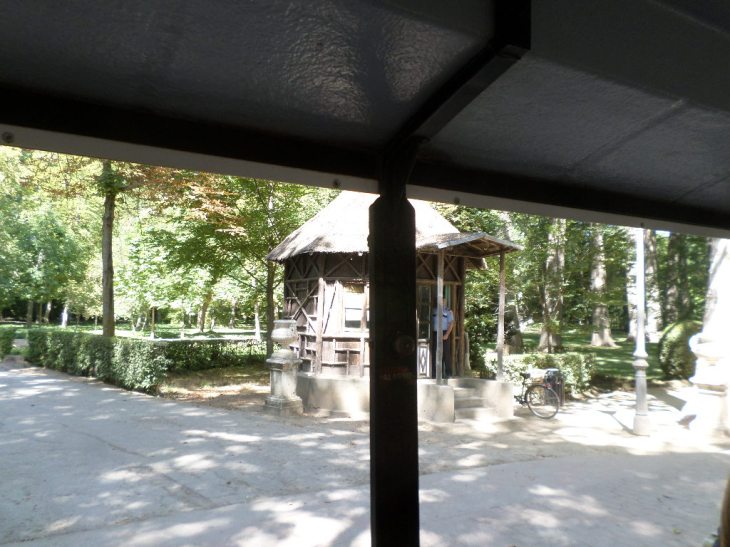
There is a Estanque de los Chinescos(Chinese figures) an artificial lake is probably the most accomplished feature of the entire Jardin del Principe or Prince’s Garden. It comprises three main elements surrounding a pond and situated on separate islands: the Chinese-style pavilion, the classical pavilion, and the obelisk.These islands were once connected to the outside by walkways, although the one leading to the obelisk is now missing. The arrangement of these three elements creates a variety of landscapes that encourage exploration of the entire garden. The original pavilion had two separate sections divided by a small roof with walls forming openwork chinoiserie-style fretwork and a steeply pitched roof. The current structure is built of wood on a circular island with a considerably larger surface area than the original temple. It has a curved, eight-sided roof that gives it an oriental appearance, culminating in a small lantern. It is accessed via a wooden walkway with a railing in the same style. Attached to it are four alternating balconies, each with a pointed arch doorway in a Neo-Gothic style, featuring latticework on its buttresses. The classical temple is a Greek tholos with a circular floor plan, built on a circular island that conforms to the dimensions of the temple itself. It is a monopteral structure with ten Ionic columns made of green marble from La Granja. The entablature is made of limestone, and the roof is a spherical dome whose interior cupola displayed an oil painting by Zacarías González Velázquez. It is topped by a pinecone and, as previously mentioned, by a gilded dragon. Between the columns are stone cubes that once housed the black marble Egyptian idols that were stolen during the French invasion. A staircase at the opposite end from the entrance allows access to the water level.
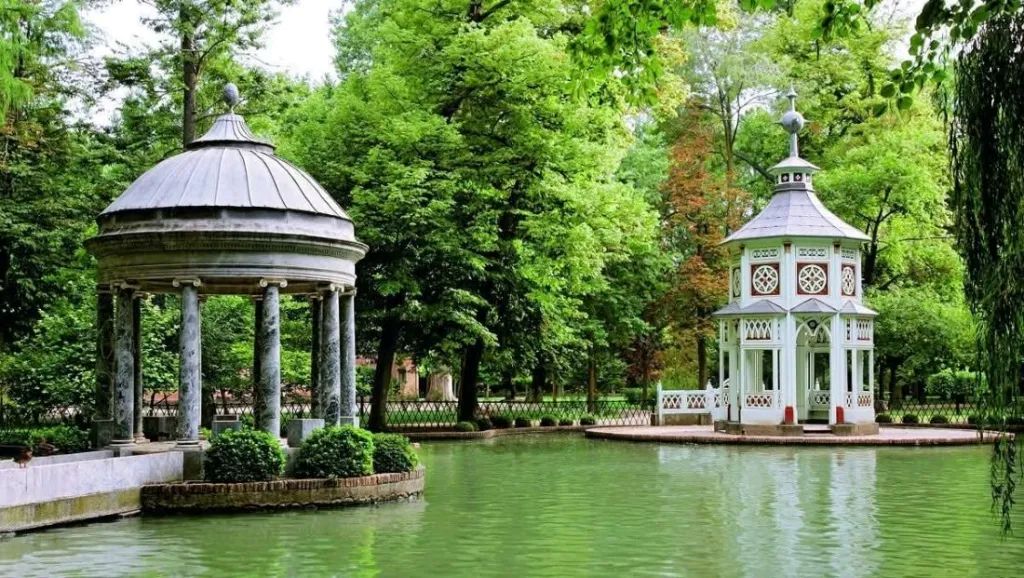
During the War of Independence,(peninsula war with Napoleon), the boat, the Egyptian sculptures of the classical temple, and the golden dragon on its roof were looted, and the chinoiserie temple was destroyed. It was rebuilt in 1826 maintaining the original layout while incorporating new design elements. There is a rebuilt roof of the classical temple around 1820. Between 1844 and 1849, during the reign of Isabel II, a restoration was carried out, followed by another during the reign of Amadeo of Savoy (1870). The last restoration took place between 1990 and 1992, during which a fish farm dating from the 1940s was removed.
The Aranjuez tourist office on the prince garden : https://visita.aranjuez.es/espacio/jardin-del-principe
The Comunidad de Madrid region tourist office on the gardens of Aranjuez: https://www.visitmadrid.es/en/royal-gardens-of-aranjuez
The Alliance of Cultural Sights on Aranjuez : https://www.alianzapaisajesculturales.org/paisaje-cultural-de-aranjuez/
The UNESCO on the Aranjuez Cultural Landscape : https://whc.unesco.org/en/list/1044
The Madrid City tourist office on Aranjuez : https://www.esmadrid.com/en/trips-aranjuez
There you go folks, a nice palace and a beautiful garden in a nice town of Aranjuez. Maybe not a love story for you or me but nevertheless its a very romantic place especially in the gardens. Again, hope you enjoy this post on the Jardin del Principe of Aranjuez !!! as I
And remember, happy travels ,good health, and many cheers to all !!!


I visited Arunjuez several years ago, thanks for the memory nudge…https://anotherbagmoretravel.wordpress.com/2012/07/18/spain-the-royal-palace-of-aranjuez/
LikeLiked by 1 person
I have several post on it, mom took me there first with a nice song of Spanish history. Glad it brought you memories as I Cheers
LikeLiked by 1 person