
Ok so I finally came to Richelieu, the town of the Cardinal of France! This is a small but amazing town that needs to be seen; in my road warrior trips always by passed it until now. There will be a series of posts, and I finish with the Notre Dame Church of Richelieu, part I !!!. Hope you enjoy it as I.
The town of Richelieu is located in the department of Indre-et-Loire no 37, in the Centre-Val de Loire region. On the borders of Touraine, Anjou and Poitou, the city now borders the department of Vienne no 86 and the Nouvelle-Aquitaine region. Richelieu is located south of Chinon, west of Sainte-Maure-de-Touraine in the Loire-Anjou-Touraine Regional Natural Park. In addition, the city of Richelieu belongs to the canton of Sainte-Maure-de-Touraine, which takes place within the district Chinonnais, in the department of Indre-et-Loire,no 37 in the Centre-Val de Loire region,
I had told you about the history and other things to see in my other post Curiosities of Richelieu; so let me tell you now about the Notre Dame Church of Richelieu !!!

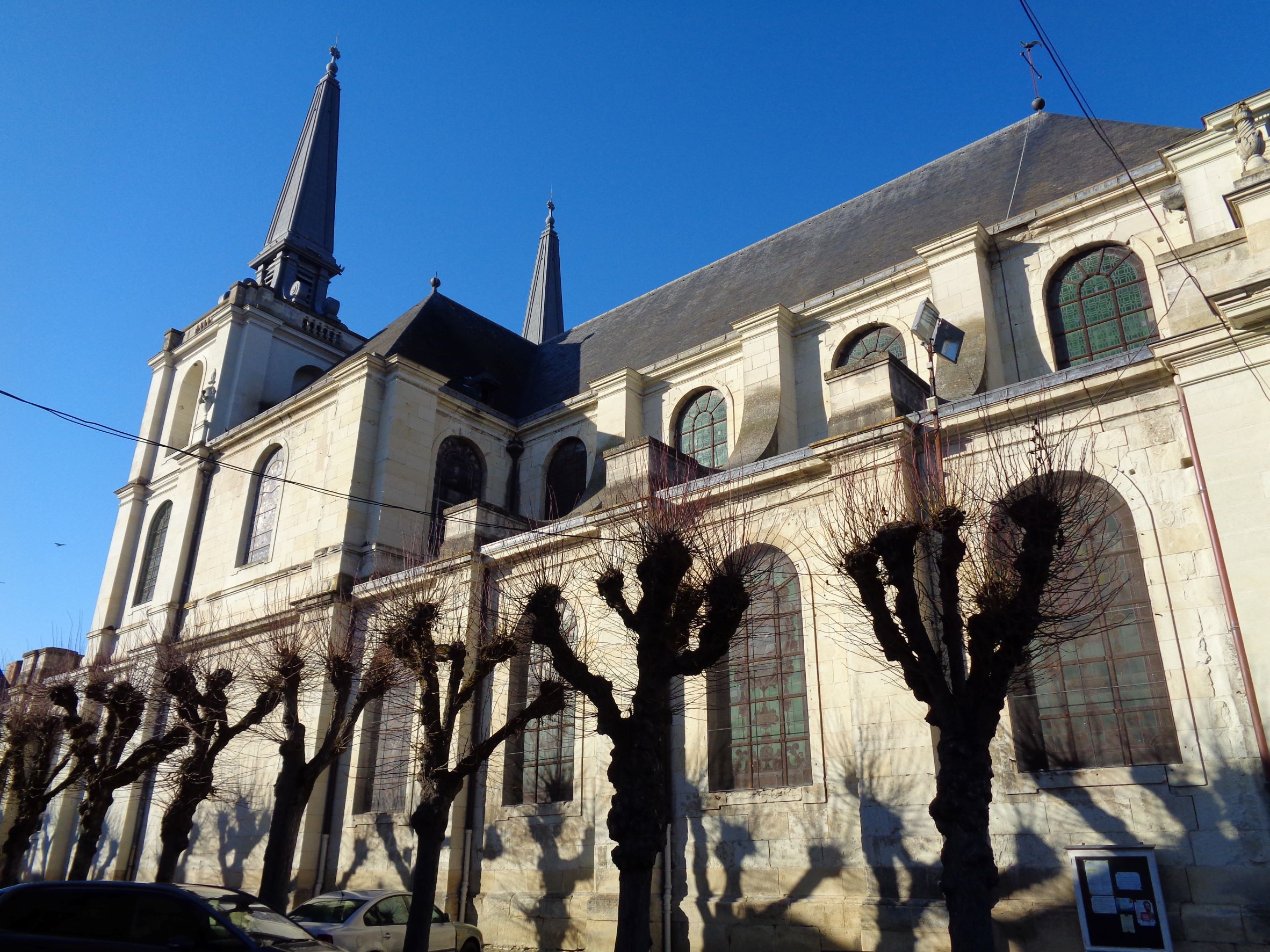
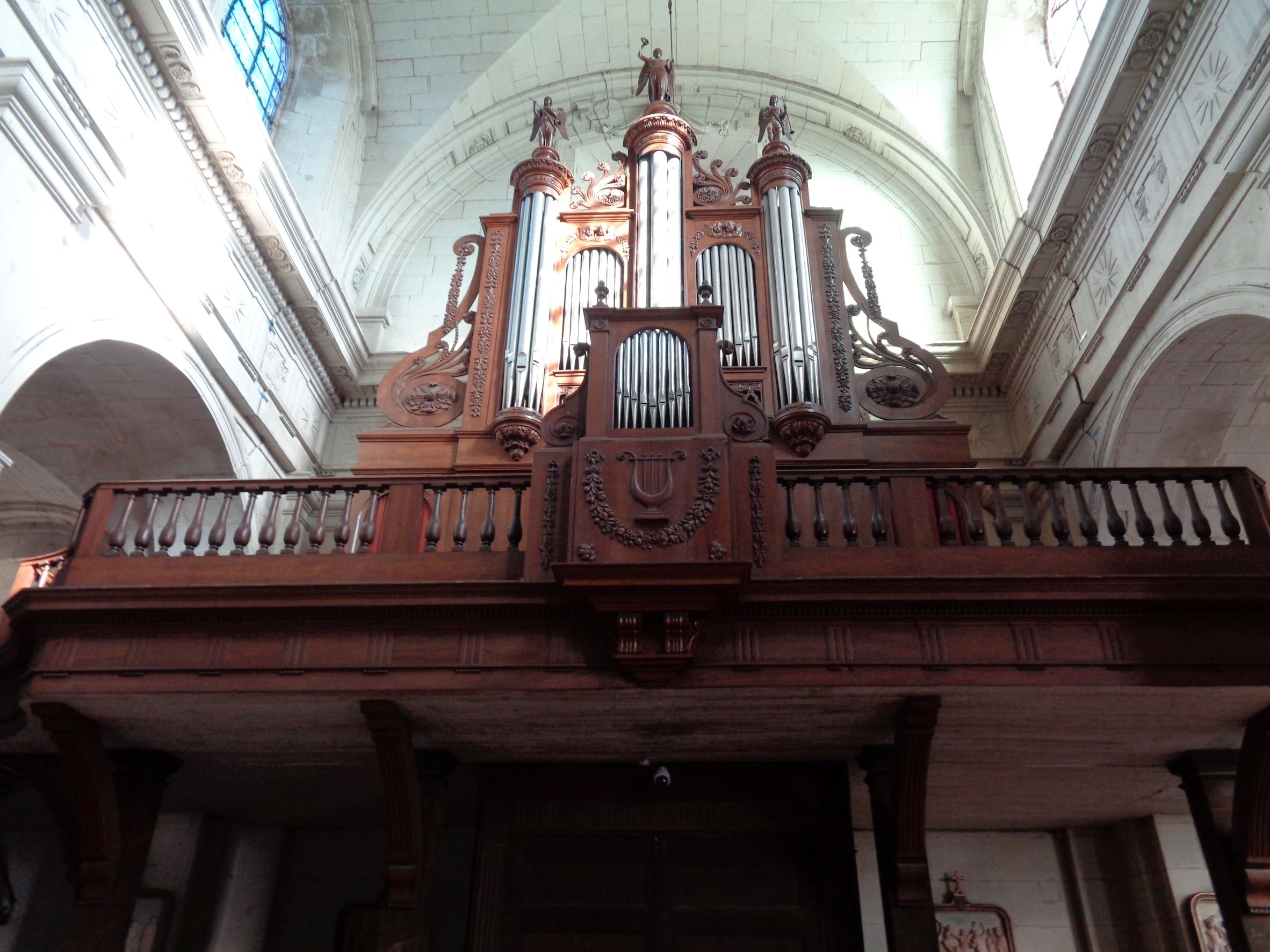
The Notre-Dame Church was built in the classical style between 1633 and 1639, In 1638, the cardinal made an agreement with the Lazarists to take over the running of the parish. The statues of the four evangelists were commissioned in 1761. The French revolution removed the altars and the cardinal’s coat of arms, particularly on the pediment and above the main door, but also inside the church. The church houses an organ built in 1853 by Louis Bonn, a Bavarian organ builder who immigrated to France. it was renovated in 1994. It is the only instrument of this organ builder never modified since its construction. The transept is formed by a span wider than the others. The two chapels placed at the back of each of the collaterals are decorated with sculptures, painted ceilings and altarpieces.
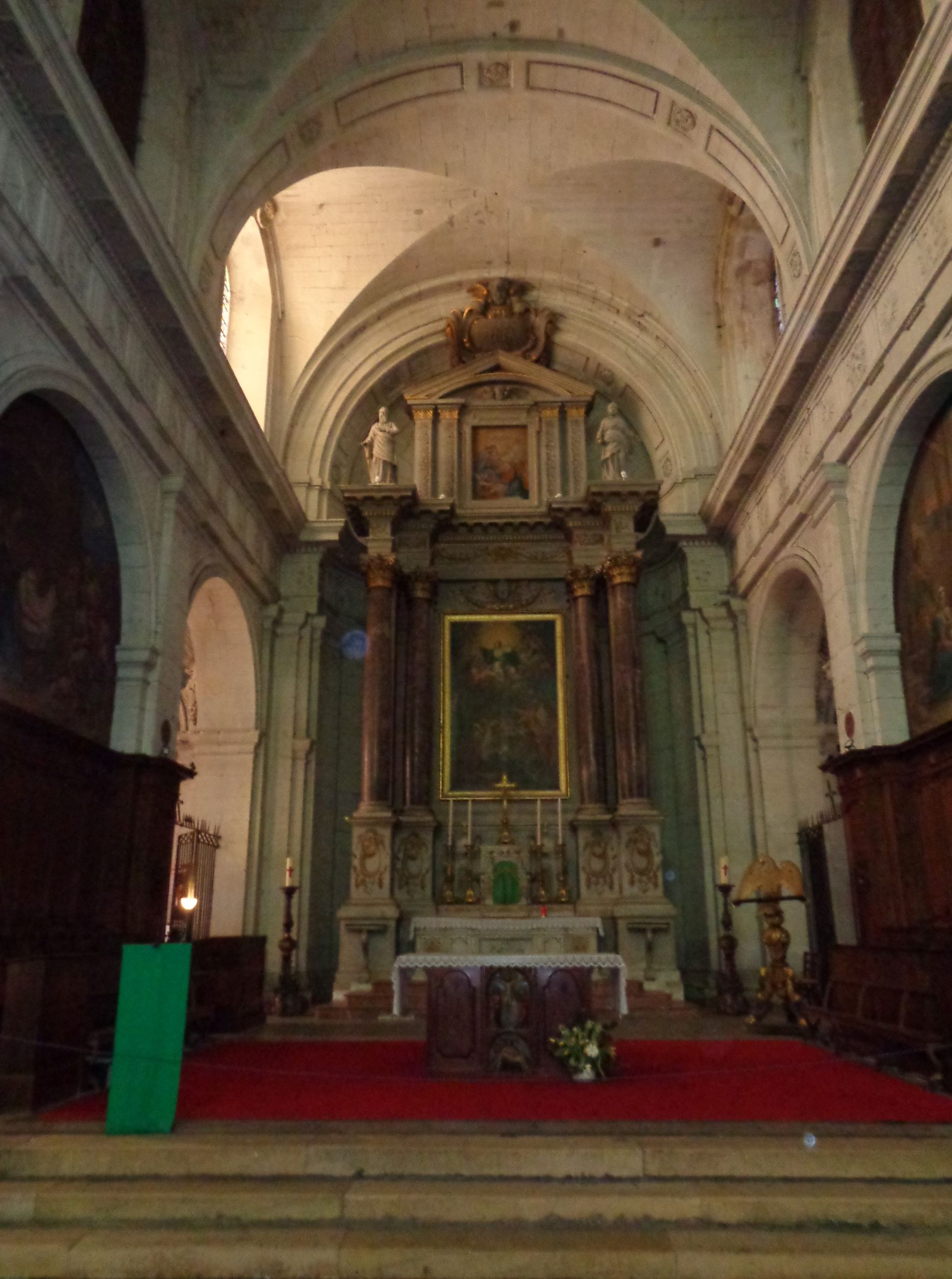
This is an amazing church yet not much written on it. I took several sites and the brochures in the church to compose the post. I say its worth the detour just for the church alone! It is located in the Place du Marché facing the Halles. The Notre Dame Church consists of a large central nave flanked by two aisles. The transept is formed by a span wider than the others. The two chapels placed at the back of each of the collaterals are decorated with sculptures, painted ceilings and altarpieces. In elevation, the interior layout follows a Doric order whose entablature receives the stone vaults. The main facade is decorated with two superimposed orders, with niches on each side of the door and the central window.
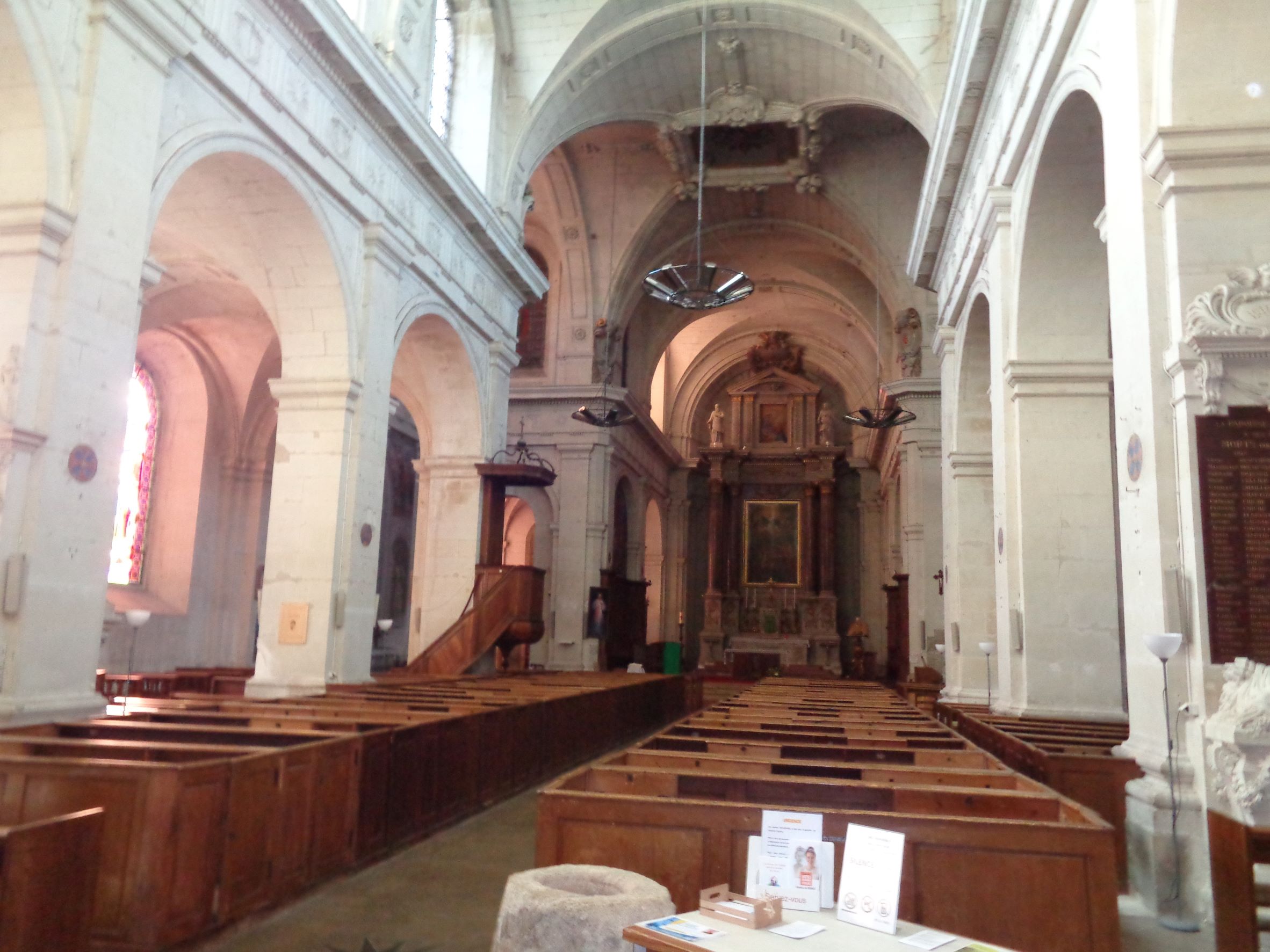
Of ancient inspiration (Doric pilasters, pediment, metopes, reminiscent of Greek temples) it stands out from the region’s often Romanesque or Gothic churches. This church is remarkable for its imposing size compared to the rest of the city. The church is dedicated to Our Lady of the Assumption or Notre Dame de l’Assomption.

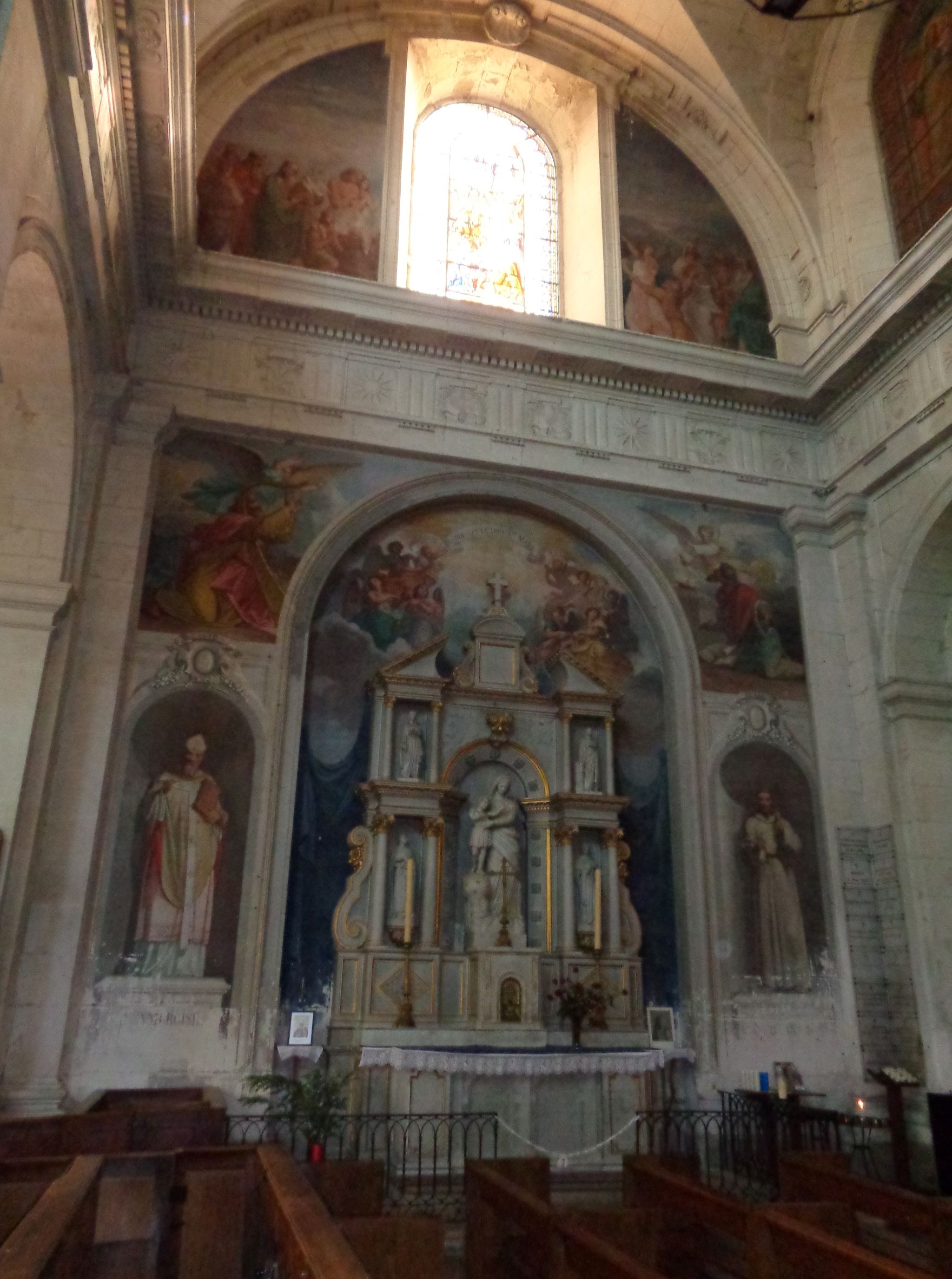
The main Altar is from the 18C. The side alters, one of which is dedicated to St. Vincent who’s contract with the cardinal provided the first priests for the parish. From 1638 to 1640, St Vincent often came to Richelieu, he called there in 1639, the Sisters of Carity who will come to treat the sick.
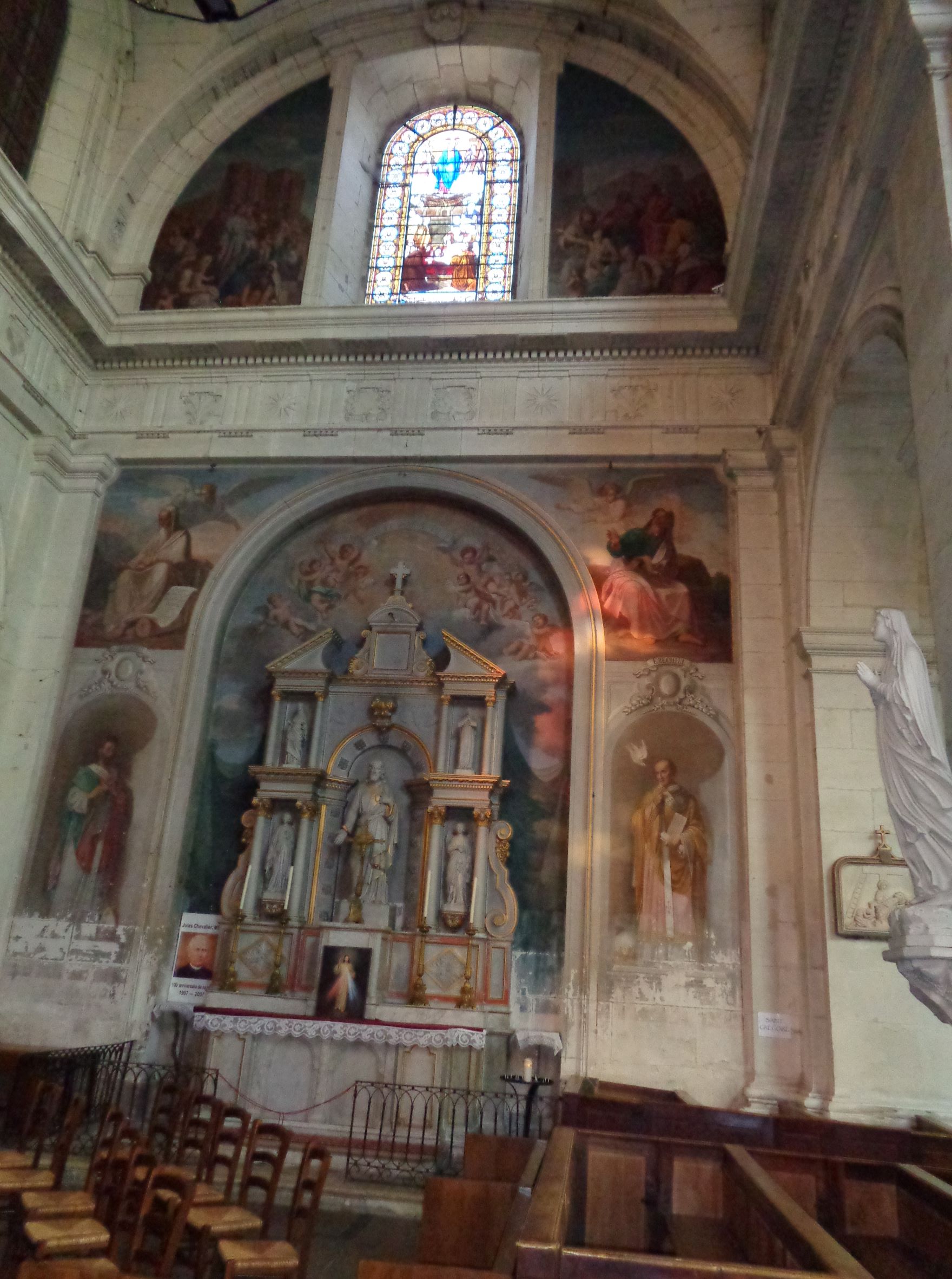
The Baptismal font is original! It is of Jesuit style, in the heart it has marble columns, behind it, a sacristy with beautiful restored woodwork, we see a portrait of the architect of the city, Jacques Lemercier.
The city of Richelieu and its heritage : https://www.ville-richelieu.fr/culture-tourisme-patrimoine/un-peu-dhistoire/
There you go folks, a dandy beautiful place to see architecture and history of France before you intact for the most part since the 17C! Richelieu is nice, the Cardinal at least here did a good job! The Notre Dame Church makes worth it the visit here alone. Again ,hope you enjoy the post on the Notre Dame Church of Richelieu,part I !!! as I.
And remember, happy travels, good health, and many cheers to all !!!

 Paris1972-Versailles2003