
A wonderful memorable City we have visited couple times over the years, Gladly found me again pictures in my cd rom vault that should be in my blog for you and me. I stop by on one of my road warrior trips way back in the 90’s ,and then came back years later and it remains a nostalgic spot in my life, Therefore, here is my take on this is Soria !!! Hope you enjoy it as I.
The City of Soria is in the province of Soria in the autonomous community of Castilla y León,in the kingdom of Spain. The City is on the banks of the Duero river. The City is a communications hub served by important roads. This is the case of the N-122 : Gallur-Tarazona-Soria-Aranda de Duero-Valladolid-Zamora-Portugal, which will become the A-11 Autovía del Duero.still under construction, The N-111 Madrid-Pamplona completed its widening and partial transformation into the A-15. The Piqueras Tunnel currently serves as a route through the Piqueras Pass and the route from Soria to La Rioja on the N-111. The N-234 road Sagunto-Teruel-Calatayud-Soria-Burgos, The City is 207 km from Valladolid, 142 km from Burgos, 159 km from Zaragoza, 192 km from Vitoria-Gasteiz, 229 km from Madrid, 987 km from my current home, We have come here from France on our way to Madrid and from Madrid on our way to France.
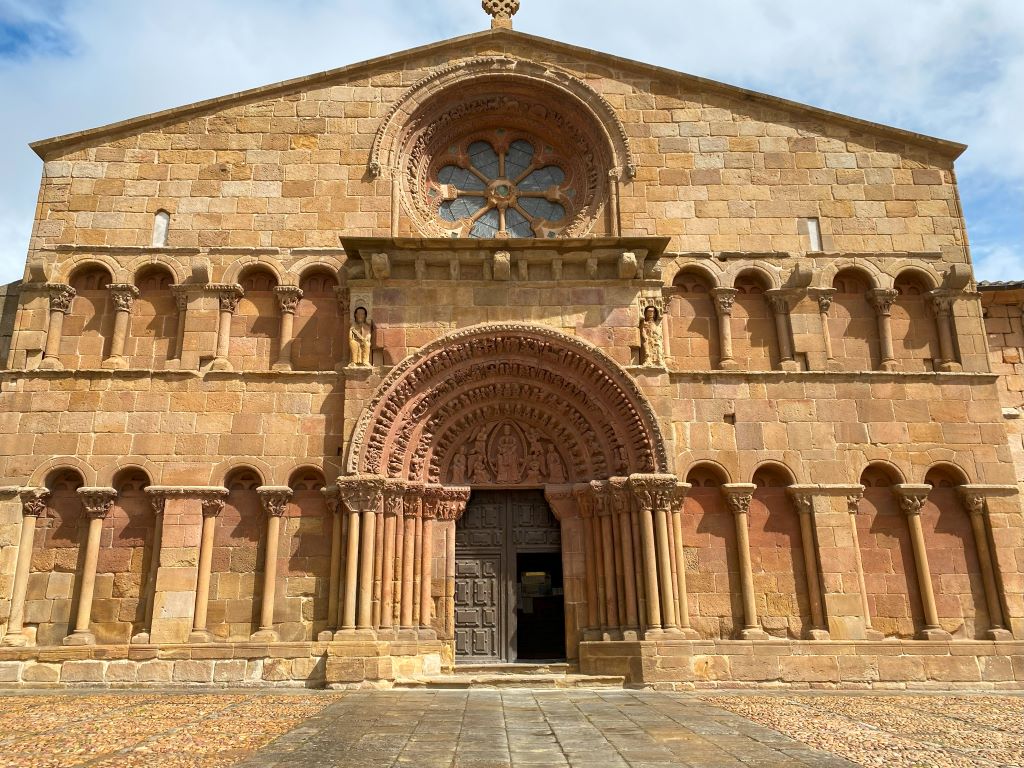
The Church Santo Domingo, originally dedicated to Saint Thomas, also retains its Romanesque character. Its façade is notable, with a rare example (there are only 5 in the world) of a paternitas trinity surrounded by four beautifully carved archivolts with biblical scenes, and an eight-part rose window. The interior of the church is from the original 11C temple, while the three naves at the foot and the façade date from the 12C. The apse was destroyed in the 14C to build the new chevet.
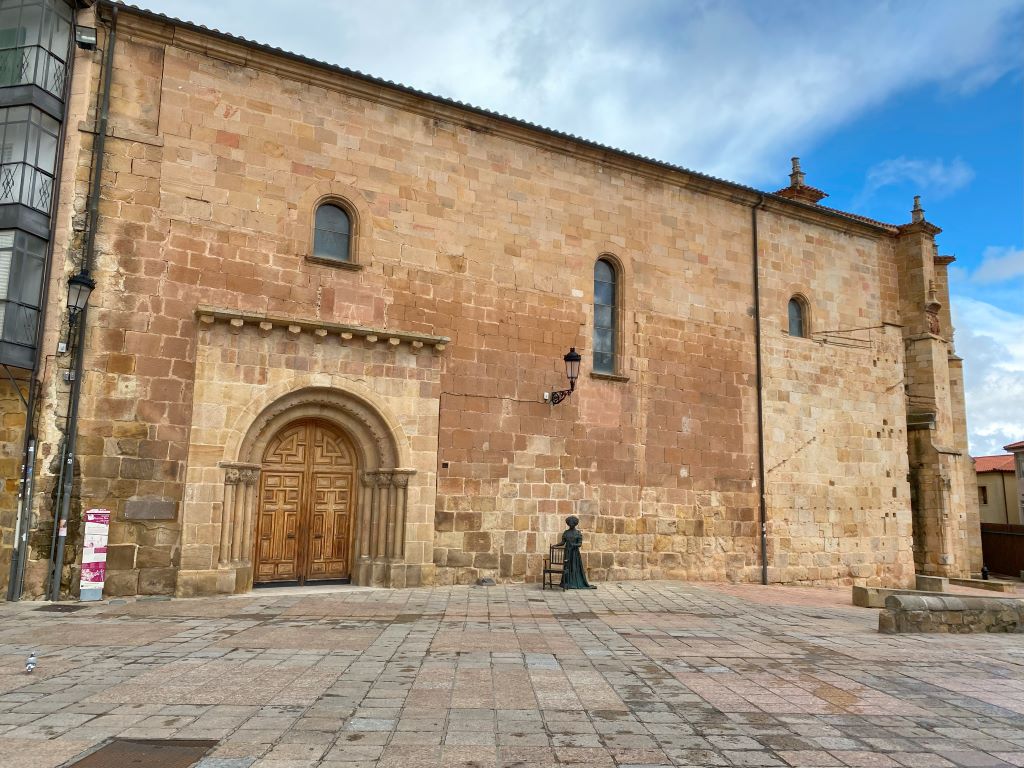
The Church Santa María la Mayor retains an austere façade, two apses, and three sections of the tower from the Romanesque temple. During the 16C the Chapter moved temporarily to this temple, and the main chapel and the late-Gothic apse were built.
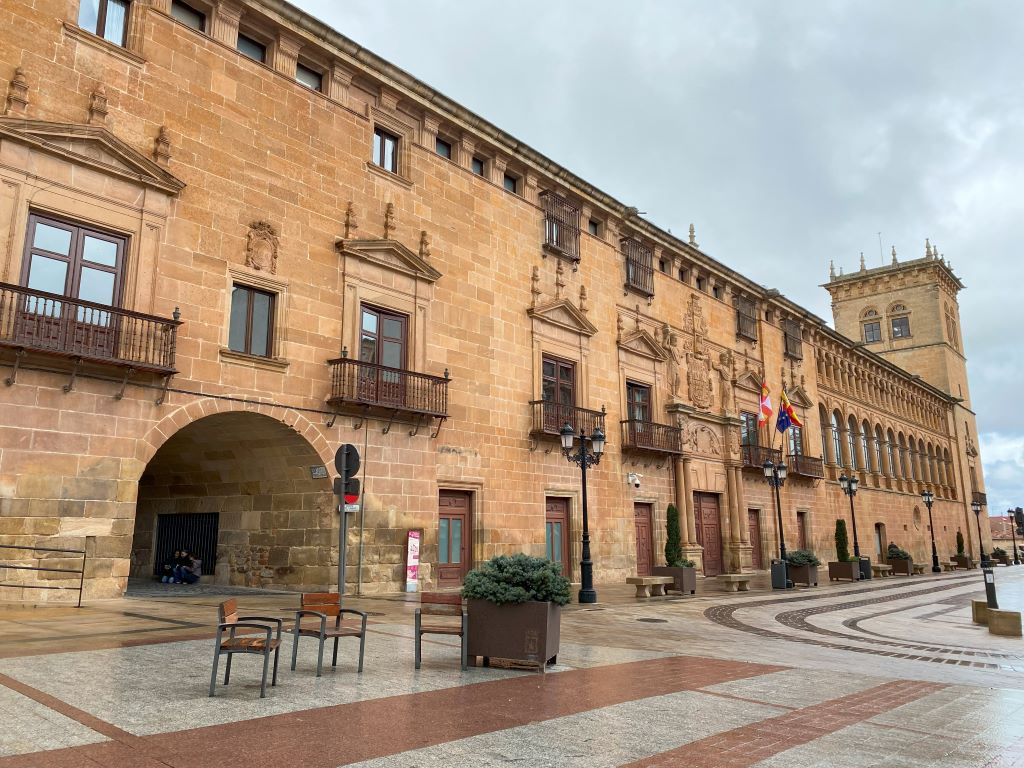
The Palacio de los Condes de Gómara palace is the most representative building of Renaissance civil architecture. The palace was built by Francisco López de Río y Salcedo High Ensign of Soria and its province, he ordered its construction at the end of the 16C, the main work being completed in 1592 according to the inscription on its façade. It is made up of two clearly differentiated bodies. The body on the left is solid with large balconies and in it is the main entrance door; there are two large low, rectangular pilasters that serve as pedestals, on each of which rise two Tuscan columns that, reaching the main floor, support a projecting cornice above which is the coat of arms of the counts. The body on the right is the most elaborate with its double arcade of 12 and 24 arches on a floor plan intended for stables that is not very striking with two access doors and a bull’s eye. On the first floor, there is a gallery with twelve wide semicircular arches resting on Tuscan columns with Ionic capitals. On the second floor, the arcade consists of 24 smaller windows. It has a tower on the far right, formed by three sections and decorated with balls at its top, in the Herrerian style.
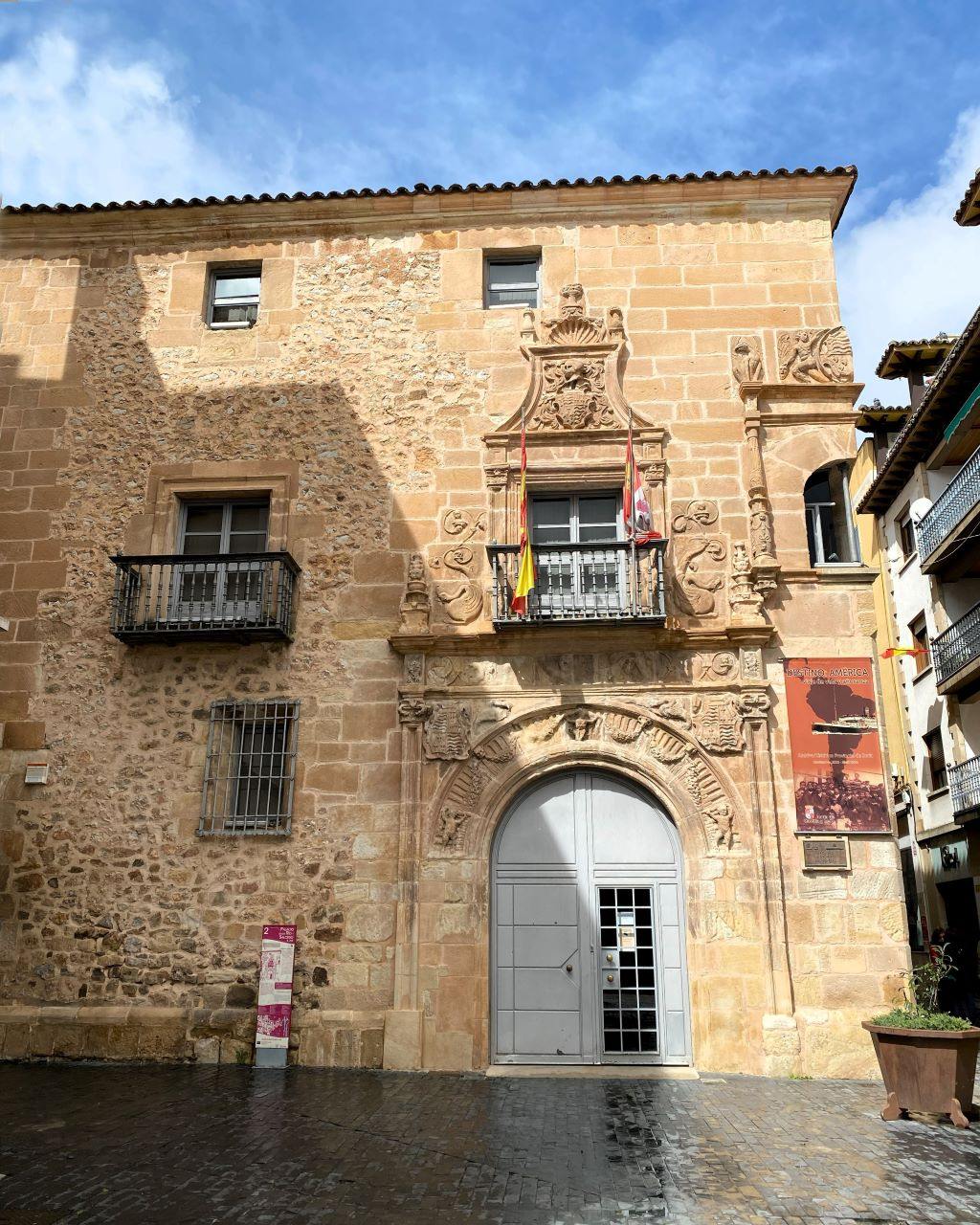
The palacio de los Ríos y Salcedo palace is a building from the first half of the 16C with a Renaissance façade, in the Plateresque style. The most notable element of the façade is the corner window, of great technical difficulty, which has balustraded columns on both sides. Above this is the family crest highlighting a magnificent corner. Flanking the façade, formed by a semicircular arch and pilasters on its sides, are the heraldic shields of the Ríos and Salcedo families. Above these is a balcony topped with a pediment that ends in the shape of a scallop shell and, again, the shield of the original owners. This 16C residence, formerly a Civil Guard barracks, is today the headquarters of the Provincial Historical Archive of Soria. Among its funds you can find documents that talk about various events that took place in the province of Soria.
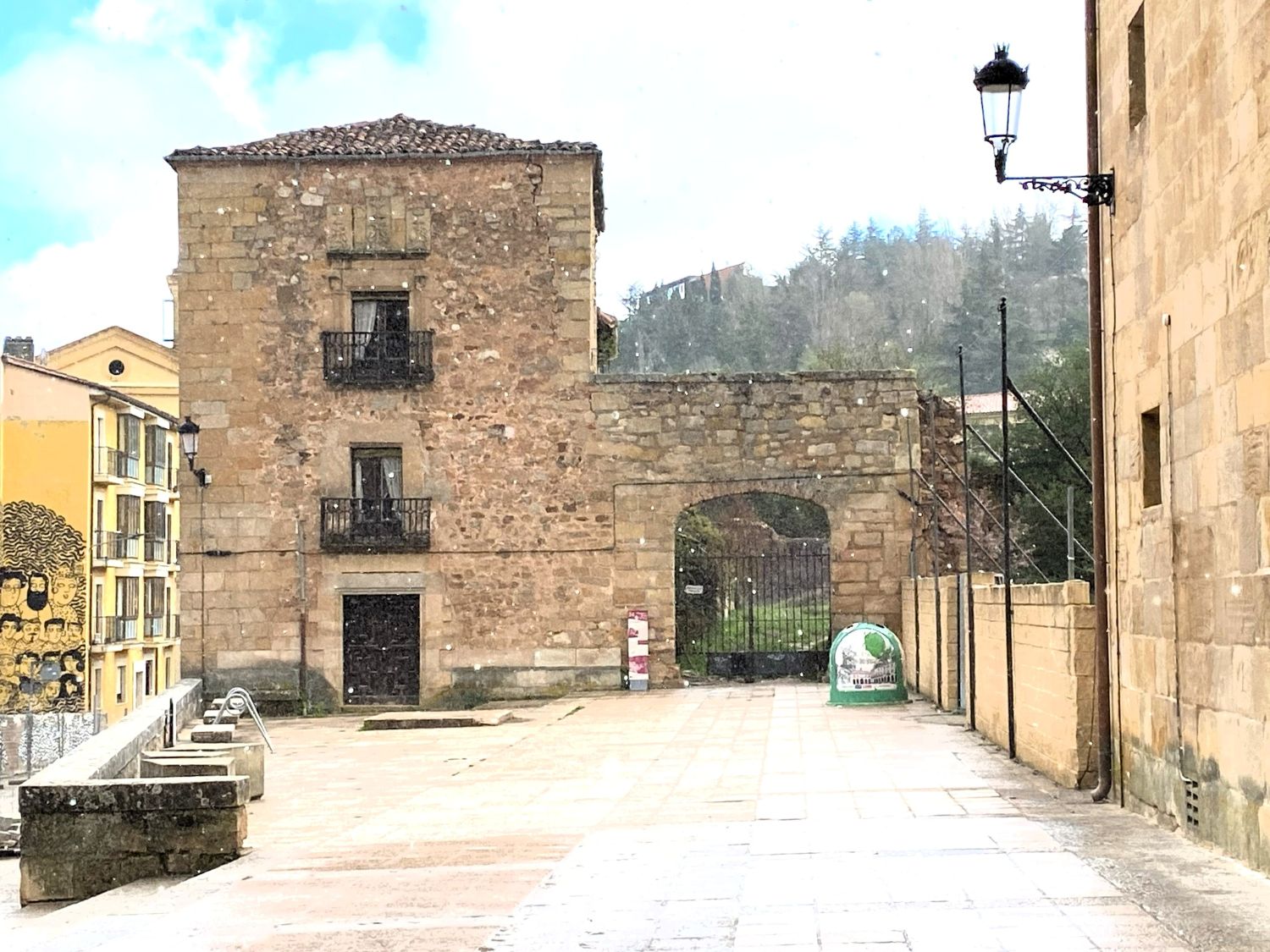
The Palacio de los Beteta o de Suero de la Vega or the Beteta Palace or Suero de la Vega Palace is a fortified house located in the Plaza Mayor. It is also known as the Tower of Doña Urraca due to a 19C legend that claimed that Queen Urraca I of León had been imprisoned here, although no documentation has been found other than it being a later construction. During the 16C it served as lodging for nobles who came to visit Soria, among whom are Felipe II and Saint Teresa of Jesus when she traveled to found the Convent of the Holy Trinity. The origin of this palace is found in a 15C fortified house owned by a wealthy Jew who sold it to the Beteta family, wardens of the castle, after their expulsion in 1492. After its acquisition it was renovated in 1536.
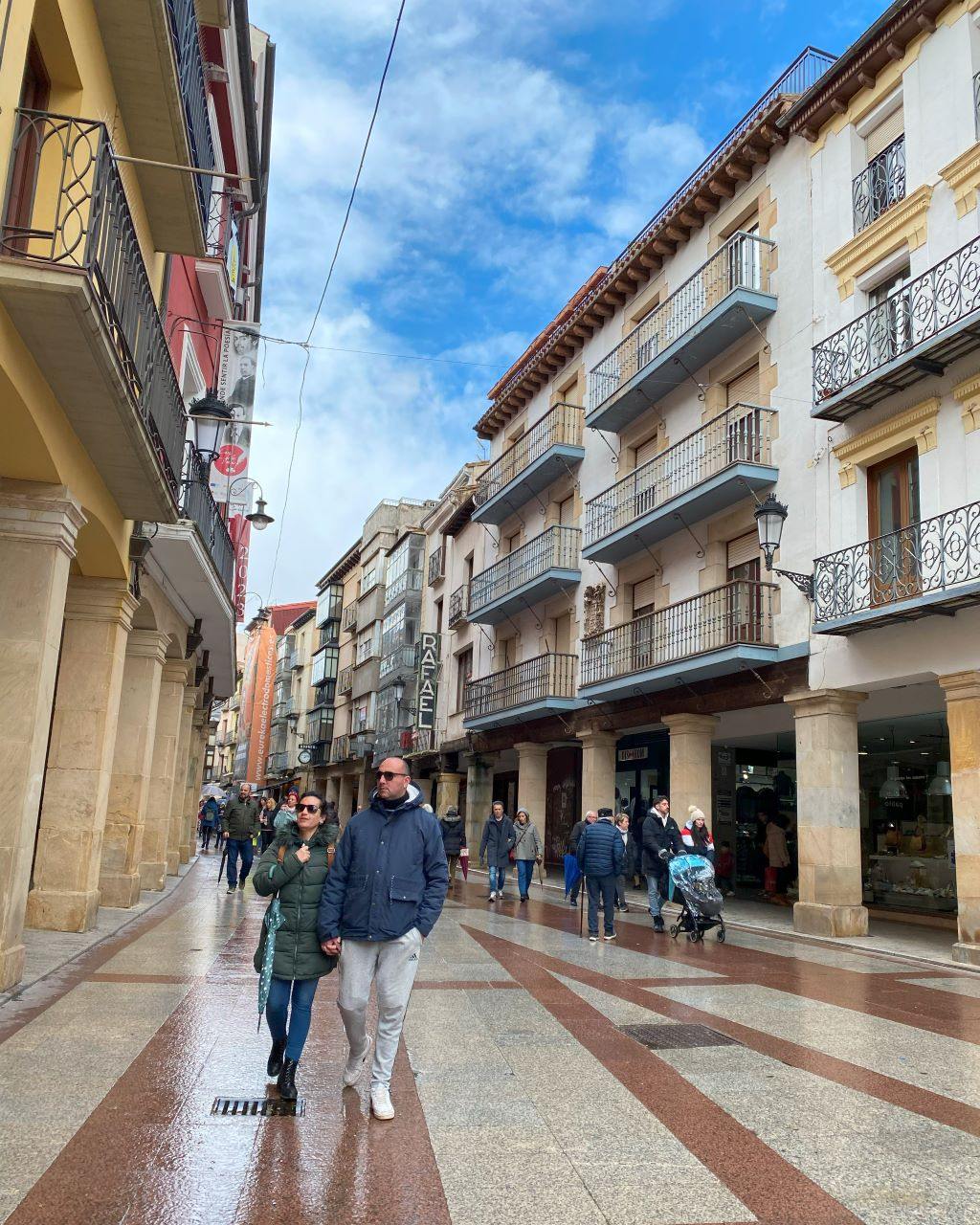
The Calle del Collado is a long street that begins at the Plaza Mayor and ends at the old limit of the city walls, joining with Marqués de Vadillo Street to Mariano Granados Square. The first section is between the Plaza Mayor and the Plaza del Rosel y San Blas, popularly known as the “Tart” Square, a nickname acquired due to the monument to the Twelve Lineages, whose layout resembles that of a cake. It is the narrowest section of the entire Collado and for this reason the people of Soria, in their eagerness to give nicknames to streets, squares and gardens, call it “the narrow one of Collado”. The next section is located between the Plaza del Rosel y San Blas and the Plaza de San Esteban. It is the most characteristic section of the street, with the arcaded buildings from the 19C. Towards the middle is the Círculo Amistad Numancia, popularly known as “El Casino”, a building that retains the flavour of 19C cafés. Other important buildings include the Casa Jodra, located on the corner with Estudios Street, renovated in 1908, whose façade features a large number of balconies with pot-bellied grilles, decorated with an imitation of ashlars and stone chains. Also noteworthy at numbers 56-58 is the Edificio las Heras, with a striking iron and glass viewing platform.
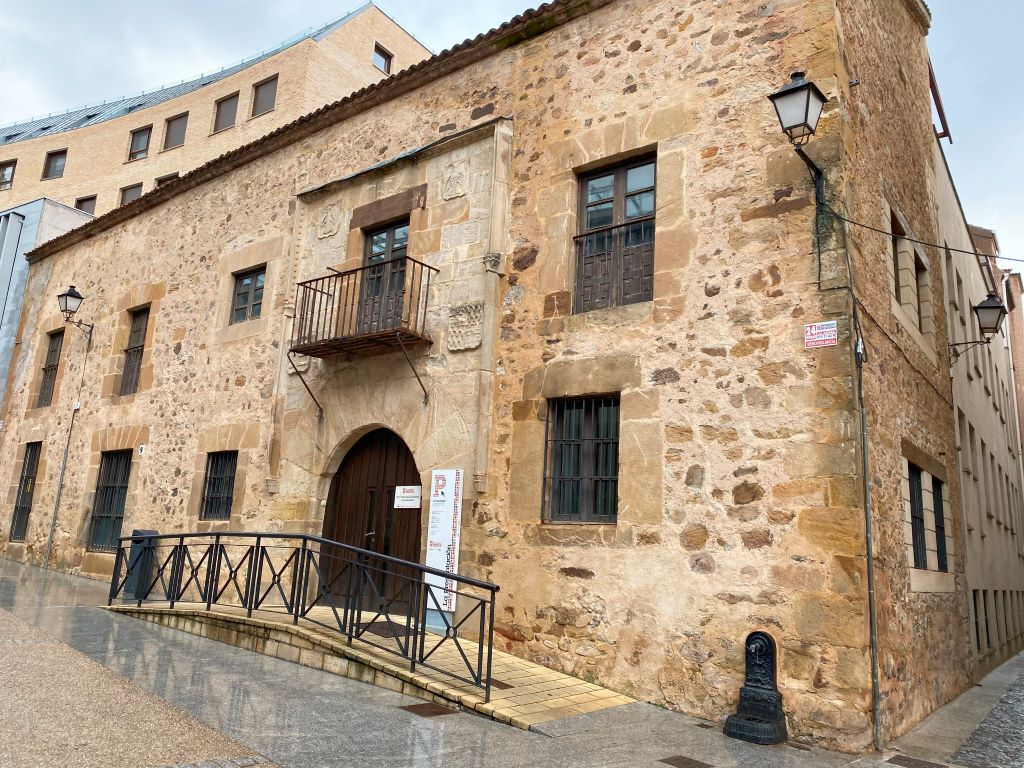
The Antiguo Colegio de la Presentación at Plaza Bernardo Robles The building has more than 1,000 square meters, with capacity for a gymnasium, workshop classrooms, music rooms, a library, meeting rooms, an auditorium, a computer room with capacity for 20 people, a videoconference room for the hearing impaired, and an exhibition space.It is in the 15C Palacio de los Marqués de Pica, which housed the Presentation College at the beginning of the 20C, was the former College of Humanities, built by the Jesuits in the 18C and belonging to the College of the Society of Jesus. The palace has two floors and its masonry façade displays, as do most palaces of the period, the typical arrabaz style that shelters the doorway with a semicircular arch and the balcony, and the coat of arms of the Bravo de Saravia family. At the beginning of the 20C, the Colegio de la Presentación was installed in the palace and after being acquired by the Soria City Council, it became the headquarters of the Municipal Band and today the Municipal Knowledge Center.
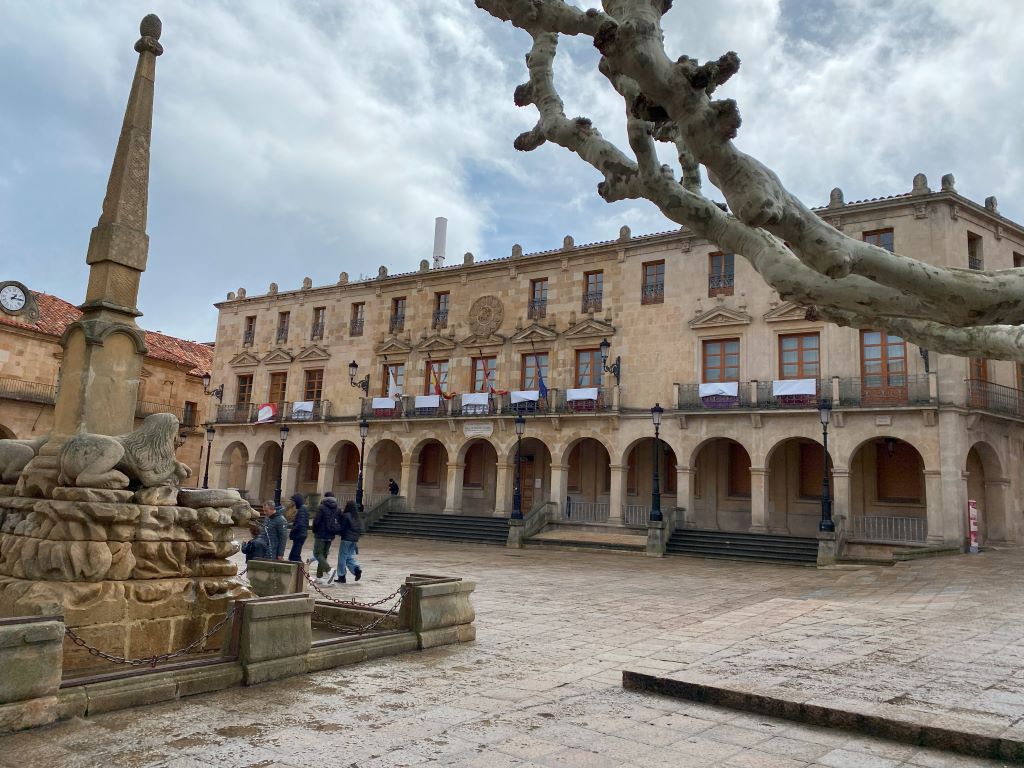
The current ayuntamiento or City/Town Hall building, on the former Casa de los Doce Linajes, retains the large coat of arms of the knights representing the most noble and powerful families who commissioned the building in the 17C as a meeting place. The Soria Council acquired the site in the 19C, and it has served as the seat of municipal government ever since. It was expanded in 1978 and 2007.
Other monuments to see here are the Church of Nuestra Señora del Espino (Notre Dame) preserves few Romanesque vestiges, having been rebuilt during the 16C in the Plateresque style. The Co-Cathedral of San Pedro has remains of a 12C monastic church. The monastic church suffered partial ruin in 1543 and was rebuilt during the 16C. It has a hall plan with five naves with star-shaped, cambered ribbed vaults, supported by circular Doric columns, with a polygonal head. Both the central nave and the side naves consist of five bays separated by slightly pointed transverse arches. In the side aisles between the buttresses there are numerous chapels. It has a remarkable sandstone ashlar cloister, of which 24 meters in length remained after the Renaissance extension, distributed in three bays: two with four arches and another with five. The Church San Juan de Rabanera retains its original Romanesque character. Particularly noteworthy is its semicircular apse, divided into four sections, with windows in the two central ones and two beautifully decorated blind windows on the exterior. The Museo Numantino or Numantine museum is the name of the archaeological museum in Soria, and it houses many of the finds from nearby Numantia. The remains of the Castillo de Soria castle and its murallas or walls are located on the so-called Cerro del Castillo. The walled enclosure covered an area of almost 100 hectares with a perimeter of 4,100 meters. It seems to have been built during the 13C during the time of Sancho IV. Starting from Cerro del Castillo, to the south it borders the cemetery, continuing in a curve along Santa Clara, Alberca and Puertas de Pro streets to the west, heading north. It passes through Santo Tomé and continues ascending until it reaches the height of the Paseo del Mirón, heads east looking for the hermitage of Nuestra Señora del Mirón and descends the slope of the mountain towards the Duero river, where bordering the river it returns to Cerro del Castillo.
A bit of history I like tell us that during the 10C and 11C, the area of Soria was strategically important due to its location next to the Duero river, which marked the boundary between Christian and Muslim dominions in the so-called “Duero mark” or “Duero line”. The definitive conquest of this place by the Christians in 1060, and of Toledo in 1085, opened the door to the conquest and repopulation of Soria. Between 1109 and 1114, King Alfonso I the Battler definitively conquered Soria and repopulated it. Also around this time, he granted the Fuero Breve, the first legal regulation of the town that we only know from indirect sources. After the death of his mother Urraca in 1126, Alfonso VII was quick to claim the towns of Soria, Almazán and Medinaceli occupied by his stepfather Alfonso. Upon the latter’s death in 1134, Soria became a permanent part of Castile. Alfonso VIII was born in Soria and remained linked to the town throughout his life. Soria’s connection with Alfonso VIII and his wife Eleanor of Plantagenet is reflected in its coat of arms and in several of its temples. After Sancho IV was crowned in 1284, his nephew Alfonso de la Cerda claimed the throne of Castile with the support of Aragon, sparking a war between the two kingdoms with the province of Soria as the main stage. During the minority of Ferdinand IV, Alfonso de la Cerda continued his attempts to crown himself King of Castile and take control of Soria and other nearby towns for two years. However, the political instability of the last third of the 14C led to the loss of its royal status, and Henry II ceded it to the French mercenary Bertrand Du Guesclin as payment for his support in the First Castilian Civil War against Pedro I of Castile. The transfer met with open hostility from a population that did not wish to abandon royal rule, and Du Guescin’s troops had to storm the city in 1369. After Du Gueslin’s abdication, the city continued until 1539 to be granted as a lordship to members of the royal family. Thus, the future Juan I of Castile was an Infante of Soria, and the queens Catherine of Lancaster, Mary of Aragon and Isabella of Portugal were Duchesses of Soria. Soria is still called a town in documents from 1374, while a privilege dated June 22, 1377 already mentions the city of Soria. It is possible that it was elevated to a city in 1375, a year in which there were several royal weddings. Soria regained its strategic-military prominence in the history of Spain with the War of the Spanish Succession, defending the cause of Felipe V and protecting the border line from Aragonese claims (1706-1707). In 1750 the Jesuits settled in the city. In 1808, after the French invasion of Spain, Soria decisively joined the anti-French camp with the creation on June 3 of a Supreme Governing and Military Board, which organized the Numantinos Volunteer Battalion, active on the Logroño and Sigüenza fronts. On September 17, 1812, District General José Joaquín Durán conquered the city of Soria, ordering the demolition of its castle and walls. The War of Independence caused great economic damage to Soria. After the outbreak of the Spanish civil war, Soria came to be controlled by the Nationalists side since the arrival on July 21, 1936 of a Navarrese column sent by Mola and under the command of García-Escámez.
The City of Soria on living and heritage : https://soriaparavivir.es/soria-para-vivir/
The Soria tourist office on its heritage : https://www.turismosoria.es/en/what-to-see/monuments/
The Castilla y Léon region tourist office on Soria : https://www.turismocastillayleon.com/en/heritage-culture/soria
There you go folks, another gem in my dear Spain, Soria, an easy ride by car all worth it for a pleasant rest stop or more on my road warrior trails between France and Spain. Again, hope you enjoy this post on this is Soria !!! as I.
And remember, happy travels, good health, and many cheers to all !!!

 Paris1972-Versailles2003
Fabulous
LikeLiked by 1 person
Thank you; happy travels Cheers
LikeLiked by 1 person