
I take you back to my dear Madrid!! love it !! I like to continue the saga of my dear Madrid with new pictures from my cd rom vault that should be in my blog for you and me, This is again my lost walking trails of wonderful sublime Madrid, Therefore, let me tell you about curiosities of Madrid, part VII !!! Hope you enjoy the post as I.
The Puerta de la Colonia de la Prensa is located in the Carabanchel district and it hides a surprising art-deco neighborhood built between 1913 and 1916. This colony, made for writers and journalists from the Los Cincuenta or the fifties professional association in order to develop the land between Lower and Upper Carabanchel, was made up of homes and small hotels in the modernist style with a garden. It has its main entrance at numbers 61 and 63 Calle Eugenia de Montijo, it is still possible to enjoy its spectacular entrance with a guard post with two splendid modernist control posts turrets, which was also used to halt the tramway and act as a telephone booth, and some of the original 65 chalets. You will see a gate with two towers with brackets holding a marquee decorated with drooping flowers. In the early days. The small modernist houses were designed by Mario López Blanco and true to its name, Colonia de la Prensa was built on the initiative of a group of journalists as a place of welcome for wealthy families wishing to escape the hustle and bustle of the city. They came to relax in the many small hotels and houses. The first stone of the Colony of the Press was done in 1913 by the king Alfonso XIII, it was estimated in 1915 as the construction of this singular puerta or gate of great architectural interests, was located at the beginning of the ancient street called Calle del Mediodía or midday street.
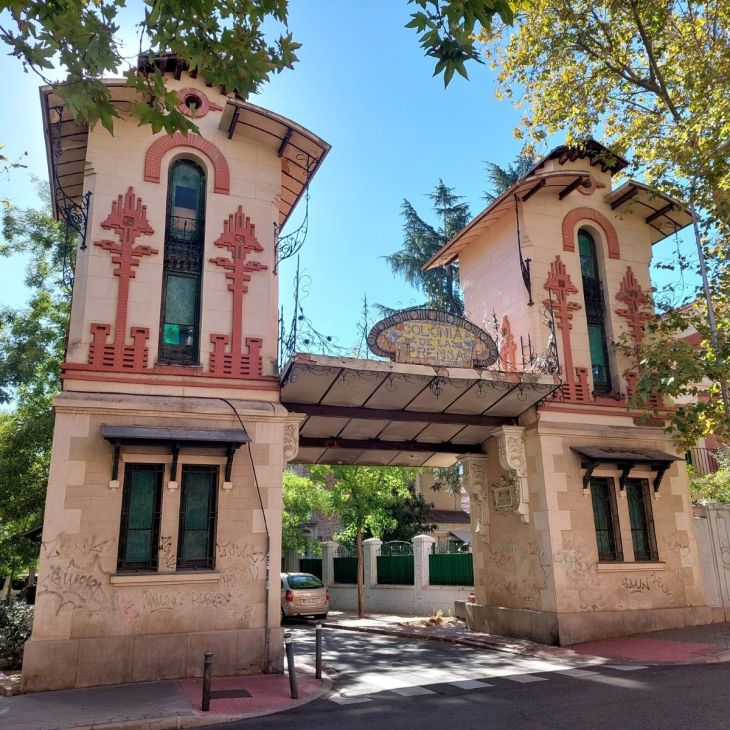
The Madrid tourist office on the Colonia de la Prensa : https://www.esmadrid.com/en/tourist-information/colonia-prensa
The 19C Fuente de Diana Cazadora or Diana the Huntress fountain ; is also known as the Fuente de la Cruz Verde or Green Cross fountain, after the name of the square where it is located, formed by a widening of Calle Segovia , where Calle Rollo and Calle de la Villa meet. The fountain was inaugurated in 1850 in the Plaza de la Cruz Verde, a site that takes its name from an old green-painted wooden cross, which was customarily used to mark the places where executions were carried out during the Inquisition. It was built at the initiative of the Madrid City Council to supply drinking water. Its design, and the sculptural group, which comes from the now-disappeared fountain in the Plaza de Puerta Cerrada, was created in the 17C,.It is attached to the façade of the garden of the now-gone Convent of the Bernardas del Santísimo Sacramento, which, like an embankment, bridges the steep slope between Calle Mayor and Calle de Segovia. The complex consists of three bodies, joined together by a granite plinth. The central one, which is higher, features a coat of arms of Madrid carved in white stone. Resting on its lintel is a statue of Diana, the virgin goddess of the hunt and protector of nature, dressed in a short tunic. It is made of white marble, as are the two mythological dolphins at her feet. The sculptural group is flanked by two ornamental white stone pine cones. The fountain has five spouts on its front, three of which are located in the central body and one on each side. Its water is deposited in three basins: the main one is located at the front and the other two on each side. All of them are made of granite and have a rectangular floor plan.

The Madrid tourist office on the Fuente de la Cruz Verde : https://www.esmadrid.com/en/tourist-information/fuente-de-la-cruz-verde-diana-cazadora
The Plaza de la Cruz Verde is a small, secluded square in the Madrid of the Habsburgs next to Calle Segovia ,and in La Latina district. A quiet, steep square of medieval origin presided over by the monument of the so-called Fuente de la Cruz Verde or fountain of the green cross. The name of the Green Cross has its historical origin in a wooden cross painted green as a sign that indicated the places where the executions of the Inquisition were carried out. The five-spout fountain was built in 1850. The monument benefits from the old façade of the garden of the convent of the Bernardas del Santísimo Sacramento as a pillar. The complex consists of three sections, joined by a granite plinth. The central section, which is higher, features a Madrid coat of arms of the Oso and Madroño or the Bear and the Strawberry Tree, carved in white stone, beneath which appears a plaque with the following inscription: “During the reign of Mayor, His Excellency the Marquis of Santa Cruz. Year 1850.” Above its lintel rests a statue of Diana, the virgin goddess of the hunt and protector of nature, dressed in a short tunic. It is made of white marble, as are the two mythological dolphins at her feet. The sculptural group is flanked by two ornamental white stone pine cones. The fountain has five spouts on its front ; three of which are located in the central section, and one on each side. Its water is deposited in three basins: the main one is located at the front and the other two on each side. All of them are made of granite and have a rectangular floor plan. The Plaza de la Cruz Verde is a square of ochre facades dotted with lanterns and balconies, with a cobbled area with benches and trees and where there is a popular terrace from which you can see the building where the architect Ventura Rodríguez, an 18C architect, lived for a time. The square’s name alludes to the emblem of the Inquisition, a green-painted cross, which led the processions held on the eve of an auto-da-fé (act of faith) and symbolized the hope of eternal salvation for heretics reconciled with the Catholic Church. This cross was carried by members of the Inquisition to the site where the auto-da-fé was to be held the following day. During that night, prayers were said, preparations were completed, and the pyre was prepared, while the inquisitorial militia stood guard. At the end of the auto-da-fé, a procession returned the green cross to its sanctuary.
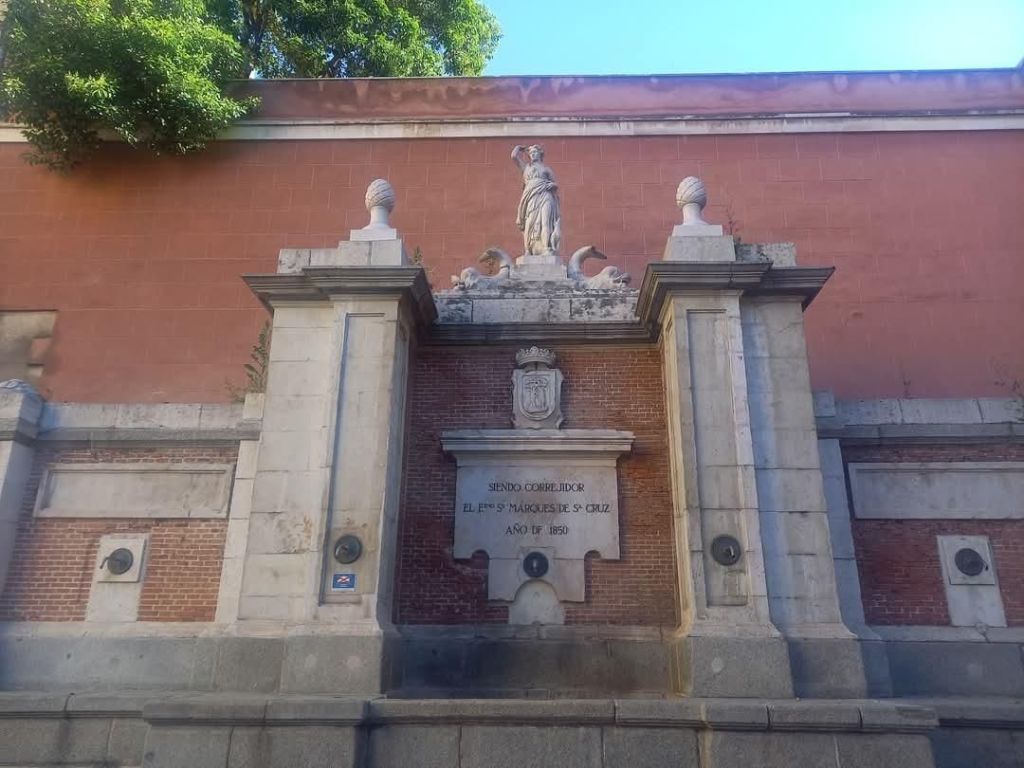
The Madrid tourist office on the fountain green cross in plaza de la Cruz Verde : https://www.esmadrid.com/en/tourist-information/fuente-de-la-cruz-verde-diana-cazadora
At No, 7 Calle Sacramento in the Centro district, beneath modern red brick buildings, lies the entrance to the Huerto de las Monjas or Nuns’ Garden, also known as the O’Reilly Palace Garden. It is a small interior garden with several culinary trees and a striking fountain. Formerly used as a vegetable garden by the Bernarda sisters (17C), this corner evokes the atmosphere of the Golden Age of Madrid. The garden has two entrances, one from Calle Sacramento, and the other from Calle Rollo. One of the walls separating the garden from the exterior faces Plaza de la Cruz Verde, where the Diana the Huntress Fountain is located. The former O’Reilly Palace is now the Madrid City Council’s Treasury offices. The convent was founded by Don Cristóbal Gómez de Sandoval, better known as the Duke of Uceda and a favorite of Felipe III, who commissioned its construction in 1615, very close to his own palace. Unfortunately, the convent and its church were destroyed during the Spanish Civil War. Rebuilt in the 1940s, the Bernardines continued to live there until the convent was demolished in 1976, to be replaced by several modern apartment blocks, although there was no intention of eliminating the garden. The fountain in the center it’s a bronze fountain composed of four cherubs called the “Fountain of the Prioress.” Apparently, the fountain comes from the “El Castañar” estate owned by the Duke and Duchess of Montellano in Toledo, and when they moved to their palace on Paseo de la Castellana, they took it with them. The fountain was cast in France, as a plaque tells us, in the “Fonderies D’Art du Val D’Osne-58 bd. Paris.”
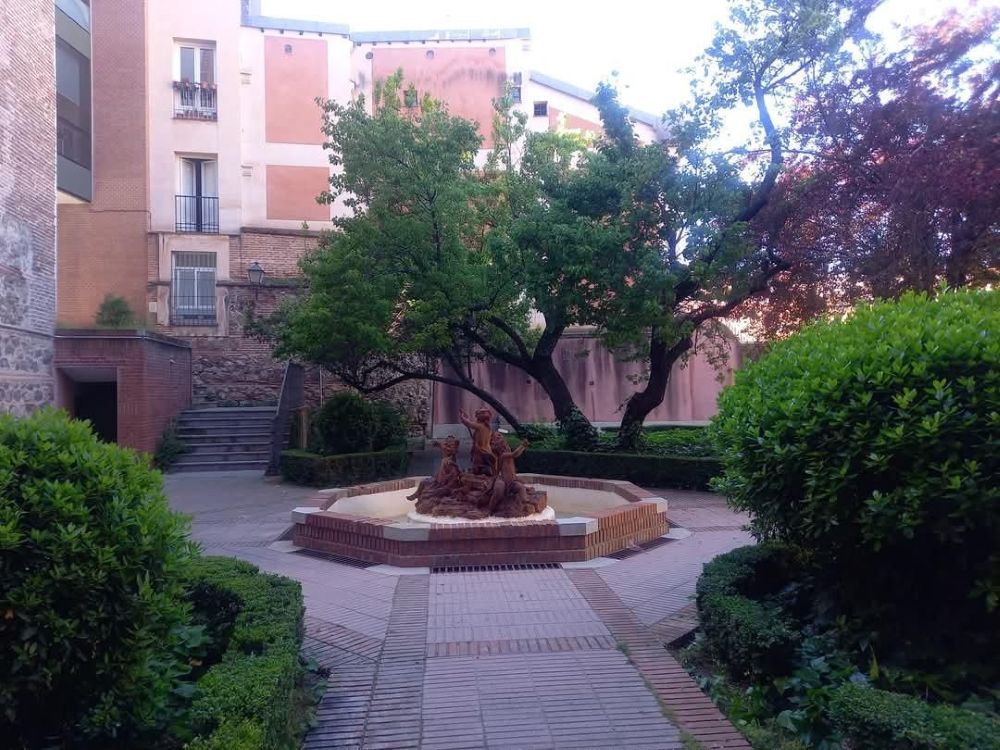
The Madrid tourist office on the Huerto de las Monjas : https://www.esmadrid.com/en/tourist-information/huerto-de-las-monjas
The village of Hortaleza, whose first records date back to 1361, was probably founded in the 13C. Hortaleza means “place where orchards abound,” hence the name of this now district of Madrid since the mid-20C. The Huerta de la Salud (garden of health) was created at the end of the 19C on the site of the Quinta del Cristo de la Salud (Christ of Health Farm). In the 18C, Don Martín Fernández de Velasco, XII Duke of Frías and holder of eight other noble titles, owned the Huerta de la Salud. From that time only part of the monumental gate of access to the estate remains, the text of the inscription indicates the time of its construction: the year 1744. The enormous concrete grain silo, built in 1928, is one of the few remaining structures of the old buildings, including the gate and the silo itself. The Hortaleza Silo is a polygonal tower of unknown design with the tower 20 meters tall, divided into seven floors; now it has been turned into a venue for exhibitions and cultural events, with a reading room and a viewing platform on the top floor that can accommodate a hundred people, with views over Cuatro Torres, Barajas, and the surrounding mountains. Belonging to the Huerta de la Salud Cultural Center. Among the facilities built for its operation in 1928 was a grain silo, one of the first reinforced concrete structures in Madrid and all of Spain. Today, the Huerta de la Salud Park has several apartment blocks, and public facilities such as a cultural center and a library stand on its site. The Parque de Huerta de la Salud is reach best by bus lines 9 , and 107 ,and metro line 4 Parque de Santa Maria station coming down on Calle de Santa Virgilia, The main entrance is on Calle Mar de las Antillas, 4-8.
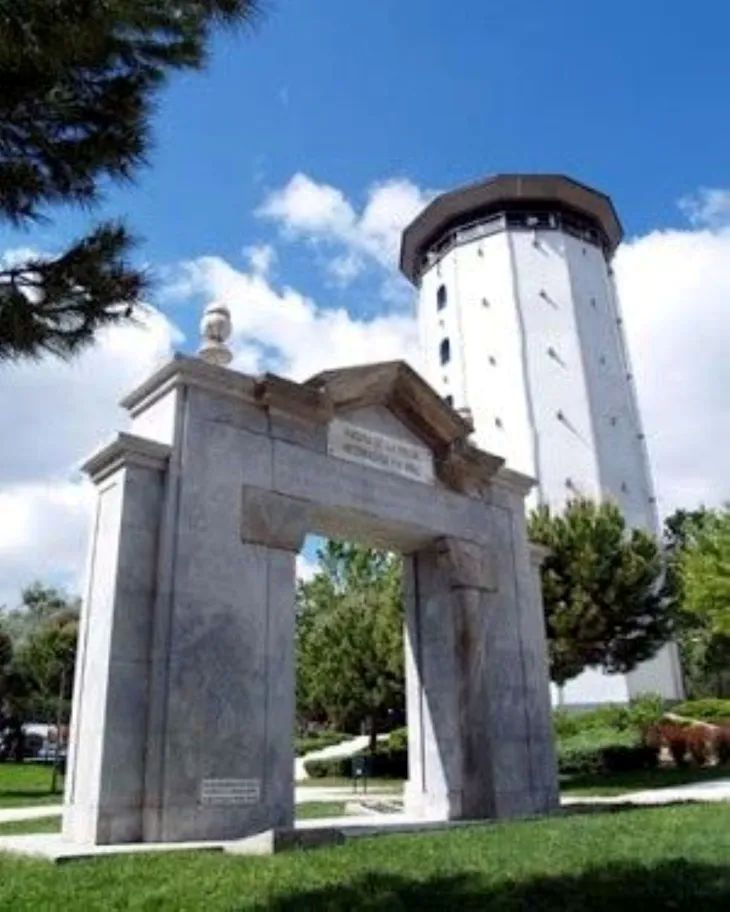
The Madrid tourist office on the Silo de Hortaleza : https://www.esmadrid.com/en/tourist-information/silo-hortaleza
The Teatro Albéniz Theatre is one of the most centrally located theatres in Madrid, situated at no, 11 Calle de la Paz. The theatre’s inauguration on March 31, 1945, marked the arrival of a new theatre in the heart of Madrid. For the first ten years of its existence, the theater was dedicated to revue-style shows, but on February 16, 1955, it was converted into a cinema. The building and its theatrical performances enjoyed a golden age in the 1970s (during my time living there). The theater was leased by the Community of Madrid in 1985 and in subsequent seasons hosted both festivals promoted by public administrations and private theatrical productions. In December 2008, after a production of Life Is a Dream, the theater was closed. After various legal issues, under the name UMusic Hotel Madrid, it forms part of a cultural and hotel complex with 130 rooms, 898 seats, and a hall for events and performances. It reopened in November 2022 with the musical *Company*, directed by and starring Antonio Banderas. This is the first establishment of the new UMusic Hotels brand in Europe and worldwide.
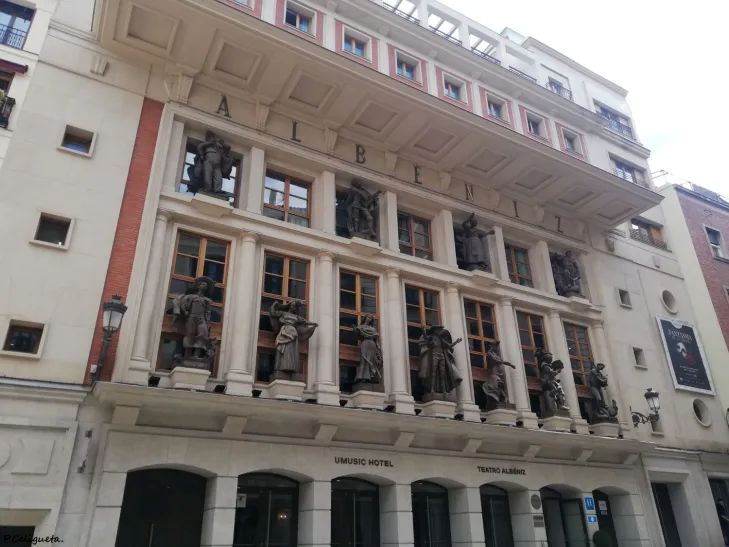
The Madrid tourist office on the Hotel Teatro Albaniz: https://www.esmadrid.com/en/tourist-information/umusic-hotel-teatro-albeniz
The Official Hotel Teatro U Music Hotel Teatro: https://www.umusic-hotels.com/umusic-hotel-madrid/theater-albeniz
The Calle Mayor connects Puerta del Sol with Cuesta de la Vega, after crossing Calle de Bailén. Although it is barely a km long, throughout its more than six centuries of history it has had different names to describe its different sections. In the official layout, Calle Mayor ends at the Emir Mohamed Park (founder of “Mayrit” in 865),(see post), and continues along the winding layout of Cuesta de la Vega. The Edificio de la Compañía Colonial or Colonial Company Building, aka Conrado Martín Building, is a modernist building with a façade that also leans towards an eclectic style. It is located at No 16 Calle Mayor (see pic), in the Sol neighborhood of the Centro district. The Colonial Company, a business focused on chocolate and other imported goods, built the building between 1906 and 1909. It received the Madrid City Council’s architectural prize in 1908. Previously, their factory was located on the site in Plaza Cánovas del Castillo, where the Ritz Hotel now stands. The building on Calle Mayor housed a company store on its ground floor. Later, after the company closed, a Conrado Martín perfumery occupied the premises. For this reason, the building was also known as the Conrado Martín Building, although they are no longer there. The street-level premises are currently occupied by a Caixabank branch. The first floor serves as the headquarters of the Royal Spanish Naval League (RLNE), a non-profit organization whose objective is to defend Spain’s maritime interests. The RLNE offers some spaces in its headquarters for rent for events. The rest of the building is residential. Upstairs, there are three ceramic tiles dedicated to its main products: coffee, tea, and cocoa. Inside, the stained-glass windows, from the Maumejean workshop, are particularly striking. The elevator, one of the oldest in Madrid, is also preserved. Later, the company moved to the Community of Madrid region town of Pinto, where its chocolates were produced. Compañía Colonial, or “La Colonial” as it was popularly known, was founded by businessman Jaime Méric (Perpignan, France) in 1854 in Madrid, and moved to Pinto in 1866. In addition to chocolate, the company produced tea, tapioca, and coffee. It was a supplier to numerous royal houses and gained international recognition and several medals thanks to its excellence in chocolate making. It supplied the courts of Spain, Belgium, Bavaria, Brazil, Prussia, Norway, and Mexico. The Colonial Company even sold its products to Pope Pius IX.
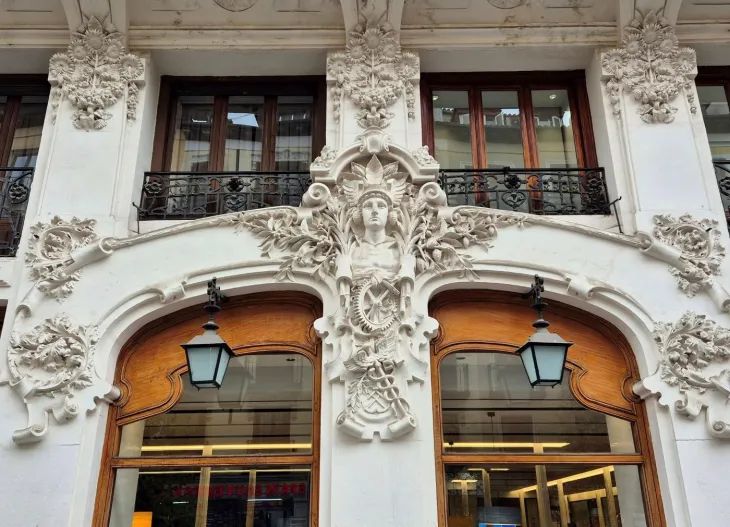
The Madrid tourist office on the shopping Calle Mayor/Arenal : https://www.esmadrid.com/en/mayor-arenal-shopping
The Madrid tourist office on neighborhood Sol Gran Via : https://www.esmadrid.com/en/madrid-neighbourhoods/sol-gran
There you go folks , another wonderful nostalgic, sentimental trip to my dear Spain, A love affairs with my Madrid, as do not know when we will be back, we sure will have this trip in our hearts forever, Again, hope you enjoy this post on curiosities of Madrid, part VII !!! as I
And remember, happy travels, good health, and many cheers to all !!!


