
So got me another picture from my cd rom vault on the Calle Mayor! And of course, could not keep it out of my blog and share it for you and me. This is a very famous street and a wonderful set of architecture and history as well. Many more post of it and around in my dear Madrid. Therefore, let me tell you again on the architecturally stunning and historically great ,the Calle Mayor of Madrid !!! Hope you enjoy the post as I.
The Calle Mayor, lined with some of Madrid’s most beautiful monuments, the street is home to Plaza Mayor, starting at the Puerta del Sol and ending up next to Madrid’s Almudena Cathedral. (see posts) .You’ll also stroll by several plazas, such as the lovely Plaza de la Villa, a few churches, the remains of the muslim wall of the city, and souvenir shops. Plus, you’re right near the famous Mercado de San Miguel, where you can stop by for some tapas and a glass of wine mid-walk.(see posts). Although it barely reaches a kilometer in length, throughout its more than six centuries of history it has had different names to describe its different sections. Originally, and even before it was actually a street, it was a triumphal route for the Catholic Monarchs on their visits to the town at the end of the 15C and then a walk for courtly finery in the 17C, One of its oldest buildings It was the convent of San Felipe el Real, which with the confiscation of Mendizabal (separation State and Church) was abandoned and was demolished to build houses, Throughout its history, it was an important commercial route for the concentration of guilds, highlighting those of jewelers, clothiers, silkers and wardrobes or loaners, together with others such as weavers or tinters who struggled to look out onto this main street from the swarm of those that converged in it.
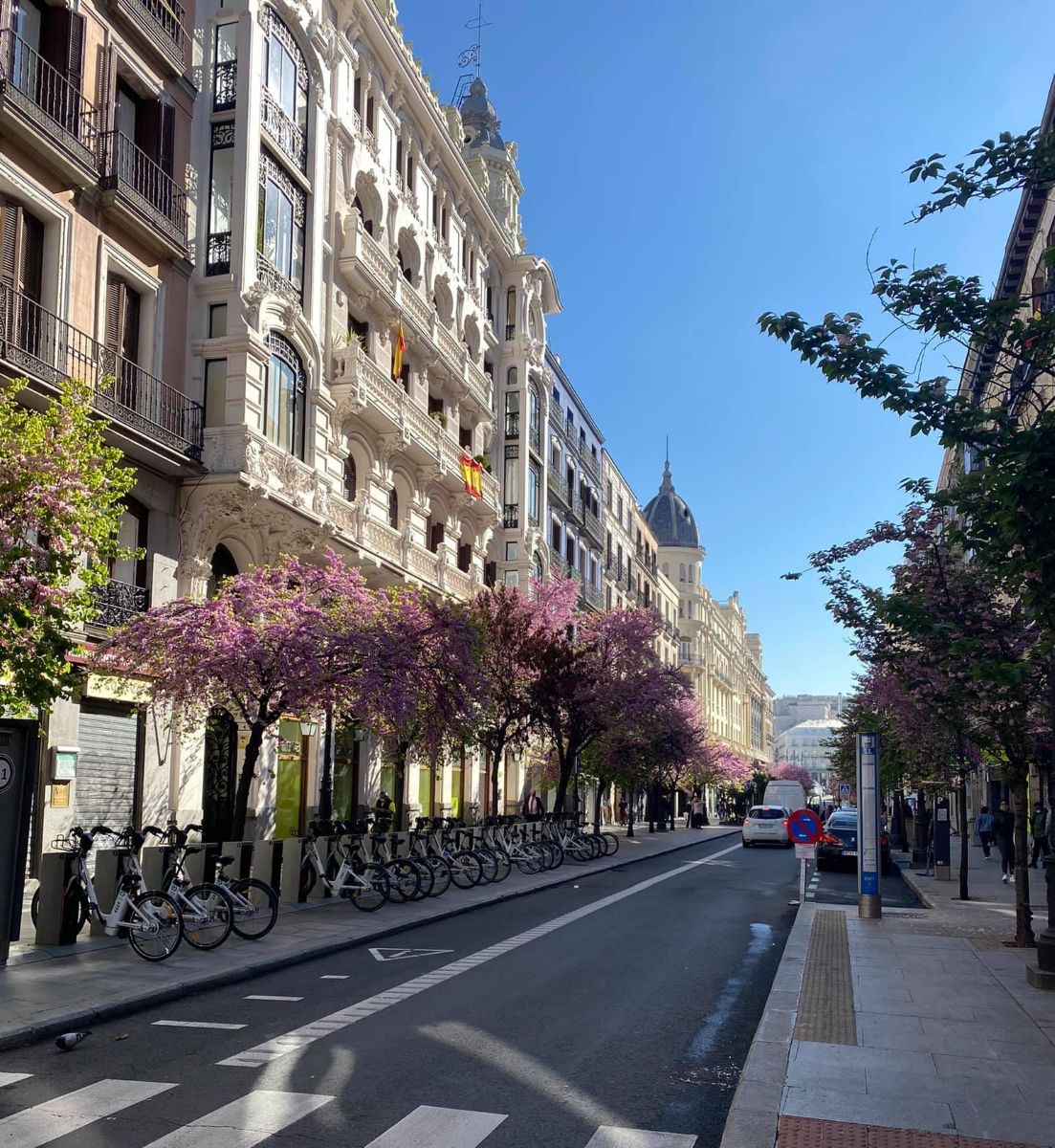
The Calle Mayor connects Puerta del Sol with Cuesta de la Vega, after crossing Calle de Bailén. Along its almost straight and almost flat route, you will find Plaza de la Villa and at its mouth stand the rear façade of the Almudena Cathedral and several sections of the Muslim city wall. Although it is barely a km long, throughout its more than six centuries of history it has had different names to describe its different sections. In the official layout, Calle Mayor ends at the Emir Mohamed Park (founder of “Mayrit” in 865),(see post) opened in 2010 in the area of the old entrance to the Almudena crypt, and continues along the winding layout of Cuesta de la Vega.
Throughout its history it was an important commercial route for the concentration of guilds, highlighting those of jewelers, clothiers, silk makers and wardrobe makers or ‘pretineros’, along with others such as the esparto makers or the color makers, who fought to appear on this main street from the swarm of those that converged on it. The presence of illustrious playwrights who were neighbors of this street is preserved in the so-called house of Calderón de la Barca at No 61, and a municipal plaque remembers that in the building that stood at No 46 Félix Lope de Vega y Carpio was born, and who was baptized on December 6, 1562 in the neighboring and also disappeared church of San Miguel de los Octoes, On the corner of Puerta del Sol, at No 2 is La Mallorquina,(see pic) founded in 1894, dean of Madrid confectioners ,and one of all time favorites. Next to the bakery, at Nor 4 is the Casa Palazuelo, built in 1921. To see it, it’s best to stand back a bit, as its second-floor columns are not visible up close. Designed for offices and shops, it stands on the site of the former Oñate Palace and is arranged around a V-shaped central courtyard lit from above by a large glass window. The iron and glass balconies are notable, as are some classicist elements such as the paired columns of the giant order and the capitals. The lobby and gallery are freely accessible.
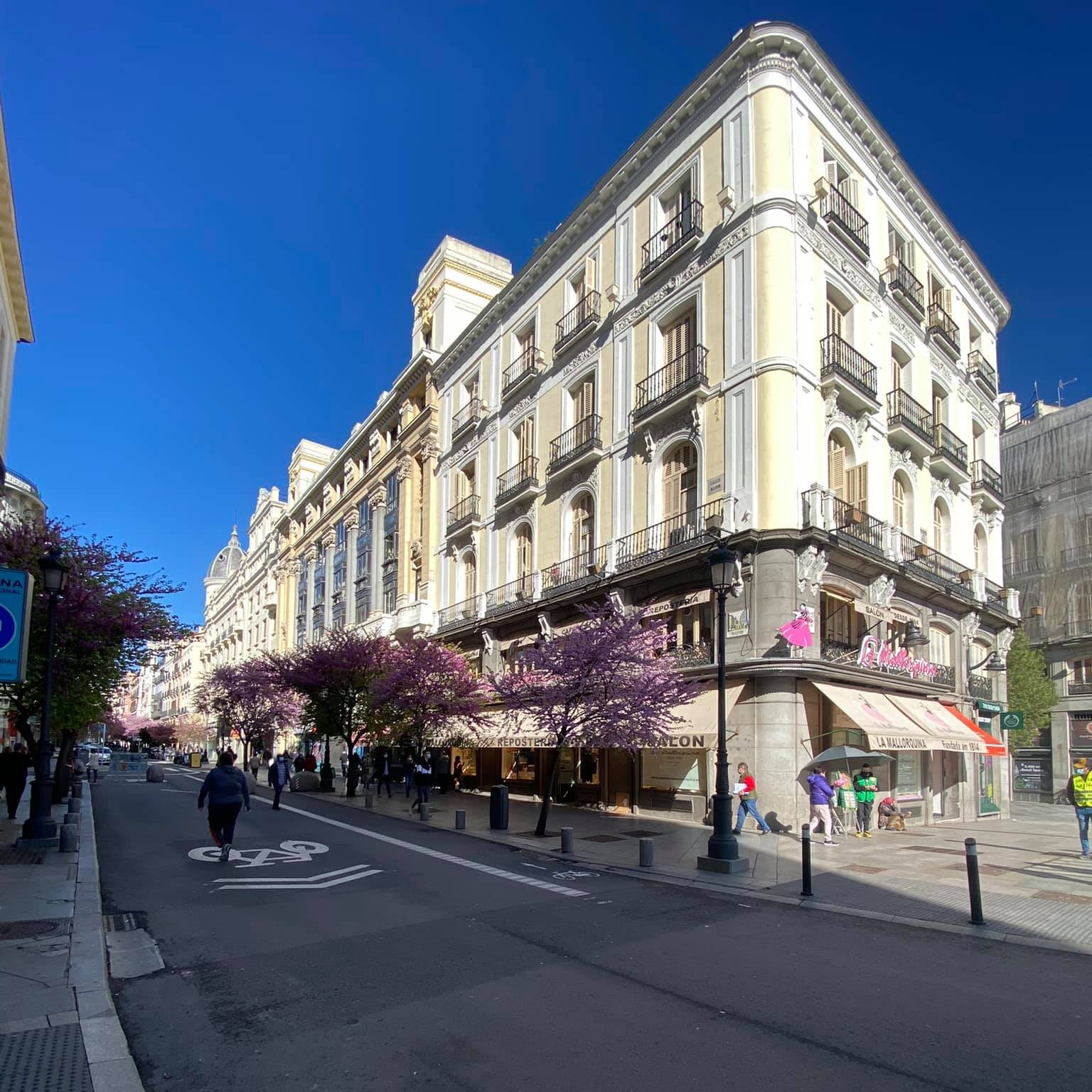
Originally, and even before being a street in its own right, it was a triumphal route for the Catholic Monarchs on their visits to the city at the end of the 15C and then a promenade for court finery in the 17C, With the arrival of the Austrians and Bourbons, the street began to transform, filling with palaces, convents and churches that reflected the power of the monarchy and the nobility of Madrid. In the 19-20C, Calle Mayor continued to evolve, adapting to the times and becoming a commercial and residential hub. Curiously, despite attempts at modernization during the 19C, many of the palaces and historic buildings were preserved, maintaining the charm of the street. Today, walking along Calle Mayor is like taking a journey through time, with buildings that tell the stories of noble families, great merchants, cultural figures and historical episodes of the capital.
Some unique buildings are preserved along the Calle Mayor are at no. 1, the so-called Casa Cordero (in which the first telephone exchange in Madrid was installed), The no 5 the modernist house of Ruiz de Velasco ; At no 10 Calle Mayor is the El Riojano pastry shop, which has hardly changed the decoration since it was founded in 1855, both in the main establishment and in the cozy tea room inside. The no 16 Colonial Company building since 1909 , dedicated to shops and offices. Its modernist style facade that includes unique crowning in the viewpoints and ceramics that allude to the colonial products that the company marketed, such as cocoa or coffee. In the building that stood at no. 46 was born Félix Lope de Vega y Carpio, who was baptized on December 6, 1562 in the neighboring and also disappeared church of San Miguel de los Octoes.
The Calle Mayor opens slightly in the Plaza del Comandante las Morenas. From this place you can go down to the Mercado San Miguel market, the Cuevas de Luis Candelas restaurant (all time favorite) or the Botín Restaurant. This is where the old Puerta de Guadalajara was located, part of the medieval wall of Madrid, and for this reason a plaque remembers it at no 49. At no. 59, the so-called Farmacia de la Reina Madre or pharmacy of the queen mother is preserved. The original business dates back to 1598. It is likely that it took its name from Isabel Farnesio, second wife of King Felipe V and mother of king Carlos III, and from the relations and services with and for the Real Botica de Palacio.(pharmacy of the royal palace),At no 61 ,you see the building where
Pedro Calderón de la Barca lived and died, with a brief plaque on the first one that commemorates him, At no 69 the palace of Cañete; no 79 the Palace of Uceda or Consejeros (advisers) ; no 86 the Abrantes Palace (which houses the Institute of Italian Culture); in addition to the Renaissance complex of the Plaza de la Villa and the Church or Iglesia del Sacramento. At no, 80, a small shop called La Librería opens its doors, specializing in books about Madrid. And at the end Casa Ciriaco, at no 84. Also on the corner of Puerta del Sol, at no 2 is La Mallorquina, doyen of Madrid confectioners (another all time favorite). In front of Casa Ciriaco, where Madrid’s Calle Mayor becomes definitely wider, you see a small monument dedicated to the memory of the victims of the attack against king Alfonso XIII and his wife in 1906, which ended the lives of many people who witnessed the royal procession on their wedding day as the newlyweds returned from the Jerónimos Church to the Royal Palace. Behind the monument stands the Iglesia del Sacramento, Cathedral of the Armed Forces.(see post). Next to the above monument is the Palace of the Dukes of Uceda, which houses the Council of State and Captaincy General. It is a large building ordered to be built by Felipe III in the 17C for his personal use and which later served to house the different Royal Councils. The last buildings on the odd-numbered sidewalk correspond to the Armenian Embassy at no 81 and the Municipal Economic-Administrative Court at no, 83. Just after this, you will see a fence behind which you can see the Emir Mohamed I Park, where a piece of the Muslim wall of Madrid is preserved, After the Park and the Image of the Almudena, the Cuesta de la Vega begins, which houses gardens with some benches and relaxing views, ideal for resting after visiting Calle Mayor.
The Madrid tourist office on the shopping Calle Mayor : https://www.esmadrid.com/en/mayor-arenal-shopping
There you folks, a dandy wonderful street of my dear Madrid. A good walk with plenty of architecture and history, A walk on Calle Mayor is a must to do while in Madrid, me think. Again, hope you have enjoy this post on the Calle Mayor of Madrid !!! as I
And remember, happy travels, good health, and many cheers to all !!!


All that lovely cherry blossom!
Gwen.
LikeLiked by 1 person
Yeah glad you notice ! Thanks for stopping by Cheers
LikeLiked by 1 person