
I take you back to my dear Madrid !! love it !! I like to continue the saga of my dear Madrid with new pictures from my cd rom vault that should be in my blog for you and me, This is again my lost walking trails of wonderful sublime Madrid, Therefore, let me tell you about curiosities of Madrid, part XI !!! Hope you enjoy the post as I.
The lighthouse or Faro of Moncloa, was and is an emblematic symbol of Madrid for many years and enjoying it since 1992 when it originally opened. It was closed abandoned really for many years and reopen in 2015. The official namen is the Torre de Iluminación y Comunicaciones del Ayuntamiento de Madrid or the Lighting and Communications Tower of the Madrid City Council, better known as the Faro de Moncloa. It is a 110 meter high structure, located in the University City of Madrid, in the Moncloa-Aravaca district. The wonderful ascent is via panoramic glass elevators, love it !!. Beware of those who have vertigo, the view is very impressive. Information panels are available to learn more about the development of the city of Madrid and its history. At the top, huge glass bays give way to the view of the main monuments of Madrid on a clear day you can see the Palacio Real, Palacio de Cristal , Catedral de la Almudena, the telephone company building or Telefónica in the Gran Vía,the four towers or Cuatro Torres, and at the back the Sierra de Guadarrama. Also, you can also see the city’s large parks and green spaces including Parque del Buen Retiro, Parque del Oeste ,Casa de Campo, and Monte del Pardo.
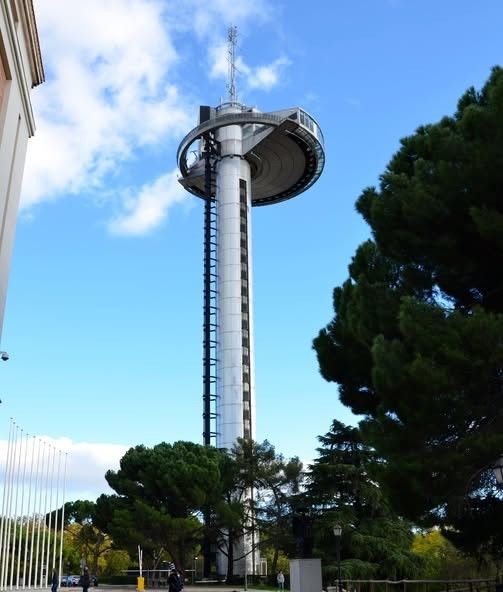
The Madrid tourist office on the Faro de Moncloa:https://www.esmadrid.com/en/tourist-information/faro-de-moncloa
The Palacete de los Vargas or Casa de Campo de Felipe II is a building of Renaissance origin historically linked to the Spanish monarchy and is currently municipal property. Around it, the Royal Site of the Casa de Campo (see post) was established in the 16C, a group of forests, orchards and gardens, converted into a public park in 1931. Its name refers to the Vargas family, to whom it was built. This lineage, one of the most influential in old Madrid, owned other residences in the city, such as the House of Iván de Vargas, the palace in the Plaza de la Paja and the current San Isidro Museum. The palace was built in 1519 when the House of Vargas was headed by Francisco de Vargas y Medina. Emperor Charles I spent some time in the palace, invited by the Vargas, and King Francis I of France may have been confined there during his captivity in Madrid (1525-1526), at least while the repair work on the rooms assigned to him in the Royal Alcázar lasted. In 1808, Joseph Bonaparte (name by brother Napoleon) chose the Palacete de los Vargas as his residence, probably because it met greater security conditions than the Royal Palace, given its remote location far from the urban center. On 20 April 1931, six days after the Second Republic was proclaimed, the State seized the property of Alfonso XIII and ceded the Royal Site of the Casa de Campo to the Madrid City Council, which converted it into a public park. The palace thus became municipal property. The complex has housed important works of art, such as the paintings The Garden of Earthly Delights and The Haywain by Hieronymus Bosch, currently housed in the Prado Museum; the equestrian statue of Philip III by Pietro Tacca, now installed in the Plaza Mayor; and the Eagle Fountain.
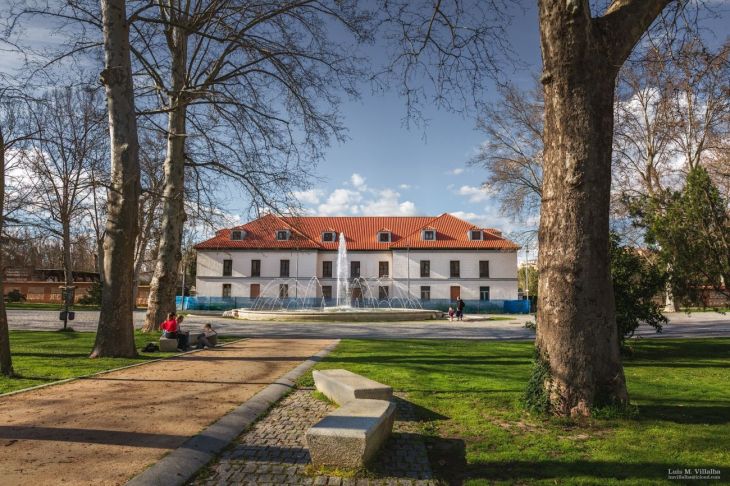
The private site Casa de Campo on the palace of the Vargas : https://lacasadecampo.es/2022/01/09/casa-de-campo-de-felipe-ii/
The Madrid tourist office on the Casa de Campo : https://www.esmadrid.com/en/tourist-information/casa-de-campo
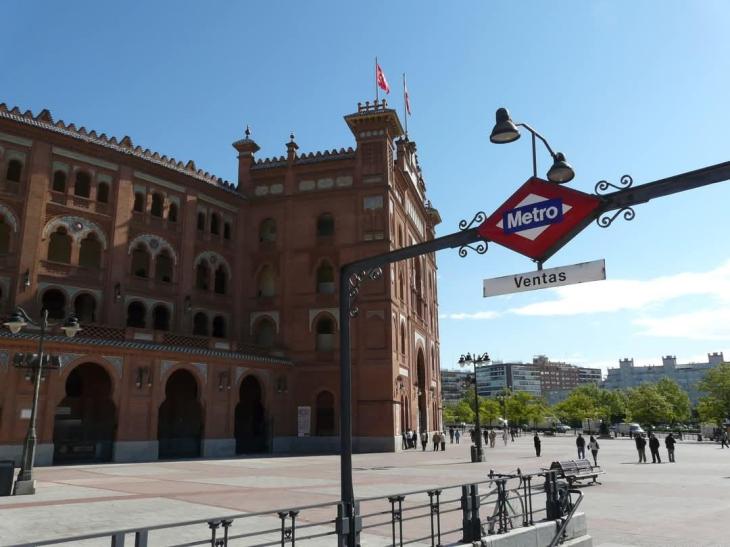
The Ventas metro station by Calle de Alcalá,no, 233,in front of the Monumental Ventas bullfight ring was inaugurated on June 14, 1924. The latest news is that the Ventas metro station will recover a hall that had been closed since 1970 and will have five elevators. On May 28, 1964, it ceased to be a terminal when the line was continued to Ciudad Lineal. On February 26, 1970, the new platforms of line 5 were inaugurated, including the Ventas-Ciudad Lineal section, (where I was able to enjoy while living in the city), and from July 20, 1970, once again becoming the head of line 2. The line 2 station ceased to be the head station on February 16, 2007 when it was extended to La Elipa. The accesses through the Ventas Vestibule or lobby are Plaza de Toros Calle de Alcalá, 237 , opposite Plaza Toros de Las Ventas, Las Ventas is the name given to the bullring in Madrid because it was called the area in which it is located ,the neighborhood of Ventas and in the district of Ciudad Lineal ( mine). One of the cultural and historic icon of the city is the Las Ventas bullfight arena (aka Monumental). The inaugural poster dates back to 1931. A replica is found in the Puerta Grande ( big entrance gate). On that occasion, eight matadors took part in the first bullfight of Las Ventas on June 16. However, the official opening was in 1934. It was built in Neo-mudéjar style, with metal structure and brick façade. There is also a nice ,and informative Museo Taurino or Bullfighting Museum at the back, inaugurated on May 15, 1951.
The Retiro metro station is on Line 2, located between the Recoletos neighborhood of the Salamanca district,and Jerónimos neighborhood of the Retiro district, under the emblematic calle de Alcalá (see post), and next to the famous Retiro Park (see posts), from which it takes its name. The station was opened to the public on 14 June 1924 when the first section of Line 2 was put into service. The station has two platforms and three tracks, one of which houses the temporary exhibition hall. The vestibule or access are Lagasca :Calle de Alcalá, 85 (corner Calle Lagasca) Calle Lagasca, 4. Ramp access Retiro Park, Vestibule or lobby Claudio Coello : Calle de Alcalá, 75 (corner Calle Claudio Coello). For Puerta de Alcalá and National Archaeological Museum ,The Puerta de Alcalà is one of the five old gates for entry into Madrid. It is at the Plaza de la Independencia or independence square facing the Retiro Park (my old entry point to the center of Madrid in my days there) . The gate was built on the orders of King Charles III ,the work began in 1769 and continued until the inauguration in 1778. This is the first triumphal arc built in Europe since the fall of the Roman Empire, The gate allowed the entrance in Madrid to travelers from Aragon, Catalonia and France.
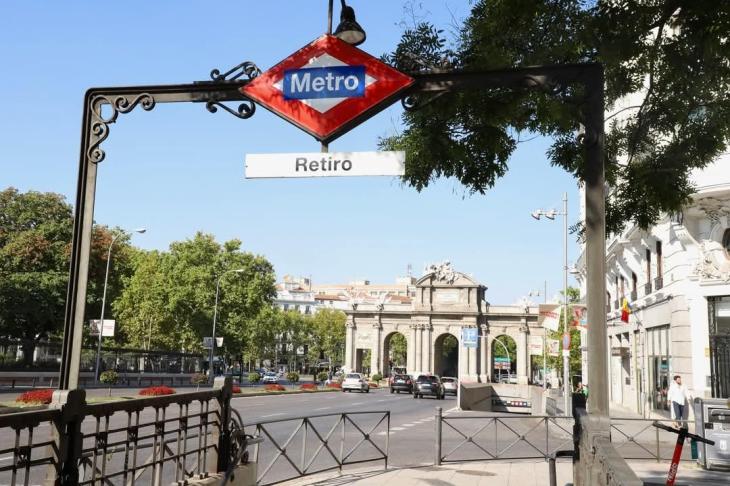
The official Metro de Madrid on itineraries : https://www.metromadrid.es/en
The Madrid tourist office on getting around by metro : https://www.esmadrid.com/en/getting-around-madrid-metro
There you go folks , another wonderful nostalgic, sentimental trip to my dear Spain, A love affairs with my Madrid, as do not know when we will be back, we sure will have this trip in our hearts forever, Again, hope you enjoy this post on curiosities of Madrid, part XI !!! as I
And remember, happy travels, good health, and many cheers to all !!!

 Paris1972-Versailles2003