
We were back to my dear Spain again !! love it !! We came by car of course and took time to see new areas and old repeat with some of them as introduction to my sons and our dog Rex ! I rented a small house in a off the beaten path country town that was just perfect ! I like to continue the saga of our new road warrior experiences even if now with less in our family, This post is on my latest road warrior tour of wonderful sublime Spain. Therefore, let me tell you about curiosities of Salamanca, part I !!! Hope you enjoy the post as I.
The City of Salamanca is capital of the province of Salama nca located in the Autonomous Community of Castilla y León, and in the kingdom of Spain. In 1988, the Old City was declared a World Heritage for UNESCO, The City is located 109 km from Ávila, 121 km from Valladolid, 123 km from Portugal and 214 km from Madrid.
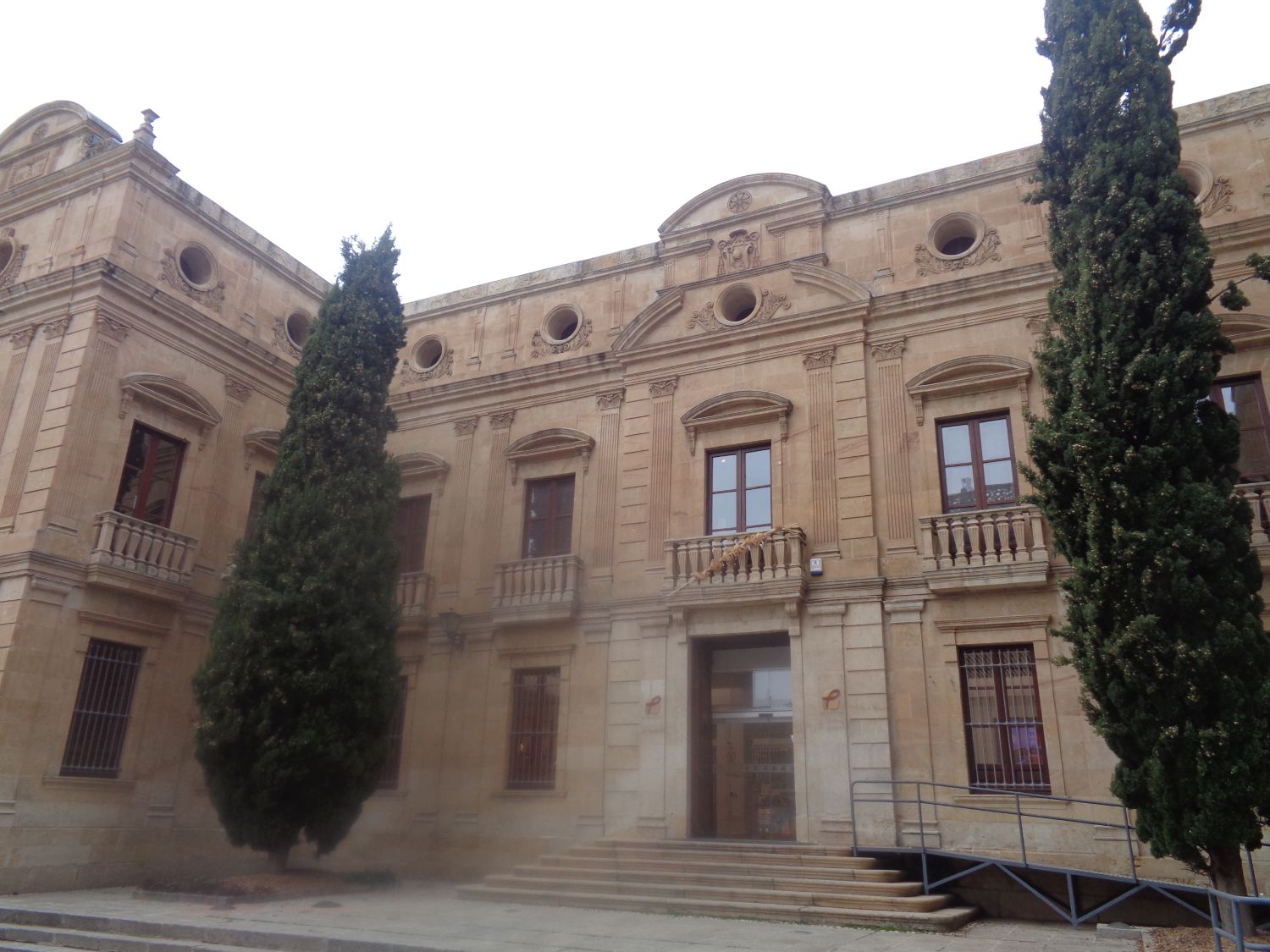
The Palacio Episcopal, or Bishop`s Palace across the Cathedral, opens its doors again with a novel exhibition concept inside, along 700 square meters distributed in two floors they will implement the exhibitions with the support of new technologies, such as an immersive room, through 3D modeling ,a 3D experience with virtual reality glasses to see the cathedral from different panoramic views, On the ground floor, dedicated to the painter, Fernando Gallego, and in the one above, to the Diocesan Museum, titled Admirable Mystery , In total , 160 works can be seen (115 on the first floor and 45 on the ground floor). Among the authors represented: Alonso Berruguete, Luis de Morales, Venancio Blanco, José Luis Núñez Solé, Fernando Gallego, Maestro Bartolomé, among others.
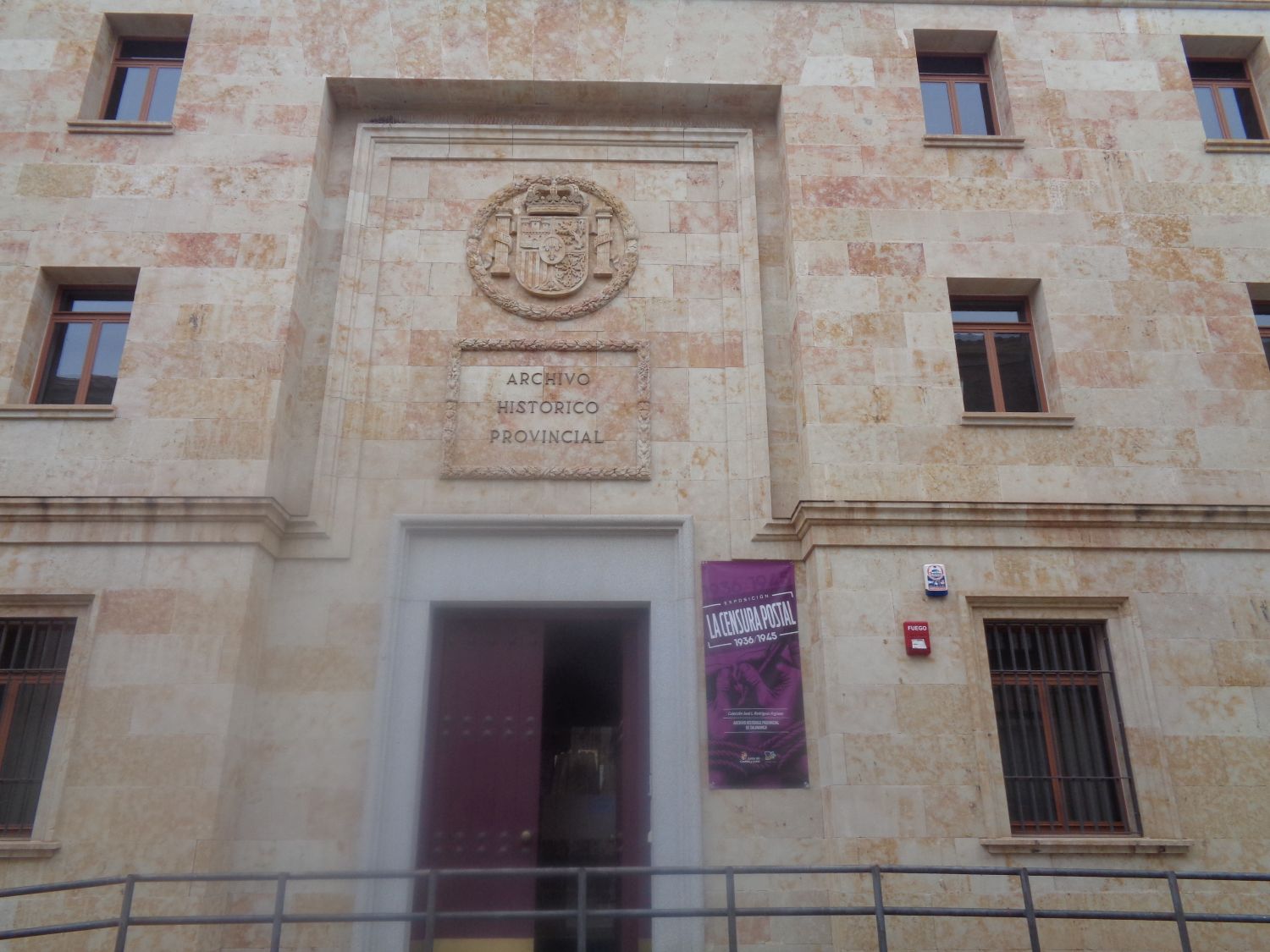
The Archivo Histórico Provincial de Salamanca or historical provincial archive of Salamanca is located at Calle Las Mazas, s/n, After the decree of November 12, 1931, the collection and organization of documentary funds that were going to integrate the Historical Provincial Archive of Salamanca was entrusted to the archivist of the Treasury. Initially, it was installed on the last floor of the Anaya Palace, assigned by the Literary University. In 1950, the transfer to the old institute building was decided in the Patio de Escuelas Menores or minor schools, to house all this documentation, part of the Santa Clara monastery was rented and later a silo was conditioned by the Ministry of Agriculture located in the Barrio de Tejares, Finally, all this came to fruition, with the beginning of its construction in 1992 and its conclusion in 1995. As of December 1997, the transfer of documentary funds and administrative services began from the monastery of Santa Clara and from the patio of escuelas menores to the new headquarters of the Calle Las Mazas,
The new building began to provide public service on 1998, The ground floor is dedicated to exhibition hall (lobby), conferences room, document download spring, meeting room and researchers room, which has twenty -four positions. The first floor has work areas and reprography room. In the future it will house the reprography and restoration laboratories. On the second floor are the management offices, secretary and several workshops of technical personnel. The building has two forklifts and an elevator for the public. It is totally adapted for disabled persons.
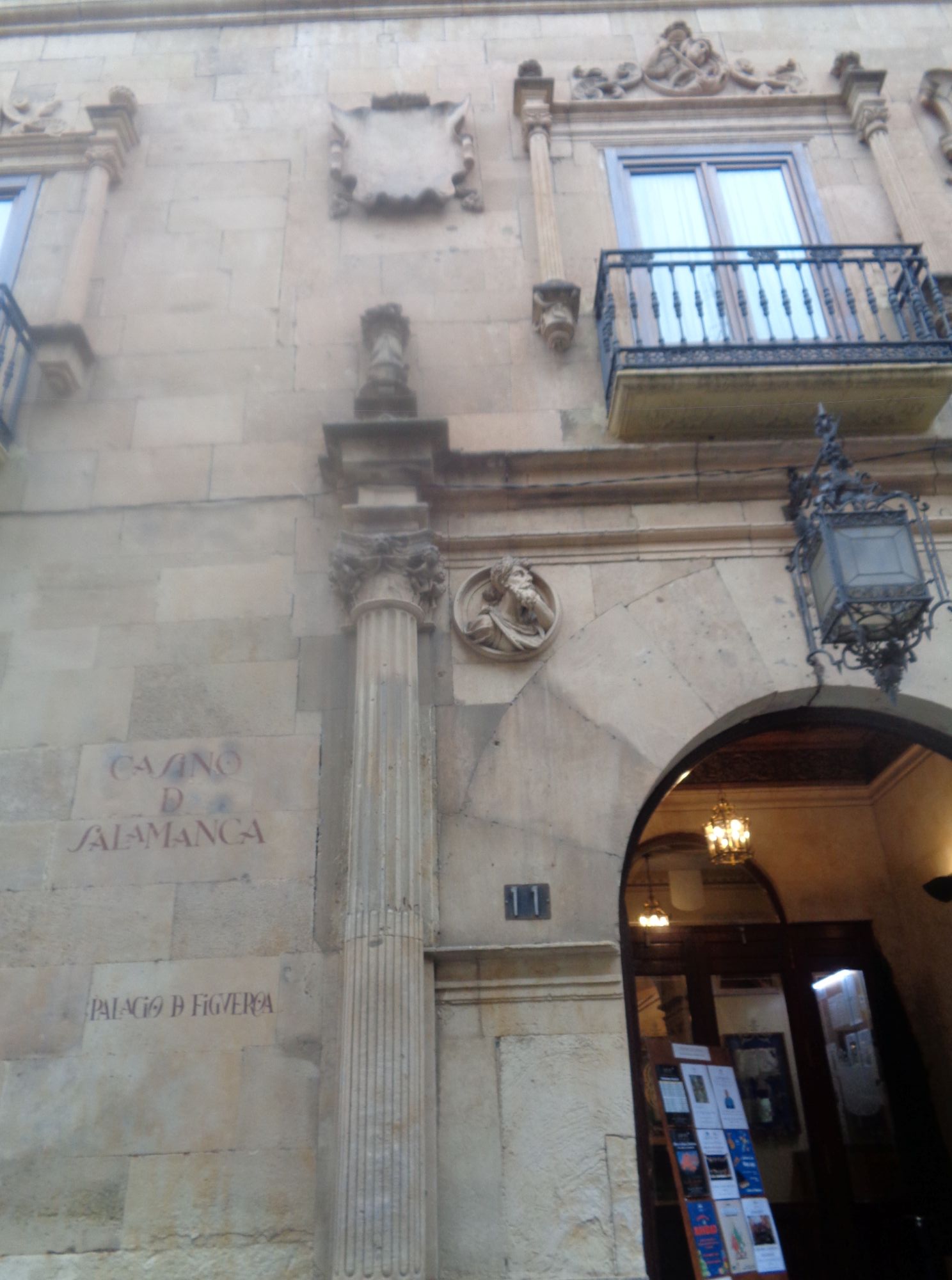
The Casino de Salamanca is not an establishment of envy and chance games, timbas and roulette, recreational machines and other things to the use shown by the house casinos of all, It goes (registered office); Gentlement and Ladies by subscription (partners); entertainment, and consumption paid for each one that requires them (game rooms, reading, TV, auditorium and cafeteria hall). This scheme, of course, would not be complete without adding two more points; the organization and evolution that the Casino has experienced , It is enough to remember that it was successively headquarters in the Calle del Prior, in the Plaza Mayor, on Calle Zamora where the famous Café Suizo was, and, finally also on Calle Zamora , in the Palacio de Figueroa, in which it continues today.
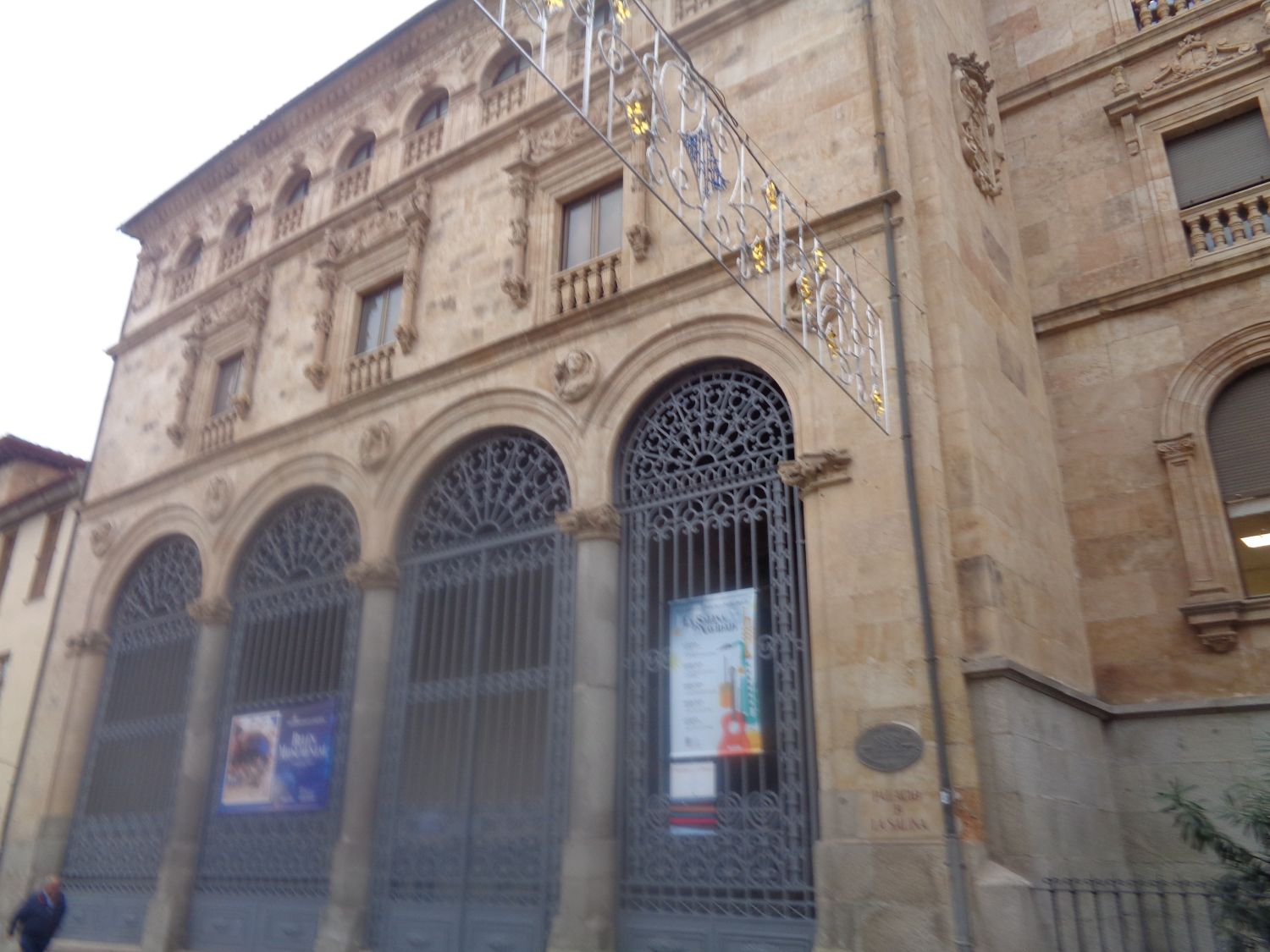
The palacio de la Salina is a building built in the Plateresque style with Italian elements, built in 1538. It has airy facade, patio with arches, capitals and brackets of great interest owes its name (the saline) to have hosted the room of the salt (until 1870) And its disposition, open to the street, demonstrates that it is a building built since its inception to be public and not destined for residence, The firstborn of the marriage, Gonzalo Messía Carrillo, inherited on August 17, 1549 the majority of family assets, But the mother wanted to give her second child, Juan Alonso de Fonseca, some goods contributed by her to marriage and, among them, the palace (and it is very possible that the son adopted the surname of his mother’s family for this reason) . For this cause on the facade, the Fonseca’s shield appears and the Palace is known as Palacio de Fonseca, Since 1884 is the headquarters of the Provincial Council. The institution bought it in 1881.
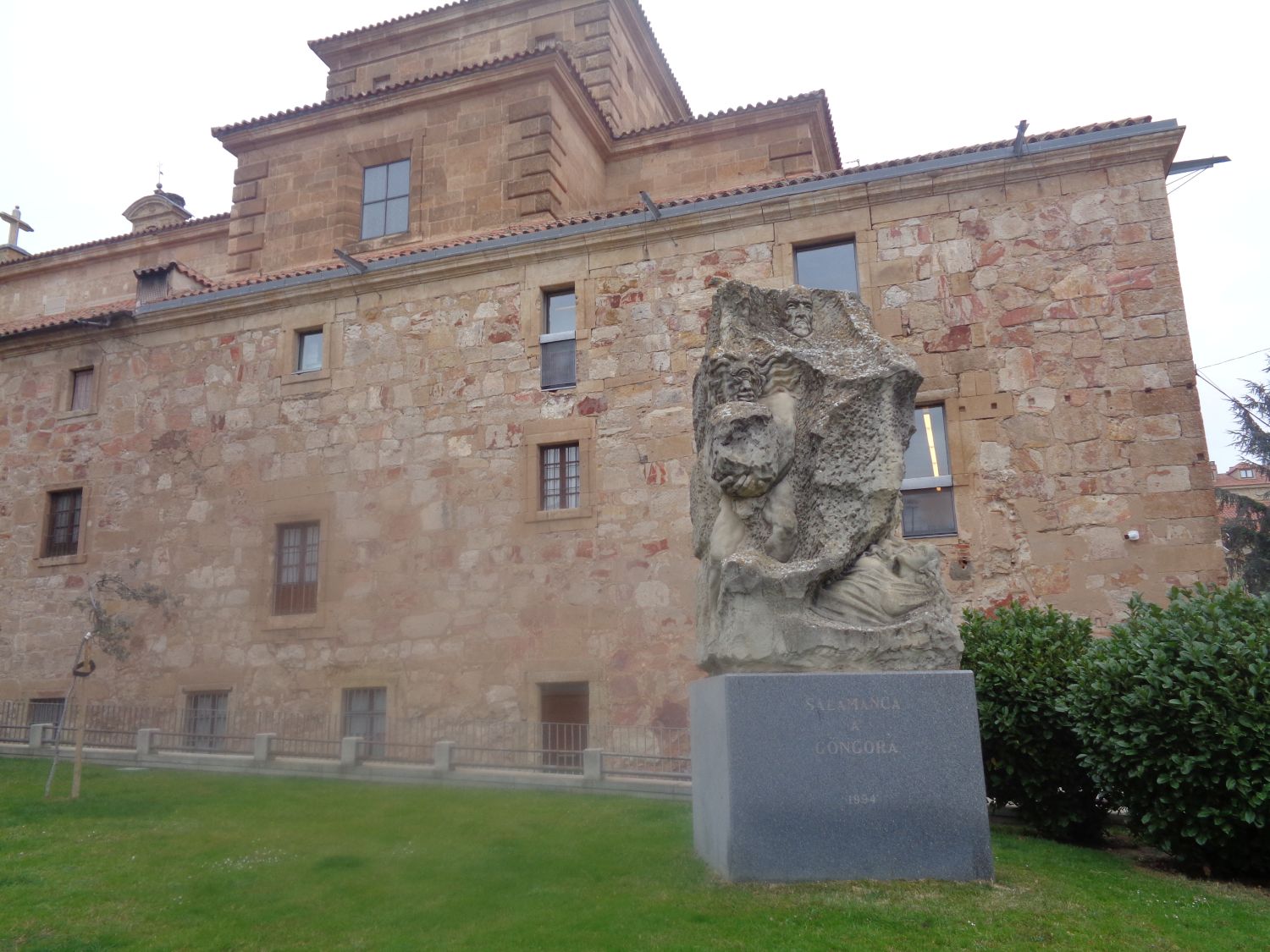
The Monumento a Góngora is a tribute to Luis de Góngora, the writer’s face is inspired by the painting painted by Velázquez, along with other elements such as an eagle that represents Gongora. Under these figures appear from the Fable of Polyphemus and Galatea, one of Góngora’s main poems. The work, opened on September 20, 1994, weighs 12 kg, measures 2.50 meters high, 1.40 width and 1.50 long. It can be seen in its original location, on the calle de Juan de la Fuente, next to the Church of San Pablo.
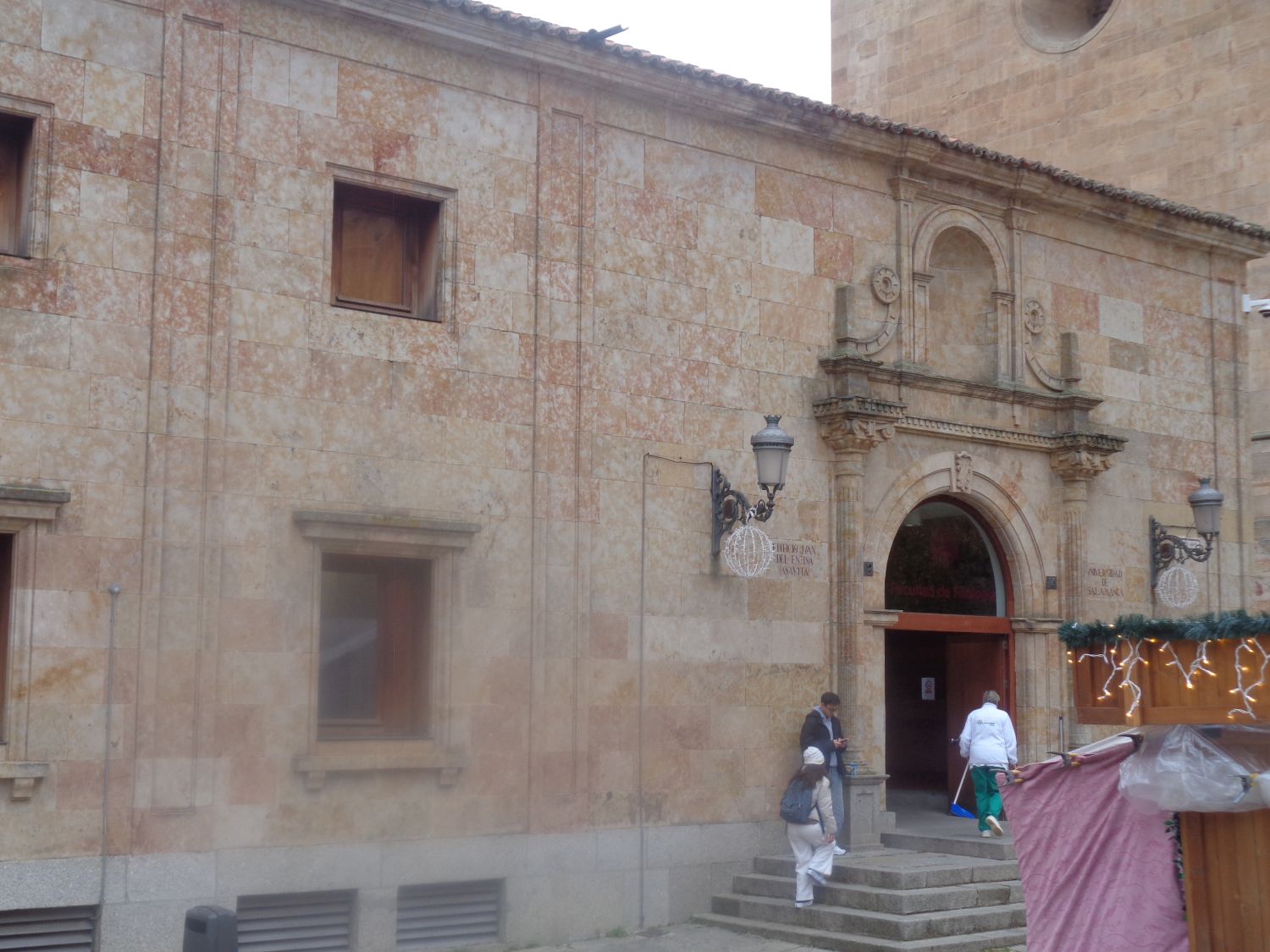
The Teatro Juan del Enzina belongs to the University of Salamanca and was created in 1970 at the former Faculty of Philosophy and Letters. Linked to the university, for experimental theater and music but with modern physiognomy and 380 seats, The works executed for the recovery of the university theater cover the first two plants of the basements of the Anayita building. The distribution raised for the theater consists of a prismatic room with double slope stands and differentiated accesses at the two levels. In addition, a rehearsal room on the top floor has been created, where the management offices and technical services have also been enabled. The endowment of dressing rooms and technical storage spaces has expanded on the lower floor. Juan de Fermoselle, better known as Juan del Encina in the current spelling of his name or Juan del Enzina in spelling of the time, was a poet, musician and theatrical author of the Spanish Renaissance at the time of the Catholic Monarchs, As a dramature is considered initiator and patriarch of the Spanish theater. His start can be dated at Christmas 1492, when he represented before the Dukes of Alba two theatrical eclogues in which some shepherds announce the birth of Christ.
The City of Salamanca on its history :http://www.aytosalamanca.es/es/tuciudad/historia/
The Salamanca tourist office: https://salamanca.es/en/
The Castilla y Leon regional tourist office on Salamanca :https://www.turismocastillayleon.com/en/heritage-culture/salamanca
The Unesco world heritage site on old town Salamanca: https://whc.unesco.org/en/list/381/
There you go folks , another wonderful nostalgic, sentimental trip to my dear Spain, Do not know when we will be back, we sure will have this trip in our hearts forever, Again, hope you enjoy this post on curiosities of Salamanca ,part I !!! as I
And remember, happy travels, good health, and many cheers to all !!!


