
We were back to my dear Spain again !! love it !! We came by car of course and took time to see new areas and old repeat with some of them as introduction to my sons and our dog Rex ! I rented a small house in a off the beaten path country town that was just perfect ! I like to continue the saga of our new road warrior experiences even if now with less in our family, This post is on my latest road warrior tour of wonderful sublime Spain. Therefore, let me tell you about the Plaza de España of Madrid, part II !!! Hope you enjoy the post as I.
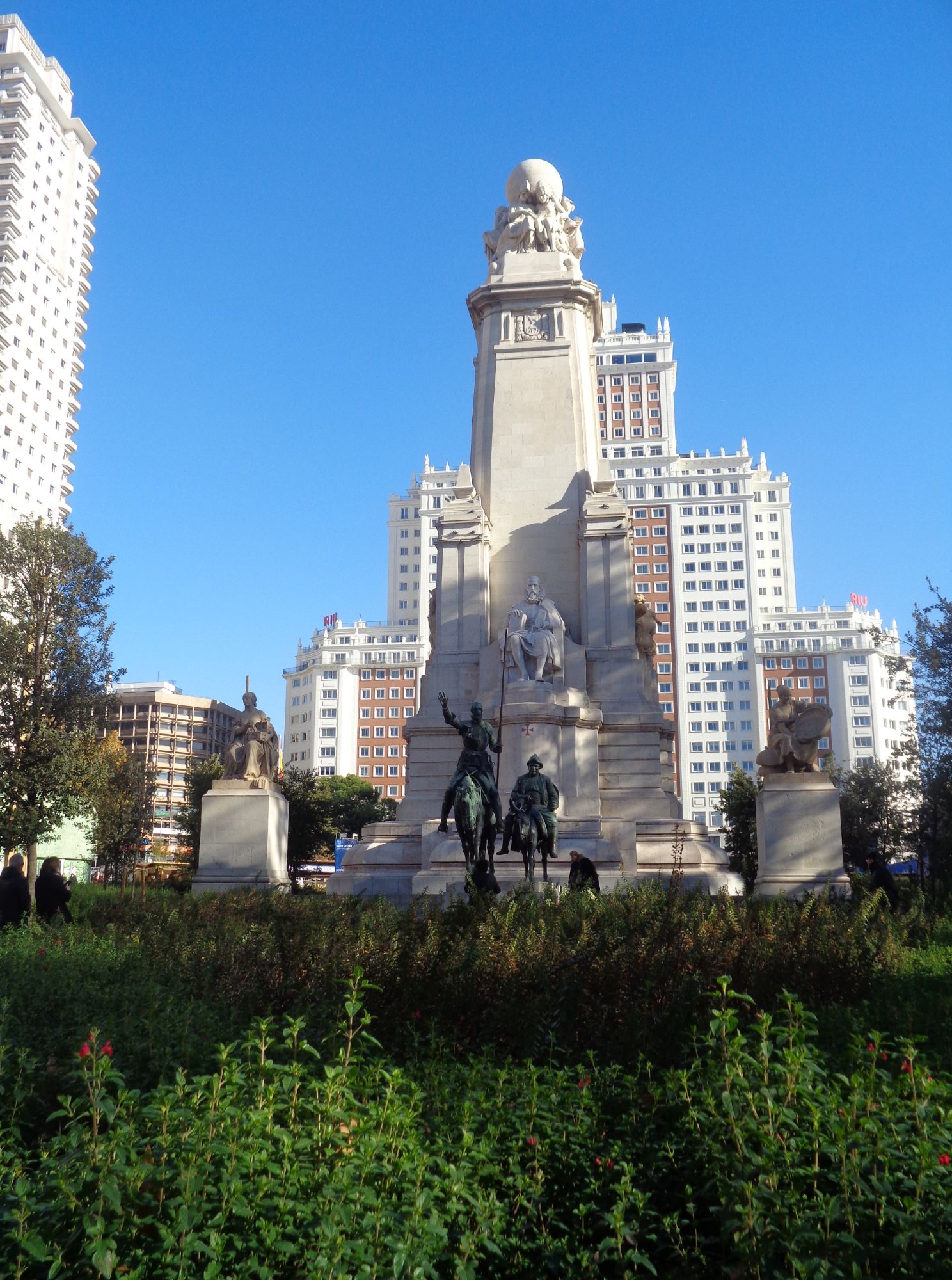
I like to bring up again, one that is very popular and better known for the literary history on it. I will talk about the Plaza de Espana. Many times came here with my dear late mother Gladys to seek history of our Spain, and play and get some refreshing afternoon splash on the fountain , and more… All again repeated bringing my girlfriend and then dear late wife Martine, as well as my dear late dad Elio, and the boys. The square is very central to many nice things to do and gorgeous parks , as well on the ending of the Gran Via and continuation into Calle de la Princesa all the way to the Faro de Moncloa and Arco de la Victoria, many times walk the beat , gorgeous just thinking about it.
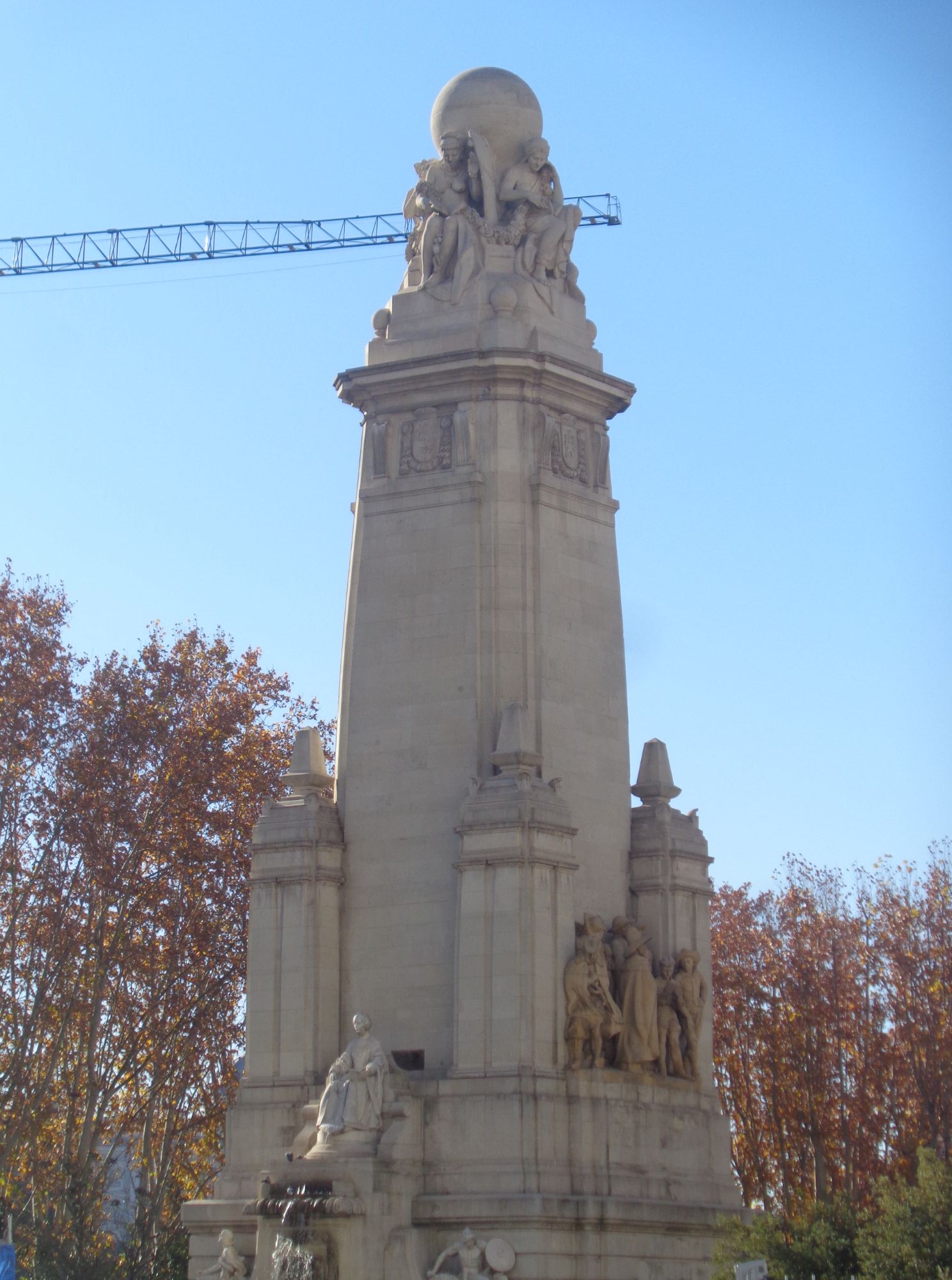
It is best known for the statue at the center dedicated to the Spanish writer Miguel de Cervantes y Saavedra and for the skyscrapers that border it that are the Edificio Espana (built 1953 with 117 meters/ 384 feet) and the Torre Madrid (built 1957 with 142 meters/ 466 feet). In front of the statue of Don Quixote and Sancho Panza, a pond of rectangular form is located that forms one of the most typical views of the Spanish capital, since just behind it see the buildings of Torre de Madrid and Edificio España. The new square occupies a space of more than 70,000 m2 in which all modes of mobility coexist, with pedestrian and cyclist areas located on the surface and underground, through a tunnel that connects Calle Bailén with Calle Ferraz (I did it !)
The Plaza de España has undergone a complete renovation project to make it more pedestrian friendly, For info, is is located in the Argüelles neighborhood, in the extreme southeast of the Moncloa-Aravaca district. In its center is a monumental fountain dedicated to Miguel de Cervantes. It acts as a continuation axis joining the Gran Vía with Calle de la Princesa. When Philip II moved the court from Toledo to Madrid in 1561, the Plaza de España was a vegetable garden. It was irrigated with water from the Leganitos stream, which ran along the street of the same name. The square was inaugurated in 1928 with the name of Plaza de España, The square is located on the old lands occupied by the San Gil Barracks, demolished in 1910. The Parque del Oeste, the Sabatini Gardens, the beginning of Calle Princesa and the end of Gran Vía come together; This axis circumstance between different poles of Madrid has made the square one of the busiest and most iconic in the city.
The new square occupies a space of more than 70,000 m2 in which all modes of mobility coexist, with pedestrian and cyclist areas located on the surface and underground, through a tunnel that connects Calle Bailén with Calle Ferraz (I did it !) The Plaza de España has been on renovation mode since 2018,delays by the you know who virus , Vehicle traffic was eliminated in the central area, new green areas were created and pedestrian accessibility was improved. In addition, an important reform of the monument to Cervantes was carried out, which included the removal of the fountain and the creation of a new lighting system. Some major changes are the space closest to the Edificio España, will act as an extension of the social life of Gran Vía and function as a great civic square with a large central space cleared of trees and street furniture where large events can be held. The second large area is the green axis that links the Parque del Oeste with the Jardines de Sabatini gardens. Between these spaces and the pedestrian area, 1,344 trees were planted, all of them native species, although some existing transplants was required. Three fountains were added to all the green areas, one of them new. The source of the Nacimiento de Agua was moved from its current position in front of the Edificio España, to the south, near the Temple of Debod. The second, which is now in front of the Cervantes monument was remodeled to improve its operation and lighting. The third and newly created will be Fuente del Cielo, built with makauba marble and inspired by the sky of Madrid. This last fountain will be located between the Plaza de España and the Jardines de Sabatini. The traffic existing in the square up to now will be lost, on the one hand, due to the removal of paved lanes, which will be used to widen the sidewalks and the new bike lanes, and on the other hand, it was diverted through the new tunnel that goes from Calle Ferraz to Calle Bailen and the Almudena Cathedral. The nine lanes in front of the Edificio España building was reduced to five. In this way, with similar actions, the available pedestrian space will double to 40,000 square metres. Likewise, bike lanes were build that cross the square from north to south and from east to west. In addition, some elevators were installed to save the unevenness of the Cuesta de San Vicente.(street).
The plus this time as was just before Christmas there were several chalets on a Christmas market spirit quite nice and believe or not first time saw them here, A pleasant surprise and made the trip worth it even more, My boys love it and Rex had a blast !!
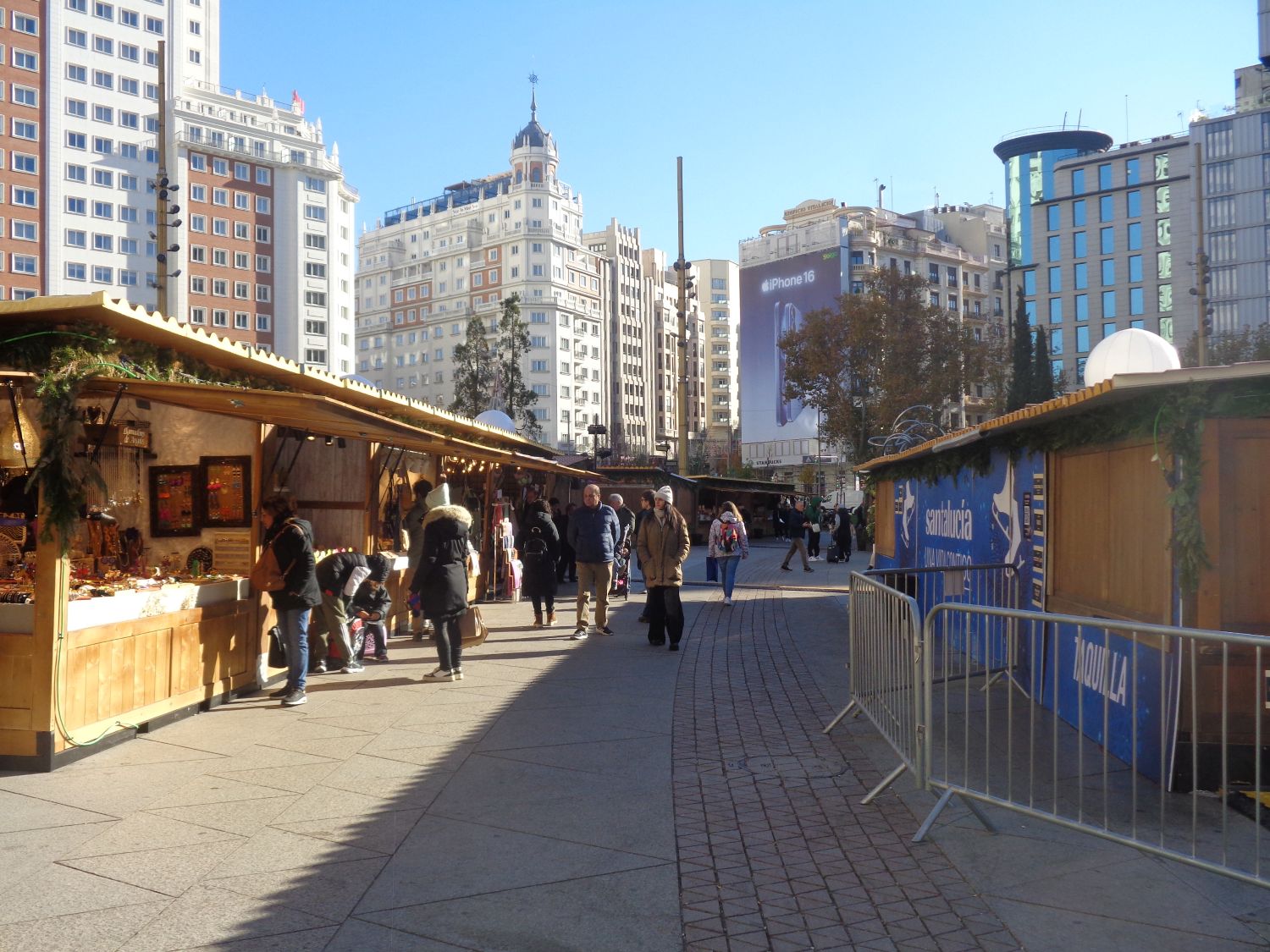
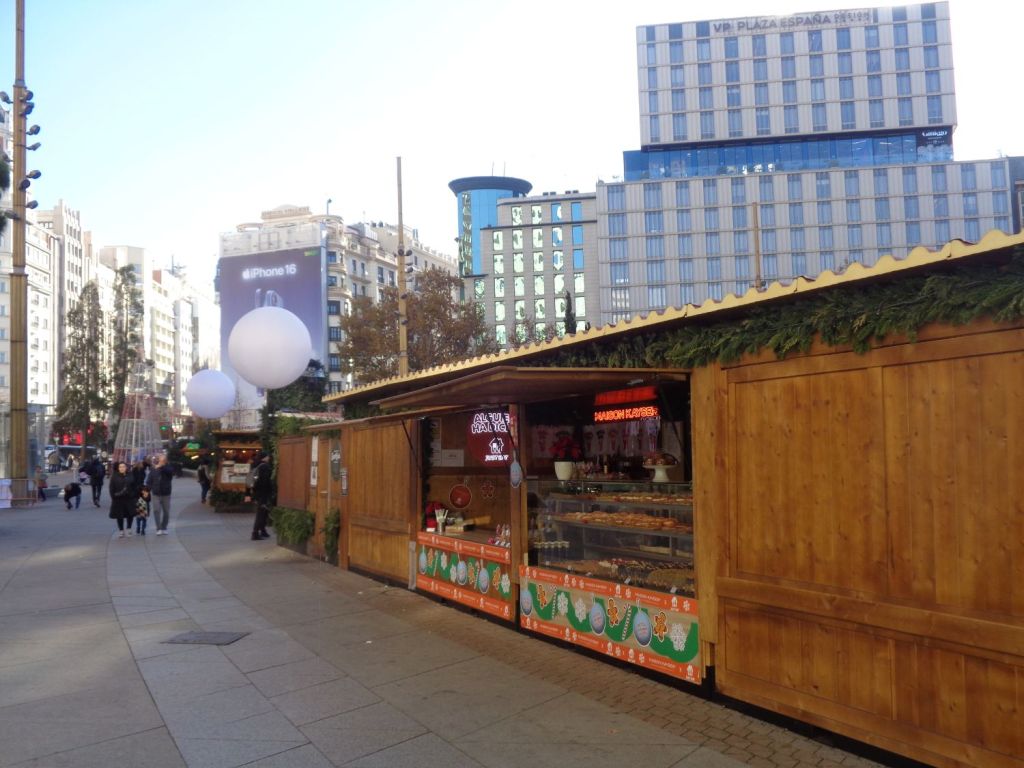
Plaza de España metro Plaza de España (L2, L3, L10) You can now reach the Palacio Real, the Almudena Cathedral, the Sabatini Gardens and the Temple of Debod without coming across a single vehicle or passing a zebra crossing. with an additional 70,000 square metersaround the central square which is home to the famous Monument to Cervantes, and where there are also children’s play areas. Road traffic has disappeared as it has been diverted underground thanks to a large tunnel spanning 1,150 metres long with two lanes in each direction between Calle de Ventura Rodríguez and Calle Luisa Fernanda, links Calle de Bailén with Calle de Ferraz. Furthermore, the square boasts three large fountains, two of which already existed and a new one, the Fuente del Cielo, made out of makauba marble and inspired by the Madrid sky.
The Madrid tourist office on the Plaza de España: https://www.esmadrid.com/en/tourist-information/plaza-de-espana
There you go folks , another wonderful nostalgic, sentimental trip to my dear Spain, A love affairs with my Madrid, as do not know when we will be back, we sure will have this trip in our hearts forever, Again, hope you enjoy this post on the Plaza de España of Madrid, part II !!! as I
And remember, happy travels, good health, and many cheers to all !!!


