
I will try to tell you again about the roads of my Spain, This is a daunting task, but after so many towns and sights done in my road warrior mode , the temptation is great. As you have been reading my blog , you know I love the road, the car is my second home! And while in Europe there is no difference, gone all over, Let me tell you on two picturesque quant areas of my Spain. Therefore, let me tell you the roads of my Spain !!! Hope you enjoy it as I
The first stop was Arguis belonging to the region of La Hoya de Huesca, province of Huesca, in the Autonomous Community of Aragon. It is located at the Umbría of the Sierras de Gratal and the Aguila (eagle) , 24 km from Huesca city, connected to the road network by the Autovia de Mudejar highway (A-23), which I take a lot in my France/Spain runs, I first passed by it and was impressed by the embalse of Arguis or reservoir on the Isuela River, Off A23 (N330) Autovia de Mudéjar road, In 1929 re erection of the surface and increasing the capacity up to 2.7 hm³ , It is currently used for irrigation and recreational use such as fishing. The reservoir waters an area of 2500 ha, It is the oldest reservoir in Aragon. It was under construction for 24 years and was completed in 1704. It retained the seasonal waters of the Isuela river and was used exclusively for irrigation, mainly from the Hoya de Huesca area.
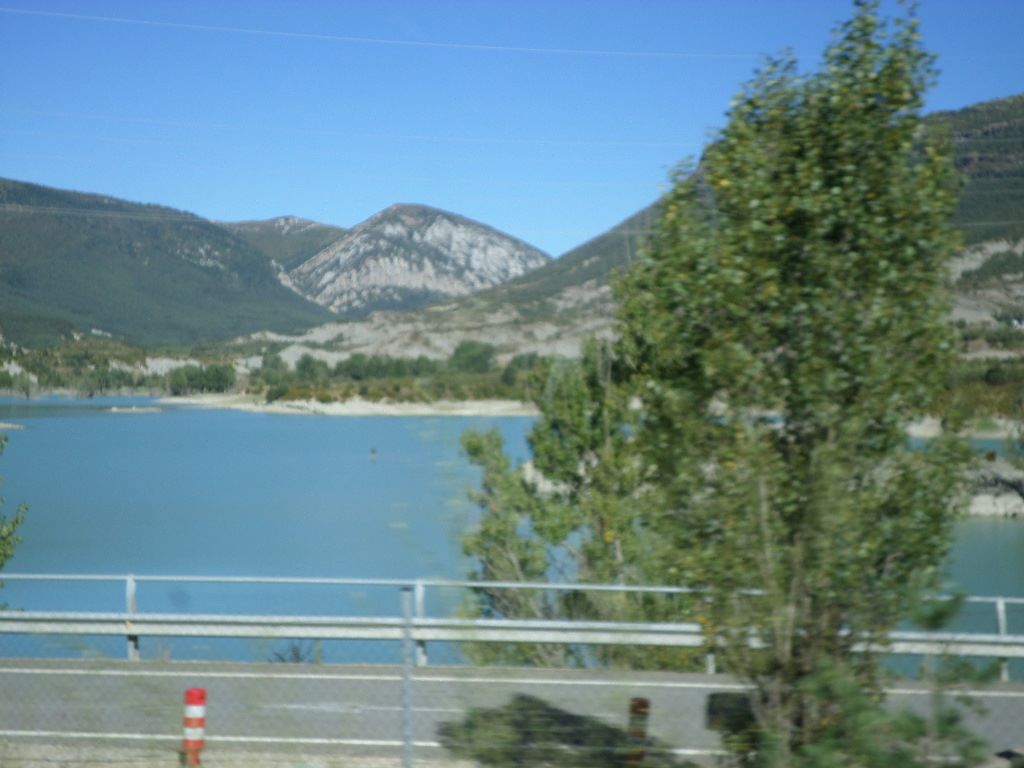
The town of Arguis is limited by the Isuela river valley and some pre -pyrenean mountains such as the Sierra de Javierre (1546 m), Sierra de Gracia (1567 m), Sierra del Águila (1609 m) and Sierra de Loarre (1470 m) and Sierra Caballera (1565 m) . The first mention of Arguis is in the cartology of San Juan de la Peña by 1070, in which Dommus Balla de Argis (the Balla de Argis house) is cited, The things to see here with more time are the Parish Church of San Miguel ,Romanesque, of the 12C, although reformed in the 16C. An altarpiece of the 15C belonging to this church can be contemplated in the Prado Museum of Madrid ! In the vicinity of the town is the ermita de Nuestra Señora de Soldevilla or hermitage of Our Lady of Soldevilla, from the 16-17C, and the ermita de la Magdalena or hermitage of the Magdalena from the 16-17C, located in Los Prados Altos de Bonés and that has a medieval necropolis of slabs
The location of the town of Arguis next to the old C-136 road that takes you to the mythical Puerto de Monrepós has made this town an icon in the motor world with various editions of rallys and climbs, such as the famous Rallye Firestone and also in the world of cycling with various stages of the Vuelta de España or Tour of Spain and the classic cycling Zaragoza-Sabiñanigo or the Aragon-Bearn. However, where this town is considered a true icon is among bikers from all over Europe that frequent the old curves of the port throughout the year, considering by the people of Arguis as the “capital of Spanish motorcycling” and comparing it even with the road to Santiago.
The town of Arguis : https://www.arguis.es/bienvenidos-a-arguis
The Hoya de Huesca municipal tourist office on natural sites : https://turismo.hoyadehuesca.es/en/la-hoya-de-huesca/natural
Moving right along in my beautiful Spain, I reached Calomarde in the province of Teruel, in the Autonomous Community of Aragon. It is located in the center of the Sierra de Albarracín and 50 km from Teruel. Hoz del Barranco del Río Blanco. Conditioned with stairs, catwalks and safety chains. It reaches the neighboring town of Frías de Albarracín. While going on the road A-1704 mountain route we passed by Calomarde which is at 1584 meters elevation ! We didn’t have time to see as was not our destination but here there is the beautiful Barranco de la Hoz or canyon ravine, The Barranco de la Hoz route is one of the most spectacular routes of the Sierra de Albarracín on foot,,,, The route starts from the town of Calomarde very close to Albarracín (see post). In this route , it tells you will cross hanging bridges and catwalks of recent construction between cannons and cliffs. The route begins at the end of the town of Calomarde on the right hand as you come from Albarracín. Here you can park the car without difficulties, well we continue on,.And I am told if you want further action go visit La Cascada de Calomarde (aka Cascada Batida or Cascada del Molino Viejo) which takes you to listen to the murmurs of the Río Blanco river.
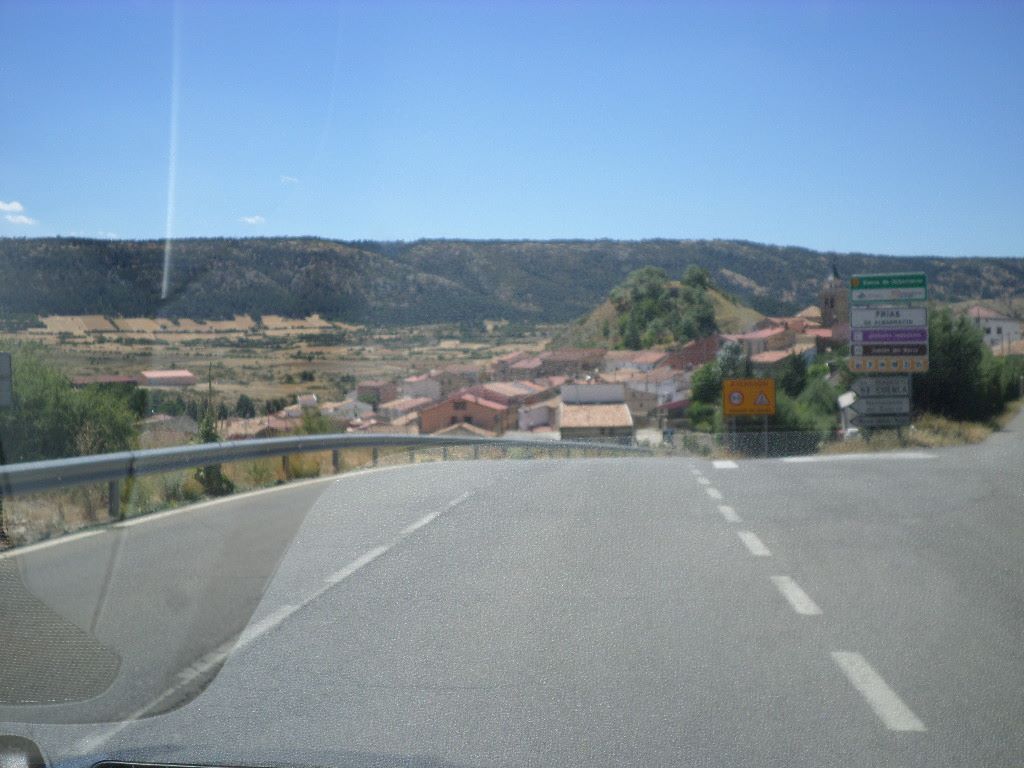
The Sierra del Albarracin on the barranco de la Hoz : https://sierraalbarracin.com/barranco-de-la-hoz
The Albarracin tourism site on Calomarde: https://albarracinturismo.com/calomarde/
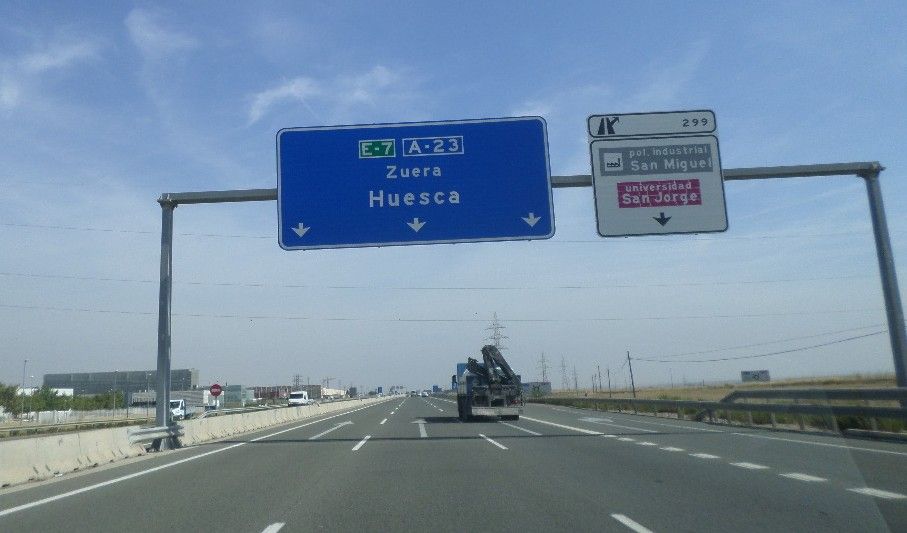
The N330 national road, goes to Alicante, Almansa, Requena,Utiel, Teruel, Zaragoza, Huesca, Jaca, and the French border at Somport tunnel (see post) ,Shortly before reaching Villanueva de Gállego, the doubled N-330 joins the A-23; and it is in Villanueva de Gállego where the N-330 separates from the A-23 as a single carriageway. The N-330 crosses, in addition to Villanueva, the towns of Zuera and Almudévar and Alto de las Canteras, to reach Huesca. Currently with the conversion of Monrepós into a dual carriageway, the N-330 ends its route in Nueno. After Monrepós, the road came to Sabiñánigo, an industrial town in the Huesca Pyrenees, and from there to Jaca where it separated from the N-240. Through Avda. de Francia or de la Variante, it enters the Valle del Aragón and, after crossing Castiello de Jaca, Villanúa ,and Canfranc, it takes the first ramps of the Somport pass, or underground tunnel ending at the French border at an altitude of 1,640 meters. My road for many years and love can’t wait to be back eventually !! . Our most nostalgic memorable trips have been over or under Somport (see post) We take it from France under Somport tunnel with the N134 France and then come out with the N330 Spain to direction Huesca, Zaragoza taken the panels for Jaca. The N330 is now a super highway, when I first started driving by here in 1990 most was dirt road under construction funding by the EU !
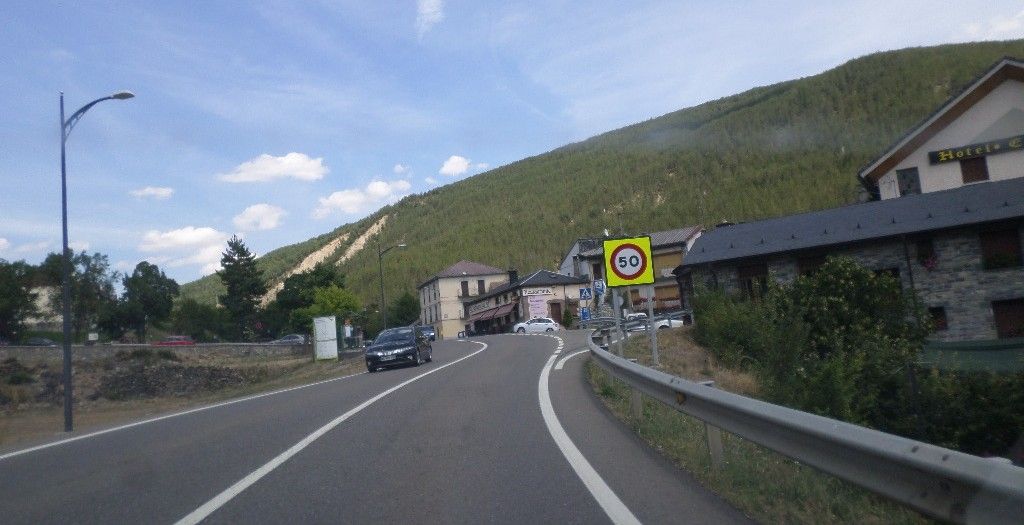
The Autovia Mudéjar highway or A-23, from Sagunto to the French border through Somport or, according to some indications of the road, the highway from Valencia to France through Aragón or the Sagunto-Somport highway, will be, once it is completely finished, (ongoing almost done) an important connection axis between the Valencian Community, Aragon, the Basque Country area and France through the Somport tunnel. The A-23 also is part of the European Route E7, which connects Pau, in the south of France, with Zaragoza. In the French section, the road is called RN134, which links Pau with Oloron-Sainte-Marie direction
Zaragoza, and Spain. The Z-40 beltway, completely bypasses Zaragoza,and allows the articulation of the metropolitan area and the distribution of national, regional and urban transits. Do take it marvelous ! The three Aragonese capitals have been linked by dual carriageway, with the commissioning of the last section of the A-23 that was pending to be opened. The highway between Zaragoza and Teruel extends to Huesca, and is expected to reach the French border, but the route also connects from Zaragoza with the Cantabrian Sea on the A-68, and in the future with the north of Navarre and the Basque Country by the A-21 and with Lérida on the A-22.
I have done the driving from Madrid , but the last time was from Cuenca on the A40 (autovía de la Meseta Sur) direction Toledo/Madrid before getting off on the N400 for Toledo .From the A-40 motorway to Tarancón, where it connects with the
A- 3 (Madrid-Valencia) and from there to Cuenca, the highway has been designed as a variant of the current N-400, which has remained a service road for most of its length. This N400 is the old road I took to see relatives near Toledo it has become a secondary road today as the A40 has taken over,
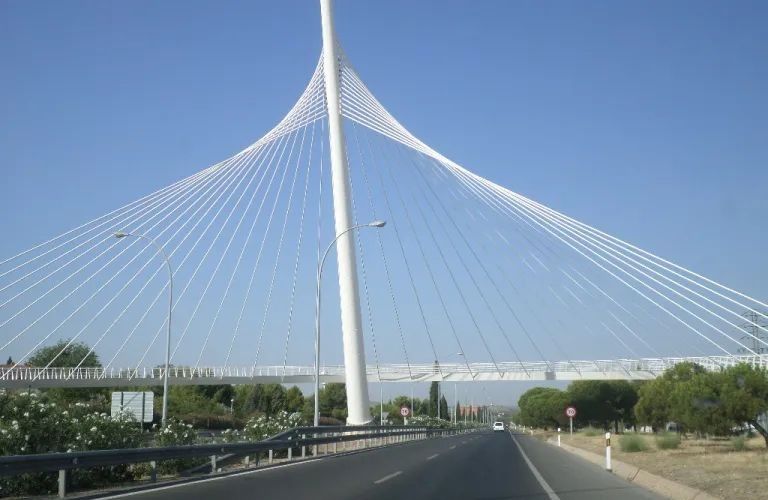
The A 2 from Madrid to France as Madrid, Zaragoza, Lleida, Barcelona, Girona and French border. The A-2 , also known as the
Autovia del Noreste or northeast highway, is one of six radial highways in Spain that connects Madrid to Barcelona. The A-2 begins to the east of Madrid (M-30 beltway) where it extends the great Avenida de America. It crosses the eastern part of the City conurbation (doubled by the newer M-21) and bypasses the Adolfo Suarez Barajas International Airport from the south. It continues its path to the northeast where it serves the towns of Torrejón de Ardoz, Alcalá de Henares and Guadalajara which it runs along to the south and from where it is joined by the R-2. The A-2 is connected with A-15, and it extends northeast following the Jalón Valley, serves Calatayud, then arrives in Zaragoza serving Europe’s largest logistics platform Pla-Za before connecting to the Zaragoza ring road (Z-40).
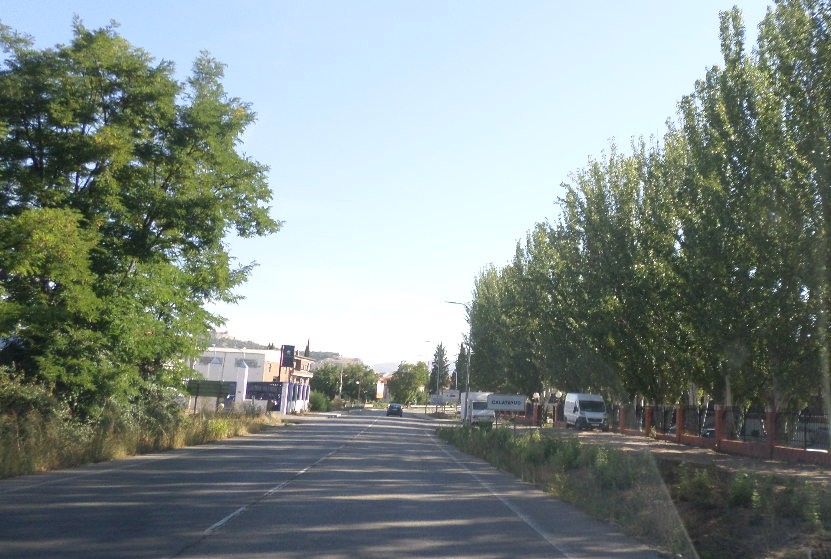
Spain’s toll highways known officially as Autopistas are designated by the letters AP, as in AP8. Spain’s free highways, usually known as Autovias, are generally designated by the letter A, as in A66. In addition to the A designated highway, the M highways for Madrid and R Radial highways (tolls). The highways M30 (first finished in 1974 my sentimental as it passes near where I used to lived in Madrid!), M40, M45 and M50 , and even a short M55 nowdays are the main orbital routes round Madrid. M50, the outermost, runs 80% of the way round Madrid, and connects all the main national A highways, from A1 to A6. The missing section is the northwest, from the A1 to the A6 – for which the A40 should be used. Orbital M highways are free, the radial R highways are toll roads (which i always avoid).
Highways are the roads that can be identified by the letter “A” followed by the corresponding number of the motorway / highway. The letters and numbers are white on a blue background. Within this type of roads we can make a subdivision: Nationals: are those identified with the “A” followed by the number. Toll: they are identified with the letters «AP» and as their own name indicates, they include tolls. Autonomous: when the road belongs to the community. Local: when they are under local jurisdiction and belong to a municipality. Roads of General Interest of the State: the roads of General Interest of the State, also known as national highways, are the roads that are marked with the letter «N» and with the corresponding number after the letter. Letters and numbers appear in white on a red background. These roads are single carriageways and are one of the roads that have the most kilometers.
First-level autonomous: these are the roads identified with the letters «CL» and behind the corresponding road number. The letters are black on an orange background. Second level autonomous: its letters are «CM» followed by the numbers that correspond to the road. Both letters and numbers are white on a brown background. And they are now even CU roads in a similar manner. Third-level autonomous are those identified with the following letters: «CR» followed by the numbers that correspond to the road itself. The letters are black on a yellow background. Roads of General Interest of the State in European Itinerary: they are the roads that belong to European itineraries and are identified because they carry a prefix with the letter “E”, followed by numbers. The signage has a green background.
The normal speed limits are as follows: Highways/ Motorways (autovias and autopistas) : 120 km/h; Main roads : 80 km/h, 90 km/h or 100 km/h as indicated; and Built-up areas : 50 km/h or 70 km/h as indicated. There are now plenty of speed traps, or radars, on main roads in Spain, and police can and do issue on-the-spot fines. Advance warning of speed traps tends to be given,
The Six radial toll roads which connect Madrid with its coasts and its borders divide the Spanish continental territory into 6 radial sectors. These radial roads are enumerated in clockwise fashion as follows : A 1 from Madrid to France as Madrid, Aranda de Duero, Burgos, Vitoria, San Sebastiàn, Irùn to the French French border. A 2 from Madrid to France as Madrid, Zaragoza, Lleida, Barcelona, Girona and French border. A 3 from Madrid to Valencia or Carretera de Castilla La Mancha. I must say never pay toll on this road A 4 from Madrid to Cadiz or Carretera de Andalucia as Madrid, Cordoba,Sevilla, and Càdiz A 5 from Madrid to Mérida, Badajoz, and Portugal or Carretera de Extremadura, and A 6 from Madrid to A Coruña or Carretera de A Coruña as Madrid, Medina del Campo, Benavente, Ponferrada, Lugo, and A Coruña.
The General Directoire of Traffic information in Spain:https://www.dgt.es/conoce-el-estado-del-trafico/informacion-e-incidencias-de-trafico/
The General Directory of Traffic on conditions of roads, snow ,traffic etc :
https://www.dgt.es/conoce-el-estado-del-trafico/informacion-e-incidencias-de-trafico/
The Royal Automobile Club of Spain (RACE) for highway maps: https://www.race.es/mapas-de-carreteras
The official Repsol guides on itineraries ( Spanish Michelin) : https://www.guiarepsol.com/es/rutas/
The official weather service in Spain, AEMET : https://www.aemet.es/en/portada
There you go folks, a grandeur of freedom on the roads and to know more corners than you would like to believe, get on the road see all of Spain ! Take it from this world traveler , the best way to travel ,and in Spain you are in heaven, Do read my other posts on the roads of Spain,and you will be fine, Again, hope you enjoy this post on the roads of my Spain !!! as I
And remember, happy travels, good health, and many cheers to all !!!


