
We are back to my dear Spain again !! love it !! We came by car of course and took time to see new areas and old repeat with some of them as introduction to my sons and our dog Rex ! I rented a small house in a off the beaten path country town that was just perfect ! I like to continue my road warrior stories with an introduction to Valladolid, Therefore, here is my take on curiosities of Valladolid !!! Hope you enjoy the post as I,
The town of Valladolid is in the province of Valladolid, in the Autonomous Community of Castilla y Léon, and in the kingdom of Spain. It is only 202 km from from Madrid, I took pics of some interesting buildings that I like to expand and tell all about them. It is located at the confluence of the Pisuerga and the Esgueva rivers. In the absence of reliable sources, the origin of the city’s name is not clearly established.
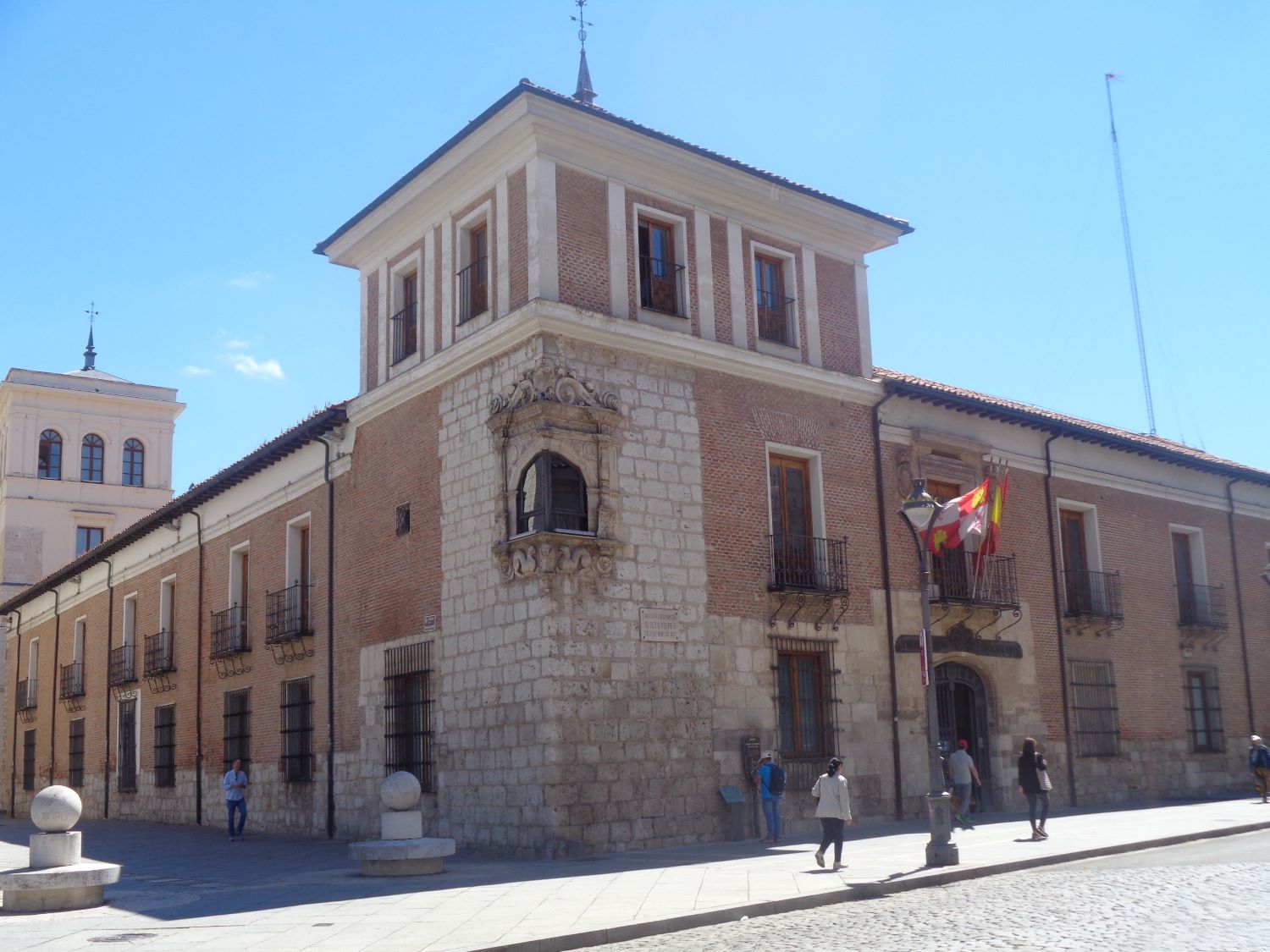
Let me tell you about an icon of Valladolid, the Hotel Imperial, The inauguration of the Imperial Hotel was in 1914, and it is the longest hotel establishment in the city. The same family that founded it continues to run this hotel !, located in a monumental building with almost five centuries of history: the residence of the Gallo de Andrada. Among the historical milestones in which Valladolid was the capital of the Kingdom of Spain, Don Juan Gallo de Andrada, owner of the House and chamber notary of king Felipe III was the person who attest to the rate with which the first published edition of Quijote was published, back 1604.

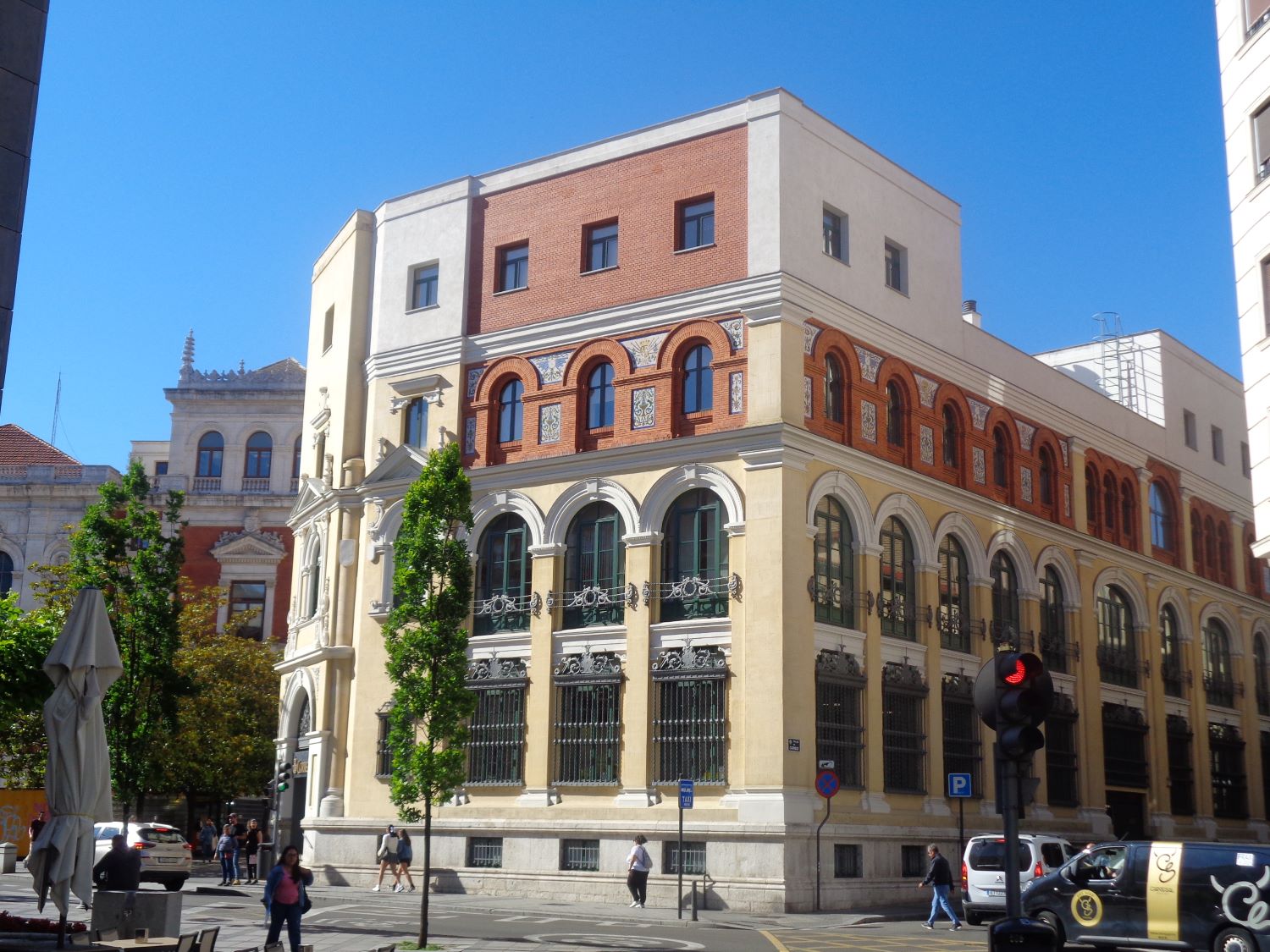
The Correos or post office building at Plaza de la Rinconada, The building is organized through large arches that cover two floors (of French Beaux-Arts) and a third level of half-point windows executed in brick, recalling the Mudejar tradition. In the 1970’s, it suffered an intervention that modified the original facade of the building, by demolishing the coronation balustrade and the tower and expanding the building then with a fourth level and made without any plastic achieve They have lost much of their original nobility. The building, losing the tower, has also lost its palatial rhetoric.
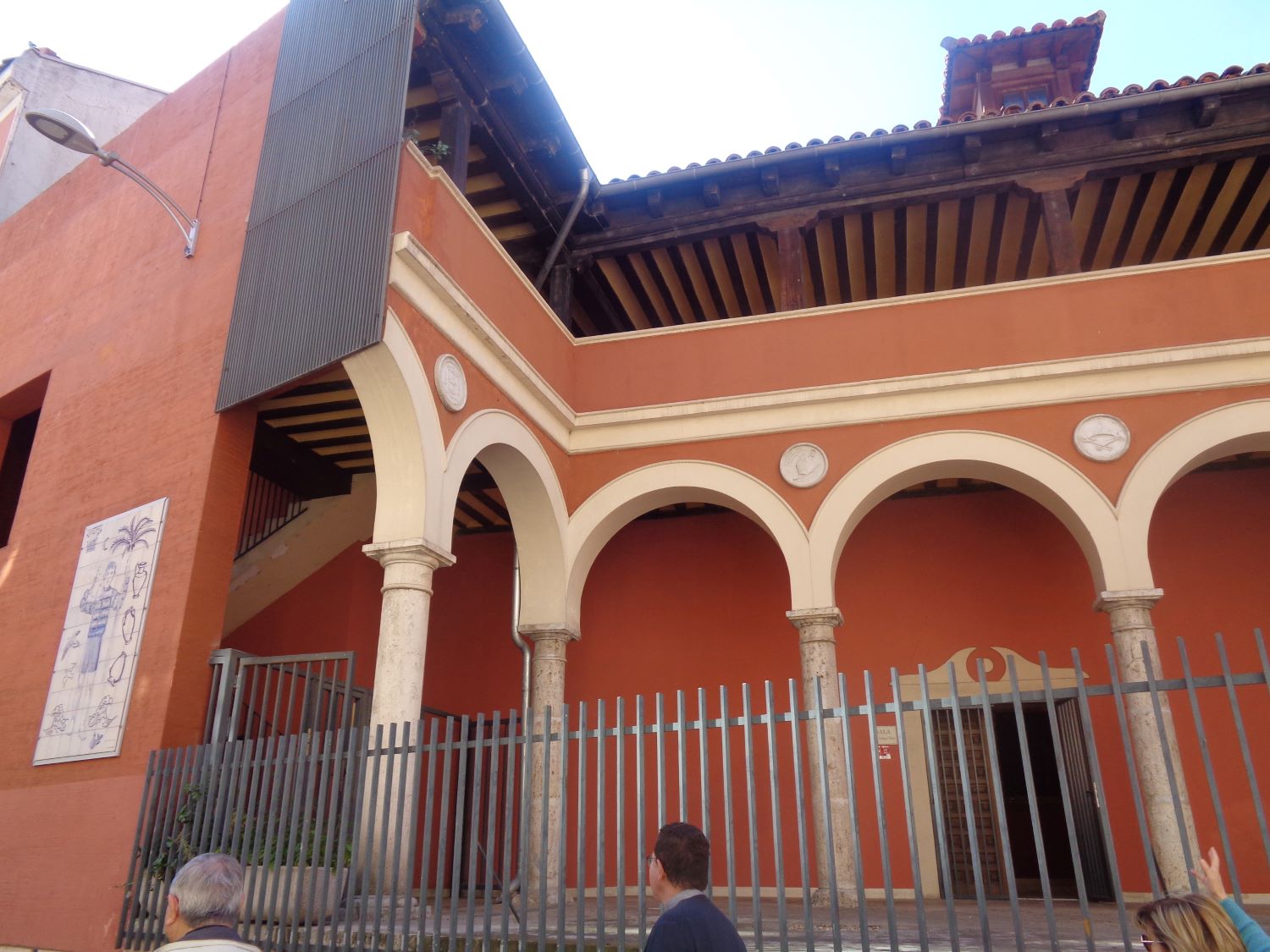
The Palacio de Fabio Nelli is, according to the critics and historians, the Renaissance building of the most important classical period of the city of Valladolid , It is decorated and finished following Italian classicist style, its facade, playground and stairs are the epitome of this type of architecture, In the 20C, it became headquarters of the Valladolid Museum, an institution destined to collect all the archaeological and artistic remains of the province. Fabio Nelli was an important Valladolid banker born in 1533 of Italian lineage, he left the City to America for a while but came back in 1576, and ordered the construction of his residence.In the 20C it was purchase by the State and in 1968 was restored to house the Archaeologic museum. In the 21C, it has the title of Valladolid Museum.
The University Isabel I of Castilla is a private university, at a distance, with headquarters in the Spanish city of Burgos, and branches in Valladolid and Miranda de Ebro. It is the first Spanish university and the second in Europe in offering the grades of Sciences of Physical and Sports Activity (CAFD) and Human and Dietary Nutrition in a semi -creasing manner In Valladolid has a delegation, offices, training rooms and registration center, located in the Paseo de Filipinos 3 next to the Plaza Colon and the train station.

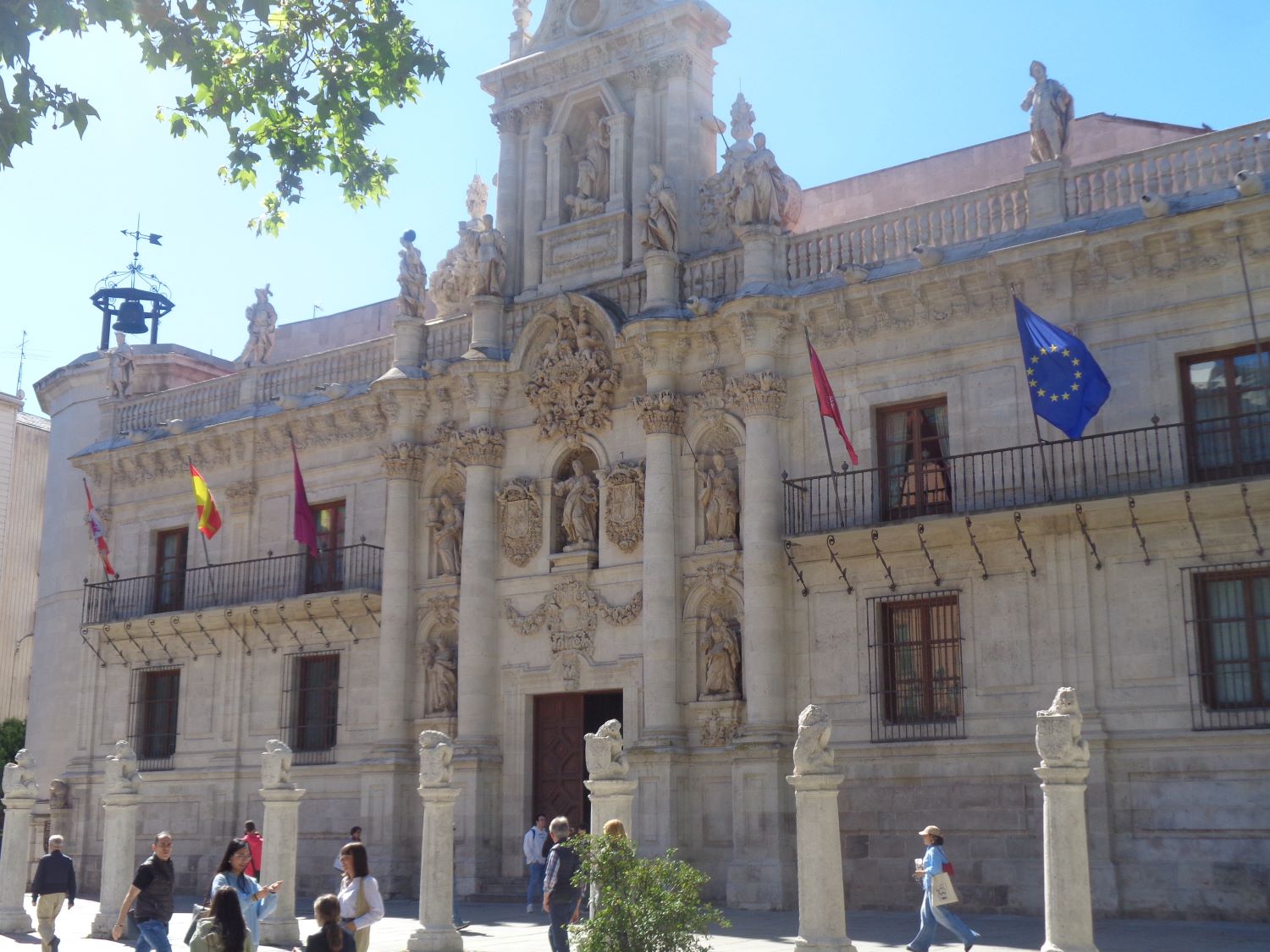
The University of Valladolid (UVA) is a Spanish public university. It was founded in 1241, which makes it the third oldest university in Spain, according to existing documents, the University of Valladolid already existed at the end of the 13C. The Museum of the University of Valladolid, has continued to rebuild its history, and heritage through articles and monographs.
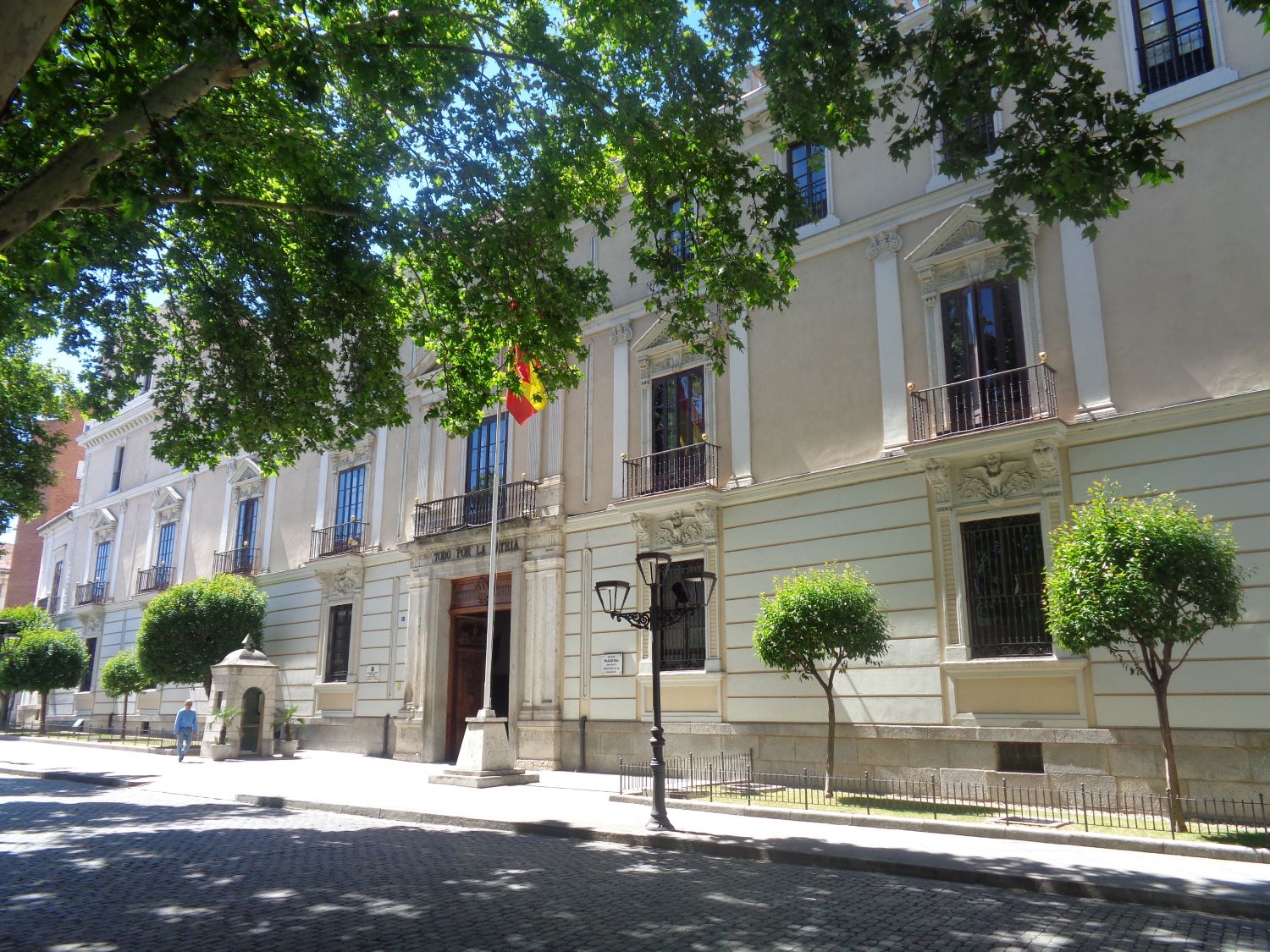
The Royal Palace of Valladolid was the official residence of the kings of Spain during the period of presence of the court in the city between 1601 and 1606. It was also a temporary residence of the reign of Charles Quint (fifth) to Isabel II. It was the headquarters of Napoleon I during the Spanish War of Independence in January 1809 (from the 6th to the 17th) where he established and where he left for his wars in Central Europe. It currently a hq of the Spanish army.
The Archbishop’s Palace of Valladolid,(Episcopal) is the residence of the Archbishops and headquarters of the Archdiocese of Valladolid. It was built in the mid -16C. In principle it was a civil palace owned by the Juan de Villasante and María de Villarroel , until the first local archbishop, Luis de la Lastra y Cuesta, made it an episcopal headquarters in 1857. It is located on Calle San Juan de Dios, The building houses the main institutions of the Archdiocese of Valladolid: the Foreign Ministry, the Ecclesiastical Court, the Ecclesiastical Notary, several of the delegations and, in El Zaguán, the bookstore. Other institutions are in the Diocesan Center of Spirituality: Radio María, the Diocesan Choir or the Diocesan Training School. Next to this, there is the headquarters of Caritas.

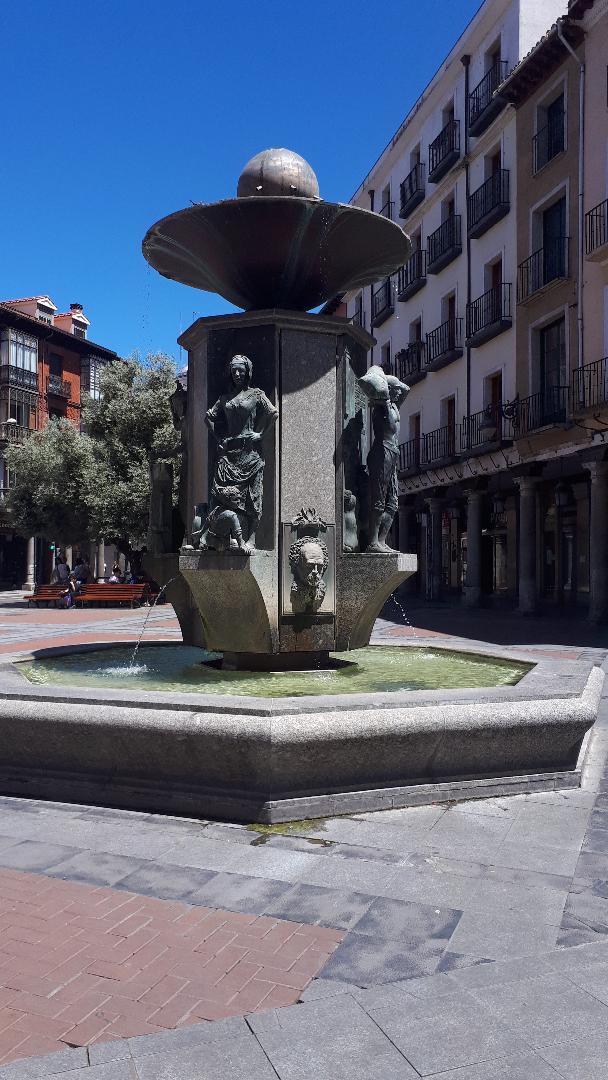
The Fuente Dorada was a public source of the city of Valladolid . It was the eponym of the square that bears that same name located near the Plaza Mayor ,so name the Plaza de Fuente Dorada. It was built in 1618 and was supplied by the Aguas de Argales stream. This fountain had many changes and remodeling throughout the centuries. From the primitive source there is none, The new Fuente Dorada has all its ornaments dedicated to the history of the different models of previous years: masks, representation of the trades that were in the past in their environment, with a special dedication to the woman who with her pitcher brought the water to her home,
The Palace of the Marquis de Valverde is a palatial residence dating from the second half of the 16C. Its entrance is located on Calle San Ignacio, and belonged to the lineage of Figueroa and felled to his descendants the Marquises of Valverde de la Sierra.The interior is currently occupied by private and local housing.
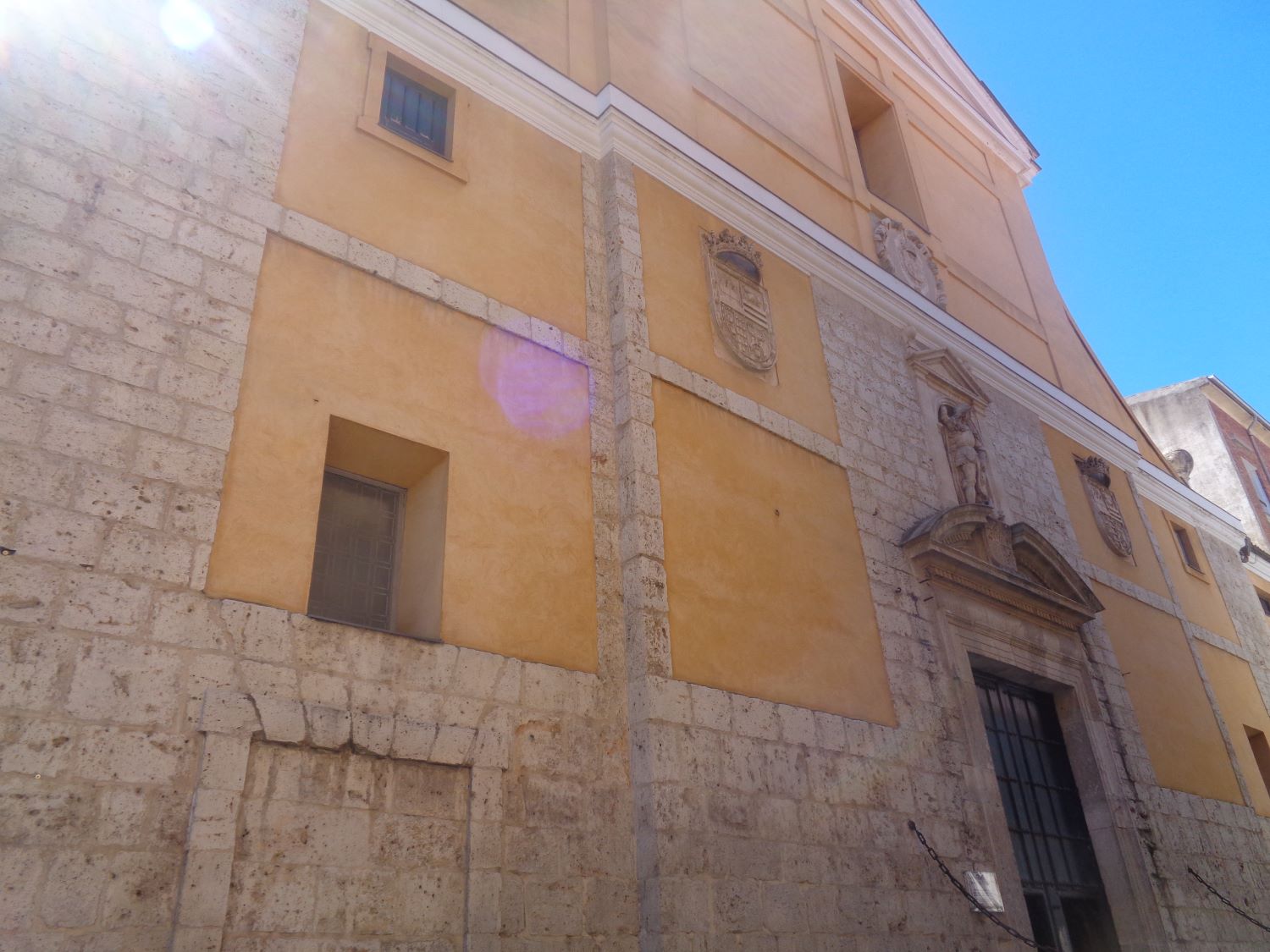
King Felipe II was born in Valladolid on May 21, 1527, speicifically at the Pimentel Palace, and had been baptized in the convent of San Pablo. The Palacio de Pimentel is a former Royal Palace, The palace in the Renaissance style was constructed in the 15C ncorporation earlier Structures. From 1985 to 1990 ,the palace was restored to served as local government offices including a public exhibition space, The palace is now closed awaiting renovation,
And not forget the importance of Valladolid on the Spanish language o Castellano as evidence by its many exponents of the language who have been born lived in the City, For this reason, the City unveil a few years back the trail of the Castilian language or Camino de la lengua Castellana in the Plaza de la Universidad square, As said , the old and present cultural life is breathed in the city, latent in its historic university and in the works of many writers that this land has given, such as the author of the “Don Juan Tenorio”, José Zorrilla or Rosa Chacel, José Jiménez Lozano, Miguel Delibes, Jorge Guillén, Francisco Umbral,etc, Miguel de Cervantes himself lived in Valladolid in his most fertile years and left, among the pages of his works, many Valladolid corners, streets, squares, palaces and houses that we can still recognize today.

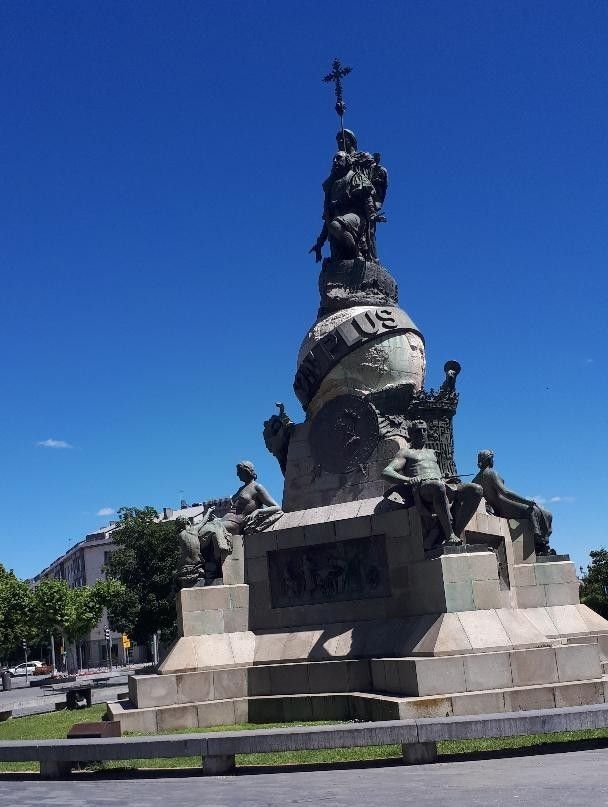
The Plaza de Colón is located at one ends of the Acera de Recoletos, in which the Paseo de Filipino, the Campo Grande, calle de la Estacion and calle Gamazo coincide. The origin of the square is in the confiscative processes of the first half of the 19C that decreed the suppression of the male convents. The current Plaza de Colón was located in part in the field on which the convent of San José de los Padres Capuchinos was built. In the center of this square the monument to the discovery of America was installed, better known as a Monument to Colon made in 1892 and that was initially destined to the Parque Central of Havana, Cuba, The inauguration of the monument took place in 1905. The monument has a pyramid structure and is divided into two heights. In the lower stone socket there are four bronze reliefs that show different episodes of the discoverer’s life: the exhibition of the Columbus project in La Rábida, the exit of Palos de la Frontera, the arrival in America and the real reception of Columbus in Barcelona after his first trip. In the upper angles there are four figures of great proportions that symbolize: the study, nautical, value and history. In the upper part there is a globe with the legend Non Plus Ultra, broken by the bundle of a crowned lion in which the eagle of San Juan appears holding the shield of Spain and two medallions, one of them with the faces of the Catholics kings, In the upper part of the set appears Columbus, semi -roded in the bow of a small boat and, behind him an allegory of faith, represented in the form of a woman carrying a cross and a chalice.
The Acera de Recoletos (sidewalk) is one of the main streets of Valladolid although in the official record of the City is shown as a street, it is, in fact, a promenade or walk with a wide and unique sidewalk and its corresponding streets that begins in the Plaza de Zorrilla, ends in the Plaza de Colon and is delimited, along all its route through the Campo Grande.(see post), The idea or need to urbanize this space arose at the end of the 19C, when the city’s widening was carried out. It is then that this area became the main artery of Valladolid. The new route at the beginning took the name of the missing convent of Agustinos Recoletos, calling “Paseo de Recoletos”, After the first royal visit of Alfonso XIII to the city, in 1903, its name was changed to the “Avenida de Alfonso XIII”. Shortly after the proclamation of the Second Republic, on April 23, 1931, it was called that of “Avenida de la República”. On August 12, 1936, it was return to the Acera de Recoletos, although it was something ephemeral, since again it was changed the title on October 28, 1936 for that of “Avenida del General Franco”, until definitely after the arrival of democracy it recovered his initial name that it had popularly maintained and is currently maintained as Acera de Recoletos. It begins with the Casa de Mantilla house built at the end of the 19C, and the Casa del Príncipe located at number 11 ,corner between the Acera de Recoletos and Calle de Colmenares. It was built in 1906 ,and is characterized by a certain French influence and presents the construction facade to both streets. The most striking is the tower located in the corner topped with a dome. The Casa Resines house, in numbers 8 and 9, the facade is eclectic style, mixing the Renaissance style with the Chicago School and French Beaux-Arts School.
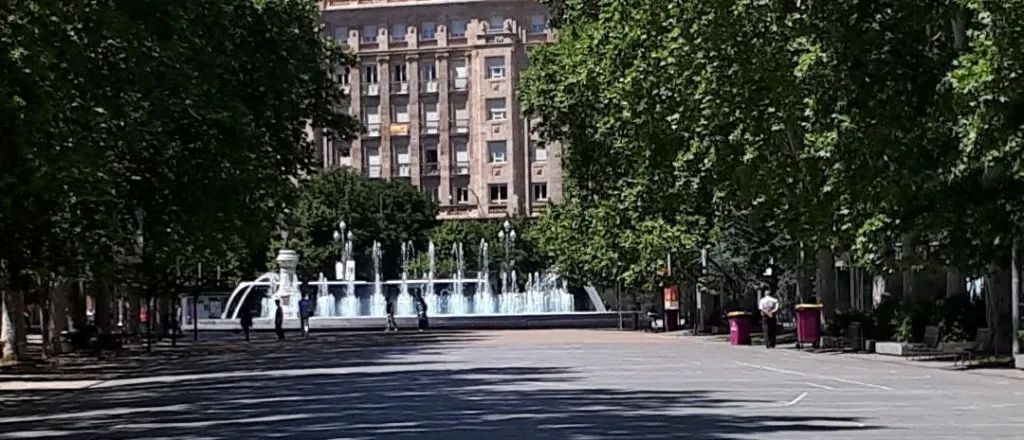
The Plaza de España is one of the most emblematic of the city, it is linked to the Plaza Mayor through the Calle del Duke of La Victoria, to the Plaza de Zorrilla through Calle Miguel íscar and to the Plaza de Madrid through from Calle Gamazo. In the Plaza de España there is also the Church of La Paz. It is one of the most modern churches in the city and has a facade that draws a lot of attention because it has the form of a huge rainbow and it is only known that it is a place of religious worship, In the center of the square is the fountain of children, popularly known as the Fuente de la bola del mundo or fountain of the world’s globe, that represents a globe that revolves around the sculptures called Bimbis, the work of Ana Jiménez, Usually ,under the great canopy is installed on the mornings, a market in which food products, such as fruits and vegetables, and flowers are sold; while monthly every second Sunday it becomes an ecological market. On the other hand, also every Sunday is a meeting place for the exchange and sale of colorful trading cards or cromos,
The Valladolid tourist office: https://www.info.valladolid.es/en/home
The regional Castilla y Léon tourist office on Valladolid: https://www.turismocastillayleon.com/en/art-culture-heritage/provincial-capitals/valladolid
The city of Valladolid: https://www.valladolid.es/es/ciudad/cultura
There you go folks , another wonderful nostalgic, sentimental trip to my dear Spain, Valladolid is nice, awesome will say back after so many years it seems all for the first time, and love it ! We will be back, eventually, Very convenient on off the A62 A6 highways connecting to all of Castilla y Léon and Comunidad de Madrid regions, Again, hope you enjoy this post on curiosities of Valladolid !!! as I
And remember, happy travels, good health, and many cheers to all !!!


