
We are back to my dear Spain again !! love it !! We came by car of course and took time to see new areas and old repeat with some of them as introduction to my sons and our dog Rex ! I rented a small house in a off the beaten path country town that was just perfect ! I like to continue my road warrior stories with an introduction to Valladolid, Therefore, here is my take on curiosities of Valladolid, part III !!! Hope you enjoy the post as I,
The town of Valladolid is in the province of Valladolid, in the Autonomous Community of Castilla y Léon, only 202 km from from Madrid, I took pics of some interesting buildings that I like to expand and tell all about them.
Let me tell you about an icon of Valladolid, the Hotel Imperial, The inauguration of the Imperial Hotel was in 1914, and it is the longest hotel establishment in the city. The same family that founded it continues to run this hotel !, located in a monumental building with almost five centuries of history: the residence of the Gallo de Andrada. Among the historical milestones in which Valladolid was the capital of the Kingdom of Spain, Don Juan Gallo de Andrada, owner of the House and chamber notary of king Felipe III was the person who attest to the rate with which the first published edition of Quijote was published, back 1604.

The Correos or post office building at Plaza de la Rinconada, The building is organized through large arches that cover two floors (of French Beaux-Arts) and a third level of half-point windows executed in brick, recalling the Mudejar tradition. In the 1970’s, it suffered an intervention that modified the original facade of the building, by demolishing the coronation balustrade and the tower and expanding the building then with a fourth level and made without any plastic achieve They have lost much of their original nobility. The building, losing the tower, has also lost its palatial rhetoric.
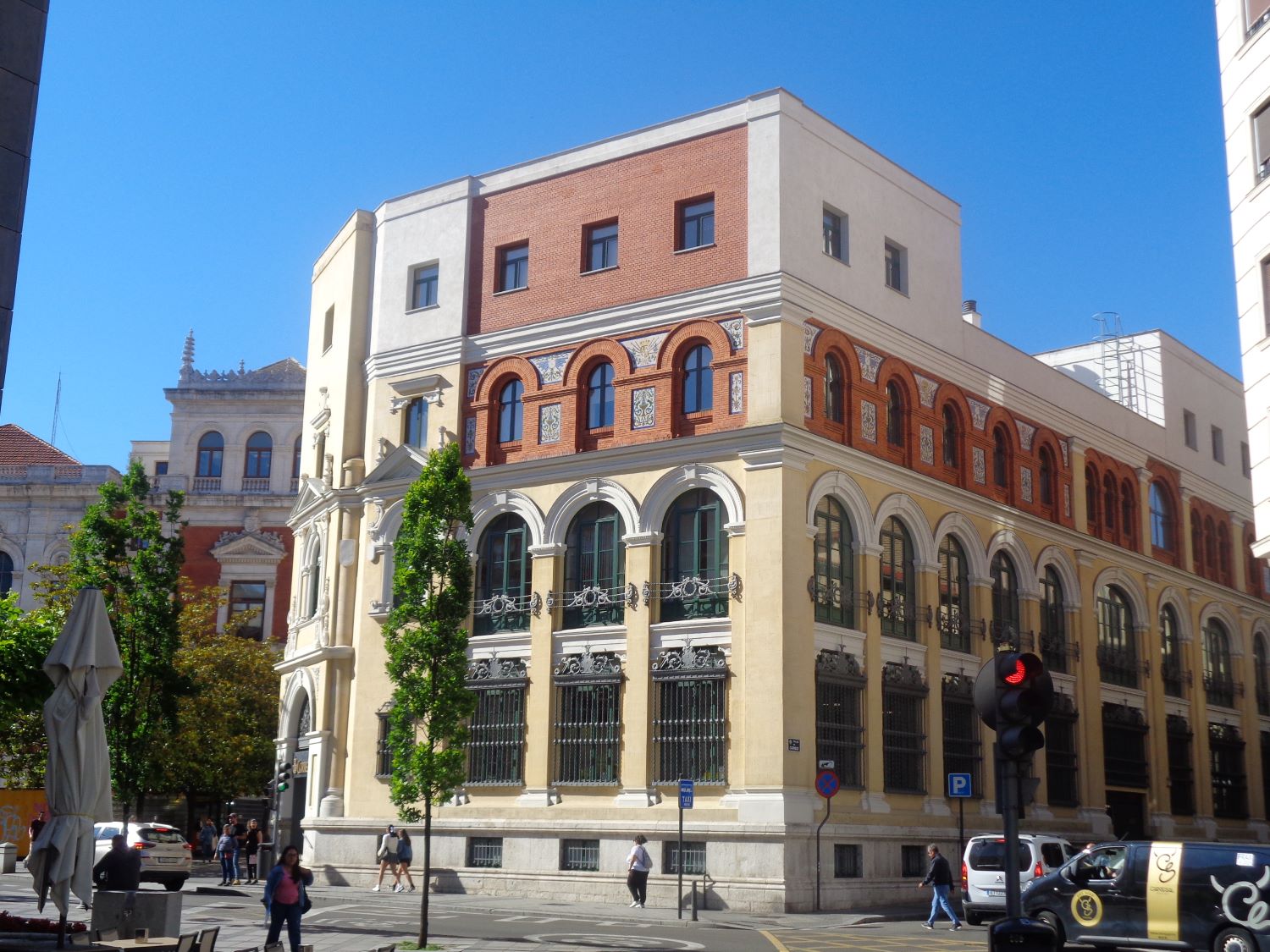
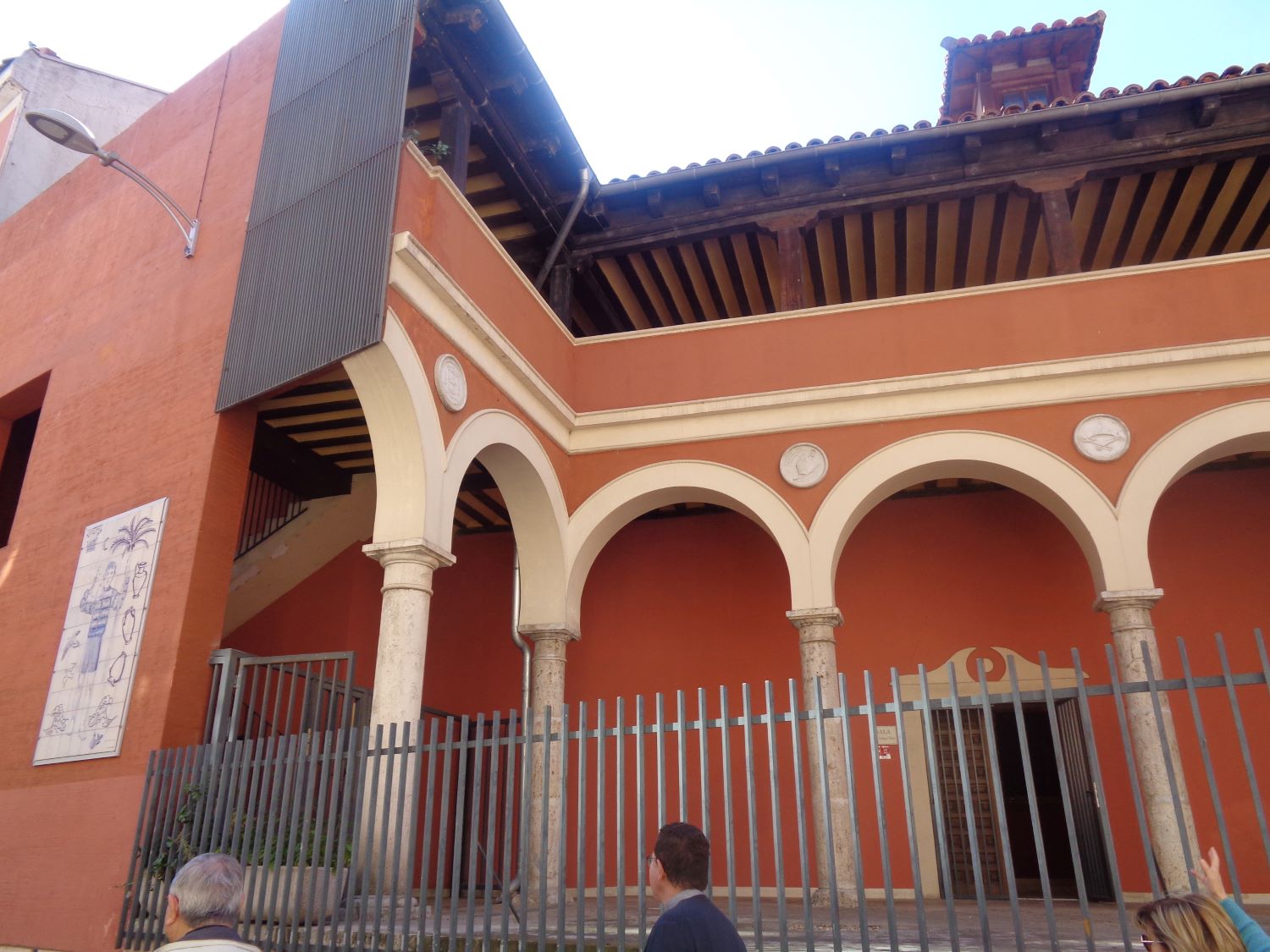
The Palacio de Fabio Nelli is, according to the critics and historians, the Renaissance building of the most important classical period of the city of Valladolid , It is decorated and finished following Italian classicist style, its facade, playground and stairs are the epitome of this type of architecture, In the 20C, it became headquarters of the Valladolid Museum, an institution destined to collect all the archaeological and artistic remains of the province. Fabio Nelli was an important Valladolid banker born in 1533 of Italian lineage, he left the City to America for a while but came back in 1576, and ordered the construction of his residence.In the 20C it was purchase by the State and in 1968 was restored to house the Archaeologic museum. In the 21C, it has the title of Valladolid Museum.
The University Isabel I of Castilla is a private university, at a distance, with headquarters in the Spanish city of Burgos, and branches in Valladolid and Miranda de Ebro. It is the first Spanish university and the second in Europe in offering the grades of Sciences of Physical and Sports Activity (CAFD) and Human and Dietary Nutrition in a semi -creasing manner In Valladolid has a delegation, offices, training rooms and registration center, located in the Paseo de Filipinos 3 next to the Plaza Colon and the train station.

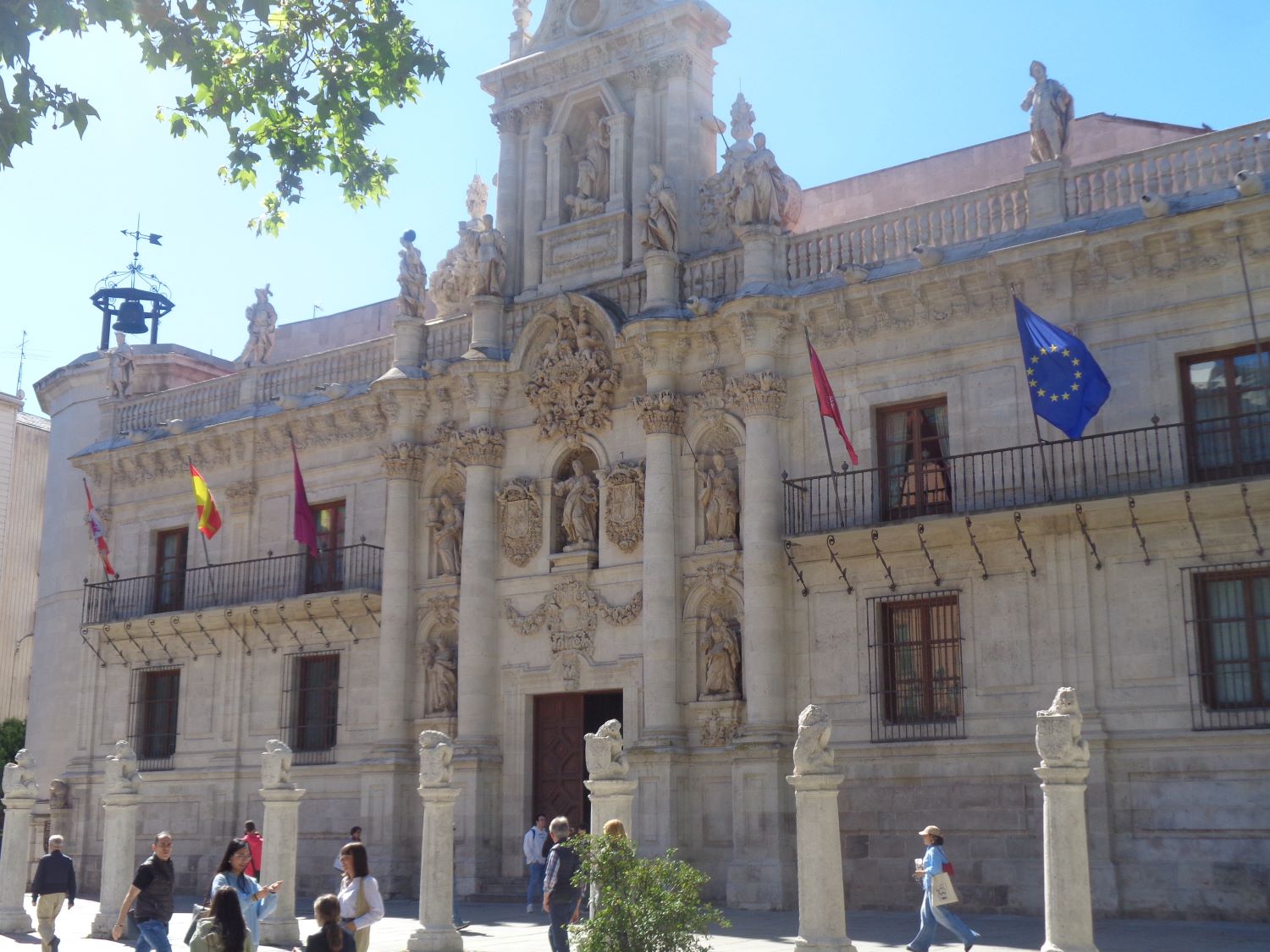
The University of Valladolid (UVA) is a Spanish public university. It was founded in 1241, which makes it the third oldest university in Spain, according to existing documents, the University of Valladolid already existed at the end of the 13C. The Museum of the University of Valladolid, has continued to rebuild its history, and heritage through articles and monographs.
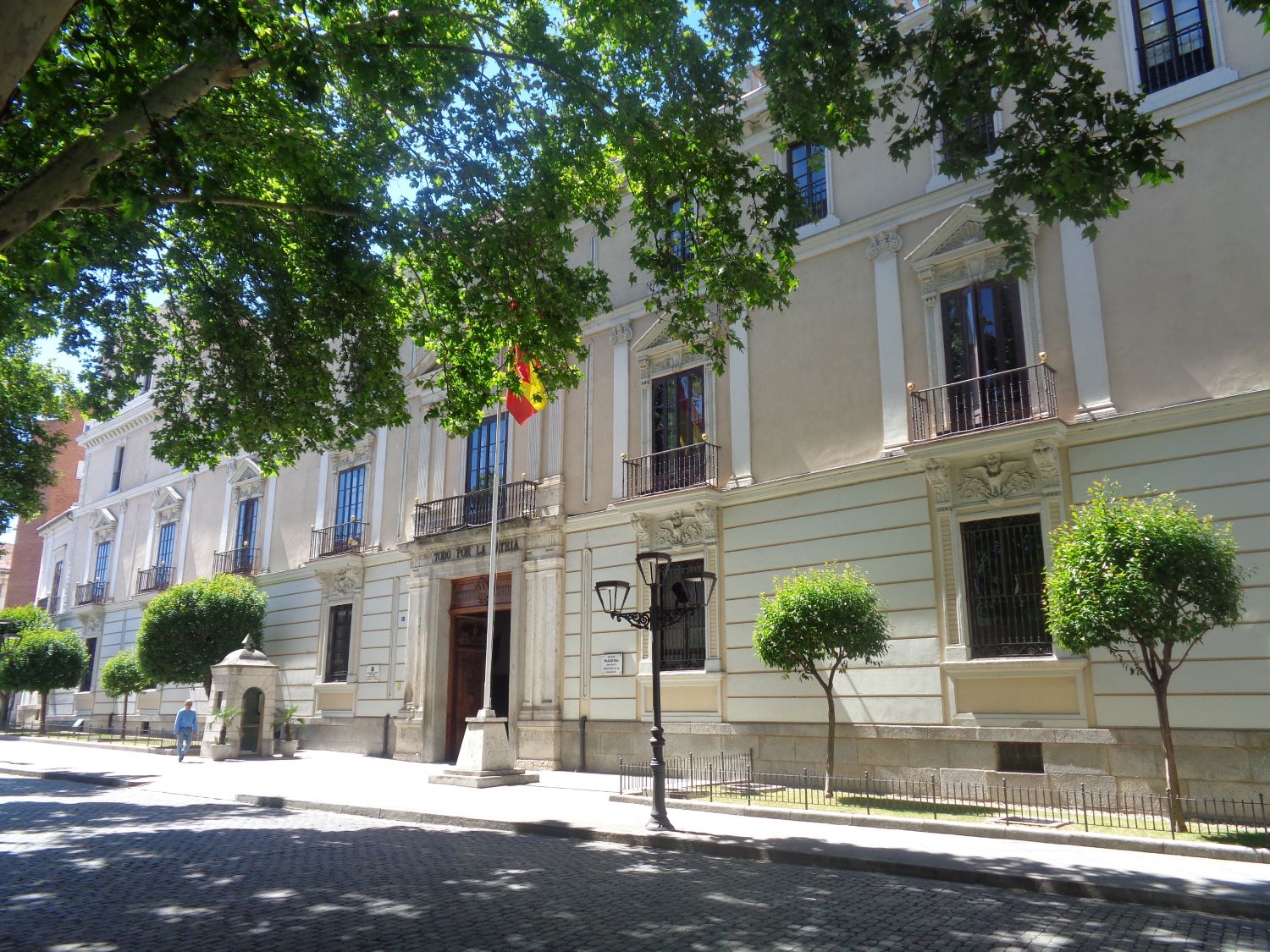
The Royal Palace of Valladolid was the official residence of the kings of Spain during the period of presence of the court in the city between 1601 and 1606. It was also a temporary residence of the reign of Charles Quint (fifth) to Isabel II. It was the headquarters of Napoleon I during the Spanish War of Independence in January 1809 (from the 6th to the 17th) where he established and where he left for his wars in Central Europe. It currently a hq of the Spanish army.
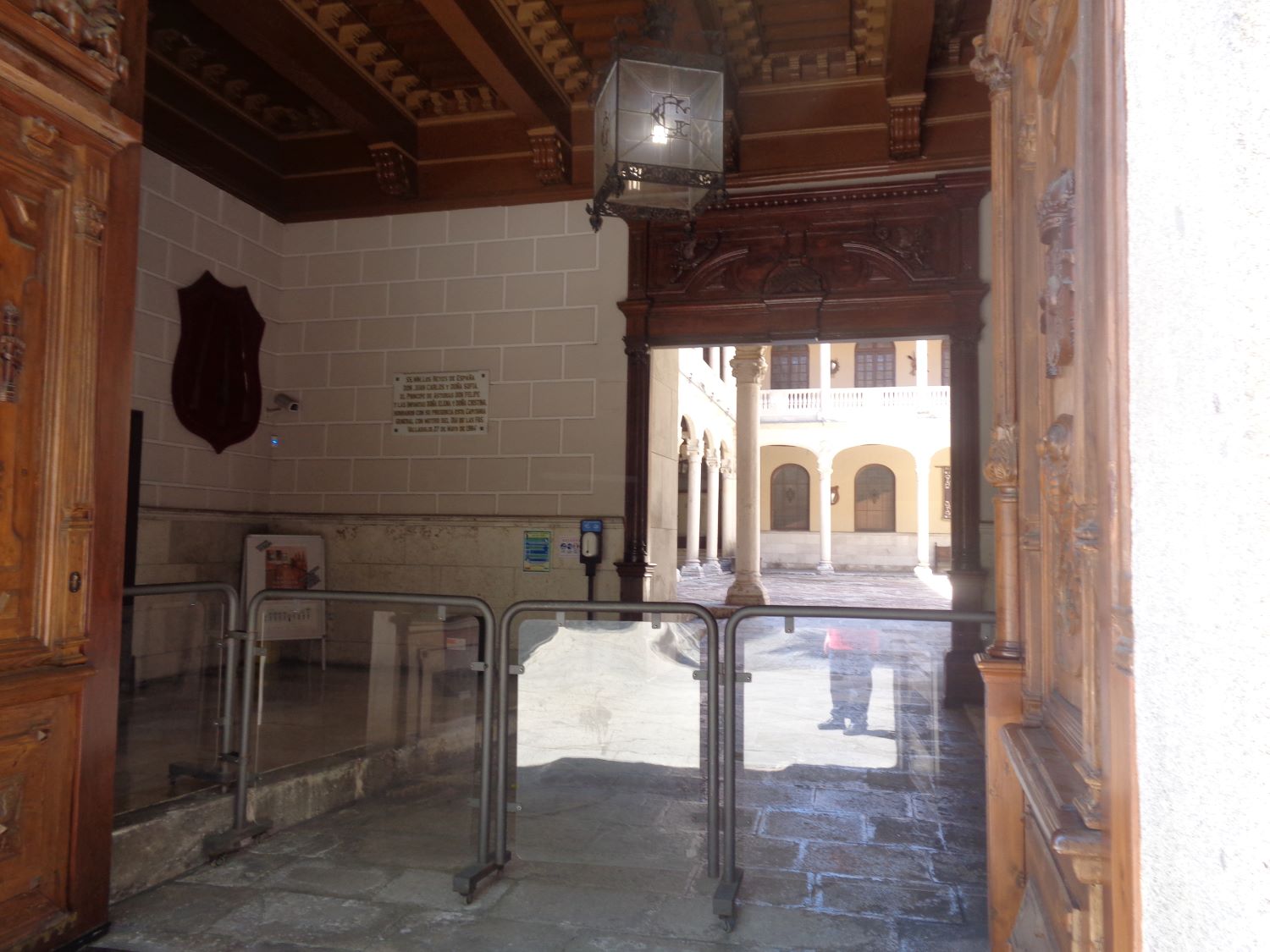
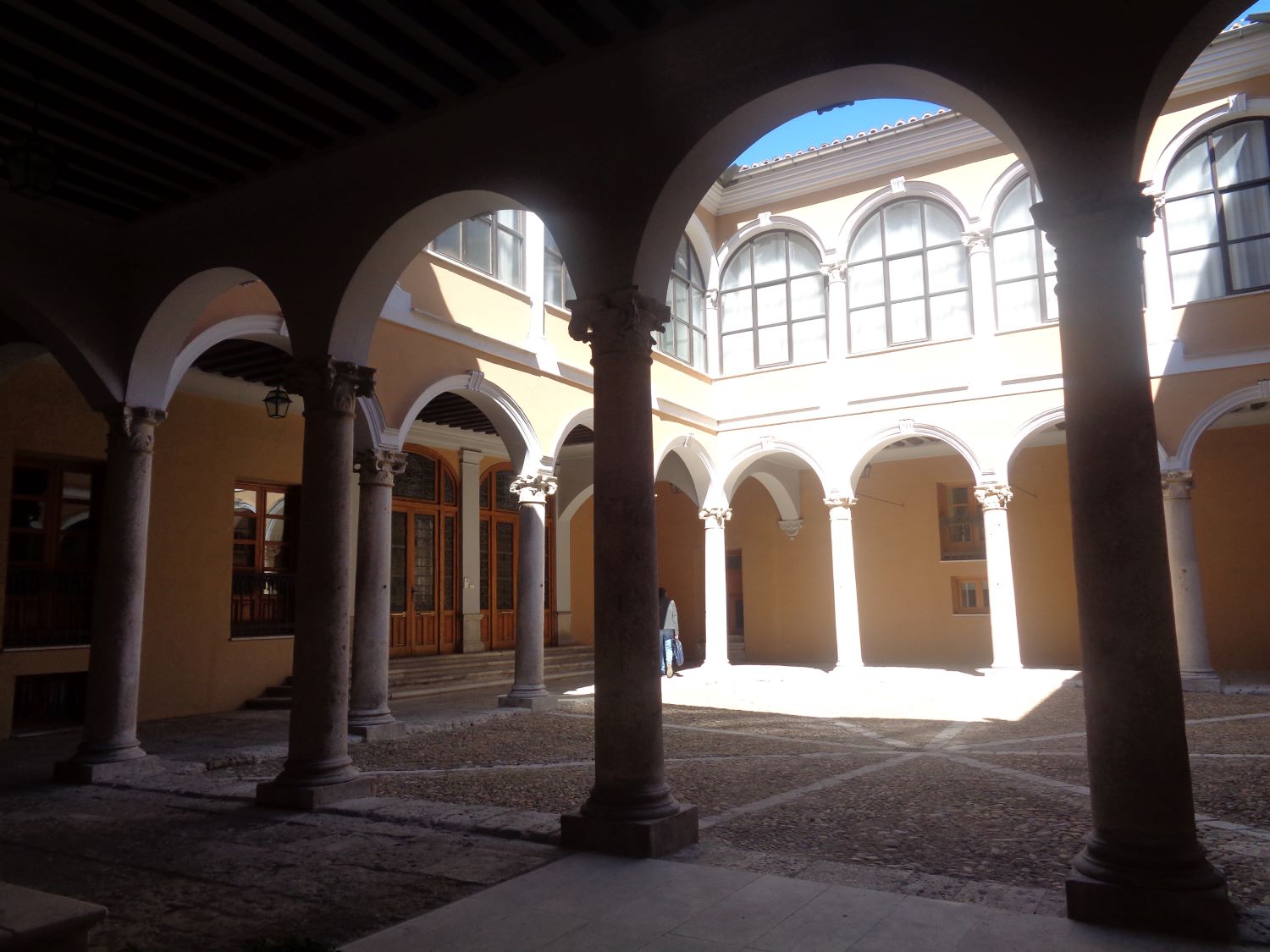
The Archbishop’s Palace of Valladolid,(Episcopal) is the residence of the Archbishops and headquarters of the Archdiocese of Valladolid. It was built in the mid -16C. In principle it was a civil palace owned by the Juan de Villasante and María de Villarroel , until the first local archbishop, Luis de la Lastra y Cuesta, made it an episcopal headquarters in 1857. It is located on Calle San Juan de Dios, The building houses the main institutions of the Archdiocese of Valladolid: the Foreign Ministry, the Ecclesiastical Court, the Ecclesiastical Notary, several of the delegations and, in El Zaguán, the bookstore. Other institutions are in the Diocesan Center of Spirituality: Radio María, the Diocesan Choir or the Diocesan Training School. Next to this, there is the headquarters of Caritas.

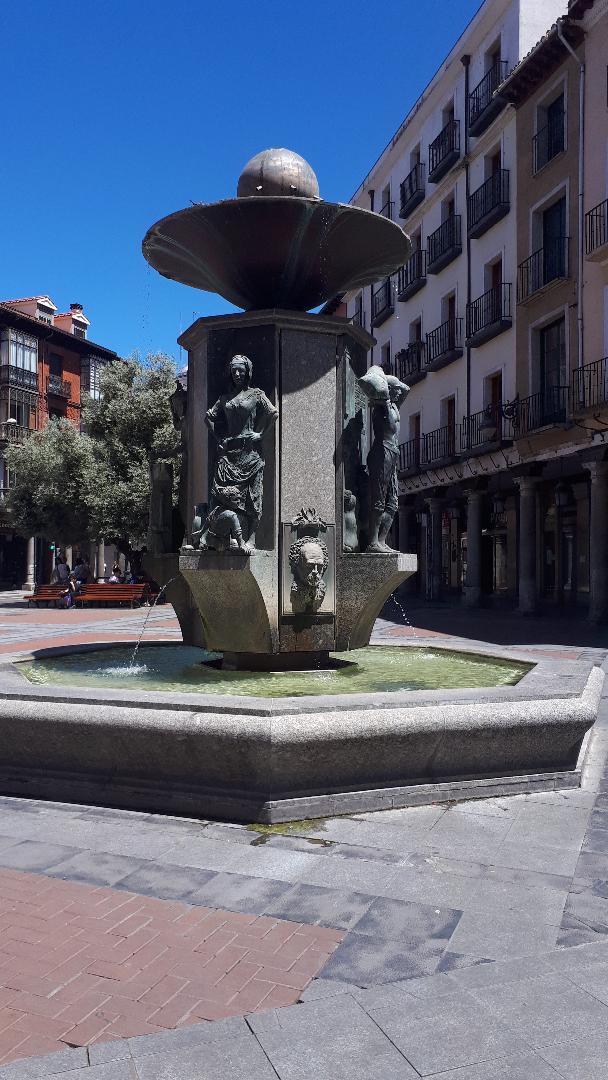
The Fuente Dorada was a public source of the city of Valladolid . It was the eponym of the square that bears that same name located near the Plaza Mayor ,so name the Plaza de Fuente Dorada. It was built in 1618 and was supplied by the Aguas de Argales stream. This fountain had many changes and remodeling throughout the centuries. From the primitive source there is none, The new Fuente Dorada has all its ornaments dedicated to the history of the different models of previous years: masks, representation of the trades that were in the past in their environment, with a special dedication to the woman who with her pitcher brought the water to her home,
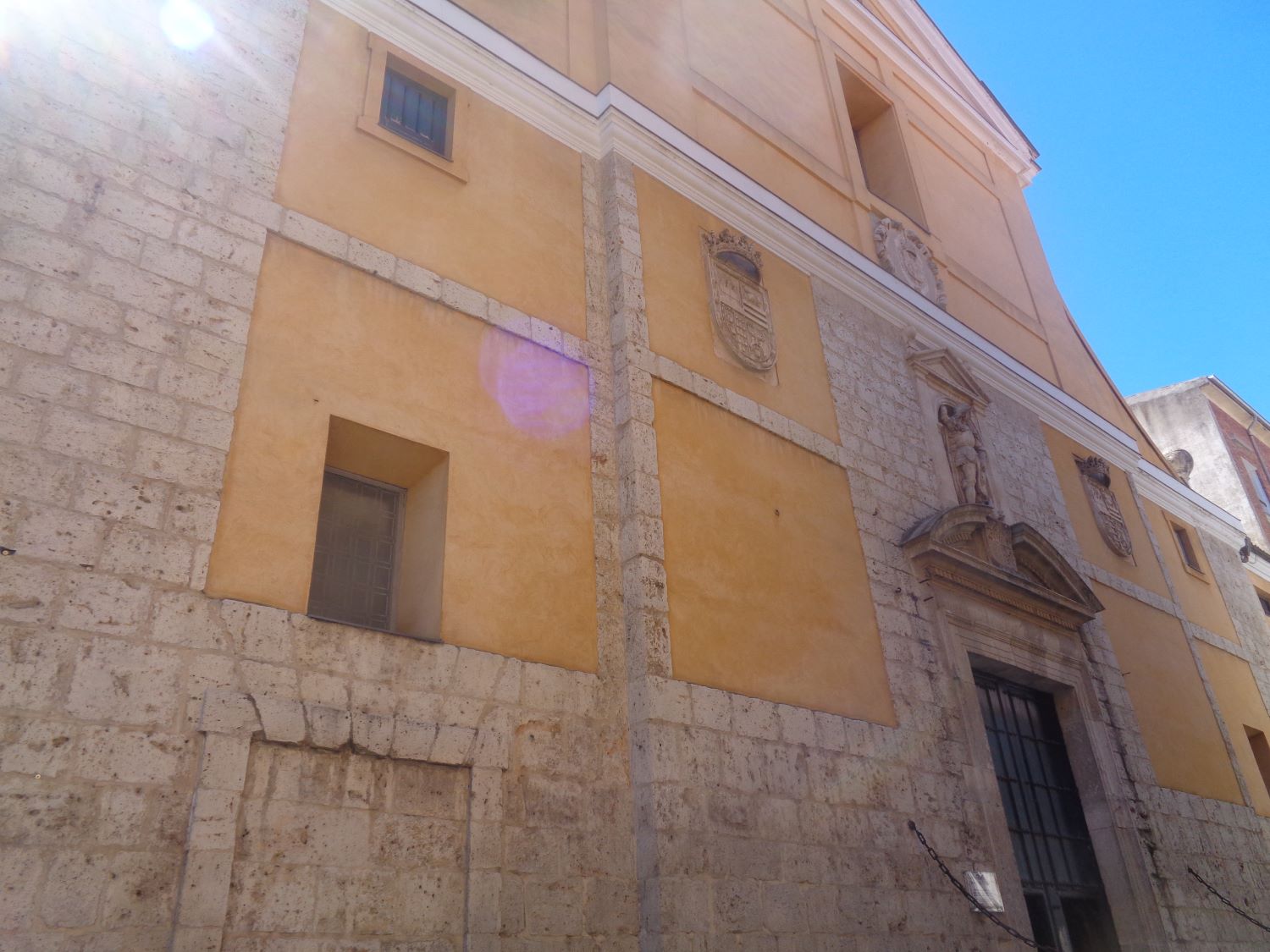
The Palace of the Marquis de Valverde is a palatial residence dating from the second half of the 16C. Its entrance is located on Calle San Ignacio, and belonged to the lineage of Figueroa and felled to his descendants the Marquises of Valverde de la Sierra.The interior is currently occupied by private and local housing.
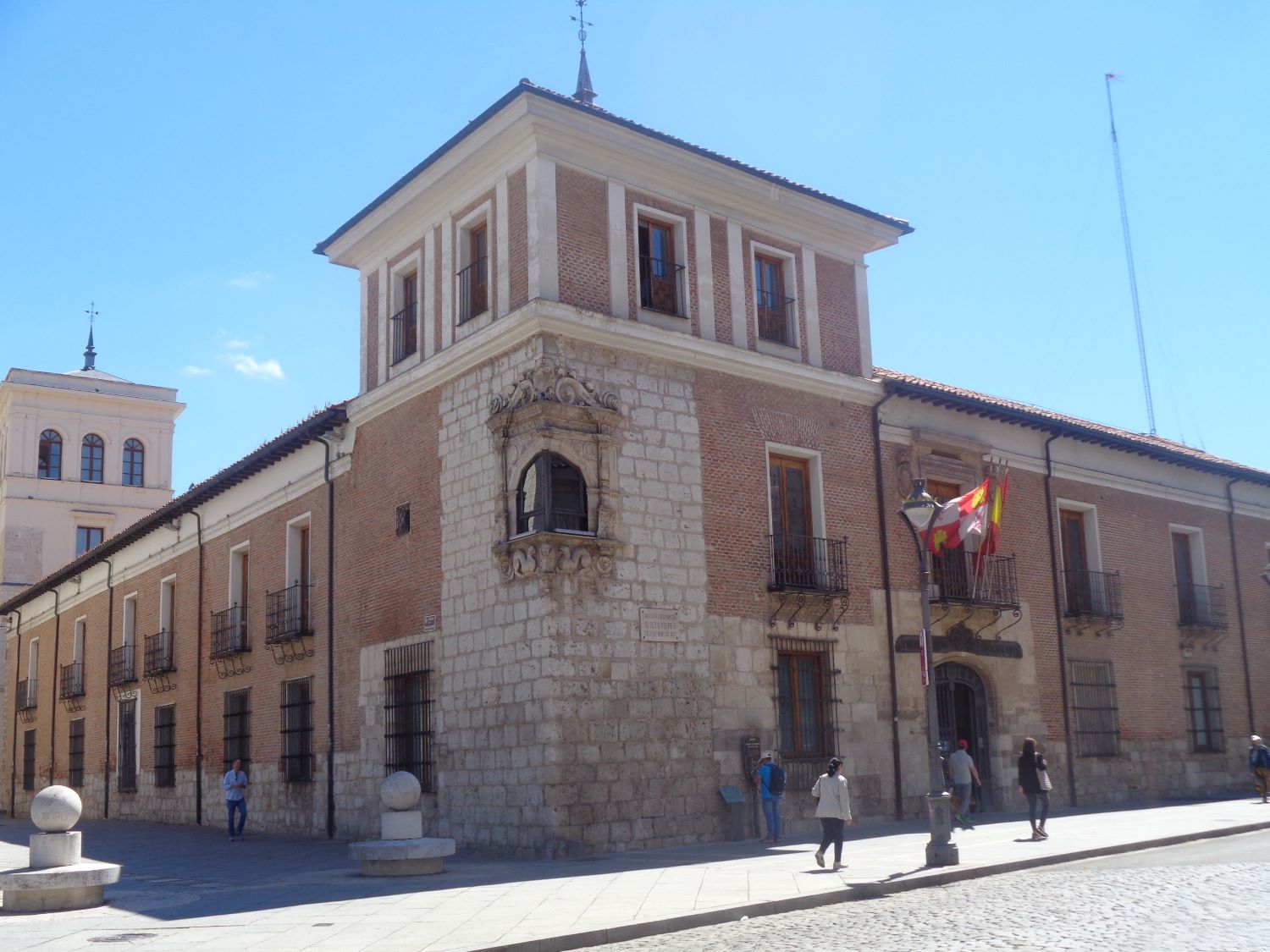
King Felipe II was born in Valladolid on May 21, 1527, speicifically at the Pimentel Palace, and had been baptized in the convent of San Pablo. The Palacio de Pimentel is a former Royal Palace, The palace in the Renaissance style was constructed in the 15C ncorporation earlier Structures. From 1985 to 1990 ,the palace was restored to served as local government offices including a public exhibition space, The palace is now closed awaiting renovation,
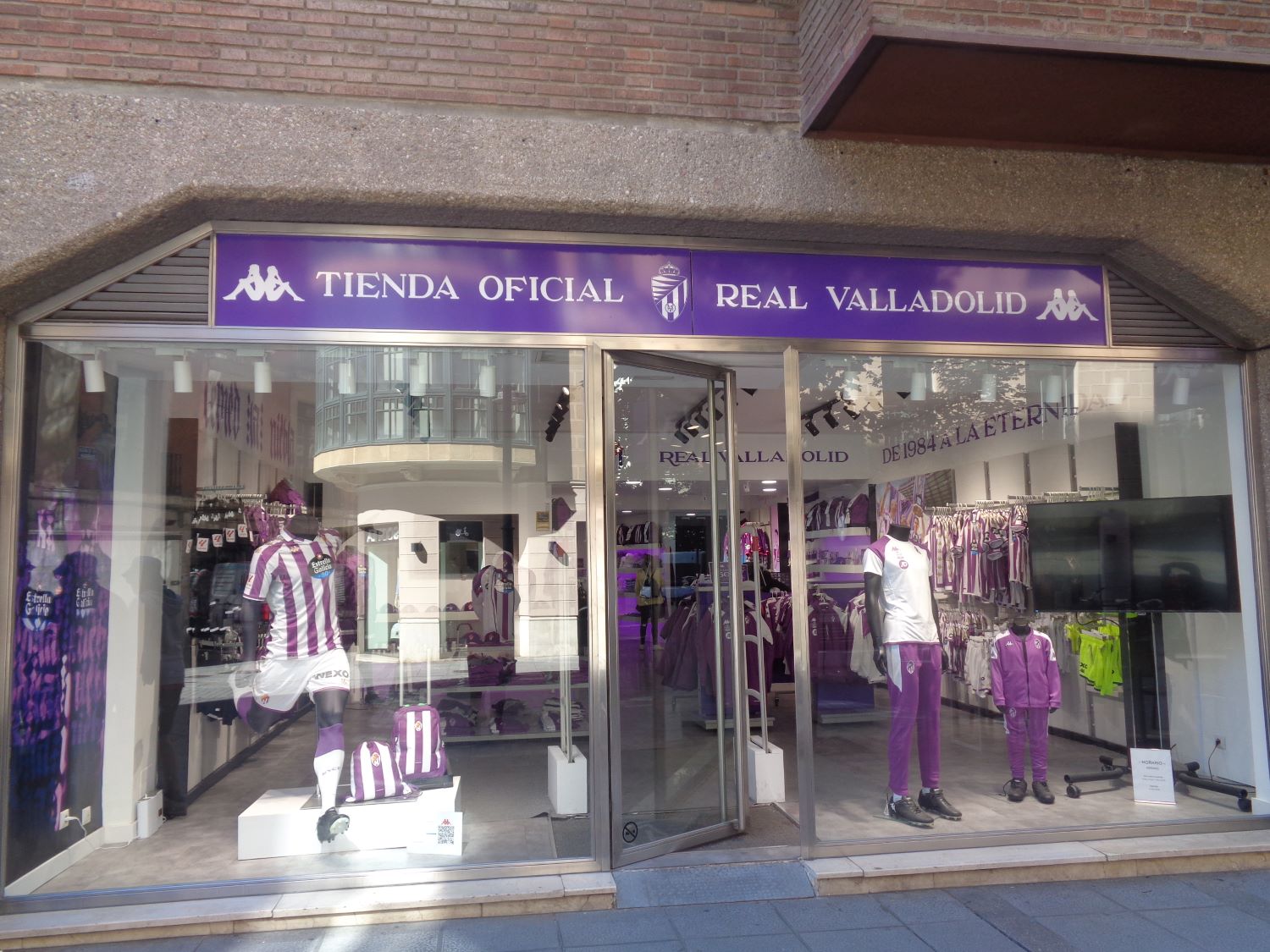
The Real Valladolid CF is a Spanish football club based in Valladolid ,The club was founded on June 20, 1928 by fusion of “Real Unión Deportiva de Valladolid” and “Club Deportivo Español”. The club reached the first division for the first time in 1948, being champion of Second Division. On September 3, 2018, former Brazilian player Ronaldo acquired 51% of the club’s shares and became its president. In April 2020, Ronaldo owned 82 % of the club’s actions,The club found the elite again by finishing in 2nd place in the 2023-2024 season, Next year we will see them in the Liga, Spanish first division ! The picture is their office store at Calle de los Heroes de Alcantara, 3,
And not forget the importance of Valladolid on the Spanish language o Castellano as evidence by its many exponents of the language who have been born lived in the City, For this reason, the City unveil a few years back the trail of the Castilian language or Camino de la lengua Castellana in the Plaza de la Universidad square, As said , the old and present cultural life is breathed in the city, latent in its historic university and in the works of many writers that this land has given, such as the author of the “Don Juan Tenorio”, José Zorrilla or Rosa Chacel, José Jiménez Lozano, Miguel Delibes, Jorge Guillén, Francisco Umbral,etc, Miguel de Cervantes himself lived in Valladolid in his most fertile years and left, among the pages of his works, many Valladolid corners, streets, squares, palaces and houses that we can still recognize today.

Maybe long but feel need to have in the posts on Valladolid, a bit of history I like!
During the Middle Ages hosted the Court of Castile being endowed with fairs and real jurisdiction and of different institutions such as Collegiate Church, raised to rank of Cathedral in 1595, University, Real Audience and Chancery ,and Casa de la Moneda. Carlos I made of Valladolid political capital and, later, between 1601 and 1606, it was the capital of the Spanish empire until this function definitely passed to Madrid., In Valladolid, established the workshops the greatest imagery and goldsmiths of the Hispanic rebirth. Juan II de Castilla grew up and died in Valladolid having reigned from this city that would say that it is “the most notable villa of these reigns and even outside them.” This king was buried in the church of San Pablo, until the final transfer of his remains to the Cartuja de Miraflores. In 1425 Enrique IV of Castilla was born in the former house of the Aldabas of Calle Teresa Gil. In 1453 Álvaro de Luna, an almighty valid one of Juan II, is judged, convicted and finally beheaded in public in the Plaza Mayor. On December 7, 1453, the Concord of Valladolid was signed in the city, putting peace between Juan de Navarra (future king of Aragon) and his son Carlos de Viana. On October 19, 1469 Isabel de Castilla and Fernando de Aragón (which would be Fernando II de Aragón) celebrated their secret marriage at the Palacio de los Vivero, then located of the Real Audencia y Chacilleria , and passed their honeymoon in the castle of Fuensaldaña. . Another navigator, Magallanes, signed in Valladolid the capitulations with King Carlos I of Spain, before starting his western route to the Indies, on March 22, 1518. San Juan de la Cruz and Santa Teresa de Jesús coincided in Valladolid when the religious came to found in 1568 the first convent of the reform of the Order of Carmen that they inhabited for a while. Fray Luis de León also, who had already passed years of childhood in Valladolid, was imprisoned in 1572 in the prisons of the Holy Office of the city, to deal with an inquisitorial process for questioning the traditional way of understanding theology . In 1601, at the request of King Felipe III of Spain, the Duke of Lerma moved again to Valladolid, but moved out again in 1606. During this time the future Felipe IV, and his sister, Ana of Austria, who would be queen of France and mother of Louis XIV. It should be noted that in this period arrived, in diplomatic mission, the artist Peter Paul Rubens and Miguel de Cervantes Saavedra published his first edition of Don Quijote, in 1604. They also resided in the city ,Quevedo and Gongoria, and the great artist of the Baroque Gregorio Fernández.
Valladolid was the city chosen to house the French troops upon arrival in Spain on May 31, 1808, There was, also a Valladolid’s May 2, when the people gathered in squares and streets on the shout of “Long live Fernando VII!”, demanding , in front of the City/Town Halls, the general enlistment, the delivery of weapons, the designation of a boss, and the proclamation of Fernando VII. As a consequence, the Battle of Cabezón was prepared, which occurred on July 12, 1808 with an absolute defeat and withdrawn in the army led by García de la Cuesta, gathered in very precarious conditions. The city was finally liberated by the army sent by Wellington, in July 1812, The coup d’etat with which the Spanish Civil War began, triumphed in Valladolid, being in the national zone, being one of the 12 centers of the military uprising. The assault guard revolted at 5h in the afternoon of July 18 and the rebel military on the night of July 18 to 19, 1936 were made with the control of the military forces after violently stopping their legitimate chief, General Molero. Valladolid became the first major peninsular city in which the uprising triumphed. With the important support of the phalangists and the Alfonsinos monarchists, they controlled in a short time the entire province, proceeding to organize a column that marched over Madrid through the ports of Guadarrama at Alto del Lion, and Navacerrada. The city also suffered bombings of republican aviation, being the sixth most bombed city of the conflict. The city would remain on the Nationalist side until the end of the war, in 1939. It retains in its old town a historical set composed of palaces, noble houses, churches, squares, avenues and parks, The first Alcazarejo was transformed into Alcázar Real, and Queen María de Molina, queen and regent of Castile, was built a palace and established its residence around 1300. In 1346, Pope Clemente VI granted the bull that allowed the pass of the private study of Valladolid, existing since the second half of the 13C, under general study or university.
The Valladolid tourist office: https://www.info.valladolid.es/en/home
The regional Castilla y Léon tourist office on Valladolid: https://www.turismocastillayleon.com/en/art-culture-heritage/provincial-capitals/valladolid
The city of Valladolid: https://www.valladolid.es/es/ciudad/cultura
There you go folks , another wonderful nostalgic, sentimental trip to my dear Spain, Valladolid is nice, awesome will say back after so many years it seems all for the first time, and love it ! We will be back, eventually, Very convenient on off the A62 A6 highways connecting to all of Castilla y Léon and Comunidad de Madrid regions, Again, hope you enjoy this post on curiosities of Valladolid, part III as I
And remember, happy travels, good health, and many cheers to all !!!

 Paris1972-Versailles2003