
I like to bring back this older post with nex text and links on one of my favorite cities of my Spain. I have written several posts on the City, do see them, There are many things to see in Segovia, not just the major tourist attractions that are also major monuments in the history of our Spain. However,there are museums too and very good ones indeed. One museum in particular is the one I like to tell you in this post.Therefore, let me tell you about the Museo de Segovia !!! Hope you enjoy the post as I.
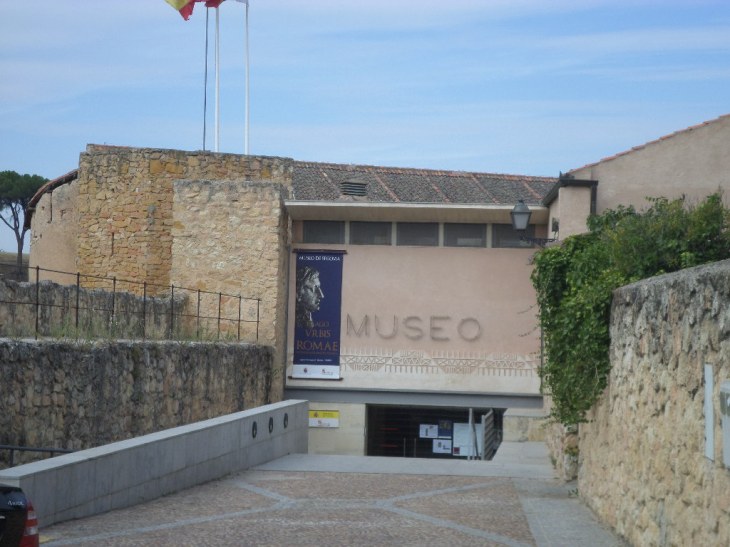
The Museo de Segovia museum in the Casa del Sol is a cultural institution of the Spanish State managed by the Autonomous community of Castilla y León, which guards the arts of the province of Segovia. Throughout its history it has had several denominations , Museum of Paintings, Museum of Fine Arts or Provincial Museum, as well as various headquarters from the initial in the episcopal palace in 1842, passing through the Church of San Facundo 1845 and the House del Hidalgo 1967 , until settling in the Casa del Sol or sun house dating from 1454- 1474 times. The building, nestled in a ram in the western section of the medieval wall, is a reform of the old slaughterhouse, Offering great views over Segovia and the Cathedral from the museum !!!
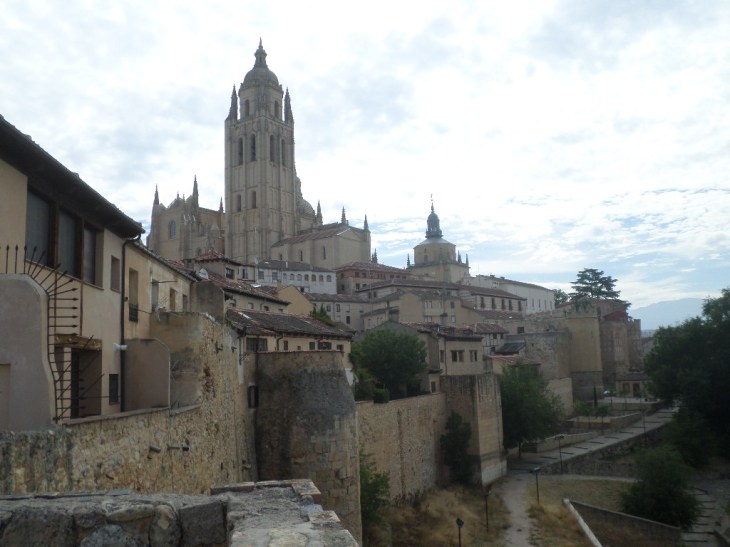
The Casa del Sol museum made between 1986 and 2006 is made up of some 1,500 pieces with archaeological, ethnological and fine art backgrounds from the Segovian region. The archaeological pieces range from the Paleolithic, through Celtiberian, Roman, Visigoth, Islamic, to the Christian era. The collection of sculptures, paintings and decorative arts come from the Spanish confiscation of the 19C. The permanent exhibition is organized in 7 rooms on 4 floors.
They are as on the ground floor: Room A. “Segovia in time. The roots of History” (Geology, Geochronology, Geography and Landscape). Room B. “From the First Villagers to the Altomedieval World” (Prehistory, Ancient History and Visigothic Period). Room C. La Piedra Labrada (Ancient, medieval Lapidary and Barral collection, in the courtyard). Upstairs: Room D. “The Low Middle Ages. Church, Nobility and Pueblo Llano”. (From Islam to the 16C: Romanesque, Gothic and Mudejar. Painting. The Lord and the War. Castles and Alcázares. Departure to the Adarve. The Grinding and its Measures. Grazing, Mesta and Transhumance Wool and Dresses (Batanes, looms and Knitting Machines).
Mezzanine I: Room E. “Renaissance and Baroque. The Austrias”. La Estampa.Arquitectura: the New Cathedral. Painting. Hydraulic Energy and its Technique: Numismatics in Segovia. Navafría Copper Martinete. Mezzanine II: Room F. Sculpture of the 15-16C. Room G. “The Bourbons and the Enlightenment. The 20C”. The constructions of the Bourbon Segovia. The Royal Factories: La Granja, El Aserrío de Valsaín and the Cloths of Laureano Ortiz de Paz. Popular pottery (highlighting the Fernando Arranz collection). Traditional clothing Contemporary painting and sculpture.
The Segovia tourist office on the museum : https://www.turismodesegovia.com/es/museos/museo-de-segovia
The Castilla y Léon region tourist office on the museum : https://museoscastillayleon.jcyl.es/web/es/museosegovia/museo-segovia.html
There you go folks, there is arts in Segovia and very good ones indeed. Again,hope you enjoy the Museo de Segovia as I. And remember, happy travel, good health, and many cheers to all !!!

 Paris1972-Versailles2003
I consider Segovia to be one of my favourites.
LikeLiked by 1 person
Me too! thanks for stopping by Cheers
LikeLike