
Looking at my posts on Madrid, and plenty of them lately, found me an older picture should be in my blog, The memories of always are always worth the relive after to remember is to live again ! This is an area overlook by visitors but worth the detour me think after all is part of the Prado Museum ! Let me tell you a bit more on the Cason del Buen Retiro of Madrid !!! Hope you enjoy the post as I.
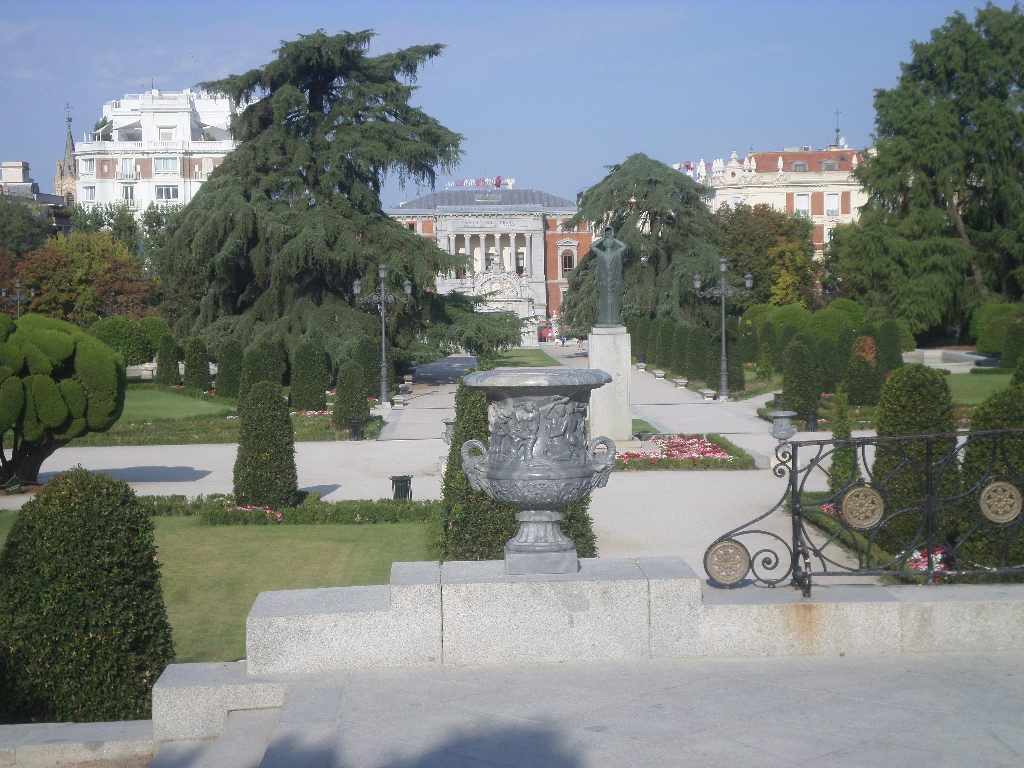
From the estanque or pond of Retiro park walk towards the Fuente de la Alcachofa fountain in plaza de Honduras, Turn right into the Paseo de Paraguay and continue past the Monumento to Jacinto Benavente ,and, into the Parterre passing on the side of the garden continue towards the Puerta de Felipe IV (aka Mariana de Neoburgo) the oldest gate in Madrid today done in 1680 ,You go out by this gate into the Calle de Alfonso XII cross the street and you are at the Cason del Buen Retiro back side,
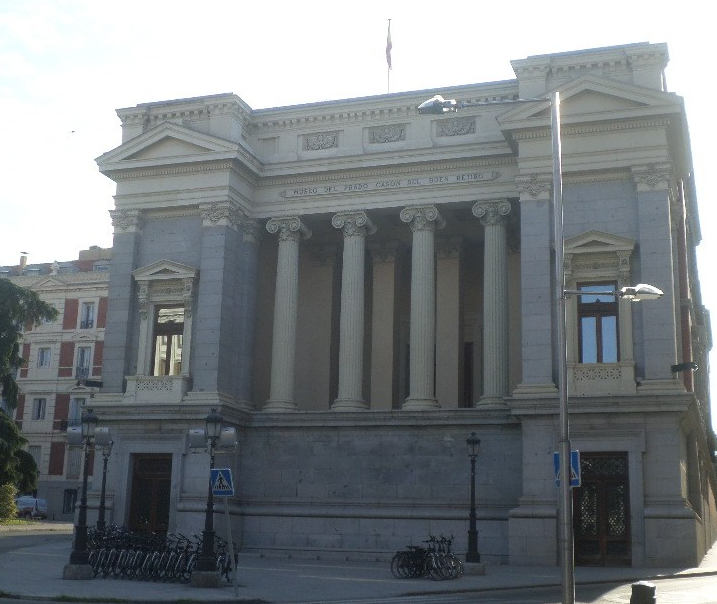
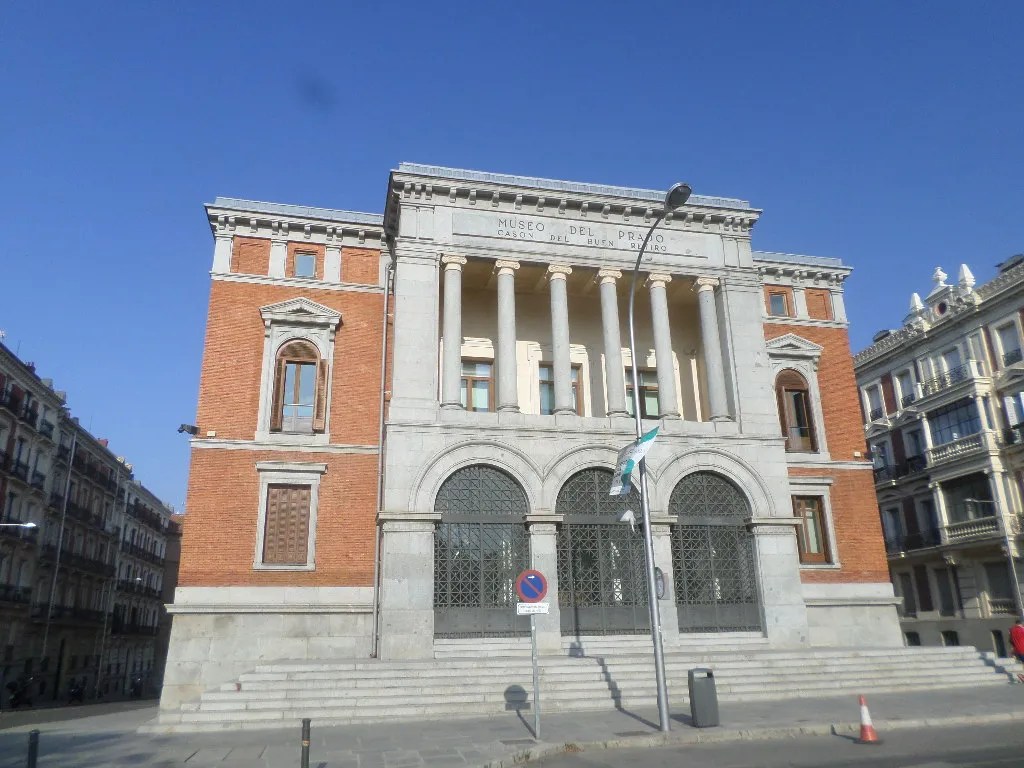
The Casón del Buen Retiro is one of only two buildings that survive the destruction of the Buen Retiro Palace, from which it takes its name. Built in 1637, it is initially thought of as a dance hall of the Court of Felipe IV. This was part of the Retiro park then. The Casón del Buen Retiro was use to house the Center of Studies of the Museum called ,the School of the Prado, It is dedicated to the study of works of art and the training of expert in art. This is where the documentation, archive, library and conservation departments of the Prado Museum are located. Subsequently, the large central room with its vault painted by Luca Giordano was used as the large reading room of the Prado library. The Center had books on painting, drawing and iconography, sculpture and the decorative arts, covering a period from the Middle Ages to the 19C. Apart the catalogs of exhibitions; there is also a large old collection, made up largely of acquisitions from the Cervella and Madrazo libraries. In total there are nearly 60,000 volumes and 700 journal titles. From 1971, it depends on the Prado Museum and has more than 3,000 paintings, including Picasso’s Guernica before it was transferred to the Reina Sofía museum in 1992. After years of work, the building is transformed into center of studies in 2009, while collections of paintings of the 19C are relocated to the main Prado museum after its enlargement.
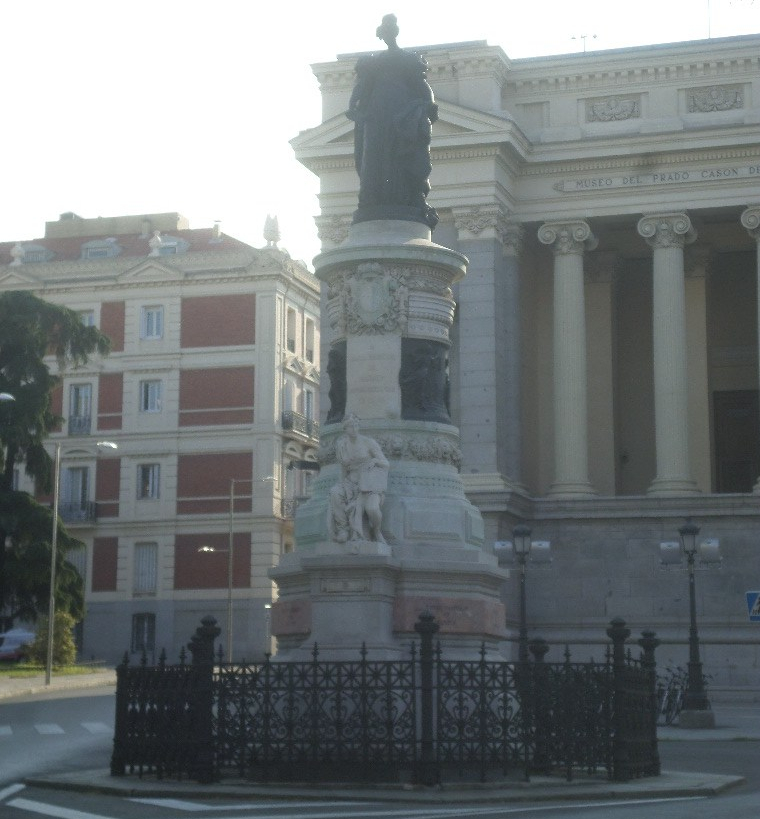
The Casón del Buen Retiro received in 1981 the Picasso legacy, of which most important work was Guernica. Along with him, other significant legacies were exhibited, such as that of Arthur Doug Cooper or Piler Juncosa, widow of Joan Miró. They were then moved to the Reina Sofia Museum (see post). Under the auspices of public art collections, the artists who were born after Picasso would go to Reina Sofia museum, and those born before they would stay in the Prado. The final use of the building is to host the Center of Studies of the Museum called the Prado school, following the model of the School of the Louvre. It devotes itself to the study of works of art and to the training of art expert. This is where the documentation, archive, library and conservation departments of the Prado Museum are located. It owns books on painting, drawing and iconography, sculpture and the decorative arts, from the Middle Ages to the 19C. There are exhibition catalogs; also a large old fund, largely made up of acquisitions of the Cervella and Madrazo libraries. The main benefactor of the Cason del Buen Retiro has a statue in front, Spanish queen Maria Cristina de Borbon de Dos Sicilias!
A bit of history I like tell us that originally it was not an independent building, but an intersection or segment in a significant succession of buildings. The other surviving building of the Buen Retiro palace is the Salon de Reinos (see post) or hall of realms, which for decades was the headquarters of the Army Museum, until its move to the
Prado Museum. The painter Luca Giordano participated in the decoration of the Casón. He painted Allegory to the Golden Fleece on the vault of the building. It is practically the only original element that remains, although in reality this panel was largely restored by two painters of the 19C. It was added two new facades,in neoclassical style. The building was operated as a royal cabinet for topographic studies as early as 1831. Previously, it was the seat of the royal cabinet of machines. During the 20C,the Casón or hut, so called because of its sorry appearance then was used for different purposes. In 1971 it was ceded to the Prado Museum to house the collection of paintings of the 19C. These paintings had belonged to the Spanish Museum of Modern Art, created in 1894. it was decided in 1971 to return the paintings of the 19C to the Prado and to leave the remaining ones of the 20C in a new building built at the university campus: the Spanish Museum of Contemporary Art (MEAC) which was transformed in 1988 into the
National Museum of Reina Sofia and moved in 1992 to its current site
The area immediately surrounding the Salón de Reinos was redeveloped, and a maintenance and facilities tunnel was built underground between the south wall of the Salón de Reinos and the north wall of the Casón del Buen Retiro, as well as the north staircase, and the staircase and south ramp providing access to the refurbished building.
The official Prado museum on the Cason del Buen Retiro : https://www.museodelprado.es/en/museum/studies-center
The Madrid tourist office on the Cason del Buen Retiro : https://www.esmadrid.com/en/tourist-information/cason-del-buen-retiro
The Comunidad de Madrid region tourist office on the Prado Museum : https://www.visitmadrid.es/en/things-to-do-in-madrid/what-to-do/culture-in-madrid-art-history-and-traditions/museums/art-0
There you go folks, a wonderful building you should seek out when in Madrid and time away from the main Prado museum , if possible ! This is wonderful Madrid in the golden triangle of museums, Again, hope you enjoy this post on the Cason del Buen Retiro of Madrid !!! as I
And remember, happy travels, good health, and many cheers to all !!!


