
Again, updating this older post on one of the big must see while in Madrid even if for most it stays in the off the beaten path routine. I have passed by a thousand times over the years, and always got to the library not the museum. Finally, went in and it was a find love it !! Bringing my boys to teach them the ropes of my dear Madrid and these wonderful monuments to mankind is awesome, I like to tell you as briefly as possible on the Museo Archéologico Nacional or the National Archelological Museum of Madrid !!! Hope you enjoy the post as I.
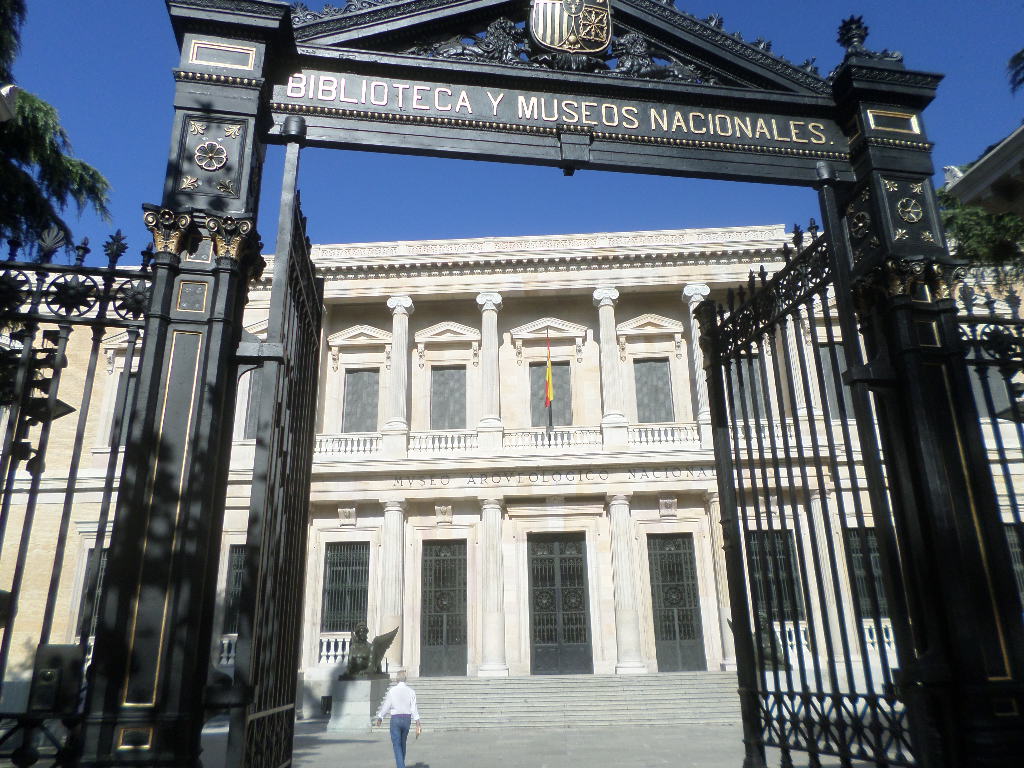
The National Archaeological Museum based in the National Library and Museums Palace , a 19C building, which it shares with the National Library and is located on Calle Serrano , next to the Plaza de Colón. It is the main Spanish museum dedicated to archeology. It’s collection is based on pieces from the Iberian Peninsula, from Prehistory to the Modern Age. However, it also has different collections from outside Spain, especially from Ancient Greece, both from the metropolitan and, above all, from Magna Greece, and, to a lesser extent, from Ancient Egypt, in addition to a small number of parts from the Middle East.
The project of a National Archaeological Museum was set up in 1862. In that year it was decided to build a building, the National Library and National Palace at the end of the Paseo de Recoletos, which would serve as the headquarters of the National Library, the National Museum of Painting and Sculpture (better known as the Trinity Museum) and the National Archaeological Museum.The Museo Archéologico Nacional de Madrid or National Archaeological Museum of Madrid was founded in 1867 by decree of Queen Isabel II(Elizabeth), the museum presents a route that goes from the caves of Altamira, of which there is a reproduction, through the Iberians and Egyptians, reaching the Renaissance and touching above decorative arts until the 19C. We find works of art from practically all the cultures that have inhabited in Spain. It is one of the largest archaeological collections of humanity! Between 2008 and 2014, the museum is entirely renovated which made it gain in importance. Some of the most important objects exhibited in the museum are the Lady of Elche, the Moorish Well Monument, the Statue of Livia, the Lady of Baza, the Six Crowns from the Incredible Treasure of Guarrazar, the Stele of Nebsumenu and the Statue of Harsomtus-Em-Hat.
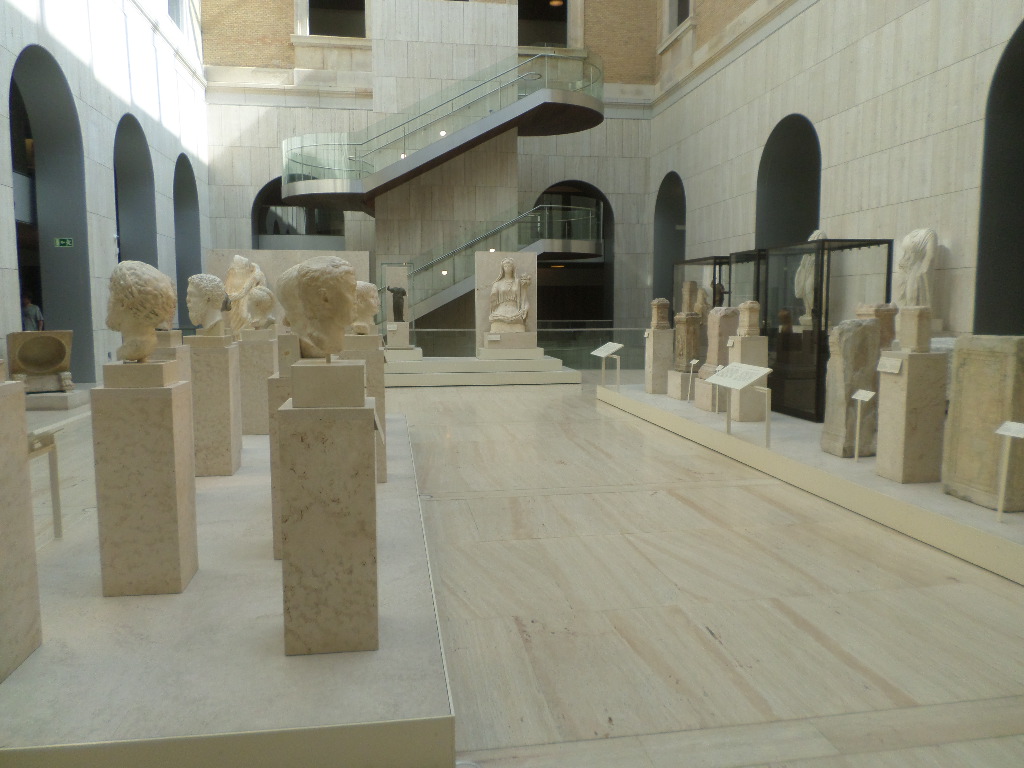
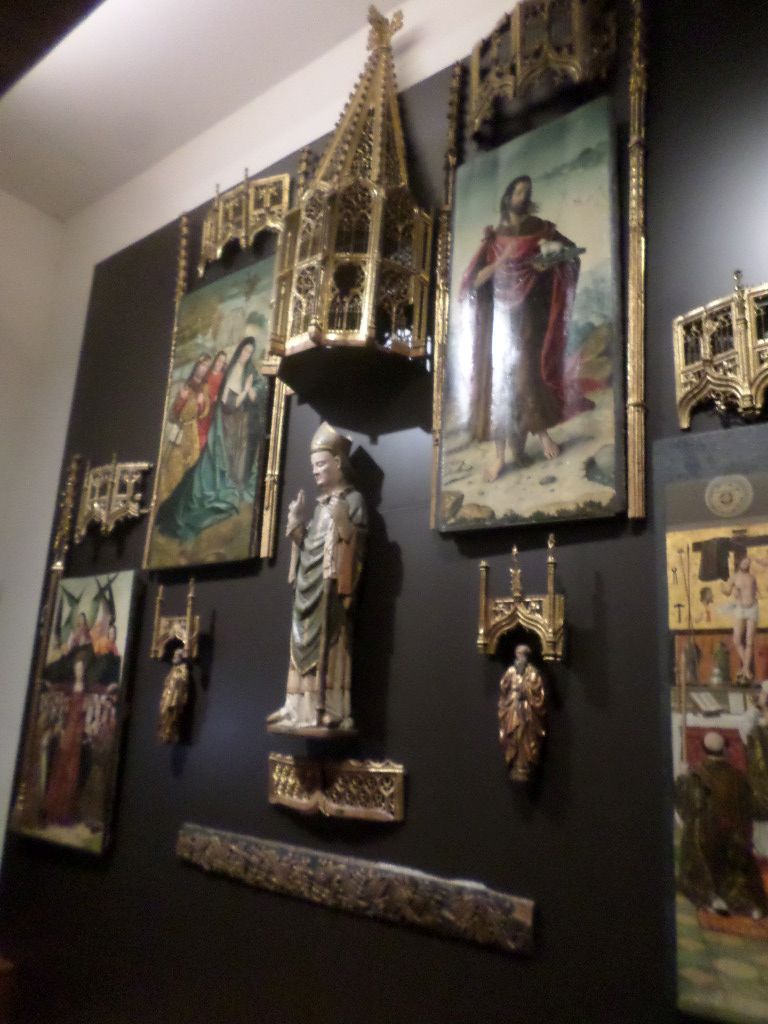
Inside the museum you will find the permanent exhibition distributed in 40 rooms that includes more than 13,000 archaeological, historical and artistic objects, most of them found in the Iberian Peninsula over the years. You will also find exhibited collections dedicated exclusively to Prehistory, Protohistory, Rome, Late Antiquity, the Medieval World, the Modern Age, Egypt, Greece, the Near East and Coinage. All the pieces are complemented by information panels, videos, interactive screens, models and in some rooms you can have a virtual reality experience. The order established in the tour of the National Archaeological Museum is chronological. It employs a sequential expository discourse that begins at the beginning of humanity and covers until the 19C, coinciding with the time of the museum’s creation. The exhibition is structured in three main spaces that host different content: ‘Archaeology and heritage’, which includes basic concepts; ‘Spain, place of cultural encounters’; and ‘From cabinet to museum’, which talks about the institution and the collections of Mediterranean cultures.
Its founding collections came mainly from the Royal Cabinet of Natural History (predecessor of the current National Museum of Natural Sciences), to which the funds of the Museum of Medals and Antiquities of the National Library were added, integrated by around 100 000 coins, medals and notches, as well as for a thousand archeological and artistic objects, those of the Higher School of Diplomats, and those of the Royal Academy of History. On July 9, 1871, the inauguration took place at the hands of King Amadeo I, and at the time it had four sections such as 1st floor- Primitive times, with 2703 objects. 2nd floor – Middle Ages, with 3033 objects. 3rd floor – Numismatics, with 103 096 gold, silver, bronze and lead coins. 4th floor – Ethnography, with 3500 objects from Asia, Africa, America and Oceania. During the Spanish Civil War (1936-39) the pieces of showcases, pedestals and rooms were removed and, stored in drawers stacked inside a scaffolding, they were stored in a room, leaving only copies of pieces exposed on the walls. Once the contest was over, the post-war period in the Museum lasted until 1951 and was characterized by provisional displays.
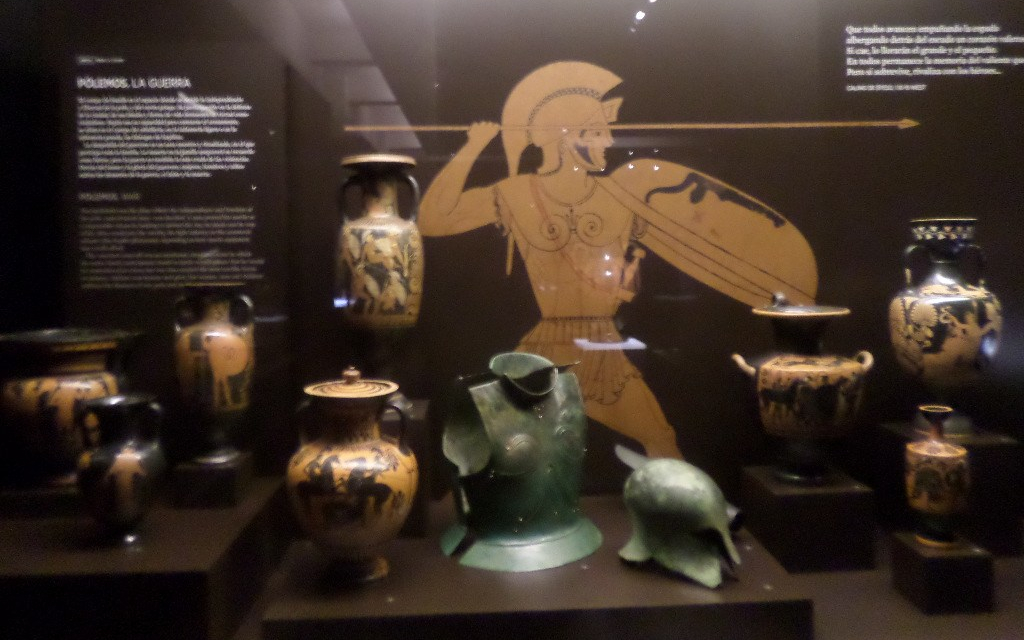
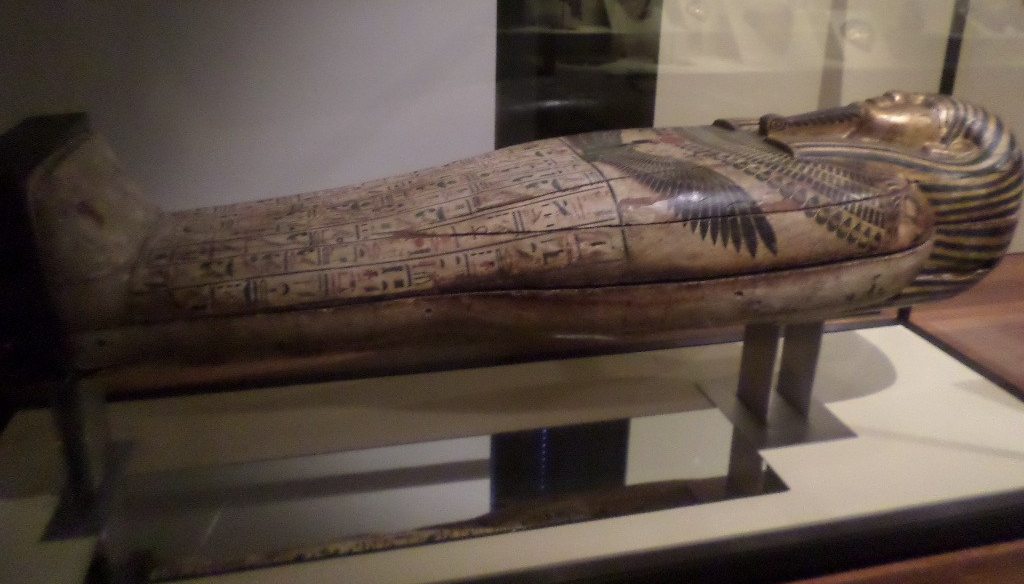
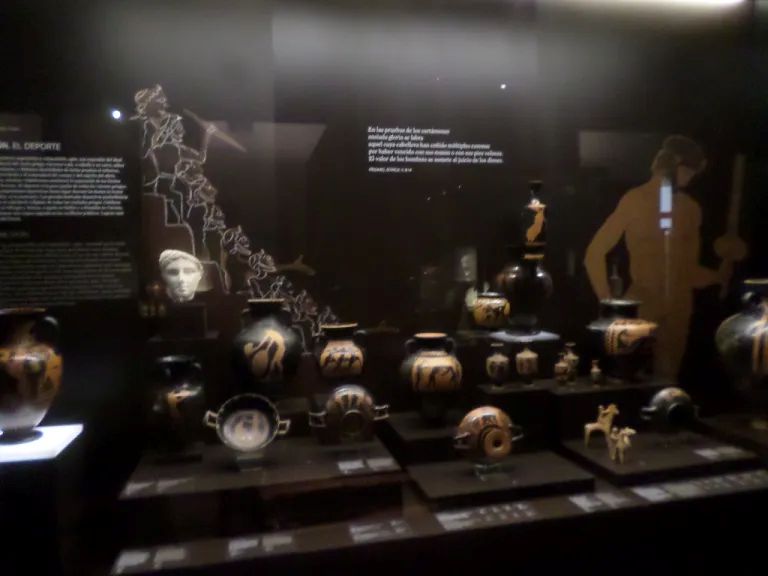
After this rearrangement the museum reopening its doors on April 1, 2014. The works involved an increase in the useful area, which went from 19 280 to 23 303 square meters, and the space dedicated to exhibition, from 7300 square meters to 9715 distributed in 40 rooms, despite which the number of pieces exhibited in the new installation has not only not increased but has been reduced to 15,500 (although several of them form assemblies, so it can be said that 13,000 units are shown exhibition), compared to 18,000 that were previously exhibited. Likewise, new museum formats were incorporated, such as audiovisual media. The museum now has 40 rooms after its remodeling. It’s collections are exhibited in 12 exhibition modules, these are: Archeology and heritage; Prehistory; Proto-history; Roman Hispania; Late antiquity; Middle Ages; Modern age; History of the museum; Middle East; Egypt and Nubia; Greece and Currency. The highlighs are the reproduction of the ceiling of the polychrome of the cave of Altamira (Santillana del Mar, Cantabria), in an underground room located under the outdoor garden. It also has one of the most outstanding collections of numismatics at European level, with 300 000 coins. Among the non-Spanish collections stands out that of Greek vases, mainly painted scenes vases, one of the best in Europe. Although it had since its inception some pieces from the Royal Collection, received through the Museum of Medals and Antiquities of the National Library, and the Royal Cabinet of Natural History, through its successor, the National Museum of Natural Sciences, the great impulse was the purchase in 1874 of the collection of archeology of the Marquis of Salamanca, the most important 19C Spanish private collection in its field, which included 944 of them. Another milestone was the purchase in 1999 of the Várez Fisa collection of archeology. Of the 181 works, more than a hundred were Greek vases, first level and in fact superior in quality to much of the pre-existing collections in the museum.

A bit on the architecture I like: The 1865 project proposes a rectangular, three-story building, geometric and symmetrical with respect to the central axis of Paseo de Recoletos to Calle Serrano, with a cross inside and superposition of orders. It has four bays, with four pavilions in the corners. On the facade of Recoletos an octa-portico advances where a staircase that ascends from the garden ends, while on the Calle Serrano facade the wall is interrupted with seven spans between columns, before which appears an access staircase. The arms of the cross and the bays leave room for four courtyards and in the center of the floor a large octagonal space. As for the roofs, they are gabled, and on the central body a 30-meter dome. In the second project the building expands and acquires its current dimensions Surrounding the entire complex stands an iron fence 700 meters long, with three gates, two on the facade of Paseo de Recoletos and one on Calle Serrano. The Paseo de Recoletos façade presents an order of Corinthian columns, with a pediment as an auction; on the other hand, the Calle Serrano facade has Tuscan capitals on the first floor and with Ionic on the superimposed colonnade. The center of the facades gathered an outstanding set of statues and reliefs depicting illustrious characters of letters and symbolic arts and representations.
The MAN museum is a nice museum and with elevators/lifts to take you to the different rooms as well. There is staff available in all the rooms where you can ask for additional information on the pieces. The display is modernistic fantastic we love it !! You can reach the National Archeological Museum of Madrid at Calle Serrano 13 with metro station Serrano (líne 4) and Colón (líne 2), The bus lines stopping just in front are no, 1, 9, 19, 51 and 74, Also, I have used the car park at Plaza de Colón by the Jardines del Descubrimiento.
The official Madrid tourist office on the MAN museum : https://www.esmadrid.com/en/tourist-information/museo-arqueologico-nacional
The official MAN museo de Archeologia Nacional : http://www.man.es/man/en/home
The official virtual visit of MAN to visualise from home : https://manvirtual.es/#/intro
There you go folks, you have it all,now its time to come in and visit it, all worth it, I am telling you. Again, hope you enjoy the National Archeological Museum of Madrid !!! as I.
And remember, happy travels, good health, and many cheers to all !!!


