
Looking at my vault, found some older pictures on paper and took my electronic camera to take picture of the pictures and use them in my blog. This allows me to show in my blog places not shown or pics with new angles of places shown in the blog. Nostalgia sets in and here I go on the curiosities of Havana, part I !!! Hope you enjoy the post as I.
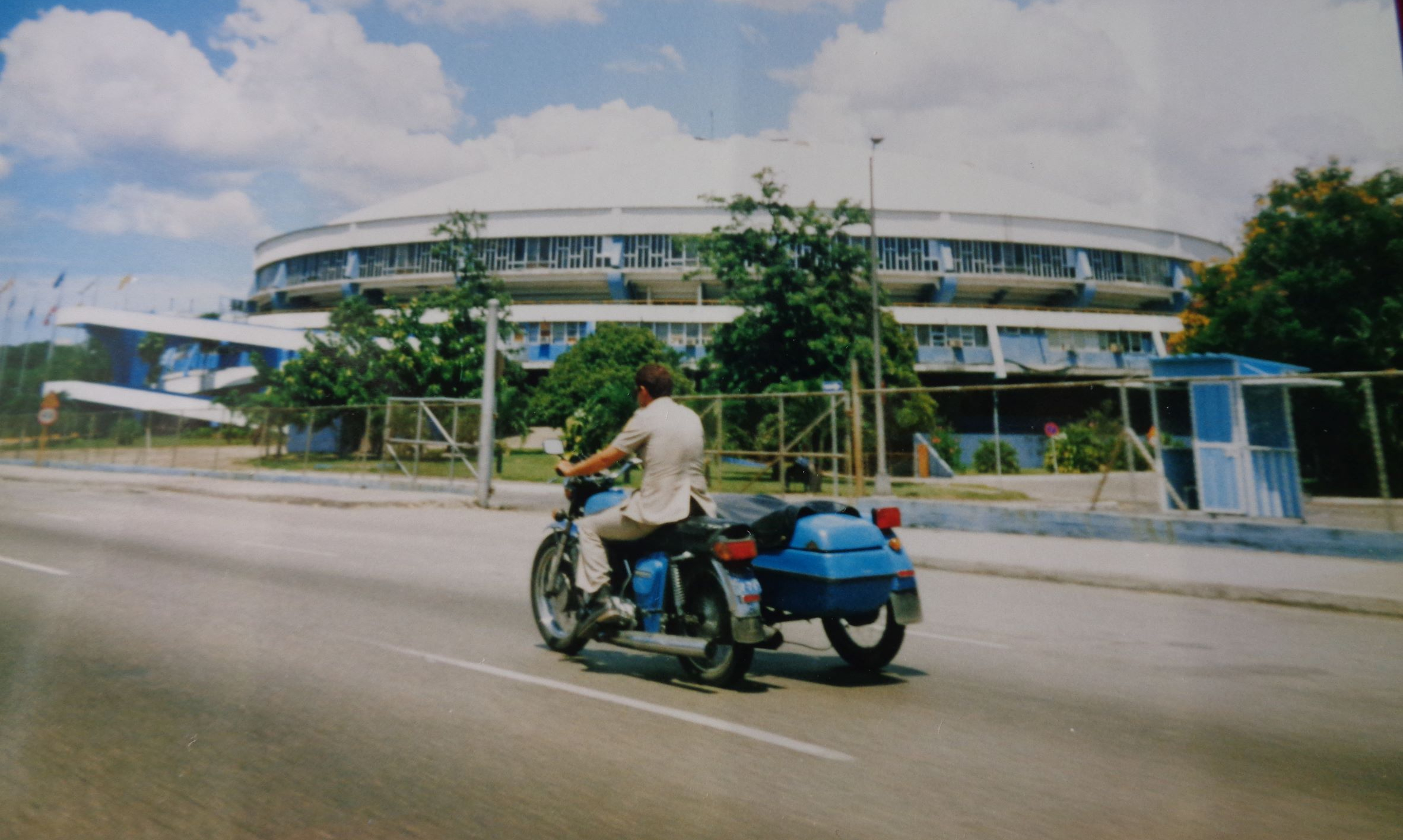
The Coliseo de la Ciudad Deportiva is an indoor sporting arena located in Havana. Built in 1957, the Sports City Coliseum is one of the most important works of Cuban Civil Engineering. The capacity of the arena is for 15,000 spectators , and its construction began on November 1952. It is a 20,000 m² circular concrete building with an outside diameter of 103.2 meters and is located at the confluence of the Vía Blanca and Avenida de Rancho Boyeros roads (the latter takes you to the airport) . Did went once as a boy here for a volleyball game I believe…
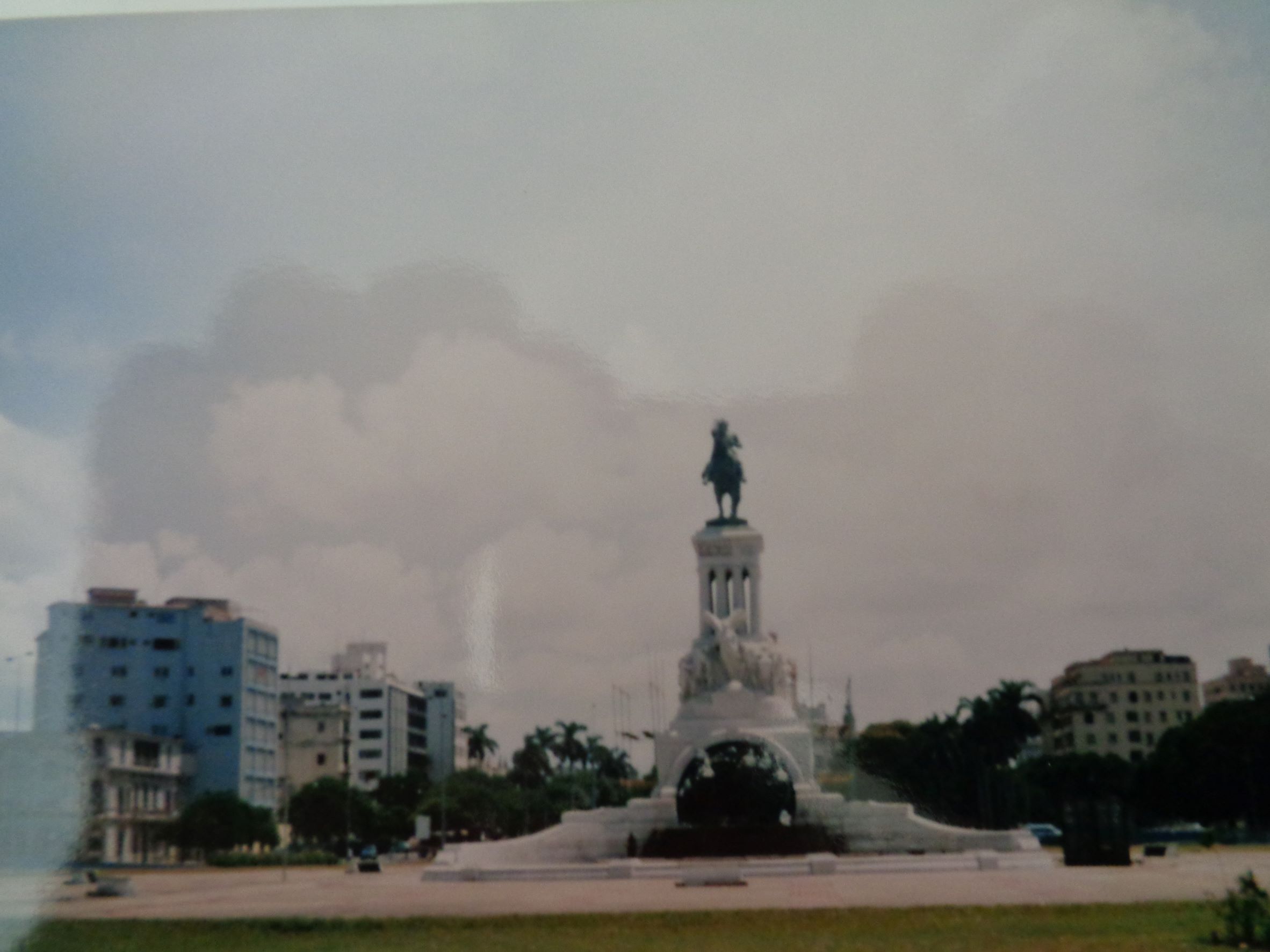
The Monument to Antonio Maceo in Havana is located between El Malecón and the Hermanos Ameijeiras Hospital ,put here in 1916. In front of the Hermanos Ameijeiras Hospital, at 701 Calle San Lázaro . It is a bronze representation of the heroe of the First War of Independence (known as the war of 1868) , one of the most important Cuban general, known as the Bronze Titan and buried outside my native town of Punta Brava. It sits in an important neighborhood of San Lázaro with importantas things to see such as Caleta de San Lázaro, Calle Belascoáin,(one of my family’s favorite), Calle San Lázaro, Torreón de San Lázaro, Hospital San Lázaro (today Hermanos Ameijeiras Hospital. ) On March 3, 1901, the Basques Jai Alai frontón was built, but today in ruins as much there now . The Cuban Grand Prix was a sports car motor race was run here until 1959. Arrested at the age of 16, José Martí (Cuba’s independence heroe) was sentenced to six years of imprisonment of hard labor in the San Lazaro Quarry in the western part of the neighborhood, where he was sent to cut coral rock. It is now a memorial called Fragua Martiana . The Santa Clara Battery was built on top of a hill that was home to one of the most historic caves on the island. The hill of Taganana, located in the coastal outcrop of Punta Brava (also in Tenerife and name of my native town) near the cove of San Lázaro took its name from a cavern in the Canary Islands where the princess Guanche Cathaysa took refuge. She was captured and sold by the Spaniards as a slave in 1494. The Spaniards finally took over the island of Tenerife in 1496 from last Guanche king Bencomo!
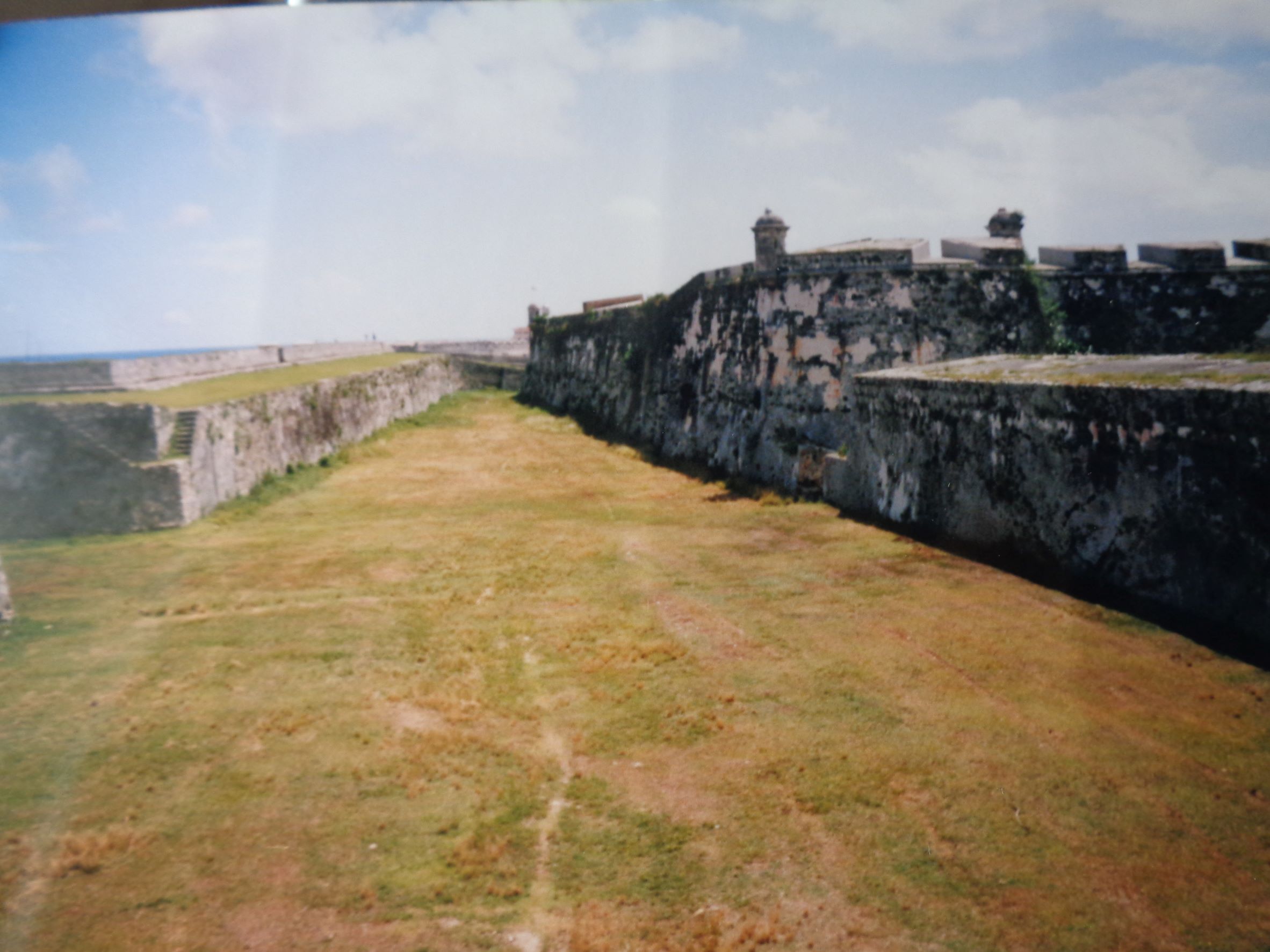
The Morro Castle or Castillo de los Tres Reyes del Morro named after the three biblical Magi, is a fortress guarding the entrance to the Havana harbor. Originally under the control of Spain, the fortress was captured by the British in 1762, returned to Spain under the Treaty of Paris of 1763. Although the castle is an irregular polygon, the stonecutting works on its walls are very attractive. The castle houses a beautiful lighthouse, an exhibition on the lighthouses of Cuba, a small underwater archaeology exhibition, a 20-meter-deep (66 feet) moat, central barracks, old cannons, guns and batteries, dungeons, a church, the office of the current harbormaster, wells, and very old bathrooms. A cannon is fired at 21h (9pm) nightly, the “El Cañonazo de las 9” is a leftover custom kept from colonial times signaling the closure of the city gates and port.
There you go folks, a walk of nostalgia from my very earlier trips to Cuba. The wonders of a great combination of Europe and the Americas that still rings a bell to my ears on each stretch of meter I take on this world. Again, hope you enjoy the post on curiosities of Havana, part I !!! as I.
And remember, happy travels, good health, and many cheers to all !!!


