
And so happy to tell you a bit about Valladolid, a beautiful city full of architecture and history I like. Finally have some paper pictures combine with newer ones from my cd rom vault to show in my blog for you and me. I am thrill to visit this city and will be back,eventually. Therefore, here is my take on curiosities of Valladolid, part I !!! Hope you enjoy the post as I.
Valladolid is the capital of the province of Valladolid and of the autonomous community of Castilla y León, and in my kingdom of Spain. It is located at the confluence of the Pisuerga and the Esgueva rivers. In the absence of reliable sources, the origin of the city’s name is not clearly established.
The Acera de Recoletos (sidewalk) is one of the main streets of Valladolid although in the official record of the City is shown as a street, it is, in fact, a promenade or walk with a wide and unique sidewalk and its corresponding streets that begins in the Plaza de Zorrilla, ends in the Plaza de Colon and is delimited, along all its route through the Campo Grande.(see post), The idea or need to urbanize this space arose at the end of the 19C, when the city’s widening was carried out. It is then that this area became the main artery of Valladolid. The new route at the beginning took the name of the missing convent of Agustinos Recoletos, calling “Paseo de Recoletos”, After the first royal visit of Alfonso XIII to the city, in 1903, its name was changed to the “Avenida de Alfonso XIII”. Shortly after the proclamation of the Second Republic, on April 23, 1931, it was called that of “Avenida de la República”. On August 12, 1936, it was return to the Acera de Recoletos, although it was something ephemeral, since again it was changed the title on October 28, 1936 for that of “Avenida del General Franco”, until definitely after the arrival of democracy it recovered his initial name that it had popularly maintained and is currently maintained as Acera de Recoletos. It begins with the Casa de Mantilla house built at the end of the 19C, and the Casa del Príncipe located at number 11 ,corner between the Acera de Recoletos and Calle de Colmenares. It was built in 1906 ,and is characterized by a certain French influence and presents the construction facade to both streets. The most striking is the tower located in the corner topped with a dome. The Casa Resines house, in numbers 8 and 9, the facade is eclectic style, mixing the Renaissance style with the Chicago School and French Beaux-Arts School. The Valladolid tourist office on the Acera de Recoletos : https://www.info.valladolid.es/en/detalle-plazas-parques-y-jardines/-/asset_publisher/bHBF1Ml2QODu/content/lugares-parques-jardines-y-plazas-acera-de-recoletos
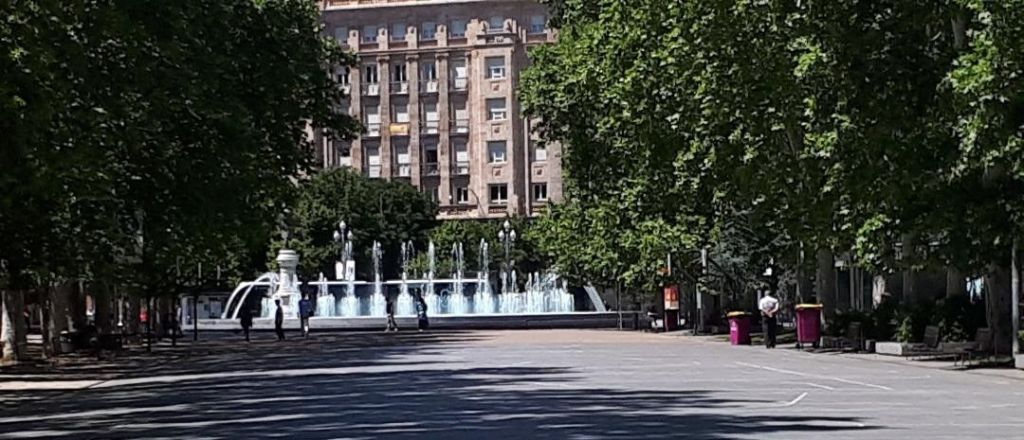
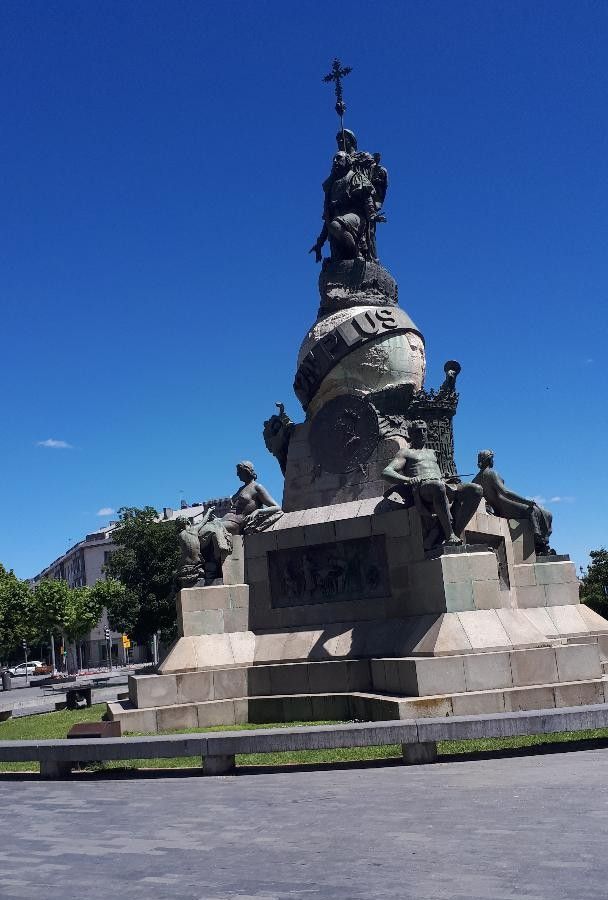
The Plaza de Colón is located at one ends of the Acera de Recoletos, in which the Paseo de Filipino, the Campo Grande, calle de la Estacion and calle Gamazo coincide. The origin of the square is in the confiscative processes of the first half of the 19C that decreed the suppression of the male convents. The current Plaza de Colón was located in part in the field on which the convent of San José de los Padres Capuchinos was built. In the center of this square the monument to the discovery of America was installed, better known as a Monument to Colon made in 1892 and that was initially destined to the Parque Central of Havana, Cuba, The inauguration of the monument took place in 1905. The monument has a pyramid structure and is divided into two heights. In the lower stone socket there are four bronze reliefs that show different episodes of the discoverer’s life: the exhibition of the Columbus project in La Rábida, the exit of Palos de la Frontera, the arrival in America and the real reception of Columbus in Barcelona after his first trip. In the upper angles there are four figures of great proportions that symbolize: the study, nautical, value and history. In the upper part there is a globe with the legend Non Plus Ultra, broken by the bundle of a crowned lion in which the eagle of San Juan appears holding the shield of Spain and two medallions, one of them with the faces of the Catholics kings, In the upper part of the set appears Columbus, semi -roded in the bow of a small boat and, behind him an allegory of faith, represented in the form of a woman carrying a cross and a chalice. The Valladolid tourist office on the Plaza de Colon: https://www.info.valladolid.es/en/detalle-plazas-parques-y-jardines/-/asset_publisher/bHBF1Ml2QODu/content/lugares-parques-jardines-y-plazas-plaza-de-colon
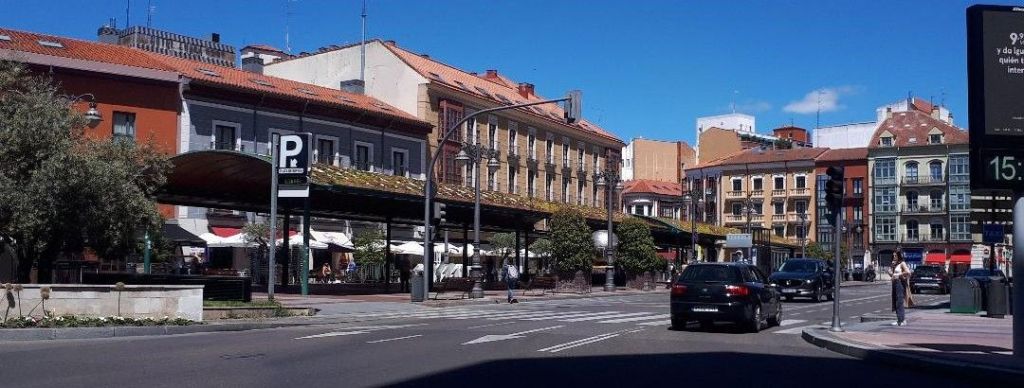
The Plaza de España is one of the most emblematic of the city, it is linked to the Plaza Mayor through the Calle del Duke of La Victoria, to the Plaza de Zorrilla through Calle Miguel íscar and to the Plaza de Madrid through from Calle Gamazo. In the Plaza de España there is also the Church of La Paz. It is one of the most modern churches in the city and has a facade that draws a lot of attention because it has the form of a huge rainbow and it is only known that it is a place of religious worship, In the center of the square is the fountain of children, popularly known as the Fuente de la bola del mundo or fountain of the world’s globe, that represents a globe that revolves around the sculptures called Bimbis, the work of Ana Jiménez, Usually ,under the great canopy is installed on the mornings, a market in which food products, such as fruits and vegetables, and flowers are sold; while monthly every second Sunday it becomes an ecological market. On the other hand, also every Sunday is a meeting place for the exchange and sale of colorful trading cards or cromos, The Valladolid tourist office on the Plaza de España: https://www.info.valladolid.es/en/detalle-plazas-parques-y-jardines/-/asset_publisher/bHBF1Ml2QODu/content/lugares-parques-jardines-y-plazas-plaza-de-espana
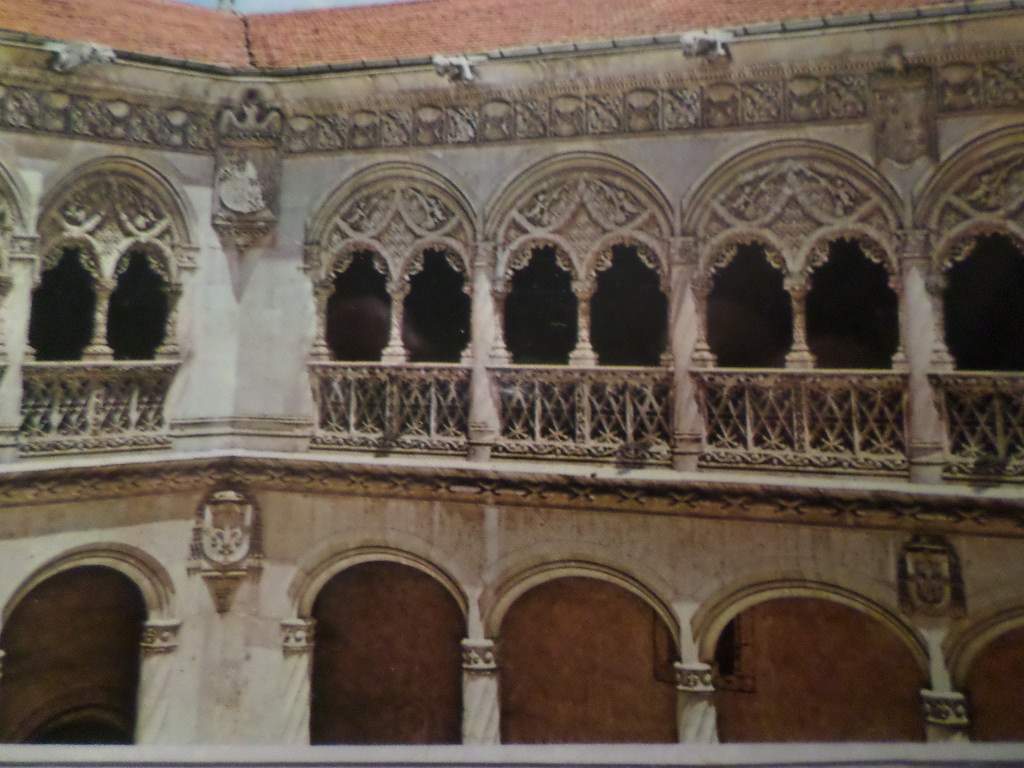
The 15C College of San Gregorio, which contains the National Museum of Polychrome Sculpture. Home to one of the very first sculpture collections in Spain. It brings together sculptures representative of the Castilian school with Alonso Berruguete, Jean de Joigny or Juan de Juni, and Gregorio Fernández, alongside other great Spanish masters like Juan Martínez Montañés, Pedro de Mena, and Luis Salvador Carmona. More on this wonderful museum from the tourist office of Valladolid: https://www.info.valladolid.es/-/10-imprescindibles-museo-nacional-de-escultura
The University ,founded in the 13C. The remarkable Baroque facade dates from 1716-1718. The 16C Cathedral still unfinished) in renaissance and baroque styles.
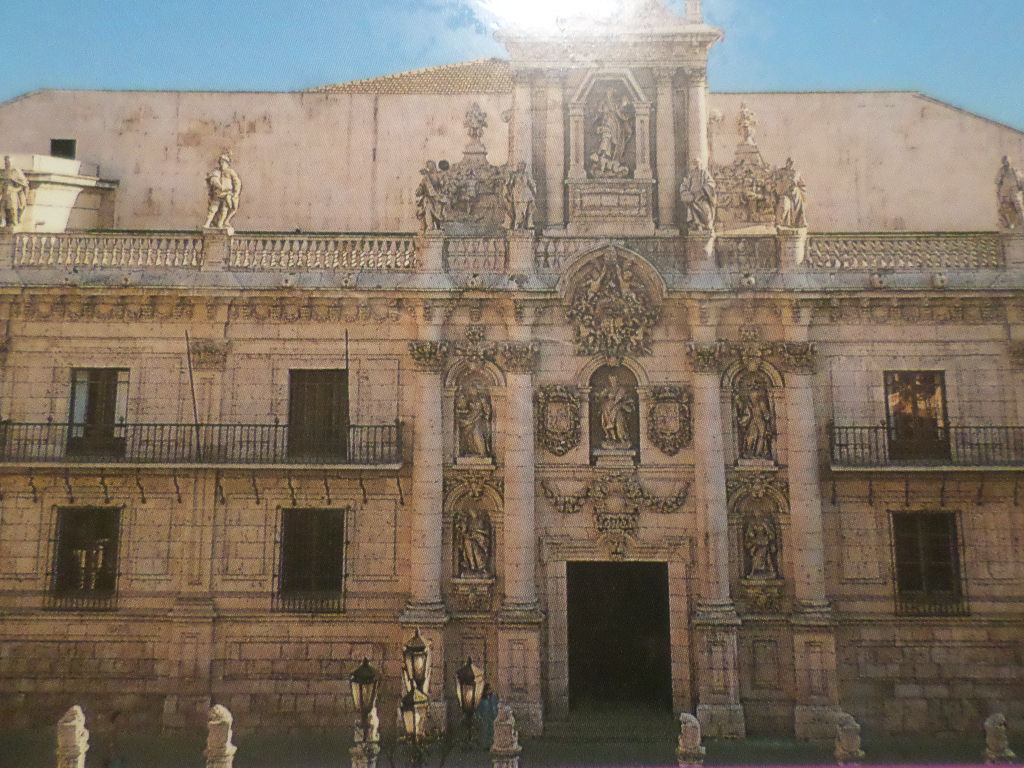
The Zorilla theater, built in 1884 in the former convent of San Francisco, where Christopher Columbus died.
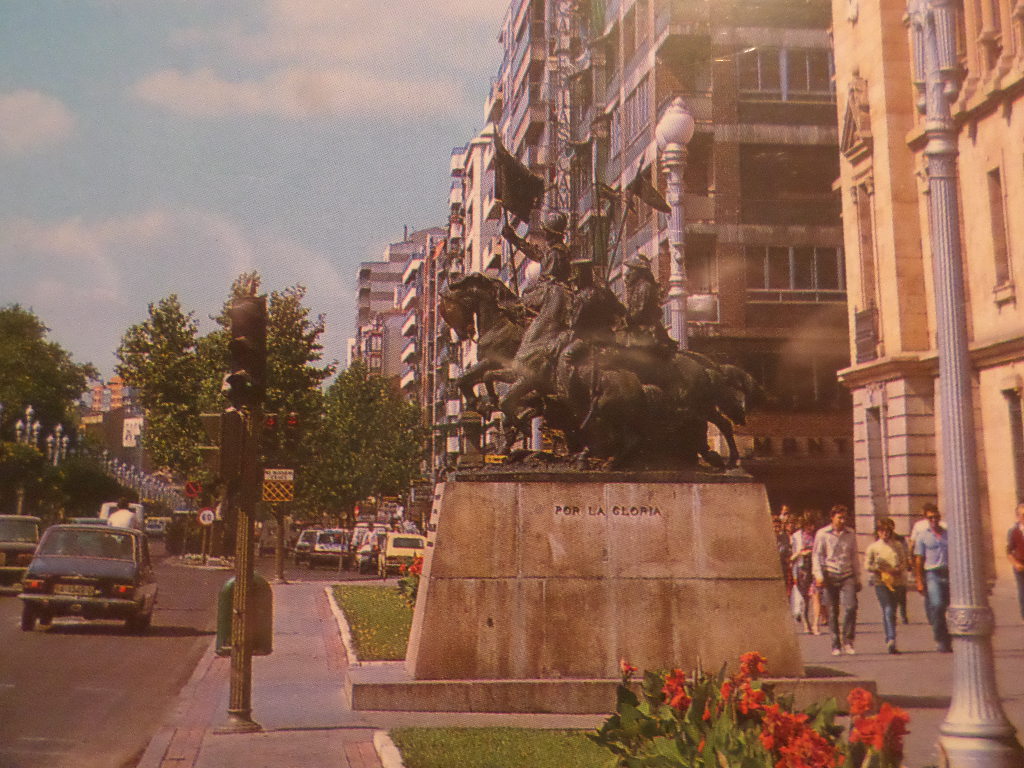
The Campo Grande is a wonderful park and sadly not enough photos of it were found,nevertheless here is a bit of a description. The Campo Grande is a large public park located in the heart of the city of Valladolid, is limited by the streets of Acera de Recoletos, the Paseo de los Filipinos and the Paseo de Zorrilla. Its main entrance is in the Plaza de Zorrilla, where together with a modern bill gate lays a floral shield of the city. Its origin as a park or, more specifically, as a garden area, dates back to 1787, although from the 15C, it must be regarded as an important urban space.
In June 1808 Napoleon’s troops entered Valladolid and camped at Campo Grande; there were a thousand artillery soldiers with their corresponding weapons. In December of the same year, the English troops entered and captured the French. In January 1809 Napoleon arrived in Valladolid and gave a general review of his troops. During the war there were executions, executions of Spaniards, guerrillas, common soldiers, etc.
The estanque or pond and the waterfall its outline was adorned with islands and an artificial mountain imitating a cave from which a waterfall fell. A fountain was also projected in the middle of the lake and the existence of a rowing barge destined to take children and their companions. It was built with stone and a lining of quicklime. The work was completed in March 1879. Almost in the center of the park a large square with wooden benches opens up around its circle, surrounded by fine specimens of trees, including the Lebanon cedar, much loved by the peacocks that chose as a bedroom. In the middle there is an artistic fountain known as the Fuente de la Fama or Fountain of Fame. A column supports the statue representing the angel of fame. The base is octagonal with an exterior pylon. The Paseo del Príncipe is a wide, straight road, well paved, that connects the main door located in the Plaza Zorrilla square with the Puerta del Príncipe or Prince’ gate that opens onto the Paseo de los Filipinos.
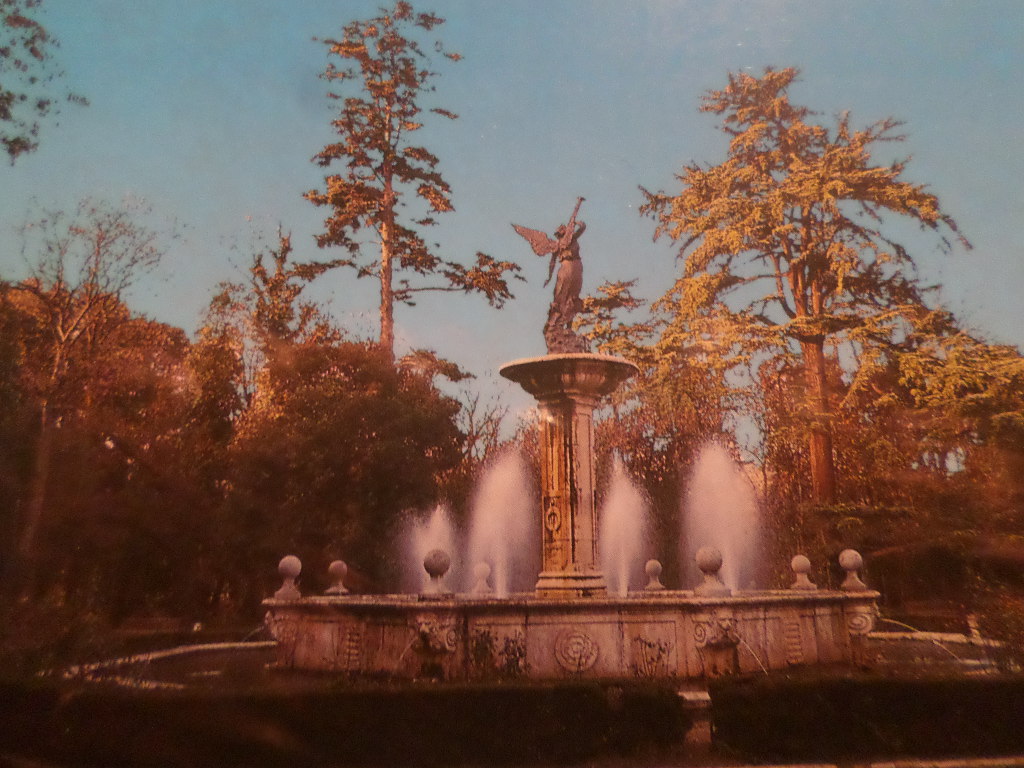
The tourist office of Valladolid on Campo Grande: https://www.info.valladolid.es/-/10-imprescindibles-campo-grande
The tourist office of Valladolid with its main monuments to see: https://www.info.valladolid.es/monumentos
There you go folks ,a bit of my days in Valladolid, another wonderful Spanish town that now has a place in my blog as already in my heart. Again, hope you enjoy the post on curiosities of Valladolid, part I !!! as I.
And remember, happy travels, good health, and many cheers to all !!!

 Paris1972-Versailles2003
Wonderful place ! Visit worthy !!! If we ever become COVID free !!
LikeLiked by 1 person
Thanks for stopping by. Yes indeed there will be better times.
LikeLike
It’s a city in Spain that I haven’t visited yet, this article certainly attracts my interest.
LikeLiked by 1 person
Thanks for stopping by. A historical city of Spain.
LikeLiked by 1 person