
This time took my road warrior skills to go again to jolly England with the Le Shuttle train service (see post), and my Ford ; towing along my good boys and wonderful Rex! It was a very nice trip going into the countryside and seeing several towns of wonderul architecture and history, This one was a first and one of our highlights of the trip, we will be back, eventually, Therefore, let me tell you on this is High Wycombe, England !!! Hope you enjoy the post as I.
The town of High Wycombe, is a market town in Buckinghamshire, England, It is located 29 miles (47 km) of Charing Cross in London, 13 miles (21 km) of Aylesbury, 23 miles (37 km) of Oxford, 8 miles (13 km) of Maidenhead. 7 miles (11 km) of Amersham , 5 miles (8 km of Beaconsfield , and 4 miles (6 km) of Marlow, (see posts), The town’s nearest motorway/highway is the M40, which has two junctions serving Wycombe: junction 3 for Loudwater and High Wycombe ,and junction 4 at Handy Cross roundabout for central Wycombe, Marlow and Maidenhead. Junction 4 is a major interchange between the M40 and A404 trunk road which provides a link to the M4. Junction 3 is restricted; only traffic going towards and coming from London can join and exit respectively. The M25 and M4 motoways are also fairly close. Other roads include the A404 towards Marlow and Amersham; the A4010 towards Aylesbury; and the A40 towards Beaconsfield and Oxford. We rode on all of them this time !!! We came here from Winchmore Hill along Whielden lane to left onto the A404 road or Amersham Road going thru Hazlemere continue same road on Amersham Hill road into High Wycombe Crendon street and making rigth onto High Street,
The Guildhall was given to the town by John, Lord Shelburne, in 1757. Being built of brick and supported by an arcade of stone columns allowed space for market stalls underneath. On top of this 18C building is a wooden cupola on which swings a weathervane of a centaur shooting an arrow into the wind, Lord Shelburne’s crest. The town council met here to deal with everyday matters until 1932. Within the Guildhall is a stained-glass window showing a young maiden with a laurel wreath and the words ‘Welcome home, well done’. ‘In grateful remembrance of the patriotic services of the five thousand men of Wycombe who fought in the Great War 1914-18 (WWI), and were spared to return.’ Thought to be the only one of its kind in the country.
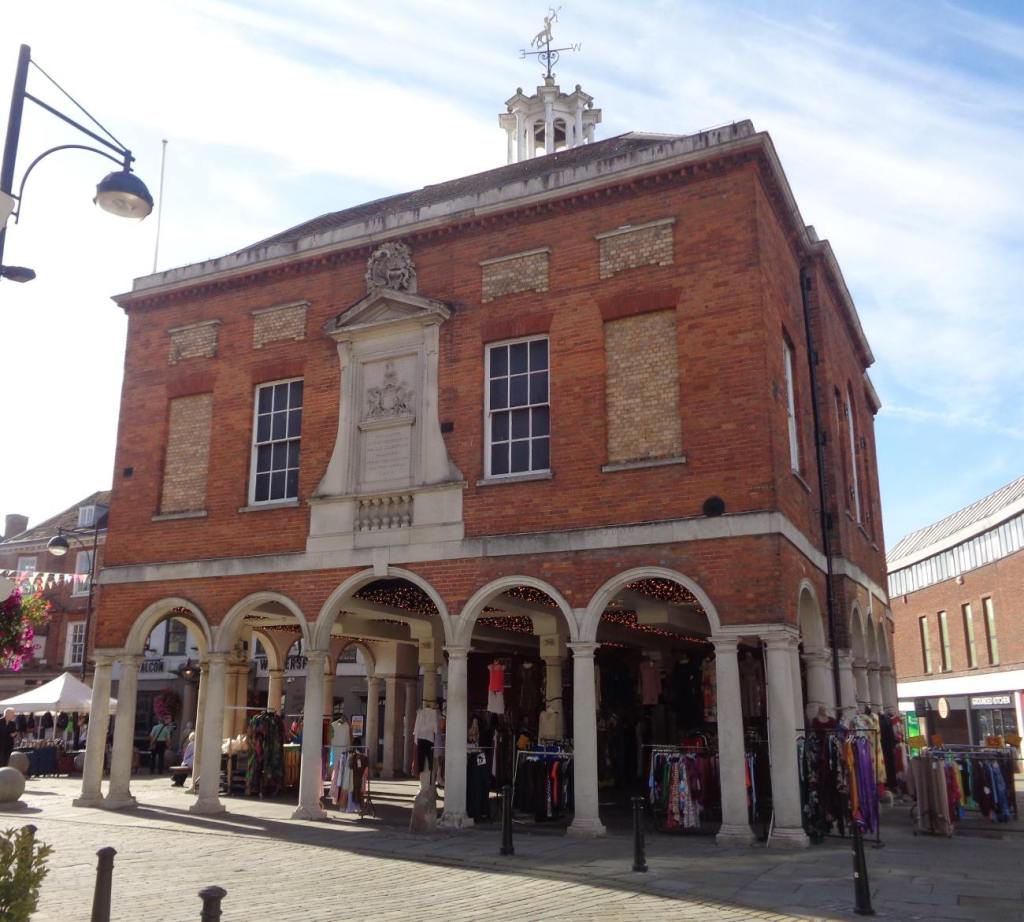
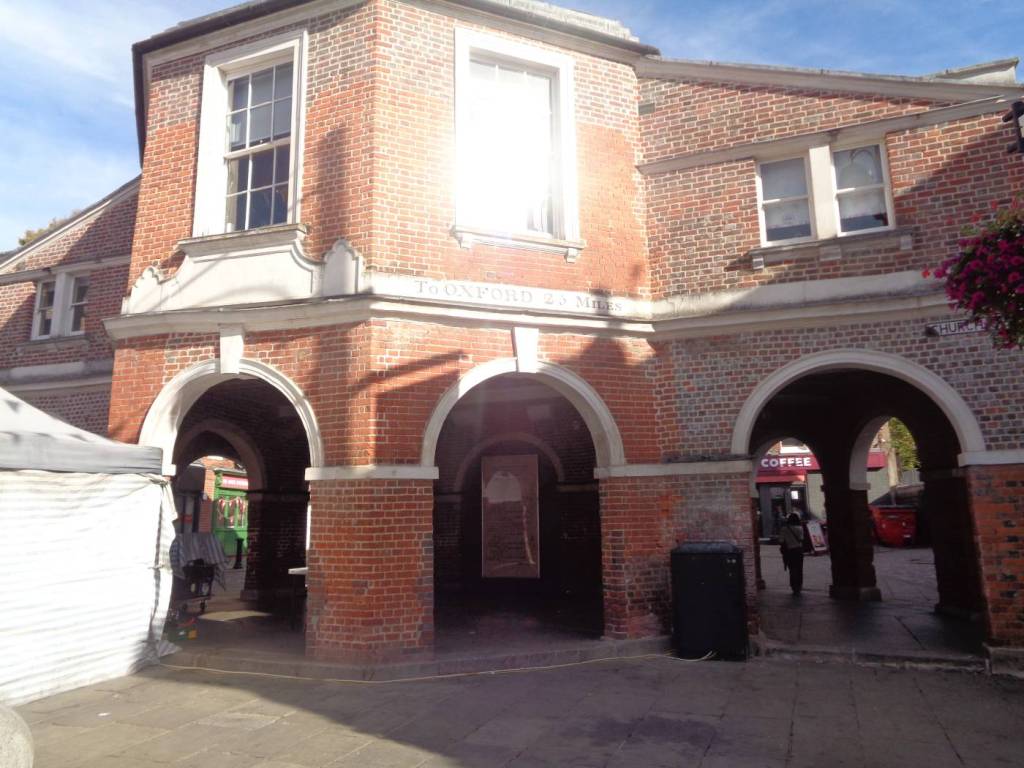
Across the way is the Little Market House , affectionately known as the Pepper Pot ,and formerly called The Shambles, which was designed in 1761 on the area known as The Shambles. Built around 1604 as a market house where merchants set up stalls Remodelled in 1761 giving it a distinctive octagonal shape and dome turret Here small animals were sold along with dairy produce and cereals every Friday. The building doubles as an old-school mile marker such as to Oxford 25 miles, and features an interior display showcasing historic Victorian market trader tariffs and tolls It contains two rooms, one occupied by the High Wycombe Business Improvement District (BID) and another available for public hire,
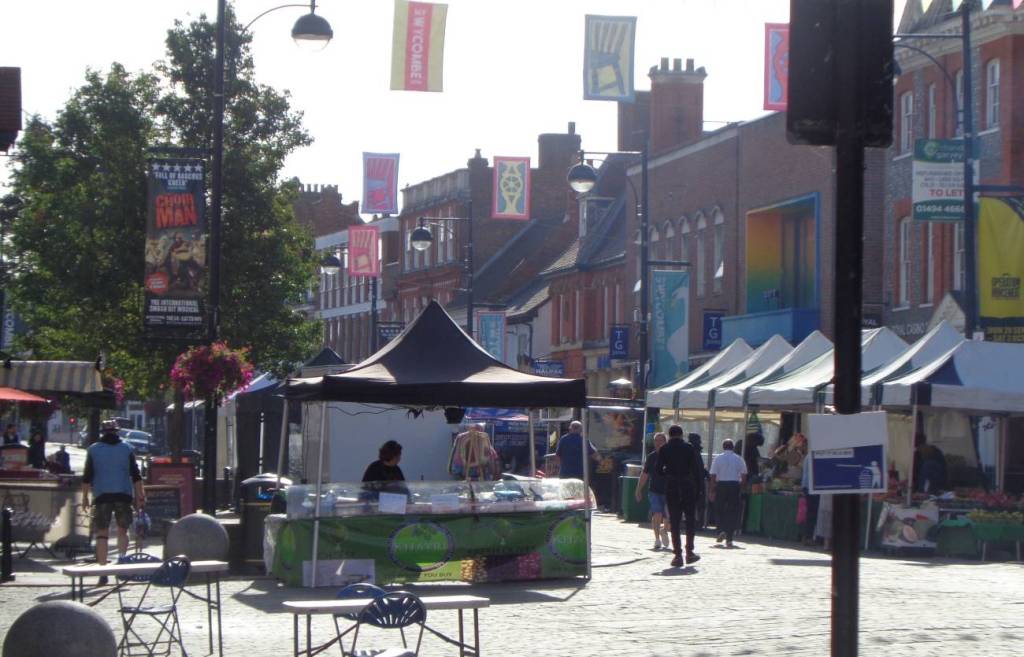
Mediaeval markets were usually found just outside the gates of the parish church. There has been a market held in the High Street since at least the Middle Ages. The market is currently held on Tuesday, Friday and Saturday,the day we visited nice
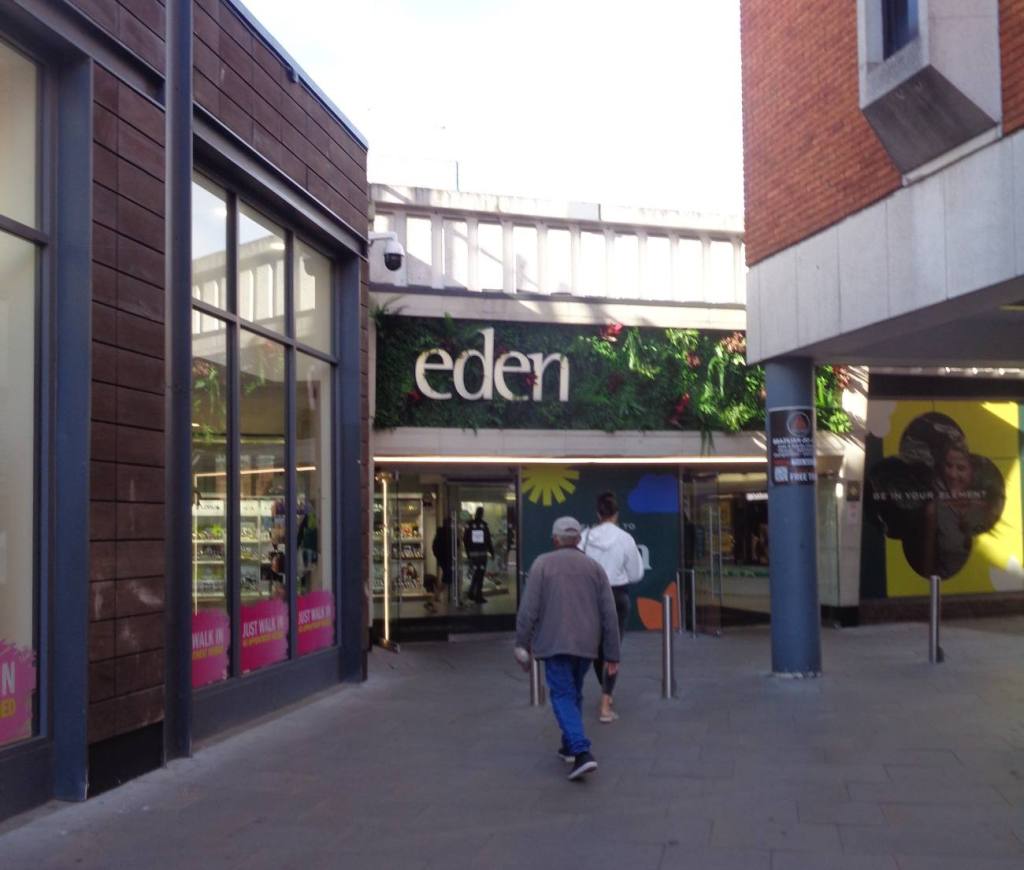
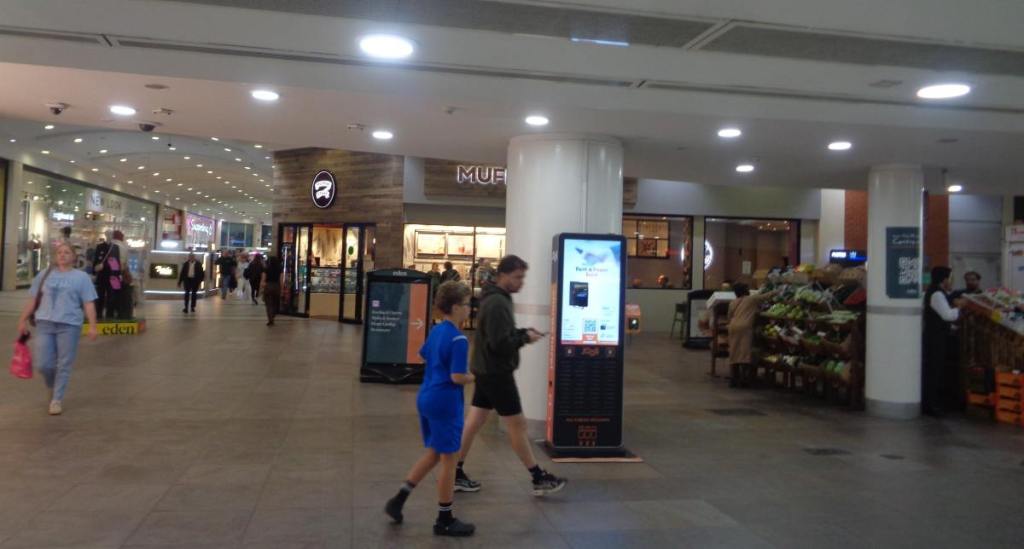
We went inside the brand new Eden Shopping Centre, with 107 shops, new restaurants, a large bowling alley and cinema and new housing, The Eden Centre spreads from the High Street under the Abbey Way flyover to the south of the A40.
The High Street has a number of 18-19C buildings, and ends at the colonnaded Guildhall that was built in 1757, funded by the Earl of Shelburne, and renovated in 1859. The small octagonal-shaped Cornmarket opposite, known locally as the Pepper Pot, (see above) was rebuilt in 1761. The large parish Church of All Saints was founded in 1086, enlarged in the 18C and extensively restored in 1889. There is a large, well equipped theatre, the Wycombe Swan, which hosts many acts and shows before or after their appearance in the West End. The Wycombe Museum is a free local museum located in Castle Hill House, The museum presents exhibitions the history of the local area, including the furniture industry, especially chair-making. There are displays of Windsor chairs, lace, art and natural history
Hughenden Manor borders the northern urban fringe of High Wycombe, approximately two miles (three km) from the centre of town. Built in the Regency period, the architecturally appealing house was also home to Benjamin Disraeli for three decades in the mid-19C. The three-floor mansion is situated in its own extensive grounds with beautifully landscaped gardens which back into the attractive Chiltern countryside. It is open to the public all year round as an historical attraction. We went but very woody steep area and expensive admission of 18 pounds or 21 Euros, we skip it,
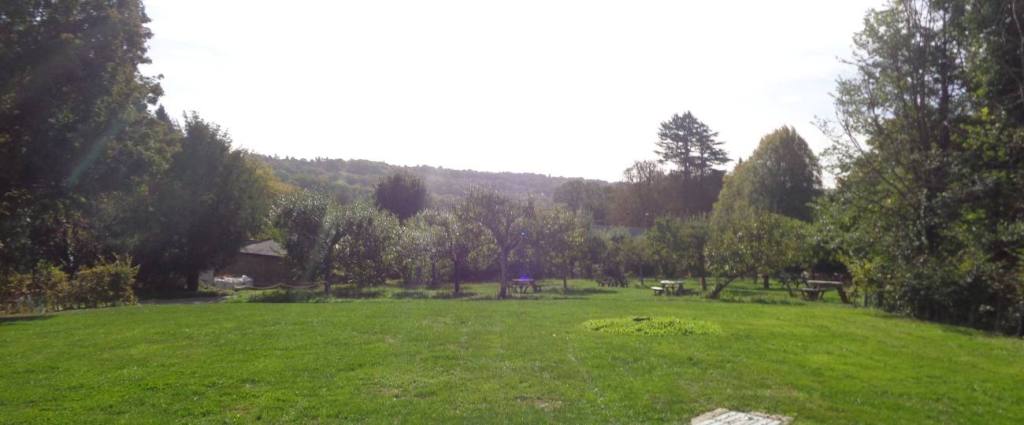
Wycombe Air Park, the modern name for Booker Airfield, to the south of the M40 motorway on the western edge of the town. Many of the replica aircraft used in the film industry, for example in films such as Those Magnificent Men in their Flying Machines, Aces High and The Blue Max were built and flown from there.
A bit of history I like tell us that Wycombe appears in the Domesday Book of 1086 and was noted for having six mills. The town was described as a borough from at least the 1180s, and built its first moot hall in 1226, with a market hall being built later in 1476, High Wycombe remained a mill town through Medieval and Tudor times, manufacturing lace and linen cloth. It was also a stopping point on the way from Oxford to London, with many travellers staying in the town’s taverns and inns, Wycombe’s most famous industry, furniture ,particularly Windsor chairs took hold in the 19C, with furniture factories setting up all over the town, From 1940 to 1968 High Wycombe was the seat of the RAF Bomber Command. Moreover, during WWII, from May 1942 to July 1945, the U.S. Army Air Force’s 8th Air Force Bomber Command, codenamed “Pinetree”, was based at a former girls’ school at High Wycombe. This formally became Headquarters, 8th Air Force, on 22 February 1944,
Nestled in the rolling countryside of South Bucks lies a quiet yet profound connection to the foundation of the United States, William Penn, the Quaker founder of Pennsylvania, spent some years worshipping with fellow Friends at Jordans near Chalfont St Giles. His marriage to Gulielma Springett of Amersham and his contributions to the Jordans Meeting House reflect his deep ties to the area. Penn’s ‘Holy Experiment’ in Pennsylvania rooted in religious tolerance and civic virtue, was inspired by the principles he nurtured here. William Petty, 2nd Earl of Shelburne, Prime Minister 1782-3, resided intermittently at Loaks Manor (now Wycombe Abbey). A reform-minded statesman, Petty talked to Benjamin Franklin engaging in dialogue about colonial grievances and future Anglo-American relations. In time further correspondence between the two helped to draft the Treaty of Paris whereby Great Britain, the Mother country, would finally accept American Independence and the right of the former 13 Colonies to be recognised as the United States of America.
The South East of England tourist office on High Wycombe : https://www.visitsoutheastengland.com/places-to-visit/high-wycombe-p92351
The local High Wycombe Society on its history : https://www.highwycombesociety.org.uk/a-short-history-of-the-town/#gsc.tab=0
The local site My Wycombe on its heritage : https://mywycombe.com/plan-your-visit/
There you go folks , do dare drive in jolly England, it’s an adventure of a lifetime, and you will be back !!! as we have lol! Until another round chasing Sherlock we will be saying elementary my dear Watson to you all. Again, hope you enjoy this post on this is High Wycombe, England !!! as I
And remember, happy travels, good health, and many cheers to all !!!


