
I like to bring you and me back to my dear Province of Cuenca and the Autonomous Community of Castilla La Mancha in my beloved Spain,The area has lots of family memories for me and will always be cherish. This was a town we passed by connecting the A40 with the A3 highways, and finally did stop in. This is my story onTarancon,the town is so small but quant that will delight most of you as it did me, A wonderful surprise that with new found older pictures from my cd rom vault that should be in my blog for you and me, Therefore,here is my take on the Church Nuestra Señora de la Asuncion of Tarancon !!! Hope you enjoy this post as I.
The Church of Our Lady of the Assumption (Nuestra Señora de la Asunción), from the 16C, with a magnificent Plateresque altarpiece that presides over the main altar.It is located in the neighborhood of El Castillejo, the oldest of the town, prior to its construction, since the 13C, there would be a temple of uncertain location, although probably in the same place where the current church is erected, and it would be in the Romanesque style or neo-gothic. The first church dedicated to Our Lady of the Assumption must have been built in the 15C. It was a Gothic building with a single nave, with attached side chapels and a ribbed vault, which persisted until the end of the 19C.
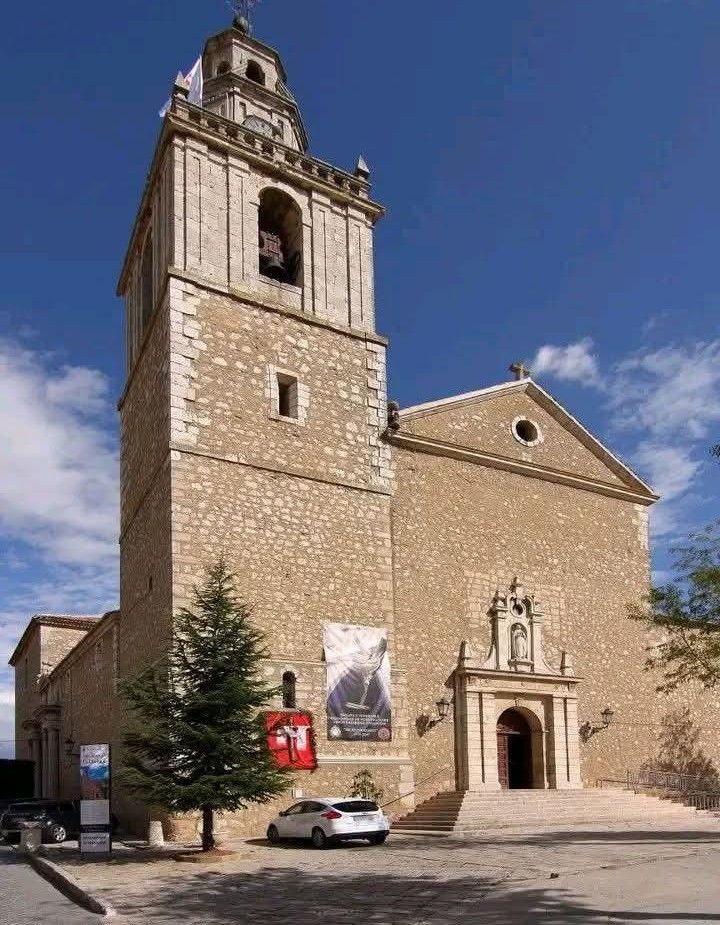
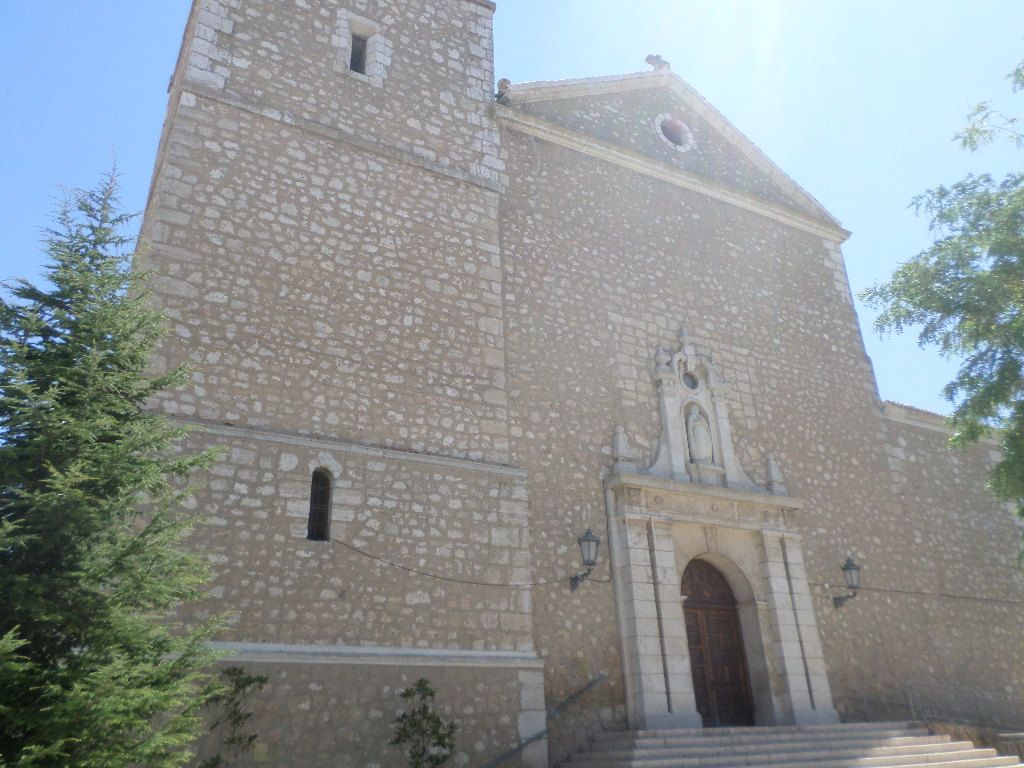
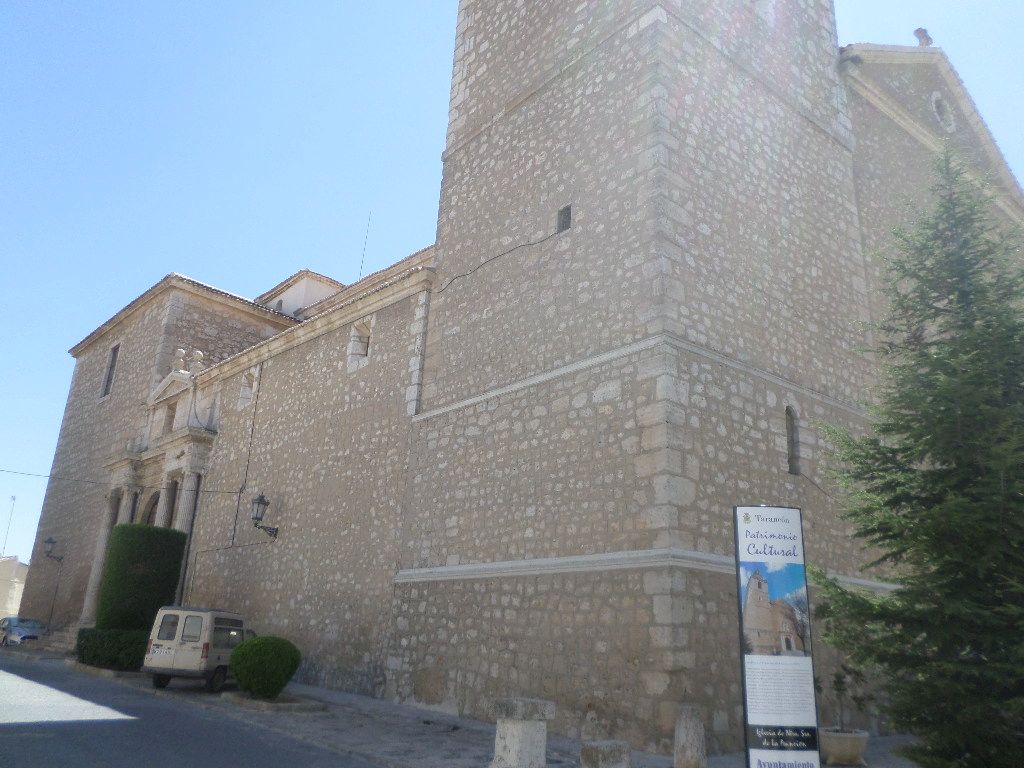
The Church Nuestra Señora de la Asuncion is accessed through a gateway known as the Arco de la Malena, the only remaining part of the medieval barbican known as El Castillejo. Three doorways open onto the walls: the main doorway, at the foot of the church, is a complete reconstruction from 1949, concealing the remains of a large Gothic doorway. The upper section contains a niche with a statue of the Virgin of the Assumption. The Puerta del Cierzo, on the north façade, is purely Herrerian in style and is structured around four large Ionic columns supporting an architrave with a cornice and a flattened triangular pediment. The simplest, the Puerta del Sol, located on the south side, consists of a semicircular arch flanked by plain pilasters with a pediment above. The tower has a three-section bell tower: the lower one is square and the upper two are octagonal, decreasing in size. It dates from the first third of the 18C.
Inside you have the main chapel. On the main altar, covering a three-chambered apse with pointed arches, is the altarpiece dedicated to the Assumption of the Virgin. This work was begun around 1548, is a superb example of Plateresque art, albeit very late and with hints of the Mannerist style. In 1936, during the Spanish Civil War ,the republican side destroyed all the statues that filled the niches of the first floor and the original statue of the Assumption of the Virgin. In total, there are twelve high-relief panels. Their approximate measurements are 15 meters long by 9 meters wide. The altar table and the presbytery stalls were also lost in the deliberate destruction of 1936. The Sacristy ,to the right of the Altarpiece, an 18C walnut chest of drawers is preserved. Opposite this piece is a 17C canvas entitled Lamentation over the Dead Christ. Below the painting, in a glass case, are some liturgical goldsmithing objects. You have several chapels that are very nice sadly can’t find pictures, these are the Altarpiece of Our Lady of the Tabernacle.17C painted around 1645, depicting Our Lady of the Tabernacle, flanked by two pairs of fluted columns in the Composite order. The attic is occupied by another painting, depicting the Holy Trinity. The Altarpiece of Saint Joseph. replaced a 19C altarpiece destroyed in 1936. It houses the image of Saint Joseph. Chapel of San Antón in the Epistle nave, that once housed the Baroque Chapel of Our Lady of the Ancient. This altarpiece houses the image of Saint Anthony, which makes its pilgrimage through the streets of Tarancón every January 17th. Altarpiece of Jesus of Medinaceli, represented by a carving of Our Lady of the Ancient. Father Jesús de Medinaceli, carved in 1954. The altarpiece of Our Lady of the Rosary was built here, a Baroque work that disappeared in 1936. Picture of Souls ,located at the foot of the Epistle nave, this 18C painting depicts the Virgin of Carmen holding the Child in her arms, who offers the miraculous scapular to the souls in Purgatory. The Chapel of the Most Holy Christ of the Exaltation. It contains a carving of the Crucified Christ , This altarpiece features images of the Devout and Fervent Penitential Brotherhood and Brotherhood of Slaves of the Exaltation of the Holy Cross and the Sweet Name of the Most Holy Mary. The Choir, built in the 18C, it had a pipe organ that was destroyed in 1936.
Continue inside, we have the Altarpiece of Christ of Burgos. At the foot of the Gospel aisle, it is made of marble and frames the image of its patron saint, and those of Our Lady of Peace and Saint Francis. Altarpiece of Our Lady of Fatima, located on the site where the Altarpiece of Christ of Burgos once stood, it is a new devotion. The altarpiece, like other furnishings added to the church after the destruction of 1936. Altarpiece of Our Lady of Mount Carmel. It replaces the old one, from the 18C, whose main body consisted of the Table of Souls. It houses the image of Our Lady of Mount Carmel, patron saint of sailors. The altarpiece of Our Lady of Riánsares occupies the north end of the transept and, like its twin, the altarpiece of Saint Joseph, is of large proportions. The image of Our Lady of Riánsares, the main patron saint of Tarancón, is placed here when she is in the town, that is, from August 15 to January 28. The rest of the year, she remains in her sanctuary on the outskirts of the town (see post). The current image replaces the old one, from the 13C, which disappeared in 1936. When she is not in Tarancón, a 19C canvas is placed on the altarpiece. This altarpiece also houses the images of Saint Victor and Saint Corona, co-patrons of the city of Tarancón. Altarpiece of Our Lady of Solitude, built after the Civil War, in imitation of the destroyed altarpiece of Our Lady of the Rosary, as it occupies the same location as the latter, but at the end of the Gospel aisle. In the central niche, the clothed image of Our Lady of Solitude is venerated, at whose feet, already on the pew, is the image of the Recumbent Christ. Formerly, this place was occupied by the altarpiece dedicated to Saint Philomena. This altarpiece also houses the images of Saint John and Saint Mary Magdalene. Chapel of the Conception. With an entrance from the Main Chapel, opposite the door to the Sacristy, the Chapel of the Conception was founded at the end of the 16C. It has a beautiful altarpiece, consisting of a large paneled canvas between two fluted and gilded columns, in the composite order, depicting the Active Conception of Mary. Chapel of Jesus of Nazareth, located just behind the Main Chapel, it is of great architectural purity, with an elegant segmented dome and an artistic lantern. It was built well into the 17C. It had a magnificent Baroque altarpiece, with paintings and carved images, especially that of Jesus of Nazareth, but it was looted in 1936, so the current images and altarpiece are modern.
The city of Tarancon on its history/heritage: https://nuevaweb.tarancon.es/ciudad/
The Castilla La Mancha region tourist office on Tarancon: https://www.turismocastillalamancha.es/es/destinos/encanto-rural/cuenca/tarancon
The Castilla La Mancha regional culture site on the church : https://cultura.castillalamancha.es/patrimonio/catalogo-patrimonio-cultural/iglesia-de-nuestra-senora-de-la-asuncion-de-tarancon
The Parish of the Church Nuestra Séñora de la Asuncion : https://www.parroquiaasunciontarancon.es/
There you a nice quant beautiful scenary ride in the cross roads of Castilla La Mancha, Do stop by Tarancon you will be delighted as well, Again, hope you enjoy the post on the Church Nuestra Señora de la Asuncion of Tarancon !!! as I.
And remember, happy travels, good health ,and many cheers to all !!!


