
This is a region that needs to be known more for its wines, great improvement over the years, Actually, I came to know the wines here late in life as started with those up north in Spain. When I started coming to this region with the family several years back, the owner of the house we rented gave me a bottle of a local wine and it was not bad. I have been chasing down wines from this region ever since. Therefore, let me tell you about the wines of Castilla La Mancha !!! Hope you enjoy the post as I.
My first ever taste of wine was by my maternal grandmother at my tender age of 8, and of course , it was Spanish wine from Tenerife. Ever since, my love for the drink has increase exponentially to the point of taken professional courses from the ICEX commercial office of Spain, and SOPEXA Food and Wine from France government entities over the years. I have tasted wines from many countries and even visit many wineries. Memories forever !
In 1977, the denomination of origin Rueda was recognized and is definitively approved in 1980, being the oldest in Castilla y León and establishing the headquarters of the Regulatory Council of the D.O. Rueda in the town. Likewise in 1986, Rueda becomes the headquarters of the Enological Station of Castilla y León. The Rueda character is defined by three elements: the green Verdejo grape, the continental climate and the cascalase floors. The Verdejo grape is its native variety and has lived for centuries in the designation of origin. It is very likely that the Mozarabs brought the Verdejo variety from North Africa, after an adaptation period in southern Spain. Remember, if you drink verdejo you won’t get old,,,,,,,,,,,,,,,,,,,,,,,,,a local saying.
Rueda has more than 20 wineries located within the urban nucleus, many of which can be visited to practice wine tourism, know firsthand and at the foot of vineyard the elaboration of our famous broths and finish the visit with a tasting or tasting. Some of the other wineries in town are Félix Sanz, Finca Montepedroso, Grupo Yllera, Menade, Mocén, Ramon Bilbao, Valdecuevas, and Viore. Pagos del Rey project started in 2002 with the aim of making quality wines in the most prestigious wine making regions in Spain, with wines with their own personality. All of them have a modern design that combines tradition and innovation, and the latest technology in wine making.
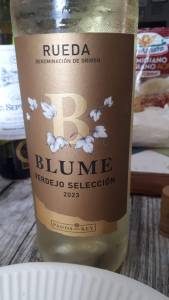
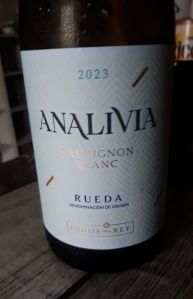
The project of Bodegas Pagos del Rey started in 2002 with the aim of making quality wines in the most prestigious wine making regions in Spain, with wines with their own personality. This is Pagos del Rey S.L in Rueda The winery in Rueda was opened in 2005.It is in this winery where the brand Blume is born, leader brand in DO Rueda wines in the off trade in Spain. Verdejo is the main grape and the symbol of the identity of the region. It was here last time that we came into Bodegas Prado Rey , with a nice welcome and the saying of drink Verdejo and you won’t get old!! We purchase Analivia Sauvignon Blanc, Analivia Verdejo Seleccion , and the Blume Verdejo Seleccion, We took a turn to come back here but amazing they ran out of wines for 2023 and the new 2024 was been bottled so no wines!! Well it will have to be next time, we will be back, eventually.
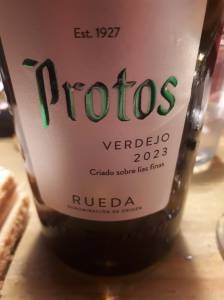
The Bodegas Protos tell us that since our first vintages (1927 & 1928), that won Gold Medals at the Universal Exposition of Barcelona in 1929. Construction of an aging winery at the heart of the mountain that holds the Peñafiel Castle, to age our barrels in over 2kms of underground tunnels. A winery is built in Anguix (Burgos), surrounded by old vineyards of high quality. Therefore, allowing shorter commute time from the vineyard to this winery. Bodegas Protos builds a winery in Rueda for the elaboration of our Protos Verdejo, at the heart of Spain’s most important white wine appelation. And this is where I come in as visited the bodega at Rueda with great welcome and wonderful wines 2019 Protos Verdejo is chosen “Best young wine in Spain” by the Gourmet Guide – Wines. 2024 Bodegas Protos, in the ranking of the fifty most admired brands in the world by the prestigious Drinks International magazine.
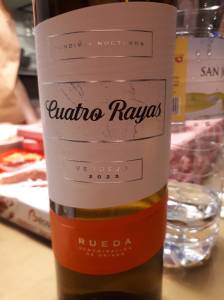
In a Spain of 1935 plunged in the uncertainty of a political turmoil that would result, only a year later, in a Civil War, the winegrower families that had their vineyards in the area of the small village of La Seca in the province of Valladolid encouraged by the village’ doctor Fermín Bedoya decided to join forces and create a cooperative that would allow them to make the most of the vineyard work they would establish officially as ‘Bodega Cooperativa de La Seca’ in July 1939. The first registered trademark of the winery was born in the 50s. By the name of ‘Fino 61’,The story behind this name is, to say the least, funny: in the first years of the winery, rumour had it that, among all the vats filled with wine, number 61 was the best of all, and that is why this one end up giving its name to the first brand of the house. By 1960, Pago de las Cuatro Rayas the winery took its current name from the vineyard terrain where, in the 50s and 60s, it was believed to grow the best vines of the cooperative, and also was the junction point of four towns: La Seca, Rodilana, Medina del Campo, and Rueda. ‘Cuatro Rayas vineyard terrain’ is still owned by a member of the cooperative winery and is planted with Verdejo and Sauvignon Blanc vines.The first Regulation of the DOP ‘Rueda’ and its Regulatory Council was passed in January 1980, becoming the first recognised Designation of Origin in the Autonomous Community of Castilla y León. In addition to strengthening the brand positioning of Cuatro Rayas as a benchmark in the Rueda white wine sector, both nationally and internationally, we expand and diversify notably our product portfolio with the launching of the first red wines of the winery under the DO Ribera del Duero. The winery also produces its firsts vermouths made from Verdejo and Tempranillo, frizzante wines and a new category of premium wines is created to seek the excellence and distinction in the industry, This was another one we tried on site and was excellent,
The official DO Rueda wines: https://www.dorueda.com/en/
The official Wine route of Rueda: https://www.rutadelvinoderueda.com/index.php
The official Bodega Pago del Rey at Rueda : https://www.pagosdelrey.com/en/winery/pagos-del-rey-rueda/
The official Bodega Protos : https://www.bodegasprotos.com/en/
The official Bodega Cuatro Rayas : https://cuatrorayas.es/en/
Bodegas Fariña tell us that rises in Toro, in an environment of old vines, with an exterior construction inspired by traditional architecture consists of several buildings, one of which houses our museum of wine and art on its upper floor, in constant process of improvement, formed by a collection of old wine machinery and the exposure of abstract painting the Primero formed by the 40 finalist works of the latest edition of the National Painting Contest organized by the winery to choose, every year, the image of its first wine . On its lower floor, the building houses the parenting room. Located 5 meters deep, under rigorous temperature and humidity control, a park of more than 1,800 French and American oak barrels gives our breeding wines a part of their marked personality. In the same plant, there are 16,000 liters French oak tubs. Each one, who help achieve this goal. The facilities are completed with the elaboration and bottling naves, which have a modern technology, essential to achieve the quality criteria marked by the cellar. In addition to the winery in Toro, our Casaseca de las Chanas winery, under the quality march of “Vinos de la Tierra de Castilla y León” or wines from the earth of Castilla y León other ranges are made, including that of sweet wines Val de Reyes and the modern series Traditions.
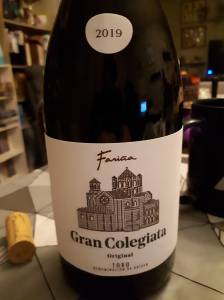
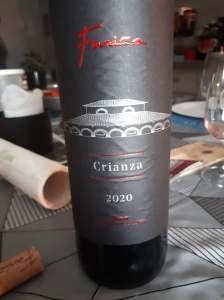
And my wines over the years have been from Bodega Fariña, the Colegiata, Gran Colegiata Original, and Crianza, It comes in red, rose ,white, and Primero, As well as many other labels, They are located at Bodegas Fariña (D.O. TORO) – Bodega y Enoturismo. Camino del Palo s/n – 49.800 Toro (Zamora) , this is the one we visited, and Bodegas Fariña (Vino de la Tierra de Castilla y León) – Bodega y oficinas centrales. Crtra. de Moraleja s/n – 49.151 Casaseca de las Chanas (Zamora).
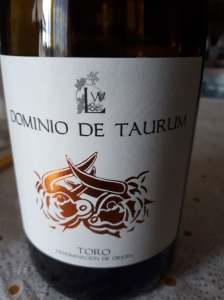
Luí & William Wines is a project of two brothers united by a family winemaking tradition: Luis Ángel and Guillermo. The winery was born in 2005, with the production of wines from the family vineyards, which are on the banks of the Duero river, on sandy and rocky soils, with little wealth but great potential. DO Toro Dominio de Taurum ,15-20 years aging in 11 ha 100 % Tempranillo ageing for 6 months in French oak Opaque purple-coloured, it has an attractive perfume of violets, spice box, blackcurrant, and blackberry. Delicate and inviting with gentle notes of oak developing as the wine opens on the palate. Full and deep with a long finish indicating still its youth.
A bit on the D O Toro tell us that despite having achieved international fame, the history of Toro wine is very old. Since the Roman era and over the 12-13C, Toro wines were precious marketing, enjoying even royal privileges. Thus, during the reign of Alfonso IX, Toro’s wine was the only foreign wine that was allowed to enter the city of Seville. It was also Toro’s wine that accompanied Christopher Columbus in his discovery of the Americas; To such an extent that the “La Pinta”, one of its three caravels, was thus baptized by the local Fray Diego de Deza ,confessor of queen Isabel I (the Catholic) as colloquial expression to refer to a drink of wine, still in use today. In 1987 the denomination of origin that covers sixteen municipal terms of the area was approved, belonging to the provinces of Zamora and Valladolid. Manuel Fariña was elected president of the First Regulatory Council of the D.O. Toro.
A bit on the grapes grown here are Tinta de Toro , the star grape of the region. Some studies consider that it could be the Spanish variety “Tempranillo” whose adaptation to the ground and the climate of the area, over the centuries, allows it to be considered as an native grape with its own characteristics. This variety occupies most of the 8,000 hectares welcomed to the D.O. Toro, Garnacha is the other tinta variety allowed in the D.O.Toro with less tannins and structure that the previous one was used in the past for the elaboration of rosé, Malvasía is the most abundant white variety of the area and proceeds, for the most part, from old vineyards with little production. It is a very old variety, from Greece and already used by the Romans , and Verdejo introduced in Castilla by the Mozarabes, its cultivation was abandoning over the years until it became the minority variety of the D.O. Toro.
The official Toro wine route with heritage sites: https://www.rutavinotoro.com/en/toro-wine-route/
The official DO Toro on its wines : https://www.dotoro.com/
The official Lui & William Wines : http://www.luiwilliamwines.com/index-en.html
The official Bodegas Fariña at Toro : https://www.bodegasfarina.com/en/winery
There you go folks, all these wines are great to buy and drink, the price/quality ratio is huge, and bargains of gastronomic proportions; La Mancha is it, and Spain is stepping out. Drink with moderation but drink wines is good for you too. Again, hope you have enjoy this post on the wines of Castilla La Mancha !!! as I.
And remember, happy travels, good health, and many cheers to all !!!

 Paris1972-Versailles2003