
One of the nice monuments of my beloved Madrid and need to be there again, I found me a picture in my cd rom vaults that made me do this post for you and me, Well with so much to see and little time, I wanted to show my young men sons the heritage of my youth and later many years of visiting my beloved Madrid. It’s time to tell you about the Real Monasterio de Santa Isabel or Royal Monastery of Saint Elizabeth. Therefore, here is my take on the Real Monasterio de Santa Isabel of Madrid !!! Hope you enjoy it as I.
The Calle de Santa Isabel owes its name to the Royal Monastery of Santa Isabel, which is located there. The monastery gave its name to the former Santa Isabel Tapestry Factory (painted by Velázquez in his painting Las Hilanderas), located nearby. It is a street that slopes downwards from its highest point in the Plaza de Antón Martín to its lowest point in the Plaza del Emperador Carlos V. It runs parallel to Calle de Atocha.
The Monastery of Santa Isabel was founded in 1593 by personal order of Felipe (Philip) II in memory of his daughter, Infanta Isabel Clara Eugenia. During the time of Felipe V, it was intended for the education of disadvantaged children. This monastery houses the Santa Isabel Tapestry Factory. Queen María Victoria, wife of Amadeo I, founded the Ophthalmic Institute on the street. The Santa Isabel barracks were located on this street, intended for the accommodation of infantry troops. During the time of Carlos III, between 1769 and 1788, he ordered the construction of the General Hospital, improving the hospices that were in the area. The work was left incomplete. In the 20C, Calle de Santa Isabel ended at the walls of the Provincial Hospital (formerly called the General Hospital) with no direct access to the Glorieta de Atocha roundabout. In 1912, the Cine Doré cinema (see post) was inaugurated, which at the end of the 20C became the official headquarters of the Spanish Film Library. The Mercado Antón Martín (see post) can be entered from Calle de Santa Isabel, built in 1934 to regulate and bring together the sales boxes that were found along the street at the beginning of the century. At the bottom of the street is the headquarters of the Official College of Physicians of Madrid, as well as a side entrance to the Royal Conservatory of Music of Madrid, located in part of the former premises of the Royal College of Surgery of San Carlos. Almost at its junction with the Glorieta del Emperador Carlos V is the entrance to the Reina Sofía Museum.
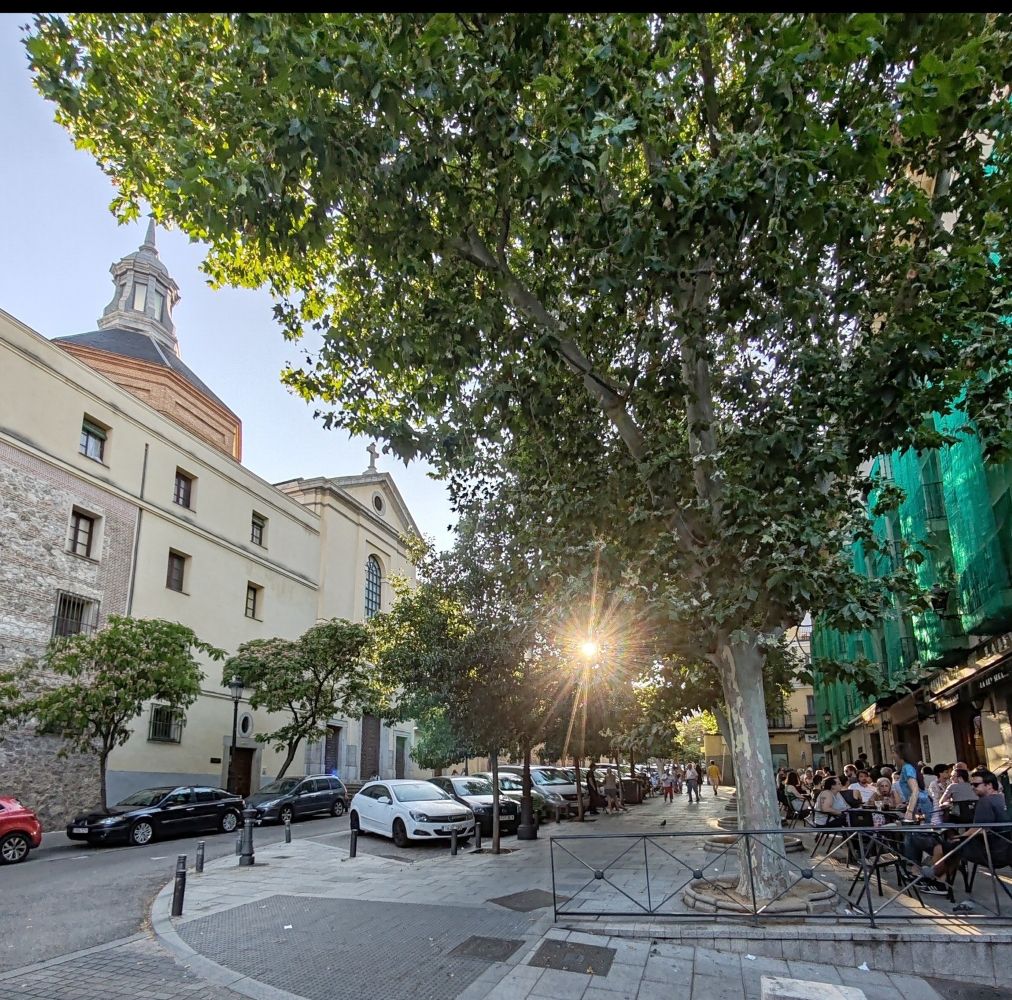
The Real Monasterio de Santa Isabel is located in a large monumental complex near Atocha. It brings together two foundations: a religious school (initially for girls only), established by Felipe II, and a cloistered convent of Augustinian Recollect nuns (also known as the Royal Monastery of the Augustinian Recollects of the Visitation of Saint Isabel), founded by Felipe III’s wife, Margaret of Austria. The church has a unique floor plan, with a nave in two very narrow bays and a large transept, almost double the size of the nave, topped by a square presbytery. The altars located on the four pilasters also contained interesting paintings by Mateo Cerezo (Saint Thomas of Villanova and Saint Nicholas of Tolentino helping the souls in Purgatory with the belt of the Augustinians), Claudio Coello (Saint Philip) and Benito Manuel Agüero (The imposition of the chasuble on Saint Ildefonsus). Completing the decoration of the presbytery were two canvases, old copies of The Tunic of Joseph by Velázquez and The Adoration of the Shepherds by Ribera, after the originals in the Royal Monastery of El Escorial. All of this burned down in 1936, along with the 18C frescoes by Zacarías González Velázquez, which were set on fire by extremists related to the Second Spanish Republic. In 1793, Antonio Ponz also came to see in the temple a half-length Apostolate by José de Ribera, apparently acquired by Carlos IV of Spain and currently preserved in the Museo Nacional del Prado, as well as a Saint John in the Desert (preserved in cloister, a copy by Ribera). Currently, two paintings by the Madrid painter Antonio Arias have been replaced in the first section of the church, under the choir. They depict Saint Paul the Hermit with Saint Anthony the Abbot and Saint Augustine with his mother Saint Monica. Other paintings have been arranged in altarpieces decorating the transept, including an Archangel Saint Jeudiel by Vicente Carducho and an Immaculate Conception by Mariano Salvador Maella, both of which came from the funds originally preserved in cloister. In it there are still some other works of relative interest, primarily from the Madrid school of the second half of the 17C, and among them several works by Antonio Pereda and José Antolínez. Souree : the Royal Monastery of Santa Isabel and Wikipedia on the above,
The Madrid tourist office on the Real Monasterio de Santa Isabel : https://www.esmadrid.com/en/tourist-information/real-monasterio-de-santa-isabel
The National Heritage of Spain on the Real Monasterio de Santa Isabel : https://www.patrimonionacional.es/en/visita/monastery-santa-isabel
There you go folks, enjoy again my tour of my beloved Madrid! We love it !! Again, hope you enjoy this post on the Real Monasterio de Santa Isabel of Madrid !!! as I. And remember, happy travels, good health, and many cheers to all !!!

 Paris1972-Versailles2003