
I have been here several times and plenty in my blog, but never forget the great time had in it over the years, A Coruña is a wonderful City of Galicia, and these are new older pictures found in my vault and they should be in my blog, Therefore, here is my take on curiosities of A Coruña !!! Hope you enjoy the post as I.
Of course, I always came here by plane either from Nantes, Paris or Madrid with Iberia mostly, but also, Air Europe, Vueling , Transvia, and Air France, I was able to do some walking in town and enjoy the night life with local friends on a personal level amazing sights. Needless, to say it was magical trips and always looking forward to be back, eventually. The airport is smallish and it seems like a countrytown home to me by now. The official AENA A Coruña airport: http://www.aena.es/en/a-coruna-airport/airport-guide.html
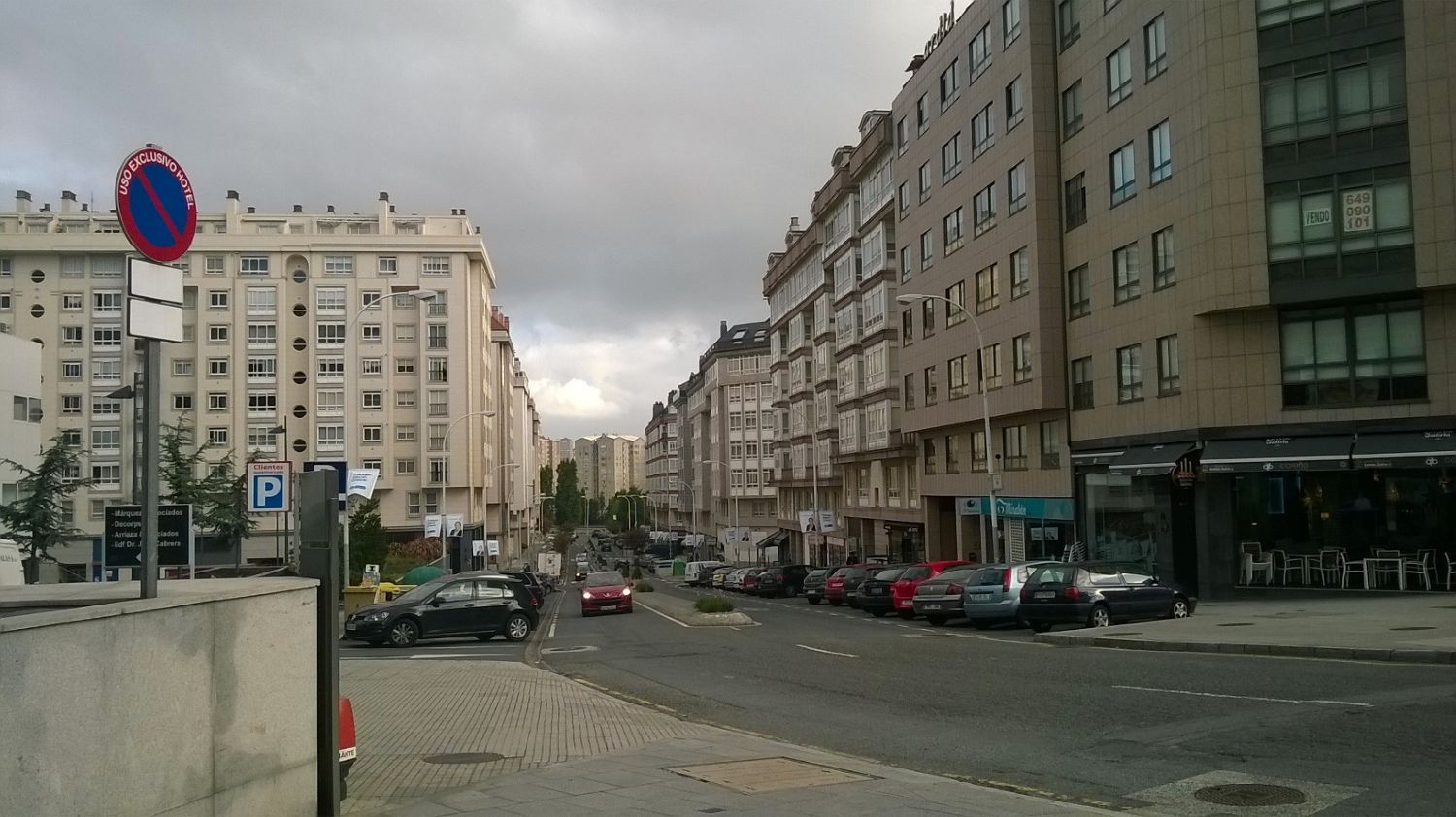
The Calle (Rua) Enrique Mariñas is a nice residential street with the hotels I have stayed AC Hotel and Attica 21 and plenty of restaurants/bars, like Soho bar and Bogaart (see posts) ,This is not far from City center , about 22 in public transports even if I was in a car took me about 10 minutes, and the area of Matogrande is a great relaxing place to be at.
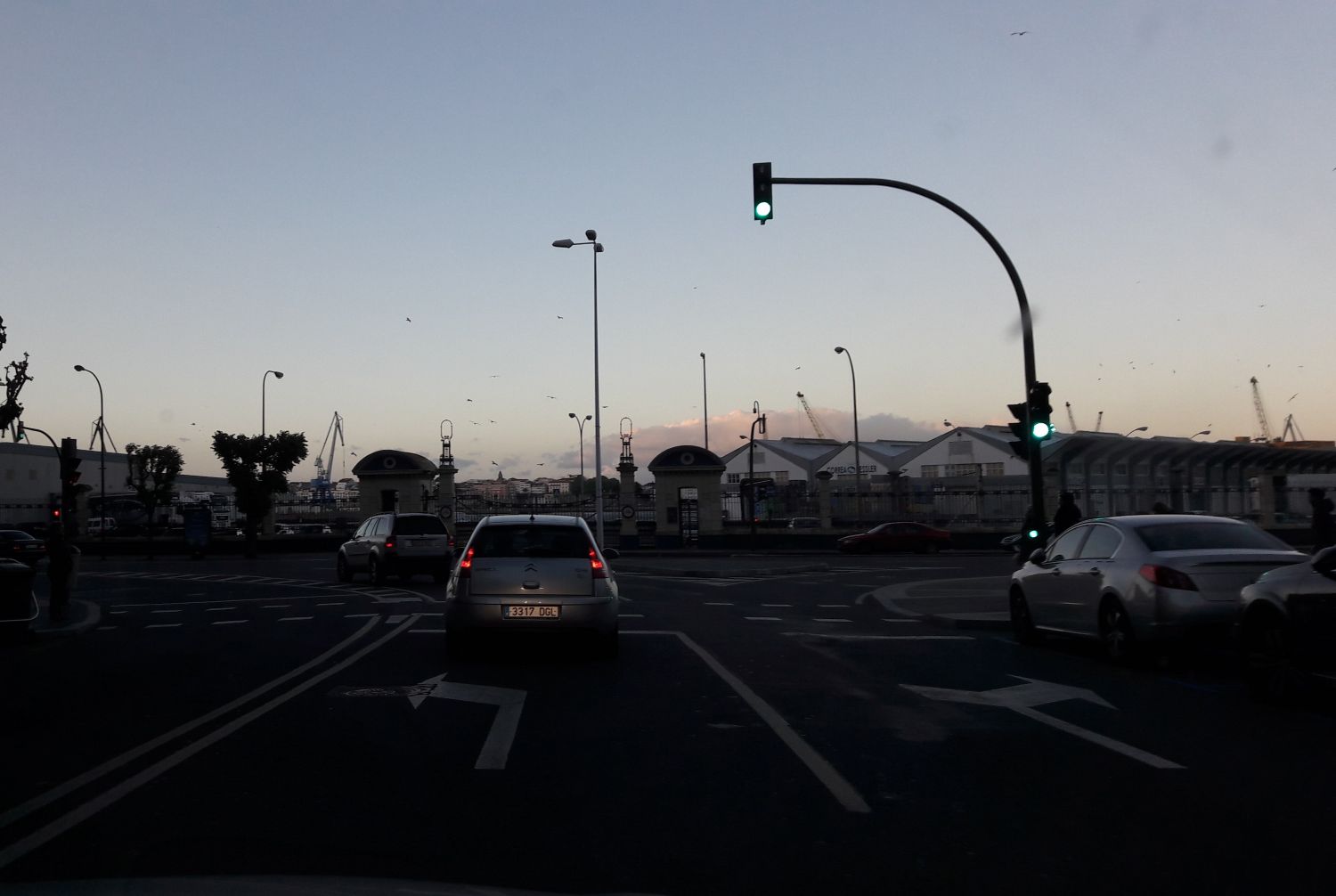
We left the hotel and had a nice ride by the port, sublime, before going to eat at the wonderful area restaurant . Another marvelous ride and lucky took a picture from the car just leaving the port. Memories forever !
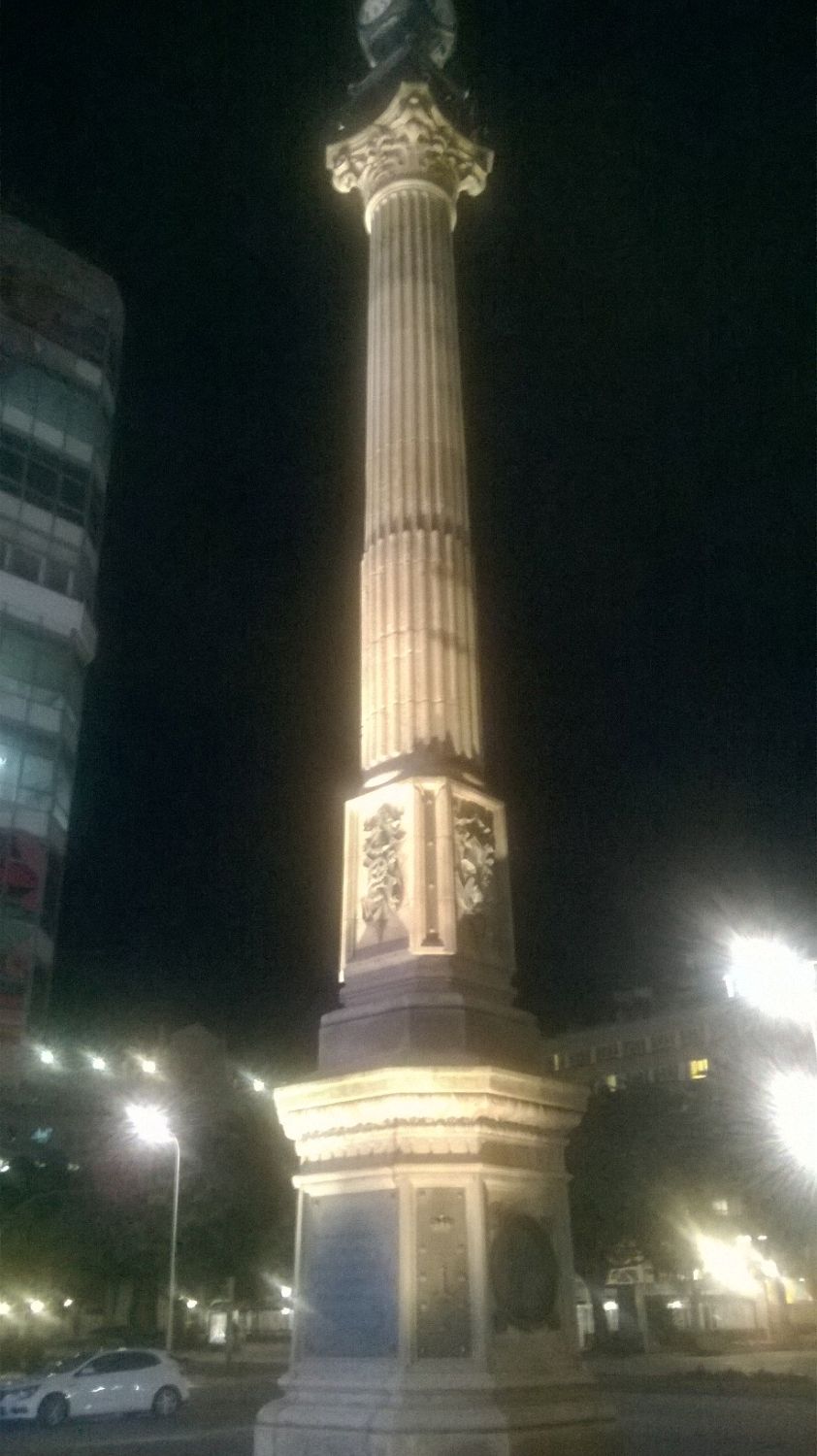
We came back to A Coruña to check into the hotel and then out to eat and walk the Plaza de Bombilla with the great obelisk or Obelisco de los Cantones.
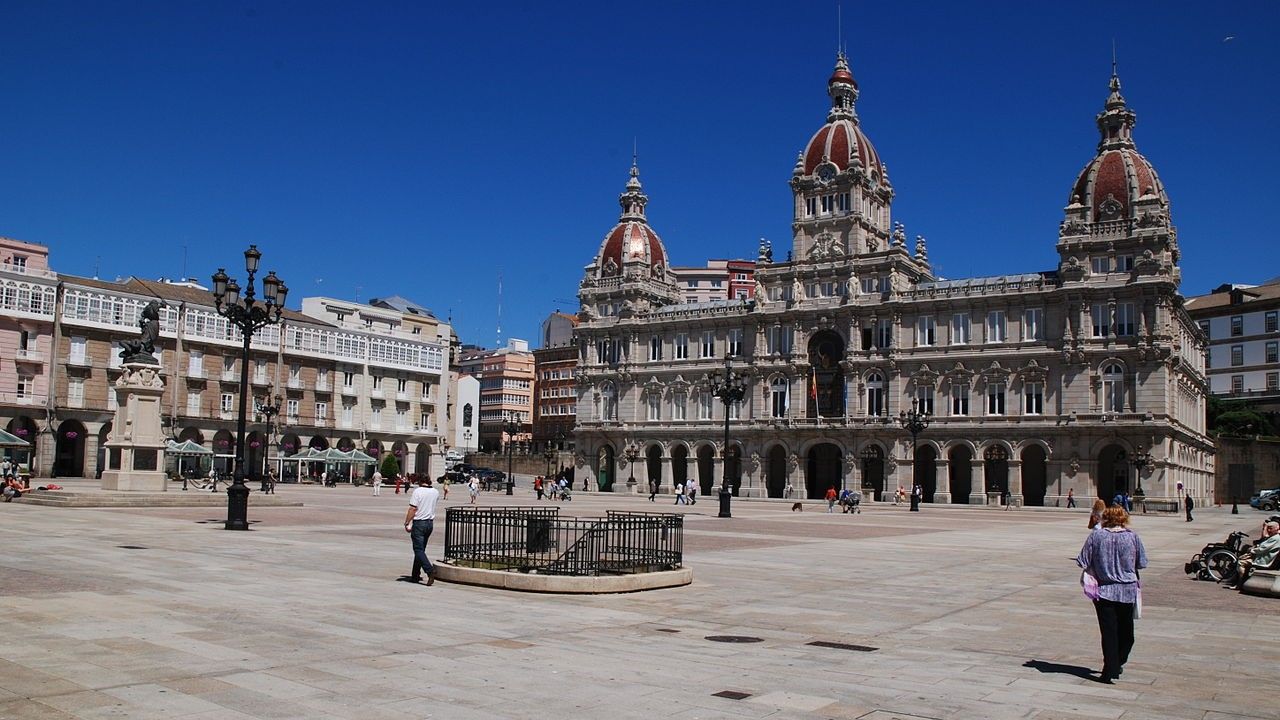
The Praza de María Pita (plaza=square) is brimming with life and energy all year round. Surrounded by cafes and restaurants offering local Galician cuisine and international dishes, it serves as a meeting point for locals and tourists alike. It is undoubtedly a must-see destination when you’re in A Coruña, whether to soak up its historical atmosphere or simply to enjoy a leisurely meal at one of its many outdoor cafes while watching the world go by. The exact measurements of the Plaza de María Pita are 112 m by 99.50 m. The 112 meters are those that run parallel to the City Hall; the 99.50 meters corresponding to the sides running perpendicular to it. In the square you see the imposing City Hall building of modernist style built between 1908 and 1912, occupying the northern front of the Plaza de María Pita. It was inaugurated by King Alfonso XIII in 1927. The building houses various administrative offices of the City Council. It has a floor area of 2,300 square metres consisting of 3 floors, and attic. Its façade was built along a front measuring 64 meters. It has 43 windows open to the exterior, and its interior has 15 arcades that rest on wide pillars. Its three domes are particularly striking against the La Coruña skyline.
The A Coruña tourist office on the Plaza Maria Pita: https://www.coruna.gal/tourism/en/what-to-do-in-a-coruna/art-and-culture/picasso-route/detalle-ruta-picasso/plaza-de-maria-pita/entidad/1374541973201
The Galicia region tourist office on Plaza Maria Pita of A Coruña: https://www.turismo.gal/recurso/-/detalle/26835/praza-de-maria-pita
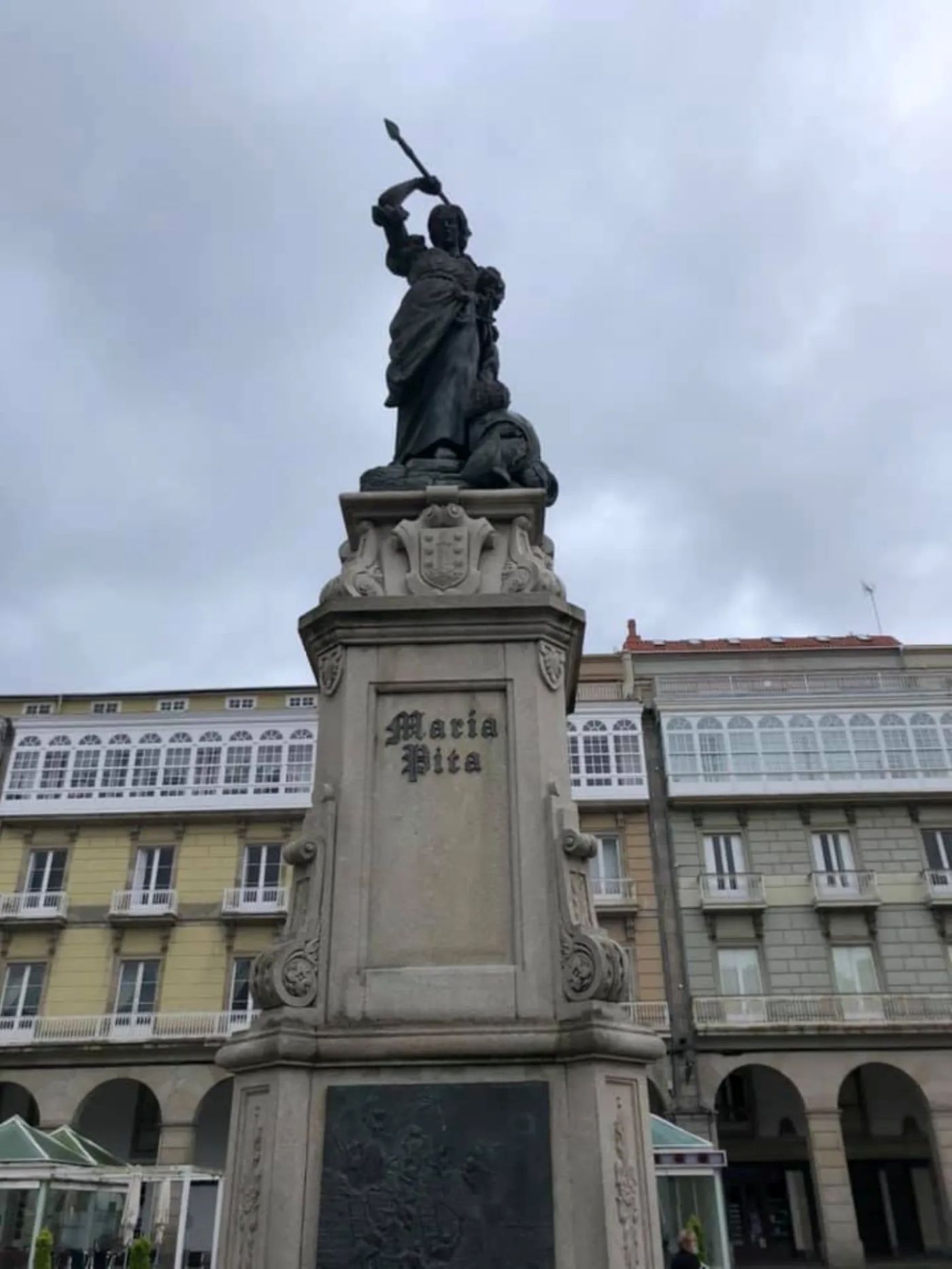
Maria Mayor Fernandez y Camara aka Maria Pita, was a Galician heroine of the defense of A Coruña in 1589 against the English armada, In the Plaza de María Pita, in front of the City Council, the monument is raised in honor of María Pita. The statue made in bronze, done in 1998, represents the heroine with the spear with which she killed the English ensign while taking with the other hand the lifeless body of Gregorio de Racamonde, her husband. The total height of the statue is 9.3 meters, composed of a 45 cm steps platform, a 5.6 meters pedestal and a 3.30 meter sculpture with a weight of 30 tons. At her feet there is a cauldron , symbol of the liberal character of the Coruña people.
The Church of San Jorge (Saint George (en) San Xurxo (gal) ) is a baroque style church located in the Plaza del Marqués de San Martín and adjacent to the emblematic Plaza de María Pita, The church is a three -nave temple, with lush decoration inside. The facade is of clear Compostela influence, with giant columns, a large rectangular hole presides over the composition, while the allets remember the Jesuit origin of this architecture. Its construction began in 1693 and extended until 1906, a long process full of difficulties, but culminated in one of the architectural jewels of the Galician Baroque, The church was conceived as a convent for the Society of Jesus, a religious order known by its Influence in education and culture during the time. The Jesuit presence in A Coruña was significant until 1767, when the order was expelled from Spain. In 1774, the building was assigned to the Augustinians, who continued to use the temple and made various modifications over the years. The 18C was a crucial period for the Church, since it suffered a complete reedification. It is at this time that the Church acquires much of its exuberant interior ornamentation, which was mostly made between 1704 and 1867, In medieval times many of the English pilgrims chose to start the route in the Church of San Jorge, which was located in the space that Rosalia theater occupies today. The reason was that San Jorge or Saint George was the patron Saint of England.

The Plaza del Marqués de San Martín, a square that has witnessed the historical evolution of A Coruña. This square, adjacent to the Plaza de María Pita, is a square that combines the past and present of the city. Here, visitors can enjoy a spectacular view of the church facade, surrounded by historical buildings that tell their own history. . Indeed a wonderful walk in a short time,
The A Coruña tourist office on the monument Maria Pita: https://www.coruna.gal/tourism/en/what-to-do-in-a-coruna/art-and-culture/tour-of-ciudad-vieja/detalle-ruta-ciudad-vieja/maria-pita-statue/entidad/1453795112379
A private webpage on the Church San Jorge of A Coruña : https://iglesiascercanas.com/iglesia-en-a-coruna-iglesia-de-san-jorge-29009
The Galicia region tourist office on A Coruña: https://www.turismo.gal/que-visitar/cidades/a-coruna?langId=en_US
There you go folks, a fabulous City that needs to be visit more, Thanks for the memories always and glad was able to put more pictures of it in my blog, Again, hope you enjoy this post on curiosities of A Coruña !!! as I.
And remember, happy travels, good health, and many cheers to all !!!

 Paris1972-Versailles2003