
In my walking warrior trails of my beloved Madrid, and with the coming of age to keep alert on the architecture all around me i came to see many buildings usually overlook by many. This is a wonderful find of pictures in my cd rom vault that should be in my blog for you and me, Therefore, here is my take on the Oratorio del Santo Cristo del Olivar of Madrid !!! Hope you enjoy the post as I.
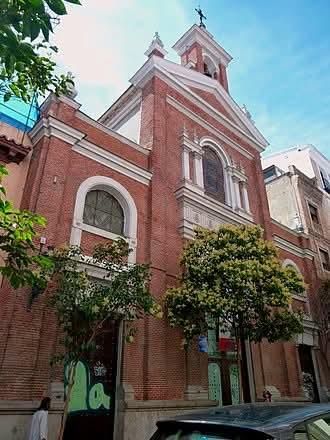
The Oratorio del Santo Cristo del Olivar or Oratory of the Holy Christ of the Olive Grove, aka Oratory of the Olive Grove, is located at no 4 Calle Cañizares , almost opposite the Church of San Sebastián, (see post) near Calle de Atocha. They were initially established in the Convent of the Trinity, moving in 1615 and 1617 to the Convents of the Holy Spirit and Magdalena, respectively. In the second half of the 17C they moved to their current location.
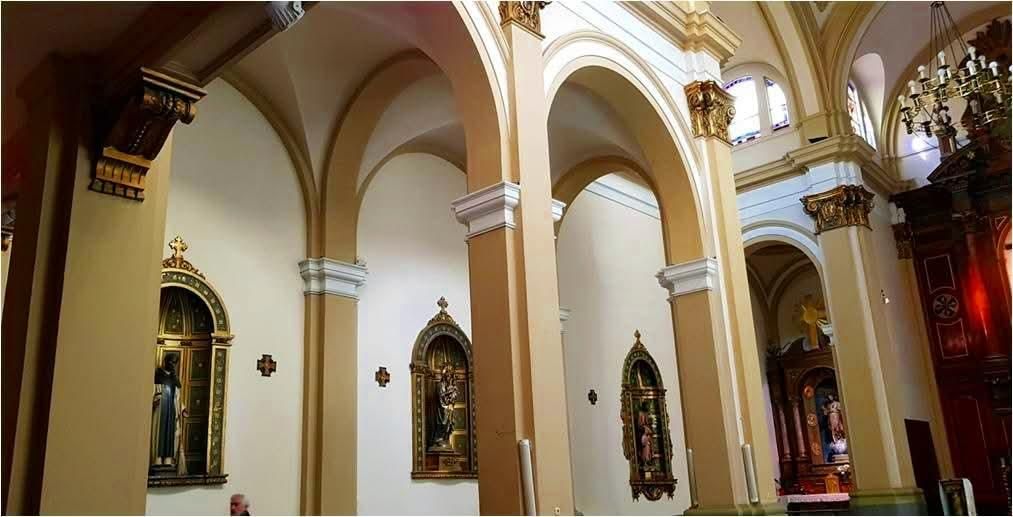
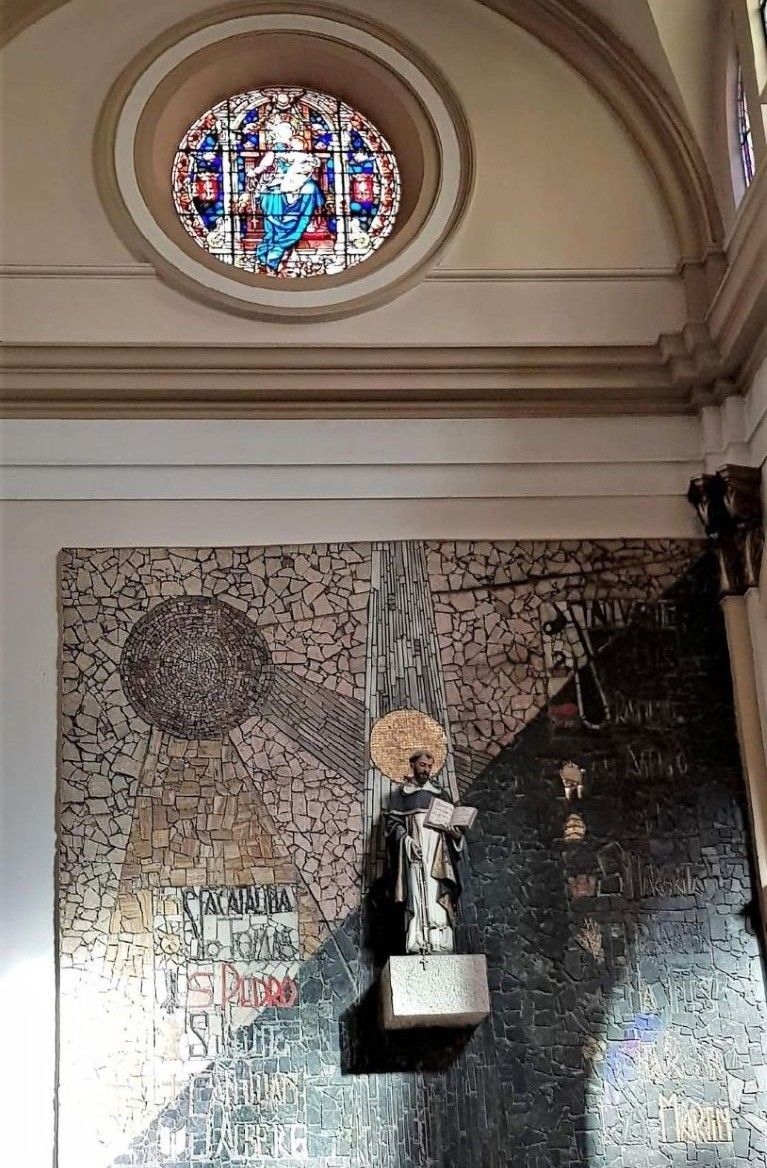
The façade is in the Herrerian style, imitating the religious architecture of the 17C. As a result of the poor condition of the pre-existing buildings, the new oratory church adopted the canons of Madrid’s Baroque architecture, resulting in a church with three naves separated by pillars with attached pilasters. The main nave is covered with a barrel vault with lunettes and the lateral naves with groin vaults. The transept is crowned by a small dome without a drum. These Baroque vestiges are nuanced in the sober main façade, made of brick in an eclectic style, mixing Renaissance elements such as the Serlian window with other neoclassical or Baroque elements. The altars and decoration are mostly contemporary, although two important old works have been preserved: firstly, the Christ of the Olive Grove, a Baroque sculpture that presides over a modern altarpiece made of unpolychromed wood. It was burned down along with the church in 1936 during the Spanish Civil War, and replaced by the current statue, The other great work of art housed in the oratory is the Virgin of the Rosary. The carving shows Mary seated on a throne, holding the Child on one of her knees, the two surrounded by a glory of child angels and cherubs among clouds, carved with great care. The work comes from the now-disappeared convent of Santo Tomás. Touring the church from the Epistle side, we pass three niches housing modern images of Saint Anthony, Our Lady of Fatima, and Saint Catherine of Siena. In the transept on this side, we see an image of Santo Domingo de Guzmán (Saint Dominic) above a large mosaic depicting the most important saints of the Dominican order.
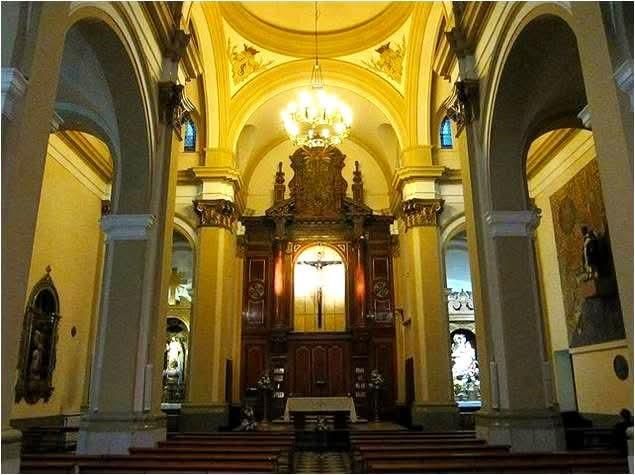
The name of Christ of the Olive Grove was taken from an old hermitage of the same name that was located in the old olive grove of Atocha. The temple suffered numerous lootings and losses during the War of Independence, the confiscations… however, it was in the 20C when it underwent the most modifications. From 1910 to 1919, the oratory and adjoining rectory were completely rebuilt The oratory’s origins date back to the 17C. In 1608, the Royal Congregation of the Unworthy Slaves of the Most Holy Sacrament was founded, a pious association whose purpose was the exaltation of the Eucharist. From the beginning, the congregation enjoyed great success among the faithful of Madrid and enjoyed the support of royalty. In 1647, the congregation built its own headquarters with a church and a house on land it had previously purchased. The oratory was inaugurated the following year. Writers such as Lope de Vizcaí, Cervantes, Quevedo, and Calderón de la Barca belonged to this congregation. During the period preceding the Spanish Civil War, the church suffered severe damage. Almost all the images and altarpieces, which had been largely preserved during the renovation, disappeared. Repaired after the war, the church was entrusted to the Order of Preachers (Dominicans), who had been serving as chaplains to the Royal Congregation since 1899. In 1966, the Olivar Church-Oratory was erected as a parish church with the name of Santo Cristo del Olivar. In this long history, it is worth highlighting the chapter of the martyrdom of the friars, five of the eleven in the community, in July 1936, beatified by Pope Benedict XVI on October 28, 2007.
The Madrid tourist office on the Oratorio del Santo Cristo del Olivar : https://www.esmadrid.com/informacion-turistica/oratorio-santo-cristo-olivar
The official Parish of the Oratorio del Santo Cristo del Olivar : https://www.parroquiaolivar.com/la-parroquia/
There you go folks, so much to see in this wonderful Madrid, been coming to it since 1970 but each time it amazes me with the things to see and do, full of life vibrant ,lively, gorgeous just feeling a need to go back lol! Again, hope you enjoy the post on the Oratorio del Santo Cristo del Olivar of Madrid !!! as I,
And remember, happy travels, good health, and many cheers to all !!!

 Paris1972-Versailles2003
Madrid’s architecture is a wonderful melange
LikeLiked by 1 person
Indeed it is and so many of them! Thanks for stopping by Cheers
LikeLike