
I am taking you back to my dear Spain again !! love it !! We came by car always except once by plane, and took time to see this wonderful City of Burgos , It really needs more time but on my road warrior trails we will be back eventually, I am glad found me new pictures in my cd rom vault to write this post for you and me, Therefore, here is my take on the Church Sant Nicolas de Bari of Burgos !!! Hope you enjoy the post as I.
The City of Burgos is located in the province of Burgos in the autonomous community of Castilla y Léón in the kingdom of Spain. Burgos, the cradle of Old Castile, and a stopover on the Camino Francés pilgrimage to Santiago de Compostela, at the junction with the Ruta de la Lana and the western branch of the Ruta de Bayona. It is a notable stopover mentioned in the Pilgrim’s Guide.
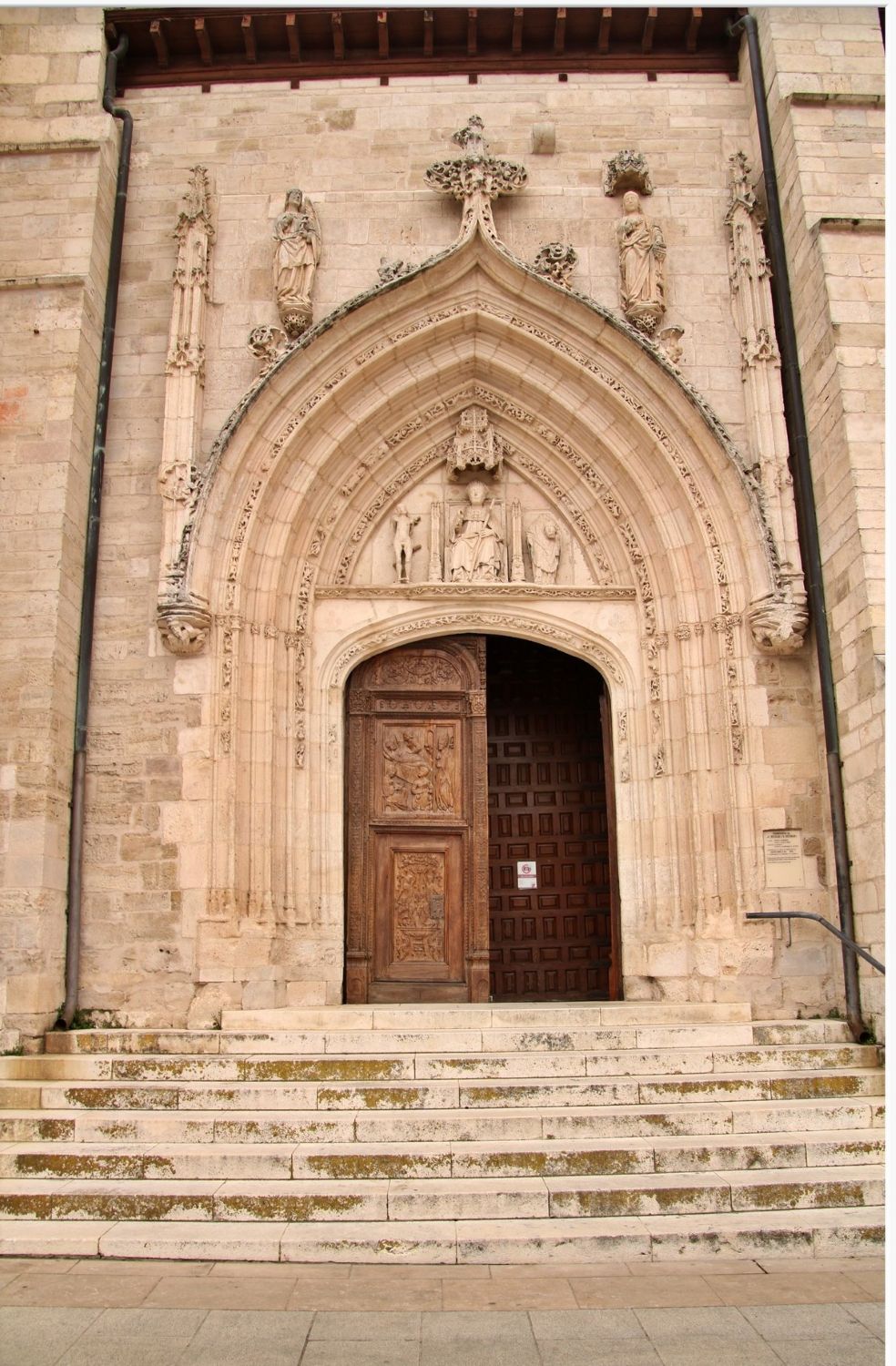
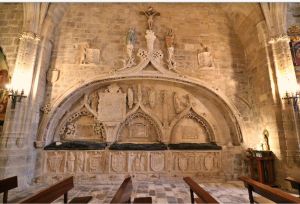
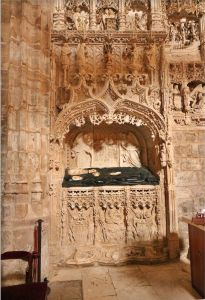
The Church San Nicolas de Bari is located next to the Cathedral, in the middle of the Way to Saint James as it passes through the city. The construction dates back to 1408, and it is built on the site of a Romanesque temple. The Gothic tombs in the church, in which members of the wealthiest families of thFernán González was the place of residence of the nobility and the bourgeois oligarchis period rest, are very interesting. It should be borne in mind that the present-day Calle y of the Middle Ages and the Renaissance. Gothic sepulchres and a Renaissance arch in the sepulchre of Fernando de Mena and María Sáez de Oña.
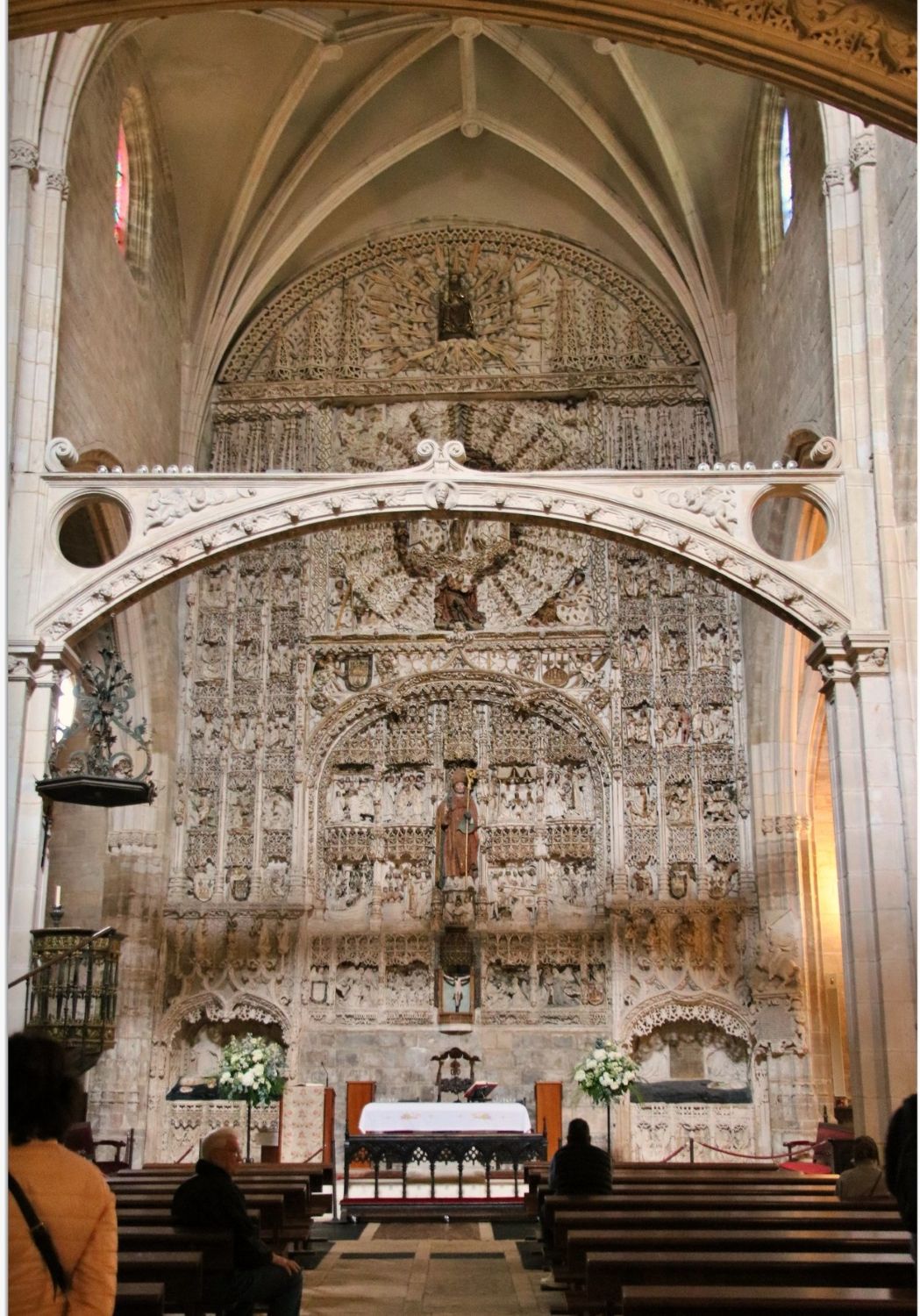
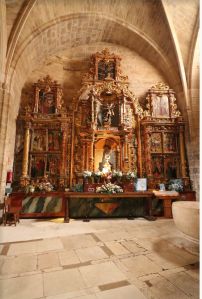
Its main altar presides one of the most monumental altarpieces of the Castilian Renaissance art, designed and produced in 1505, The altarpiece dedicated to St. Nicholas is an imposing retable that is unique among its contemporaries in terms of its size and its materials. It is both the largest lay commissioned carved retable from late medieval Burgos and the only altarpiece made from stone that survives from the city’s late medieval period . Its extremely profuse decoration includes no fewer than 465 figures. In the upper section, the crowned Virgin appears encircled by a theory of angels. Around the central statue of Saint Nicholas, the sculptor retraced the saint’s life and his journey by caravel to Alexandria. Below, the apostles depicting the Last Supper are seated with their backs to him. The simplicity of its face is in contrast with the richness of its interior. Also of note is the Baroque altarpiece of Saint Michael, which houses ten Hispano-Flemish paintings from the 15C. Nor should we forget the 16C painting of the Last Judgement, which was restored in 1988 as part of the Ages of Man Exhibition. During the guided tour of the Church Saint Nicholas it will also show you a rich collection of Flemish tapestries. .
A bit of history I like tell us that the city of Burgos was founded as such by the Castilian Count Diego Rodríguez “Porcelos” in 884, as part of the policy of repopulating the territories reconquered by the Christians. Alfonso III, King of Leon, trying to stop the advance of the Muslims, ordered Count Diego Rodríguez to create a city on the banks of the Arlanzón. The origin of the city is, therefore, military. Burgos was populated by royal ordinance and subjected directly to the authority of the Kings of León. Around 930, it became the capital of the County of Castile when it gained independence from the Kingdom of León, under the leadership of Fernán González. The city was proclaimed an episcopal see in 1074, then elevated to the rank of archbishopric in 1574. At the beginning of 1582, Teresa of Avila went to Burgos to found a Carmelite convent at the request of Jesuit fathers and with the support of the city’s archbishop. She was accompanied by 8 Carmelite nuns ,and 3 Carmelite fathers, including Jerome Gratian, the provincial. She arrived on January 25, 1582, when the city suffered a major flood. Housed for a time in the city hospital, the nuns suffered from the cold and lack of food. After some administrative hassles, the Convent of San Jose (Saint Joseph) was founded: it was the last Reformed Carmelite convent founded by Teresa of Avila. Seriously ill, Teresa wanted to reach Ávila; she passed through Palencia, but, too weak to continue, she stopped in Alba de Tormes and died there on the evening of October 4, 1582. At the time of the Spanish Civil War (1936-1939), Burgos housed the seat of the nationalist government of Gen Franco, a position it held until the capture of Madrid in March 1939. The Bérard-Jordana Accords, recognizing Franco’s legitimacy over Spain in exchange for Spanish neutrality in the impending conflict between France and Germany, were signed in Burgos on February 25, 1939. At the same time, the city also hosted the first national government of Spain, in which Franco officially assumed the functions of head of state and government. On August 9, the second Francoist government was formed, still in Burgos, where it remained until October 18, 1939, when it moved to Madrid.
The City of Burgos on its history : https://www.aytoburgos.es/historia-de-la-ciudad
The Castilla y Léon regional tourist office on the Church San Nicolas de Bari : https://www.turismocastillayleon.com/en/heritage-culture/churches-chapels/church-san-nicolas-de-bari
The Burgos tourist office on the Church San Nicolas de Bari : https://visitaburgosciudad.es/en/web/guest/que-ver/casco-historico/iglesia-de-san-nicolas-de-bari
There you go folks , another wonderful nostalgic, sentimental trip to my dear Spain, Burgos is nice, awesome will say, and love it ! We will be back, eventually, Very convenient on my road warrior trails between France and Spain, Again, hope you enjoy this post on the Church San Nicolas de Bari of Burgos !!! as I
And remember, happy travels, good health, and many cheers to all !!!

 Paris1972-Versailles2003
This brings back some fond memories from the Camino
LikeLiked by 1 person
Glad it did, thanks for stopping by Cheers
LikeLike