
I have passed by Teruel numerous times and did not made it into city center until finally one day long ago stop by, I am glad found me pictures in my cd rom vault to post here for you and me, I need to tell you Teruel is in the province of Teruel and in the Autonomous community of Aragon, in northern Spain. Therefore, let me tell you my take on curiosities of Teruel !!! Hope you enjoy the post as I.
The roads are plenty in around Teruel, and I used them exclusively over the years, The most has been the Autovia Mudéjar or A23 that goes from Sagunto to Teruel Daroca, Zaragoza, Huesca , Somport and France ! Others have been the N420 that can go towards Cuenca and the N330 to Requena and Utiel Zaragoza, Huesca Jaca, Somport and France ! And the N234 that passes as well by Calatayud, Soria and Burgos, Teruel preserves several Mudejar buildings that have been declared World Heritage under the name “Mudejar Architecture of Aragon” such as the tower, roof and dome of the Cathedral of Santa María de Mediavilla, the tower and church of San Pedro, the tower of the Church of San Martín and the tower of the Church of El Salvador.
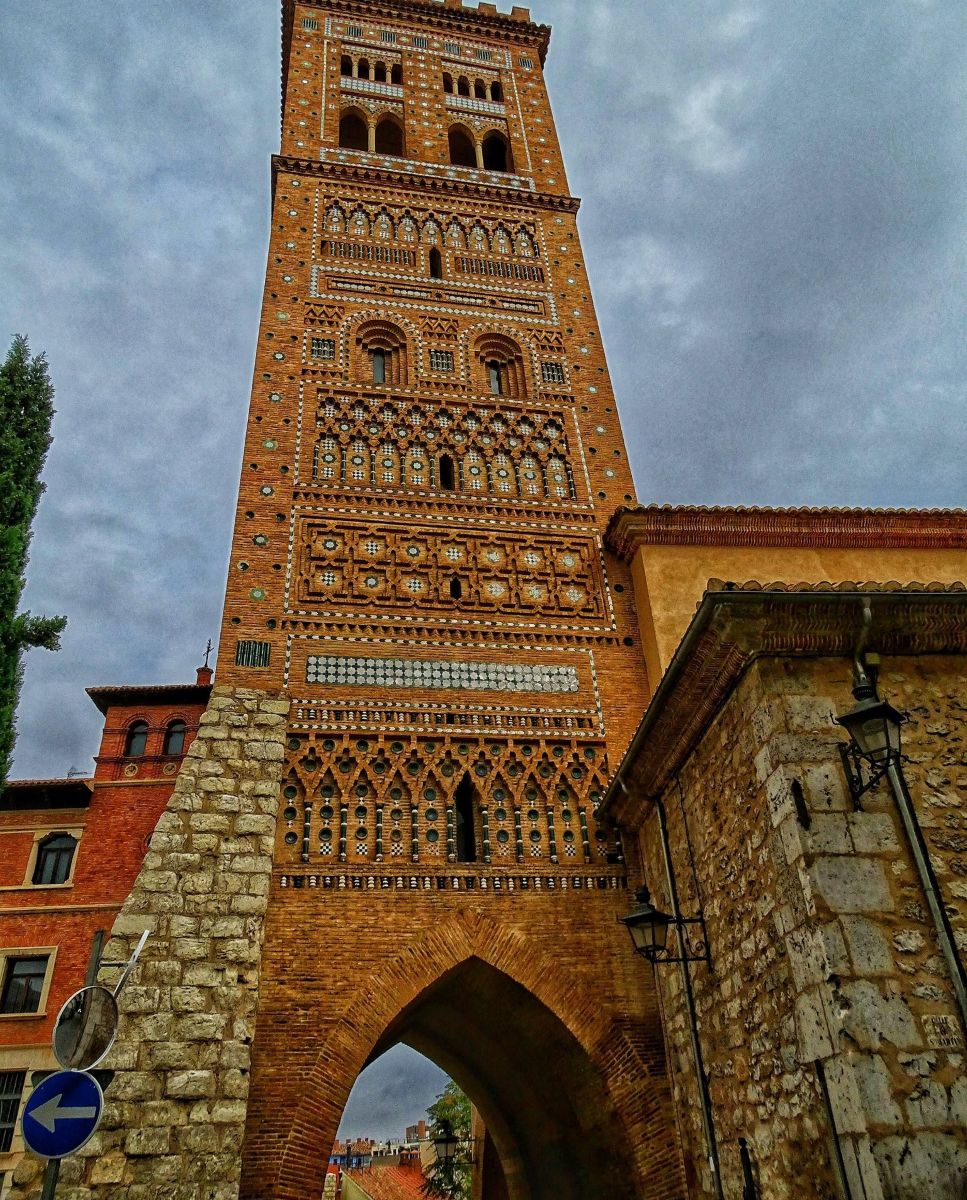
The Cathedral of Santa María de Mediavilla is one of the most important Mudejar buildings in Spain. The Cathedral has its origins in the church of Santa María de Mediavilla, which began to be built in the Romanesque style in 1171 and was completed in 1257. In the second half of the 13C, the Mudejar builder Juzaff restructured the old Romanesque work and provided the building with three Mudejar naves made of masonry and brick, which improved and elevated the Romanesque structure of the 12C. The Mudejar tower began to be erected in 1257 and a pointed barrel vault passage was opened in its lower body for use by passers-by. It is one of the oldest Mudejar towers in Spain.
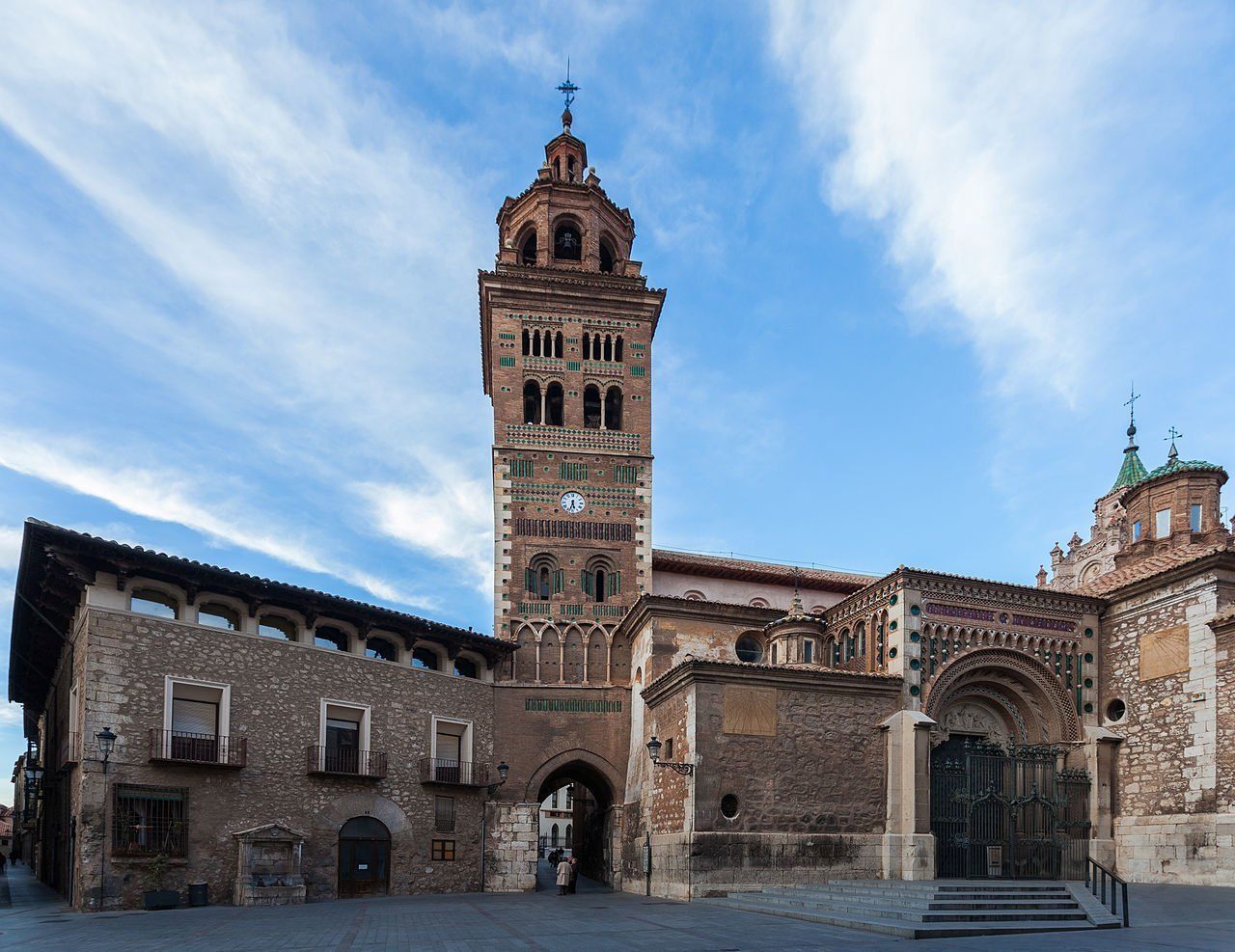
The official Catedral of Teruel : https://www.diocesisdeteruel.org/catedral-de-teruel/
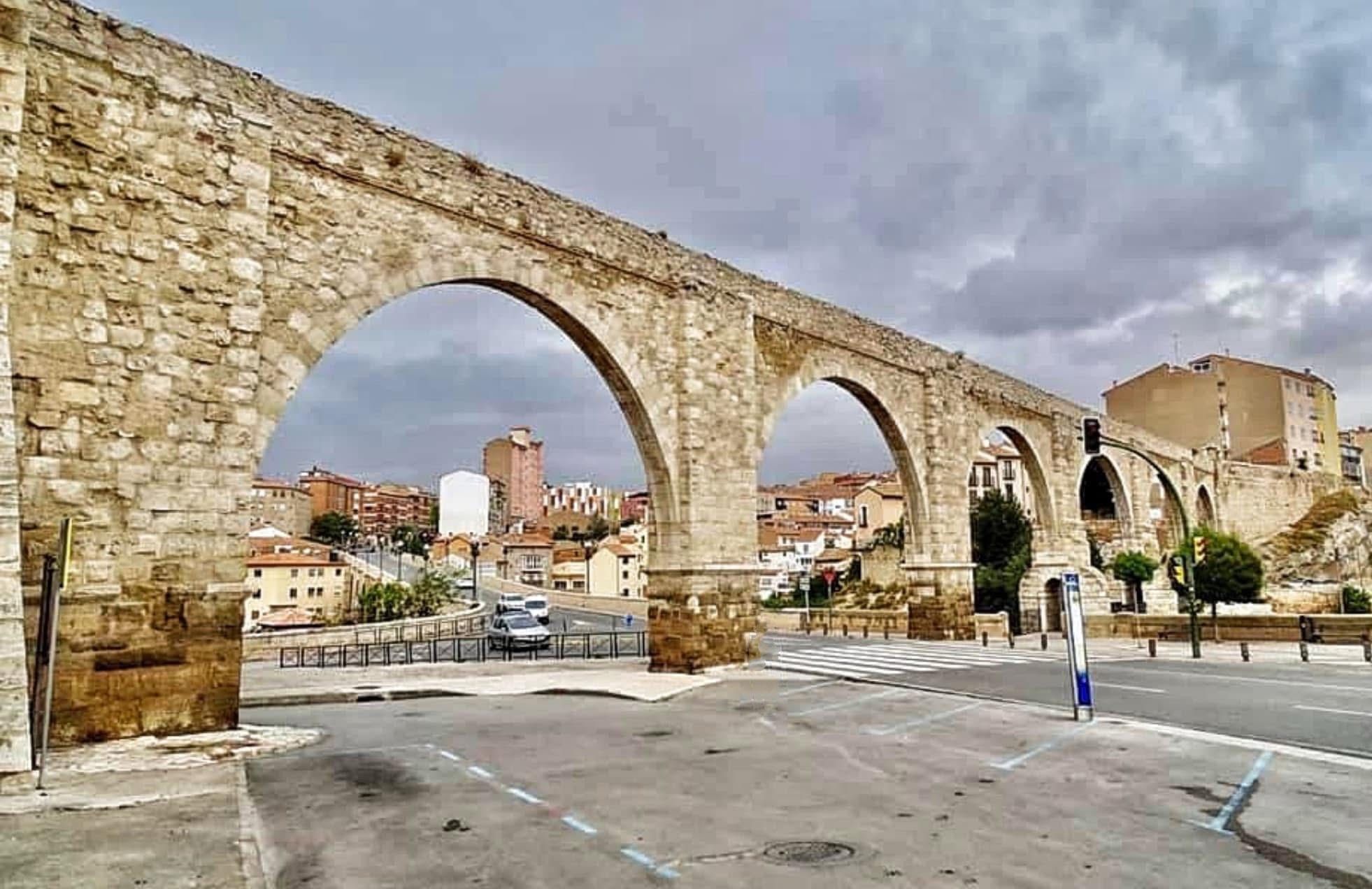
El acueducto de los Arcos o Traída de las Aguas or the Aqueduct of the Arches or Traída de las Aguas is one of the most important engineering works of the Spanish Renaissance. Construction of the Traída de Aguas (Water Supply) began in 1537, drawing water from Peña del Macho, a spring located halfway between Teruel and Valdecebro. In 1551, the Teruel Council commissioned Quinto Pierres Bedel, an architect of French origin who had successfully completed the complicated underpinning of the Mudejar tower of San Martín Church, to restart construction of the Traída de Aguas (Water Supply). This required laying a 4,450 meters pipeline made from around 12,000 ceramic arches; it had 140 manholes and two underground mines of around 190 meters long, crossing two ravines by means of arcades. Two new arches and a mine were later added to improve the layout at three problematic points. The Los Arcos aqueduct were completed in 1554.
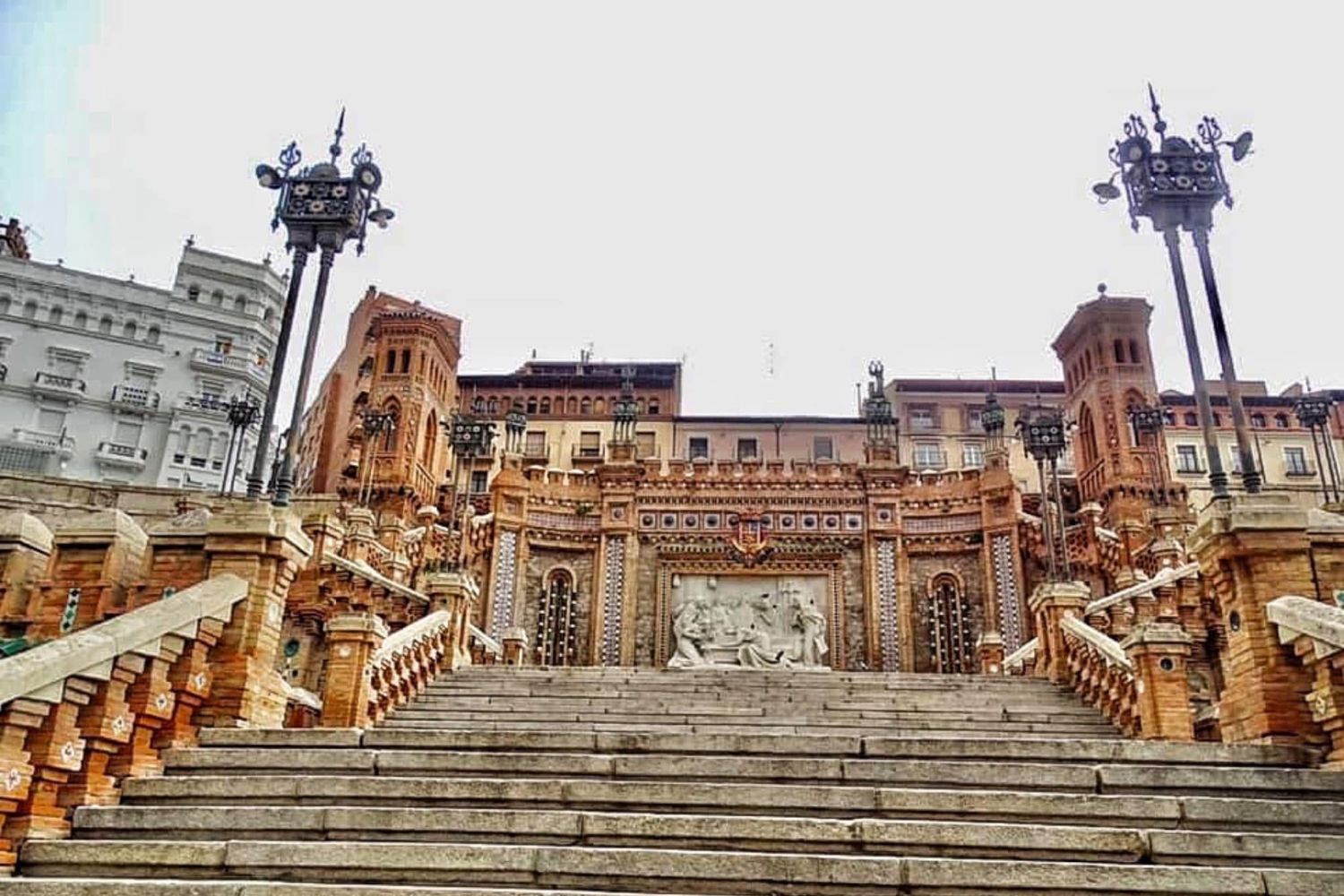
The Escalinata del Paseo del Óvalo or staircase of the Paseo del Óvalo is one of Teruel’s most emblematic monuments. It was built between 1920 and 1921 to connect the gap between Paseo de la Infanta Isabel (now Paseo del Óvalo) and the street of the Central Aragón Railway Station. With this monumental construction, it was intended to provide the city with a proper access from the station, as well as to showcase architectural and decorative elements drawn from the local Mudejar tradition and modernism. The staircase is ultimately the epitome of Teruel for the traveler arriving in the city and is currently the key work of Teruel’s Neo-Mudejar architecture.The staircase was inaugurated on June 5, 1921. Its extension runs perpendicular to the Paseo del Óvalo and overcomes the existing 26-meter gradient. The Staircase is structured in three distinct sections, connected by two small plazas. The first section begins at the station, crosses the Station Gardens or Botanical Gardens, almost without ascending, and reaches a small square with a central green space. The second section consists of seven sections that lead to a viewing plaza presided over by a large fountain and a relief dedicated to the Lovers. Finally, the third section divides into two semicircular staircases that surround the viewing plaza and end at the Paseo del Óvalo, topped by two towers.
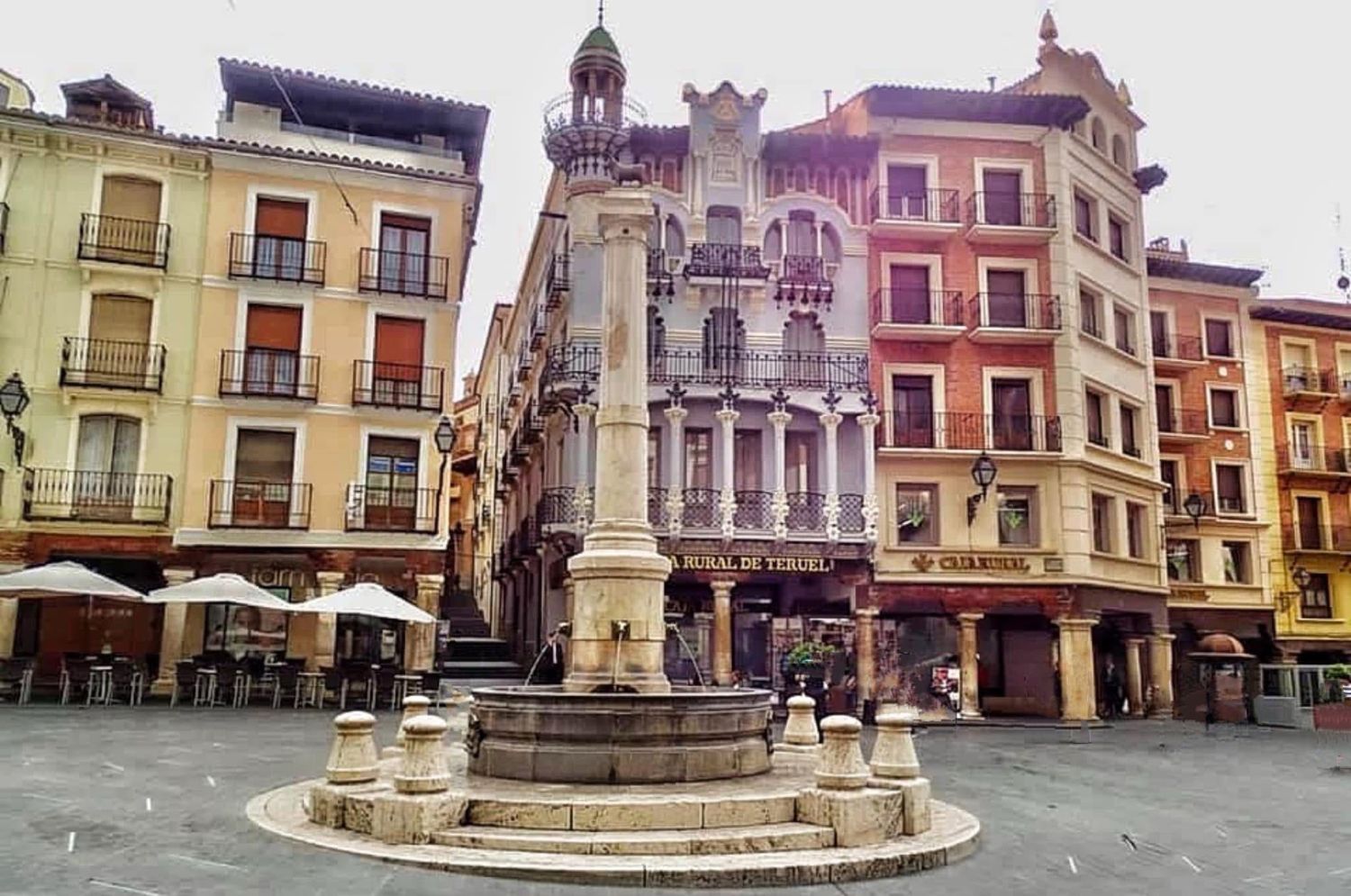
The Plaza de Carlos Castel, is the central Square in Teruel , It features a fountain with the sculpture of the Torico on a high pedestal surrounded by arcaded buildings. The buildings around the perimeter feature Modernist architecture, including the Casa Ferrán, La Madrileña, and Casa el Torico structures. The square’s central fountain, dating from 1858, supports a small bronze bull (torico) statue that has become the symbol of Teruel. This square, formerly called Plaza Mayor or Plaza del Mercado, has maintained its central position in the cityscape since medieval times. The square contains numerous shops and restaurants under covered arcades, providing shelter to visitors depending on the weather.
The Torre San Martín tower is an Aragonese Mudejar building listed as a World Heritage Site in 1986. It was erected in 1316 and renovated between 1549 and 1551, when a stone base was added. It is located in the Plaza de Pérez Prado, opposite Calle de los Amantes. It is a brick gate-tower with glazed ceramic ornaments beneath which the Andaquilla slope passes. It is accessible at its base through a pointed vault. Three of its faces are visible on the first level, as the fourth is attached to the Baroque Church of San Martín. The tower imitates the structure of the Almohad minaret with two concentric square towers between which the stairs are located. The interior tower has three superimposed floors covered with a ribbed vault.
The Teruel tourist office on the must see : https://turismo.teruel.es/en/essentials/
The City of Teruel on getting around on parkings and public transports : https://www.teruel.es/guia-ciudadana/estacionamiento-y-transporte-urbano/
The Teruel province tourist office on its heritage :https://www.sienteteruel.es/conocenos/cultura-y-patrimonio/
The Aragon region tourist office on Teruel : https://www.turismodearagon.com/en/ficha/teruel/
There you go folks, a dandy places to see in wonderful beautiful Teruel. A town that needs to be revisit and I will, eventually, Again, hope you enjoy this post on curiosities of Teruel !!! as I.
And remember, happy travels, good health and many cheers to all !!!

 Paris1972-Versailles2003