
The City of Lugo is the capital province of Lugo, in the autonomous community of Galicia, and in the kingdom of Spain, It is located about 100 km from the Costa Verde or Green Coast on the Gulf of Gascony. A wonderful memorable City that I came on business first and then with the family in my road warrior trails of my Spain, Gladly found me again pictures in my cd rom vault that should be in my blog for you and me. It remains a nostalgic spot in my life,and still friends from there, Therefore, here is my take on the Catedral Santa Maria of Lugo !!! Hope you enjoy it as I.
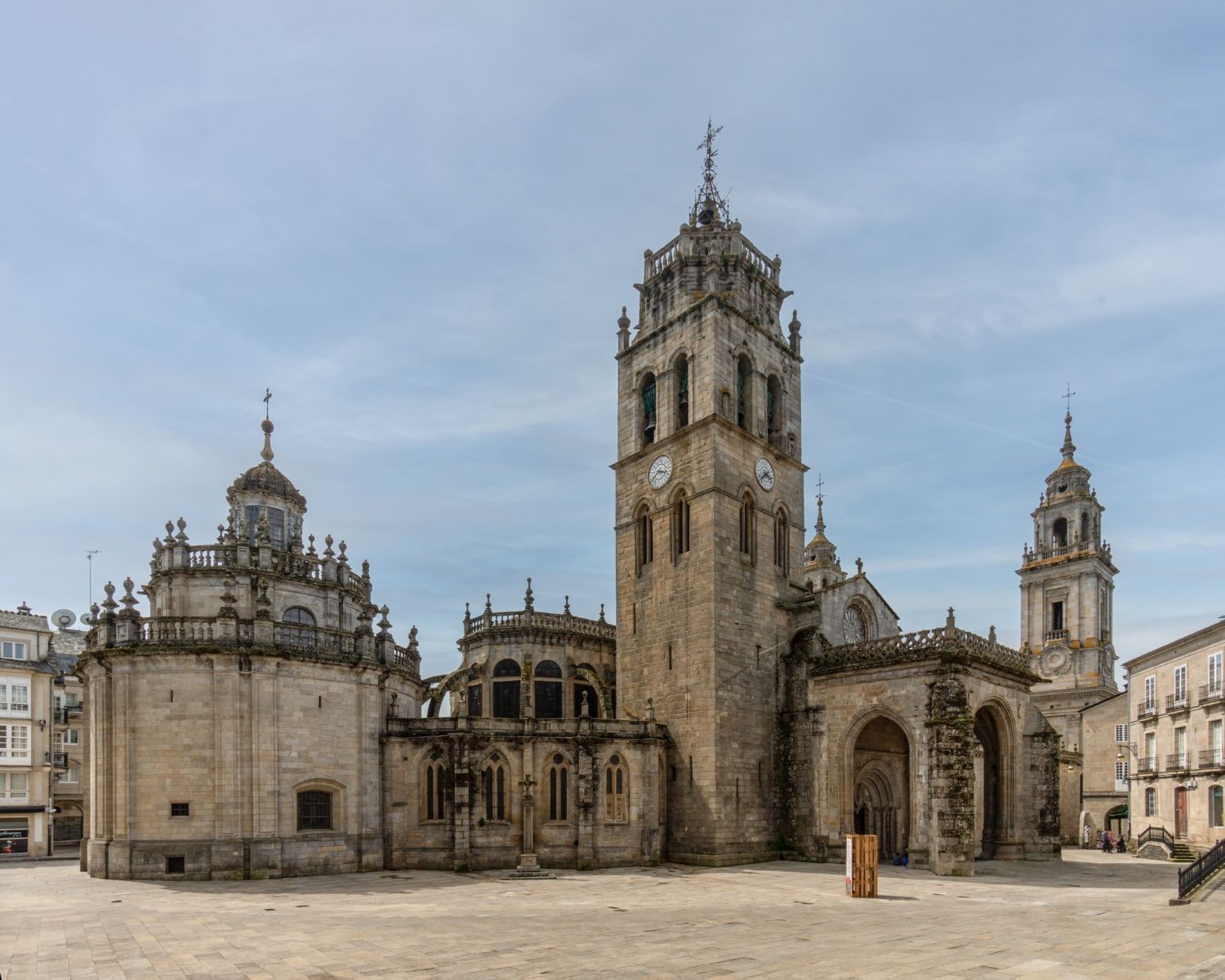
The Cathedral of Santa Maria is the episcopal seat of the diocese of Lugo. The cathedral has the papal privilege of permanent display of the Blessed Sacrament, hence the chalice and host that appear on the city’s coat of arms with the legend Hic hoc mysterivm fidei firmiter profitemvr (Here we firmly profess this mystery of faith), a reference to the mystery of the Eucharist, which was transferred to the coat of arms of Galicia itself. It has been a World Heritage Site since 2015, declared by UNESCO. This fact leads to Lugo being called the city of the Sacrament.
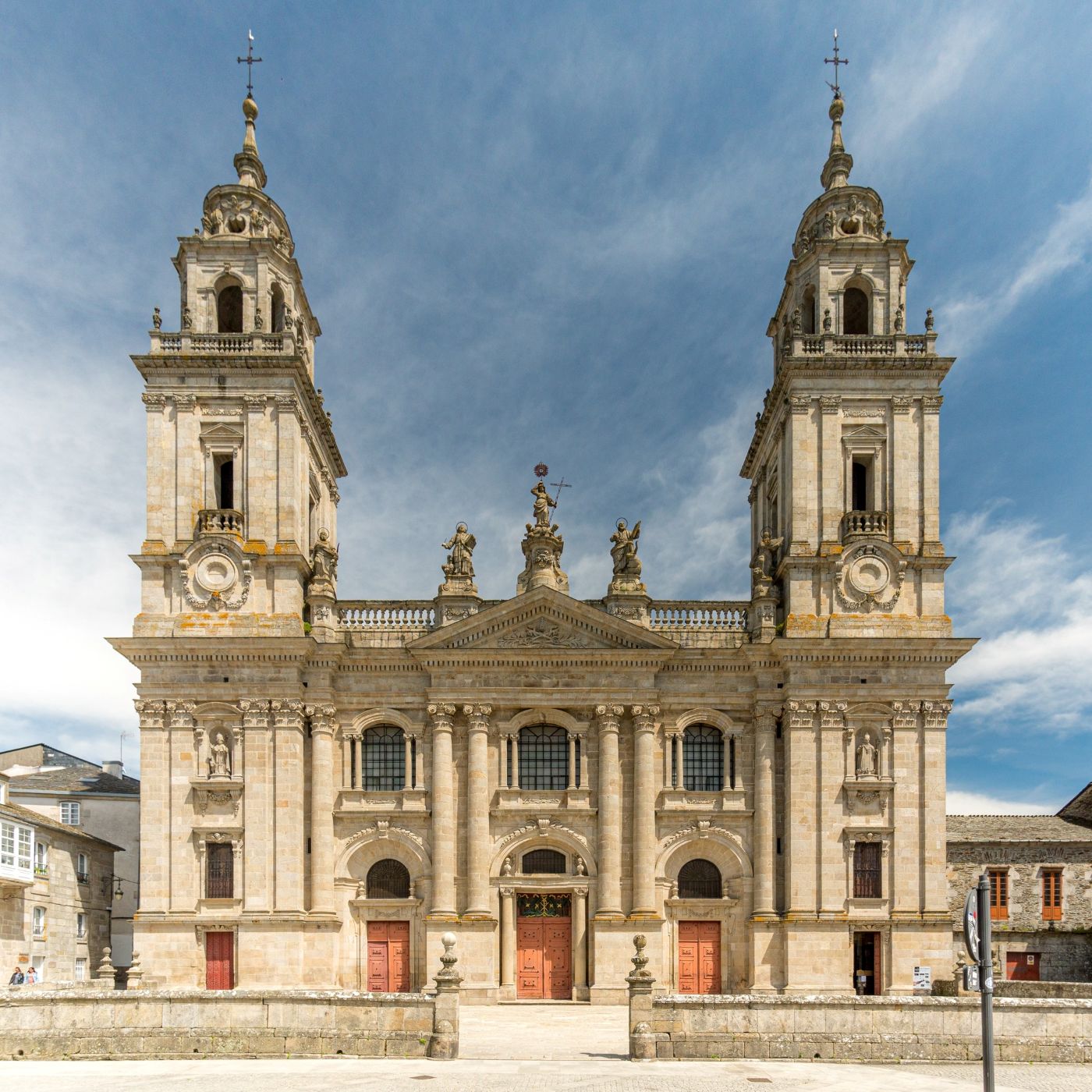
The Saint Mary’s Cathedral has a Latin cross plan with three naves, a transept and an ambulatory with five apse chapels. The main nave is covered with a pointed barrel vault and the side naves with a barrel and groin vault, with ribs in the transept and a barrel vault with lunettes in the triforium. To the left of the entrance to the cathedral is the Gothic Old Tower, topped by a Renaissance bell tower in 1571. In the Plaza de Santa María, at the head of the cathedral, there is a transept of unknown date, in the section between the bell tower and the Chapel of the Virgen de los Ojos Grandes or Virgin of the big eyes, The first body of the main chapel and the ambulatory with its attached apse chapels belong to the Gothic period, except for the central one, as well as the old chapels of Santo Domingo de los Reyes (1370) and San Froilán (1480), which currently form the so-called Pilar Chapel, in addition to the first body of the bell tower (around 1570 or before) and the narthex or north portico (1510-1530), but not the doorway. The second body of the main chapel and the current Chapel of San Froilán are Renaissance; the sacristy (1678), the chapter house and its surroundings (1683), the cloister (1714) and the central chapel of the ambulatory, called the Ojos Grandes (1726) belong to the Baroque period. The main façade, for its part, corresponds to a neoclassical style project from the end of the 18C. The completion of the façade took place at the end of the 19C, with the completion of the two towers.
One of its most notable jewels is the main altarpiece, the work of Cornelis de Holanda, which was damaged by the Lisbon earthquake of 1755. It was subsequently divided into several fragments, the two largest of which are currently located at either end of the transept, The image of the Virgin crowns the altarpiece. The carving of the Virgin pays tribute in its features to that of the Big Eyes, and on the hem of her cloak she inscribes a brief invocation, metrical and rhymed: O MATER DEI, MEMENTO MEI “Oh Mother of God, remember us” followed by AMEN, JESUS, which could also be said to be of medieval tradition (“Remember” by Saint Bernard). Of the Treasure, only a few remains remain after the Napoleonic looting in 1809. It has an important collection of chalices from the 15C to the 19C. Of particular note is the 17C monstrance, which was donated to the cathedral (1636). Other important pieces include the crown of the Virgin of the Big Eyes and the reliquary of Saint Froilán. One of the most remarkable jewels of the church’s interior is the choir stalls, built in the early 17C. The choir stalls consist of 27 stalls on the lower level and 37 on the upper level. The imagery featured in the medallions on the backs of the lower stalls and in the rectangles on the upper ones is striking. Countless naturalistic elements are also observed. It is the only Galician cathedral that preserves its choir stalls in the central nave.
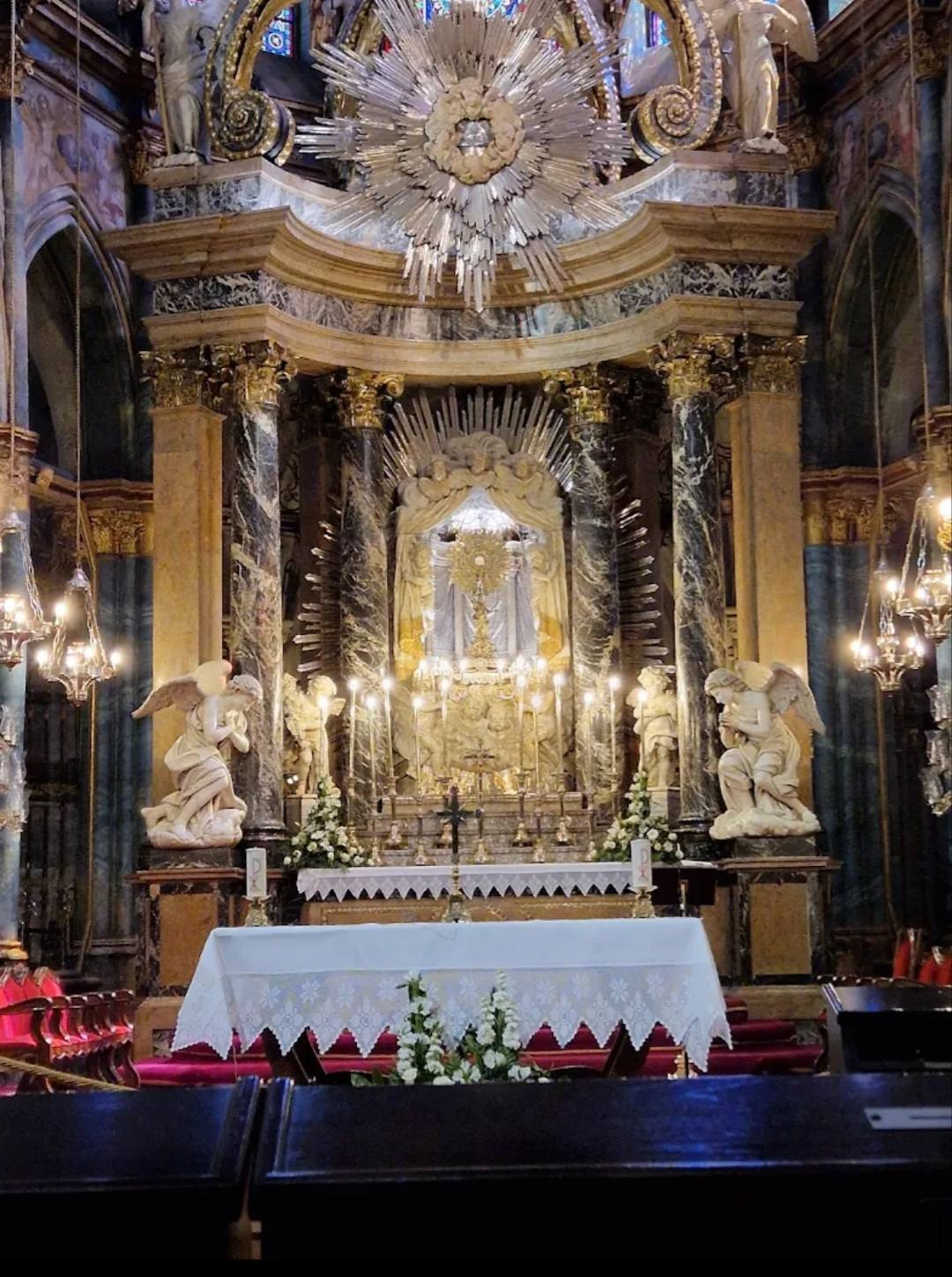
In the main Chapel of the Blessed Sacrament is permanently exposed. Since time immemorial, day and night. This motif, represented on the coat of arms of Galicia, makes the Cathedral a unique example of perpetual adoration of Jesus. It is a tradition unique in the world. For this reason, Lugo is known as Lugo, City of the Sacrament. The main chapel is the spiritual heart of the cathedral, where its inhabitants come to pray almost continuously. Be amazed by the fantastic paintings by José Terán. Discover the magnificent altarpiece by Corniellis de Holanda, placed at the end of the transept: a fantastic Renaissance work that represents one of the jewels of 16C sculpture in Galicia. Admire the beautiful ensemble formed by the main chapel, the transept, and the choir, as well as the Gothic ambulatory.
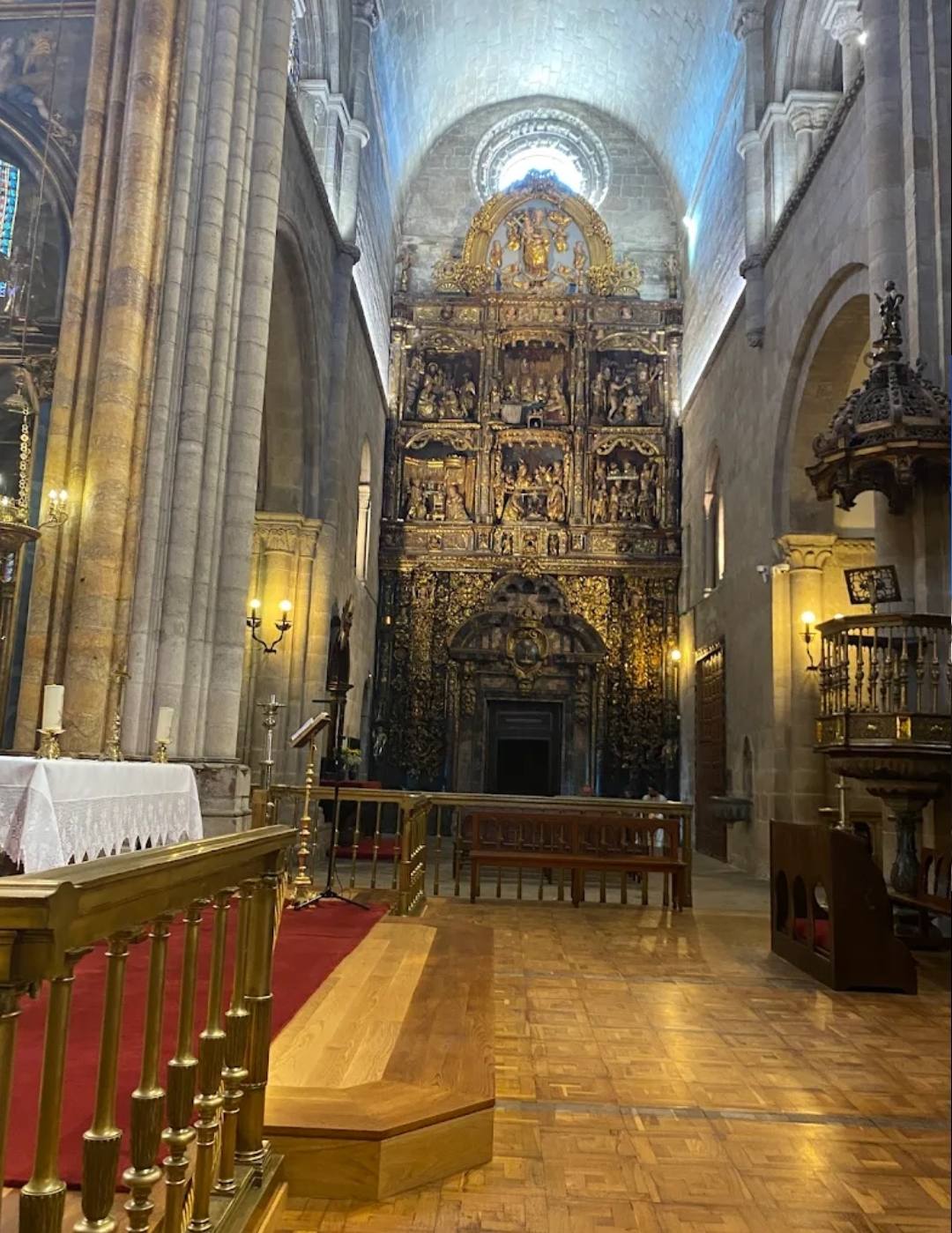
The Capilla de la Virgen de los Ojos Grandes or Chapel of the Virgin of the Big Eyes This chapel dates from the 18C, Its foundation stone was laid by Bishop Santa María Salazar on 7 December 1726. The altarpiece, one of the finest works of Galician Baroque, The image of the Virgin was canonically crowned on 15 August 1904 and was awarded the Gold Medal of the City on 15 August 1954. The artist of the polychrome stone carving is unknown. Some experts date it back to the 12C, although others put its manufacture back in the 15C. The Virgin of the Big Eyes is the patron saint of the city of Lugo and the cathedral is consecrated in her name. Her feast day is 15 August. Alfonso X the Wise dedicated his cantiga LXXVII to her, in which he describes the healing of a woman who asked the Virgin for her health, which she recovered in the cathedral of Lugo itself, at the feet of the Virgin.
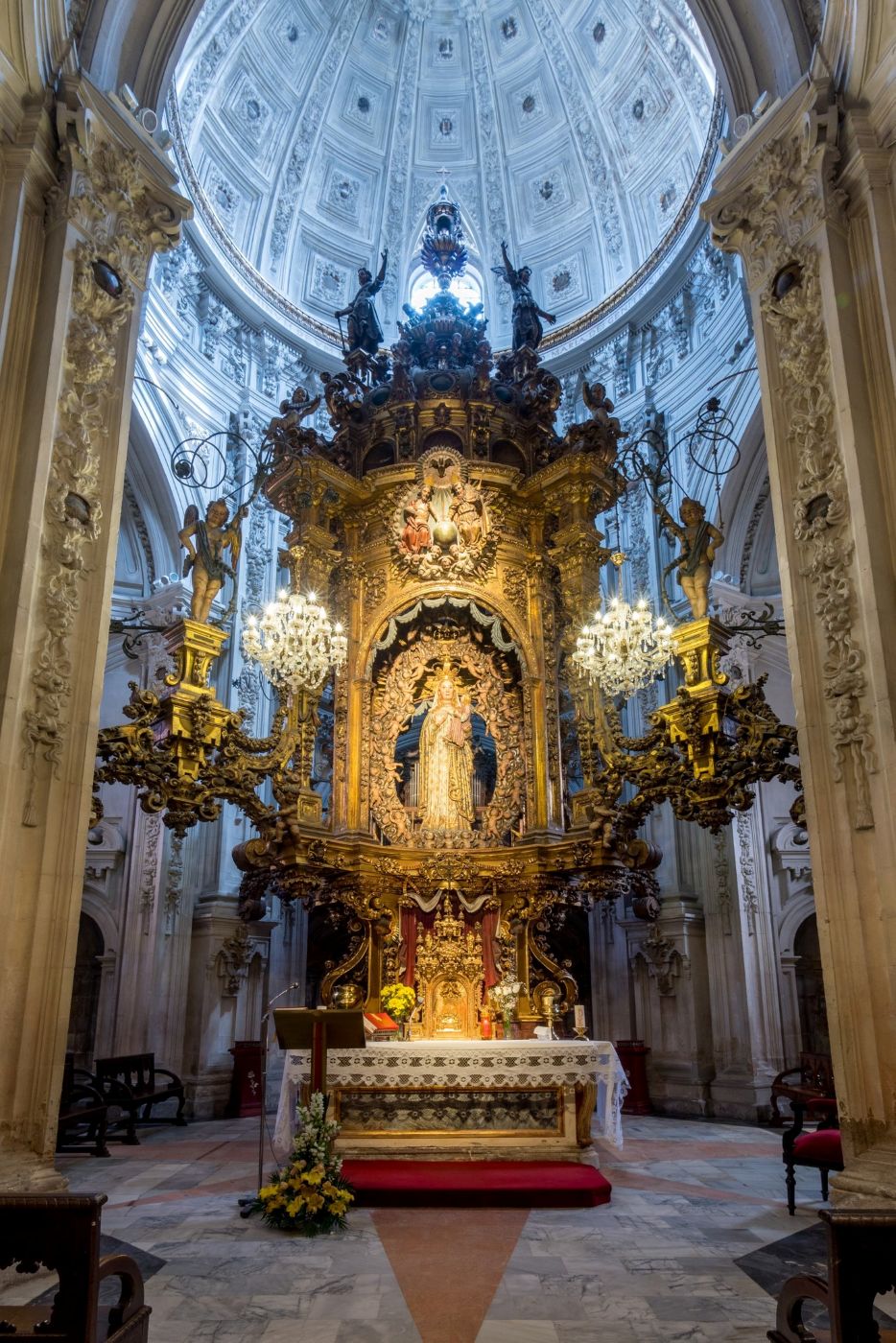
The Capilla de San Froilán or San Froilán Chapel is in the Renaissance style, from the 17C. The image of the saint, carved in wood, the head there is a tomb, known as that of Santa Froila (mother of San Froilán); the tomb is from the 9C and the sepulchre from the 12C, but it is not known whether the recipient is Saint Froila or Bishop Odoario. Saint Froilán is the patron saint of the city of Lugo. He was born in the outskirts of Lugo in 833. His feast day is celebrated on October 5. According to legend, the saint put burning embers in his mouth to accept the divine judgment to follow for his vocation: that of a hermit or a preacher. The Capilla del Pilar or Chapel of Pilar is a Gothic chapel that was formerly occupied by two separate chapels: the Chapel of the Kings and the Chapel of San Froilán. It was the master architect Gaspar de Arce Solórzano who joined the two chapels in 1611.
The ambulatory of the Saint Mary’s Cathedral is one of the most important works completed in Galicia during the Gothic period. It represents the largest transformation of the cathedral, along with the new chevet, also in the Gothic style. All the chapels within it are Gothic, except for the central one. It is essential to appreciate it from the outside as well. Beautiful railings precede the chapels of this ambulatory, among which the Chapel of Our Lady of the Big Eyes undoubtedly stands out. A highly complex creation that combines architecture, sculpture, and painting in a singular work of art that seems to merge beyond stone and wood. This is a Baroque work on which the greatest Galician Baroque artists of the time worked. In the center, the venerated image of Our Lady of the Big Eyes crowns this complete Marian theology. The image represents the Virgin breastfeeding the Child and owes its name to the expressive grandeur of her eyes.
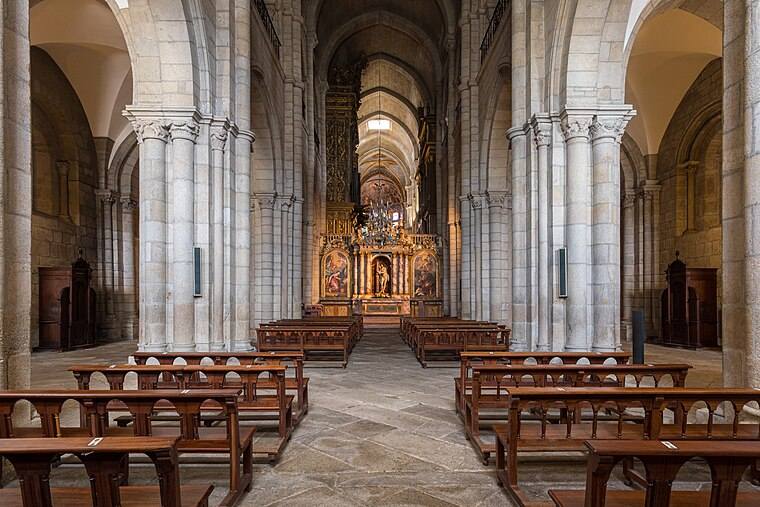
A bit of history on the Cathedral ,tell us that there is no news of what could have been the first church in Lugo from the beginning of evangelization, possibly in the 1C, until the time of Bishop Odoario, in the middle of the 8C. In the first third of the 12C, the church was in such a condition that it forced Bishop Pedro III, with his chapter and other notable people of the city, to agree in 1129 with the master Raimundo to build a new temple in accordance with the then prevailing architectural style, Romanesque. The current cathedral is, therefore, predominantly Romanesque in style; its construction began in 1129 and ended in 1273, dedicated to Santa María, in her invocation of the Virgin of the Big Eyes. The Cathedral invites you to journey through history, reflected within its walls like a large open book. This history begins in the late Roman period, after the city’s founding by the Romans.The cathedral’s greatest transformation took place; followed centuries later by another remodeling in the 18C, largely caused by the terrible earthquakes that struck Portugal. Internally, the church has the most elongated and narrowest floor plan of any Spanish cathedral church. Despite the variety of periods, its features largely reflect a late Romanesque style. The Romanesque façade of the North Door is particularly noteworthy on the exterior. The figure of Christ in Majesty, resting on a beautiful capital depicting the Last Supper, is one of the symbols of this cathedral. The temple, a summary and fusion of all architectural eras, offers an unparalleled journey through history and art through stone.
A bit of history on the City of Lugo tell us the in 25 or 26 BC, a Roman expeditionary force intended to control the northwest of the Iberian Peninsula arrived in the region that would later be called Gallaecia (Galicia), under the command of Gaius Antistius Vetus. He established a camp there, which he named Lucus Augusti. During the decline of the Roman Empire, the Suebis, a Germanic people who had invaded Hispania in 409, seized Lugo and the entire northwest of the Iberian Peninsula, and founded a kingdom in the region with Braga as its capital. This kingdom was annexed in 585 by the Visigoths. Lugo then became part of the Visigothic Kingdom of Spain until the Muslim conquest of the early 8C. Occupied by the Arabs in 714, the city was reconquered by King Alfonso I of Asturias in 741. Under the regime of Napoleon I, during the Spanish campaign,(1808-1812) Lugo was occupied by the French.
The official Catedral Santa Maria of Lugo : https://catedraldelugo.es/
The Galicia region tourist office on the cathedral : https://www.turismo.gal/recurso/-/detalle/3098/catedral-de-lugo
The City of Lugo on its heritage : https://concellodelugo.gal/es/lugo-destino-turistico-0
There you go folks, another gem in my dear Spain, Lugo, an easy ride by car from A Coruña,(see posts), all worth it for a pleasant rest stop or more on my road warrior trails ,architecture,and history of my Spain. Again, hope you enjoy this post on the Catedral Santa Maria of Lugo !!! as I.
And remember, happy travels, good health, and many cheers to all !!!

 Paris1972-Versailles2003