
I take you and me back into memory lane to our wonderful home for several years traveling in the area. I know I sound nostalgic and I am, always looking forward to be back, eventually The family came here together and we love it! We took several rides up the Serrania de Cuenca to as much as 1900 meters ( about 6270 feet) seeking lovely villages such as Uña ,the lagoon and Toba dam and bathing areas, Therefore, here is my take on this is Uña and its lagoon in the Serrania de Cuenca !!! Hope you enjoy the post as I.
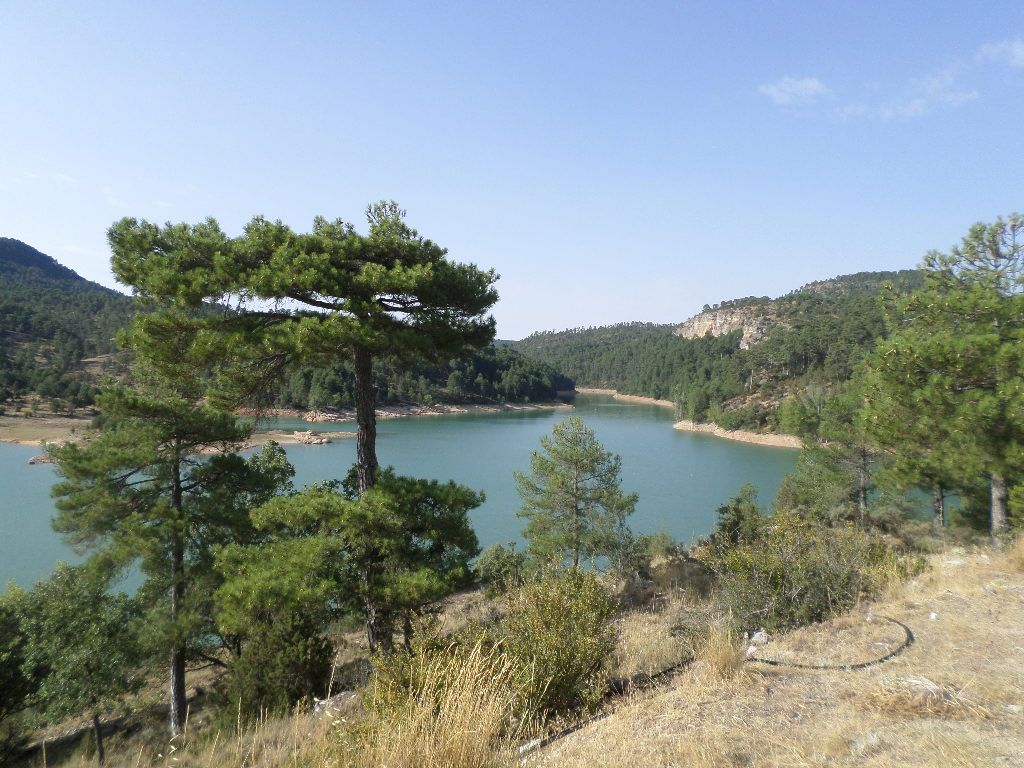
The village of Uña is located in the province of Cuenca, in the autonomous community of Castilla-La Mancha, and in my dear kingdom of Spain. The village has a population of 90 inhabitants (INE 2025). The village lies between the Uña lagoon and the Júcar river, on the river’s right bank. The Rincón de Uña stream flows into the Júcar to the north of the village. In the center of the village stands the humble Parish Church of San Miguel Arcángel (see post).
This small village, nestled in the heart of the Serrania de Cuenca (see post) mountains, sits around a beautiful lagoon and a hill through which the famous Escalerón a la Raya trail runs, ideal for hiking enthusiasts. A few km away is the renowned La Toba Reservoir, where visitors can enjoy refreshing swims during the warmer months, as well as activities such as fishing and adventure tourism. Uña is a charming little mountain village nestled in the heart of the Serranía region, just 36 km from Cuenca city. The village sits atop a hill bordered on one side by the Júcar river, which flows parallel to the CM-2105 road leading into Uña, (awesome ride) creating truly spectacular gorges and ravines that will delight visitors on their journey You leave Cuenca on the CM 2110 road continue towards Mariana where it becomes the CM 2105 continue past Villalba de la Sierra continue on a curvy mountaneous roads until reaching Uña, The lake is right on your left hand side, and you can park on the edge of the road,
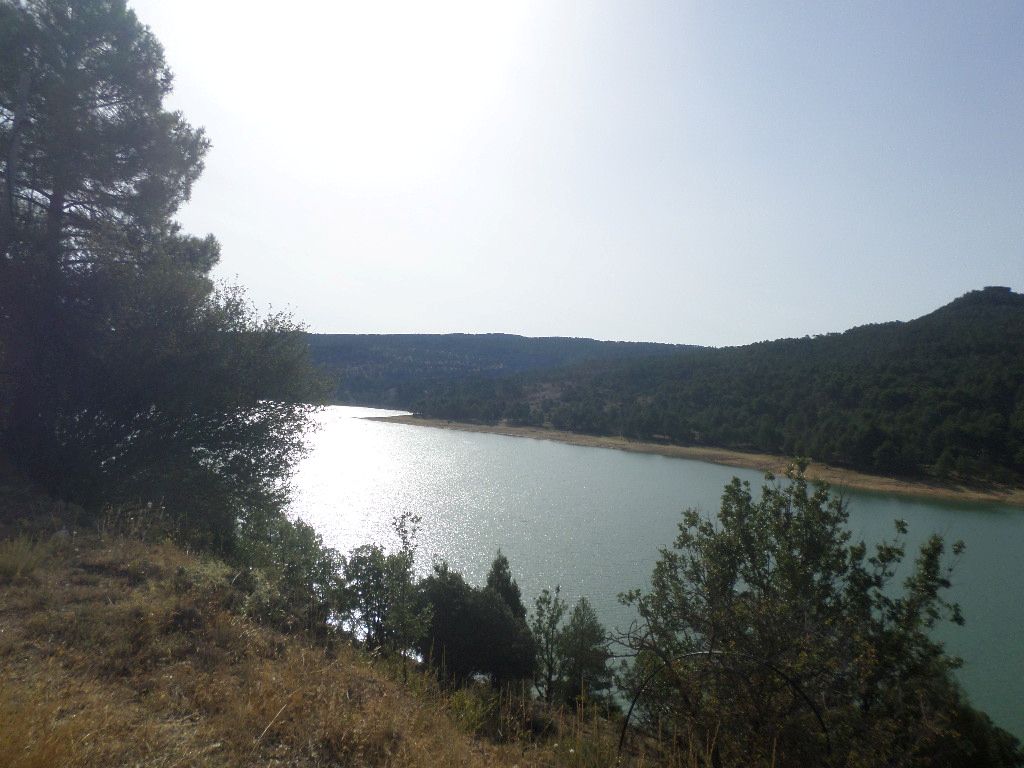
The Uña Lagoon is a peculiar and beautiful place. Strictly speaking, it’s a small lake, although before its current shape it was a lagoon, hence its original name. Almost a century ago, the small Uña Lagoon underwent a major transformation. Until then, it was filled solely by the waters of the Rincón stream, and its dimensions were much smaller than they are today. But everything changed in 1925. From that year onward, several infrastructure projects were built that would give it its current appearance and forever alter the landscape of the area. A small dam was constructed at one end of the lagoon. This raised the water level, bringing it almost to the edge of the town. A large canal was also built, diverting water from the Júcar river, from the Toba Reservoir a few km upstream, to the lagoon. And finally, another canal carries the lagoon’s waters to the Salto de Villalba Hydroelectric Plant. This caused the lagoon to grow from 3 to its current size of 15 hectares. It is a lake of 200 meters in diameter with clear emerald waters of no more than 15 meters deep.
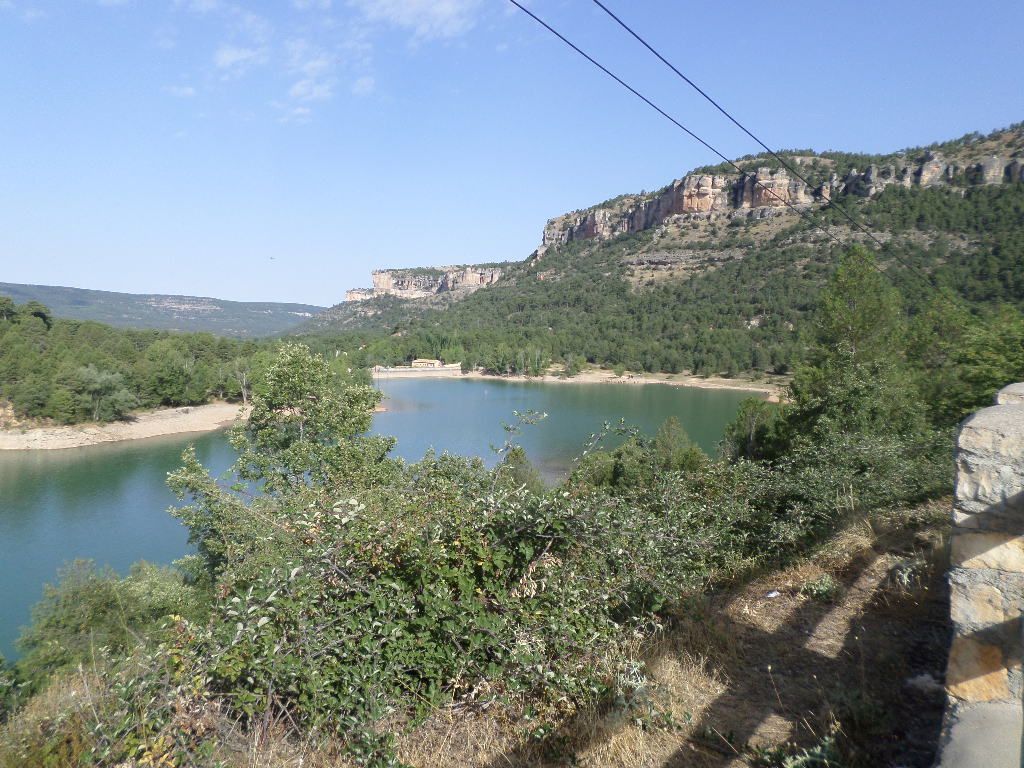
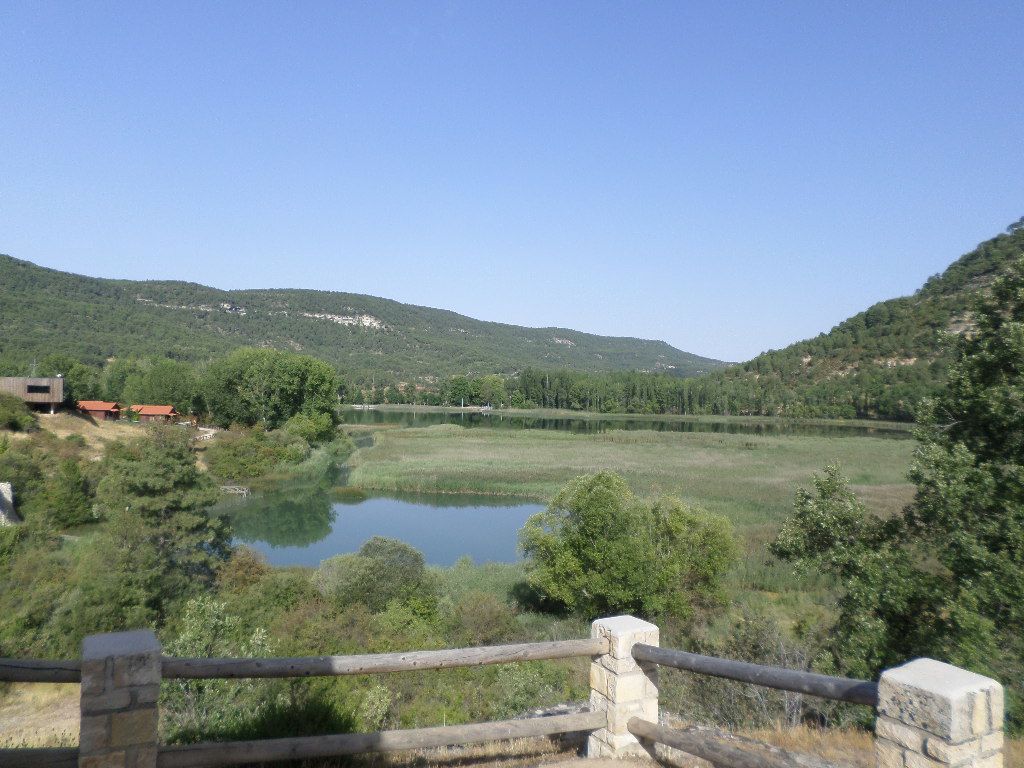
Today, the lagoon’s shores have become a place of great beauty, surrounded by typical wetland vegetation and providing shelter for many animal and plant species. Its main viewpoint consists of wooden walkways that extend a few meters into the lagoon. It’s a pleasure to walk along the Escalerón a la Raya trail, which circles the entire lagoon, passing beneath the cliffs visible in the distance. Although the climb to Escalerón has a slightly steep section and the total route is about 9 km, I went for about a km myself. Our visit was in dry season but its usually full ok. It’s well worth doing to admire the lagoon from different viewpoints, the village, and the surrounding mountains. The entire Serrania de Cuenca mountain range is full of beautiful places and charming villages. Indeed, Wild life is big here with ducks, seagalls, etc as well as deers, wild pigs etc. Around the lake you come into the Balcon of Uña, from here we can see the rocky coastal shelf, known as the castle of Uña, which shields the town from the wind. This is the landscape known as Gorge Los Cortados. The sierras of Las Majadas (where we had rented rural houses 1400 meters high) and Valdecabras, among which the Jucar river runs, are the backdrop of the town’s entrance.
A bit of history I like tell us that following the Christian conquest in 1177, King Alfonso VIII began repopulating these mountainous areas of Cuenca with settlers from the north. During the 13C and 14C, Uña was part of the Albornoz estate, a distinguished family of large landowners in the Cuenca region. The Albornoz lineage died out when Beatriz, the last holder of the estate, married Diego Hurtado de Mendoza in 1403 and endowed all her lands in the mountains to the Lordship or Entailed Estate of Cañete,(see post) created later in 1442. Uña became part of the Marquisate of Cañete as a town upon its creation in 1530 and enjoyed certain privileges. At the end of the 18C, it possessed one of the ten ironworks in the province, whose products, without competition, supplied the markets of both Castiles, Aragon, Valencia, and a large part of Andalusia. Also lime, gypsum, coal, and that ever-present jet-black color, from the lignite strata, which has permeated the history of Uña. The 20C brought one of the most significant events in Uña’s history: the construction of the La Toba canal to the Villalba Dam. This monumental construction project, in addition to completely altering the hydraulic landscape and tripling the capacity of Uña’s natural lagoon, was a driving force for the town’s socio-economic development during the 1920s. Construction of the canal began in 1924 and connected the new La Toba reservoir with the Villalba Dam hydroelectric plant.
The Embalse de Toba , a dam that starts from the Júcar river ,between mountains. It is a big swamp of 150 hectares where you can see the Muela de La Madera a place of many voltures and other rapace birds. The dam or embalse is created from the Júcar river together with others such as the Valdemeca, and other small streams .In Summer, it is one of the best areas for swimming and the most popular beach area in the province of Cuenca. Bathing is allowed in the Toba Reservoir throughout the year , Among the leisure activities we can find canoeing in calm waters throughout the Reservoir, but also kayaking,
The official Serrania de Cuenca on the Uña lagoon : https://www.serraniadecuenca.es/serrania/principales-recursos-turisticos/laguna-de-una-10
The Cuenca tourist office on the Uña lagoon : https://visitacuenca.es/es/content/descubre-naturaleza/laguna-de-una
The Province of Cuenca tourist office on the Uña lagoon : https://descubrecuenca.es/es/enclaves-y-poblaciones//la-serrania/laguna-y-cortados-de-una-21
The Rural Escapes magazine on the Uña lagoon : https://www.escapadarural.com/blog/que-ver-y-por-que-visitar-la-laguna-de-una-en-la-serrania-de-cuenca/
The Castilla La Mancha region tourist office on the Serrania de Cuenca : https://www.turismocastillalamancha.es/es/naturaleza/parques-naturales/parque-natural-serran-a-de-cuenca
There you go folks, the Serrania de Cuenca is real country area of my dear Spain still untouched by tourism in mass, and a wonderful spot to enjoy with the family. I know it brings lots of wonderful memorable moments for ours . Again, hope you enjoy this post on this is Uña and its lagoon in the Serrania de Cuenca !!! as I.
And remember, happy travels, good health, and many cheers to all !!!

 Paris1972-Versailles2003